

Stereo Vs. Surround: Which Setup Is Best For Your Soundbar?
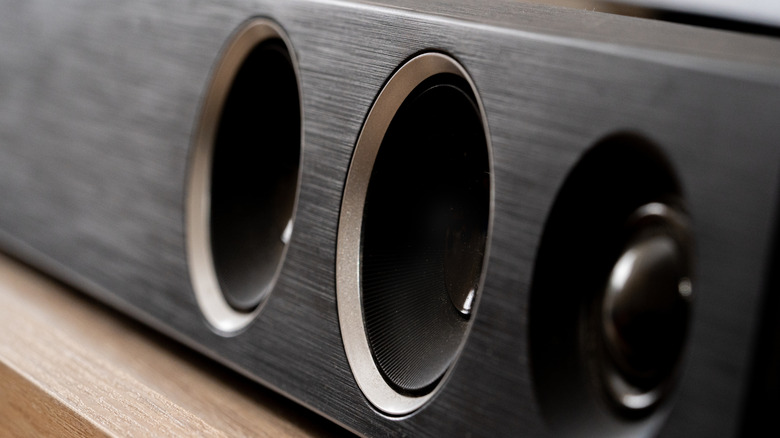
A great soundbar is more than just a plastic chassis packed with speakers, it's a meaningful addition to your home theater. Whether you're looking for a boost in volume for movies and TV shows, or the kind of immersive audio you'd expect from a surround sound, replacing your TV audio with a soundbar is a solid first step. But not all soundbars are created equal, and there are many nuances to consider, including additional speakers and audio formats. Some soundbars are best designed to deliver stereo audio, while others are engineered to simulate larger speaker configurations, complete with rear and height effects.
If you're wondering which type of audio format is best for your system, a better question to answer may be, "What type of room is my soundbar living in?" At a bare minimum, all soundbars are able to decode and output stereo audio, which may also be described as "2.0" or "PCM" on the packaging and in the manual. You also don't usually need anything more advanced for small to medium-sized rooms. At the 2.0 level, many soundbars do a great job at enhancing dialogue and will often deliver a wider soundstage than most TV speakers.
The results improve even more when you start adding a subwoofer to get better audio, which is why it's a good idea to invest in a bar that comes with one. A subwoofer prevents your soundbar's main drivers from needing to process and output ultra-low frequencies, like the pounding of a dinosaur's steps, the hum of a massive spaceship, or the energy from a soundtrack with thumping drums. Allowing those front-facing channels to focus on treble and midrange performance.
The bigger the TV room, the bigger your soundbar should be
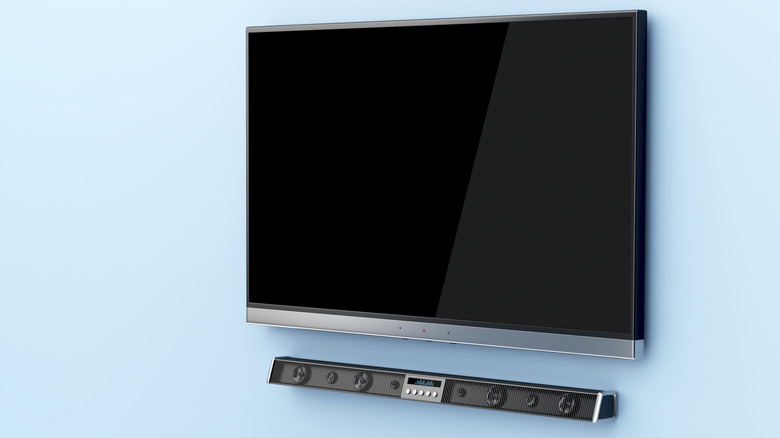
Let's imagine you have a medium-sized or large-sized living room. Larger floor plans tend to be more accommodating for bigger, bolder sizes, which can be among the best soundbars for audiophiles, according to experts. You likely won't be shopping for a 2.0 system at the level either. We suggest starting with bars that can handle 5.0 surround at the very least. Fortunately, many home theater-style bars also come with a wireless subwoofer. Some others are bundled with both a subwoofer and a set of rear speakers that usually plug into the sub for power.
A wireless subwoofer is just as important to a surround sound setup as it is to a stereo soundbar, if not more so. Your soundbar's front left, right, and dedicated center speaker (if it has one) shouldn't be trying to produce sub-bass frequencies. A subwoofer should always handle the lowest of lows. And if you're not ready to invest in a bar-subwoofer combo, there are a number of soundbars that will let you add a dedicated subwoofer after the fact.
If you have one of the best 4K Blu-ray players for cinephiles, it also pays to know what types of surround formats your soundbar can handle. Many Blu-rays are encoded for DTS, or Digital Theater Systems audio, but not all bars can decode a DTS track. This usually means your system will need to remix the audio for stereo playback. Most streaming platforms tend to use Dolby for audio encoding, but some streamable movies and shows use DTS, too.
Why your soundbar can't quite replicate a full Atmos setup
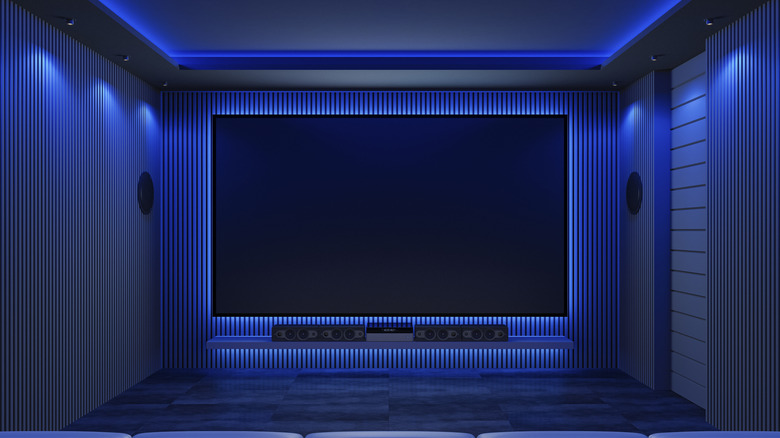
A TV or projector's HDMI ARC is for soundbars, as are plugs marked eARC or digital optical. The former is the best option, as HDMI allows for the kind of back-and-forth bandwidth that advanced formats like Dolby Atmos require. But even with all the right cables and compatible audio formats in place, most soundbars simply can't deliver the kind of pinpoint, object-based immersion that Atmos is known for.
Part of the problem is that most Atmos-optimized soundbars use up-firing speakers that are designed to shoot audio at the ceiling. That audio is then supposed to be reflected back toward your seating area. It's nice in theory, but it still isn't the same as ceiling- or wall-mounted speakers aimed directly at you. In some cases, Atmos-ready bars won't even have up-firing drivers, which usually means the system has to rely on even more bouncing and reflective sounds from the side- and front-facing drivers.
At the end of the day, nothing beats an AV receiver that's wired for a true 5.1.2 Atmos footprint or larger. But not every household can afford the heftier upfront cost that these types of surround configurations entail. Not to mention that wiring up a bunch of speakers to an amplifier is less DIY-friendly than merely connecting a soundbar to your TV.