

3 Possible Disadvantages Of Using Smart Plugs
We may receive a commission on purchases made from links.
Smart home devices let us do some pretty cool things. Smart thermostats let us adjust the temperature remotely, while smart lights let us dial in the perfect brightness for reading a horror novel. Smart tech also includes large appliances like refrigerators and dishwashers, but what about small appliances? For devices that can't connect to the internet, a smart plug makes a lot of sense, at least on the surface.
Many manufacturers make smart plugs, and many specialize in smart home gadgets. They're also not all that expensive; a two-pack from a respectable brand like Govee or even AmazonBasics shouldn't cost any more than $30. But before you invest in a box of smart plugs for all your non-automated devices, you'll want to make sure that it's okay to do so. Not all plugs are created equal, and using one incorrectly can cause irreparable damage to the plug and the device it's connected to.
We came up with a handful of common scenarios where, at first glance, a smart plug may seem like a viable solution but probably isn't the best idea. We'll explain why, and offer automation alternatives when they apply.
Hackers can use smart plugs as a network gateway

Using any type of smart home device carries some risk. Hackers are getting increasingly crafty with the tools at their disposal, so even the strongest firewalls can be breached. And just because your smart plug doesn't have a screen, that doesn't make it any less vulnerable to cyberattacks. A hacker with smart plug access could remotely disable a security camera connected to the plug; they could also turn off custom schedules and motion-triggered alerts.
Most smart home devices require you to create a free account to onboard products, and smart plugs are no different. If you entered any personal information when setting everything up — like bank details, addresses, or contact names — hackers could gain access to this info, too. That is why it's important to invest in the best internet security you can afford, including a strong router with fail-safes and red-flag notifications that make it much harder for digital thieves to break in.
We say this all the time, but it's also important to make sure your smart plugs are always running the latest software. Developers routinely patch security weak points as they're found; in a way, sticking with an older build because you didn't feel like installing new software is like holding the door open for hackers. Keep your smart plugs up to date, and set up automatic updates if you can.
You could end up with a bad plug from an untrustworthy manufacturer
Smart plugs are among the least expensive smart home devices on the market. Established brands like Govee, TP-Link, and even AmazonBasics all sell feature-rich multi-packs (two or more smart plugs) for $30 or less. But this kind of aggressive pricing can be a calling card for less-than-reputable companies to start selling tech. These manufacturers just want to make a quick buck off you, so safety certifications like an Underwriters Laboratories (UL) watermark may be missing entirely.
Stay far away from any consumer tech that hasn't been UL-certified. A smart plug without this laurel hasn't been properly tested. At best, that might mean the device fails after a short time or never works at all; at worst, you could end up dealing with a life-threatening fire or electrical issues. So, while it may be appealing to save a few bucks by going with a two-pack of no-name smart plugs, that's a lot of unnecessary risk.
Sticking to tried-and-true companies is always your best bet when selecting internet-connected tech, and the same goes for reputable retailers. Amazon, Best Buy, and Walmart are outlets you can usually trust, but be extra cautious if an agreement lets third-party vendors sell products (e.g., Best Buy offers shipping through Adorama and other third-party providers).
Not all smart plugs are easy to work around

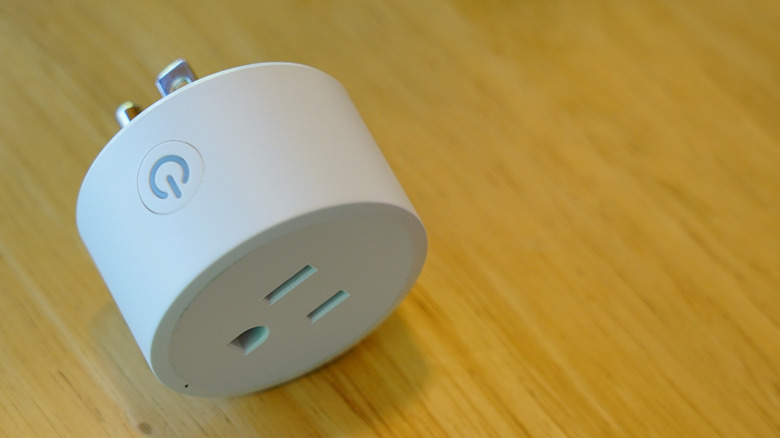
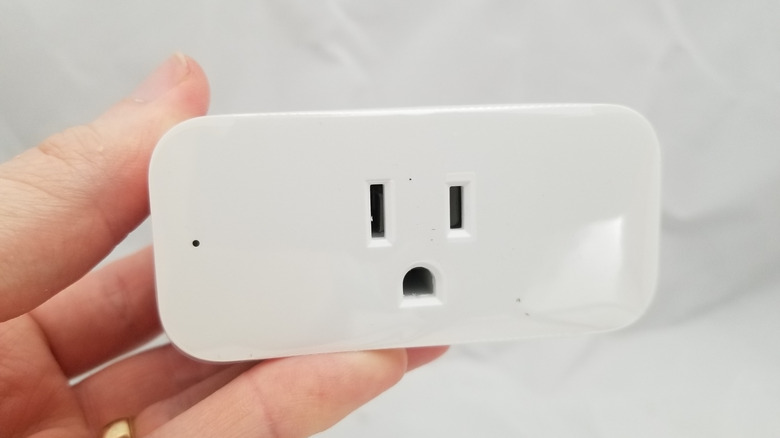
Smart plugs come in many different shapes and sizes. Most designs are pretty minimalist, but some plugs are a bit more bulbous. In a living room where no chairs or couches are shoved against walls, a bulkier plug may not be a big deal. When you want to push furniture against walls, a beefier smart plug can get in the way. And don't forget: once something is plugged in, an inch or two of wire will still jut out from the plug before gravity pulls the rest toward the ground.
A bulkier smart plug could also block access to other outlets. This may not be a problem with your current room arrangement, but who's to say you won't want to change everything a few months down the line? This might mean an outlet you seldom relied on becomes more important to your layout, and if you connect a bulky smart plug, it may need a new home. Fortunately, some smart plug manufacturers offer unique alternatives for situations where room layout and decor are your main priority.
Instead of a traditional plug, you could invest in a smart surge protector. Many of these products let you automate each outlet, much like a single-unit plug. The $30 Kasa KP303 is a solid example, offering three customizable outlets and two USB ports. It also earned a 4.6-out-of-5-star rating on Amazon, based on over 16,000 user reviews.