

5 Disadvantages Of Cheap Android Phones

"You get what you pay for." It's a saying that proves true more often than we wish it did. When it comes to smartphones, this is where Apple shines through with its recent affordable iPhone models. If you're looking for the basic iOS experience and a device you don't have to obsess over at a price your budget can handle, the iPhone 17e at $599 truly excels. That's not to say Android doesn't also shine here. Google's Pixel 10a and Samsung's Galaxy S25 FE are also excellent contenders.
If you're spending any less — perhaps as little as $200 or so — you might want to consider mid-range and premium devices from two or three years ago against anything newer on the market at those price levels. We're not just talking about disappointing specs and software support that leaves you wanting more; you should also know about the hidden catches that we had to learn about the hard way.
1. Pricing can be complicated

Since 2013, Motorola has catered to price-conscious buyers with its Moto G line of Android phones. These days, the cheapest Motorola phone you'll see is the Moto G Play with a 720p display, 4GB of RAM, and 64GB of on-board storage, though it does come with a microSD card slot. Motorola recommends a retail price of $250. Verizon will sell you this device for $250, but its prepaid division charges $50 or nothing at all when you get the phone with an unlimited plan. Meanwhile, T-Mobile has opted for a retail price of $170, while the prepaid Metro by T-Mobile stays at $250.
If you're hoping to snag a deal from a postpaid carrier, you'll also need to pass a credit check. Otherwise, you'll be dealing with prepaid carriers. If you're buying a new device from a carrier, you'll need to use it with one of that carrier's service plans. You can request your carrier to perform a SIM unlock to let you bring it to another network if you've paid the device off and have paid at least a few monthly bills on time. Ultimately, you're going to have to think about what you can afford up front versus what you'd like to pay on a recurring basis.
2. Bloatware hits harder
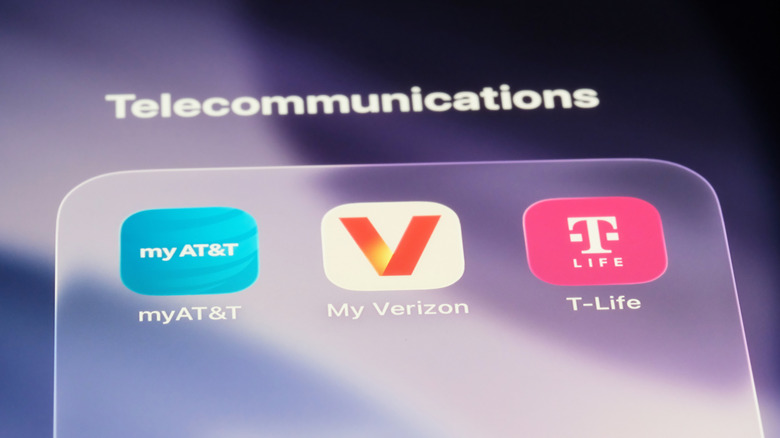
Carriers and phone makers may elect to install adware when they have the option. Third-party vendors pay device retailers to pre-load budget smartphones with a system-level provisioning service that automatically installs apps whose publishers have signed on to be featured. You can disable these services, to a certain extent, by removing the right apps — look for AppCloud on AT&T, AppSelector and Content Manager on T-Mobile, and Verizon App Manager on Verizon. Users have reported these services appearing after they've installed a SIM or a carrier account management app and that even when they've been disabled, can be reactivated after a scheduled software update.
The thing is, if you're chasing after low prices, you'll likely find them with carriers where their business is more concerned with giving you a monthly service bill than necessarily selling you a phone. There are plenty of free phone deals that are tied to switching a line over to an expensive plan. If these phones are equipped as poorly as, say, the Moto G Play is, then you can expect to deal with performance issues related to these provisioning services.
3. Slower USB ports
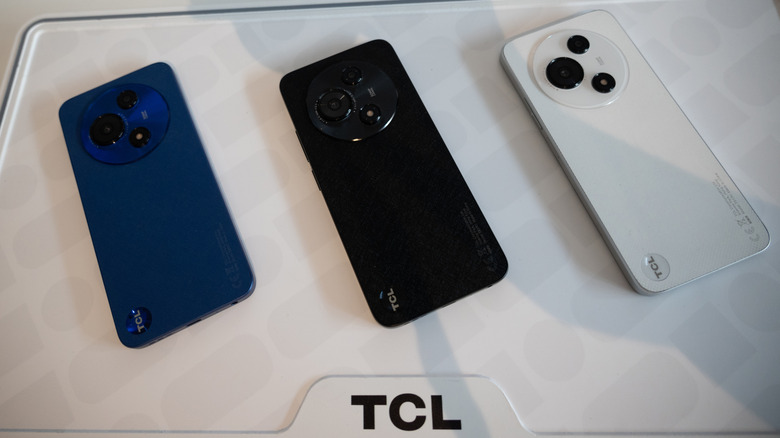
Slow charging and slow file transfer speeds have been endemic to budget phones for a long time. It's true that flagship phones from the likes of Apple and Samsung don't offer the 100-plus-watt charging speeds that Chinese phones do, but the bar isn't always that high for what a lot of people consider to be fast charging. Google considers 30 watts to be fast enough for the $1,899 Pixel 11 Fold, for example. The $250 Samsung Galaxy A17 and T-Mobile Revvl 8 offer 25-watt charging, while the Moto G Play 2026 only offers 18 watts.
Alongside those slower charging speeds, you may also have to deal with slower USB 2.0 file transfer speeds, which max out at 480 Mbps. USB 2.0 is present on $500 phones like the Nothing Phone (4a), let alone devices priced at $200. Premium phones going back several years have supported USB 3.2 with file transfer speeds of at least 5 Gbps. Of course, it's an even bigger shame many Android phones don't support USB4, but that's another issue entirely.
4. The camera experience
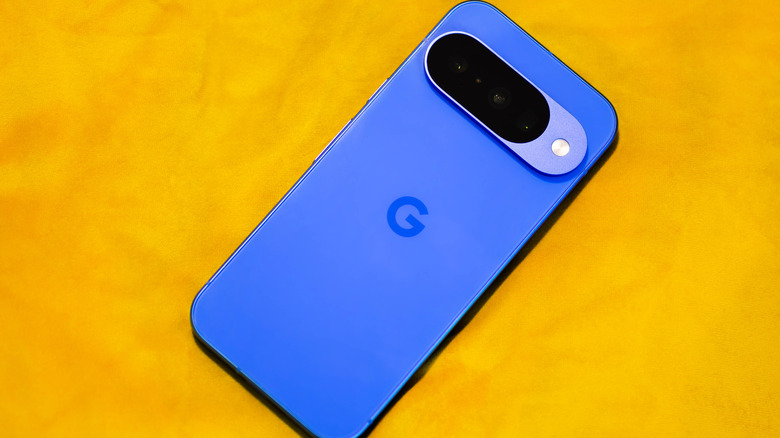
Budget phone makers don't only use cheaper camera components, but cheaper components across the device. The full stack of hardware that dictates how good or bad your experience will be from start to finish. Everything from the image signal processor on a phone's chipset to the amount of RAM a phone offers will determine whether it can capture the instant shot you want or if you've missed the moment by a second. Plus, if you're interested in AI editing features, you may only be interfacing with them through the cloud rather than on-device, thanks to less capable processors — that can eat up a monthly data allowance real fast, especially if you're trying not to spend too much.
Google has been able to pull off highly regarded photography capabilities with the processing work it has put into the Pixel series. The Pixel 3 to the Pixel 5 used the same half-ish-inch, 12-megapixel Sony IMX363 sensor, while more recent Pixel devices use larger 48-megapixel camera sensors. That's not to say a $200 phone from 2026 can't pull off good photos with mediocre components and a little cloud-based magic, but the difference between that phone and a Pixel with all its camera tricks is just how smooth, fast, and robust it'll be.
5. The usual suspects
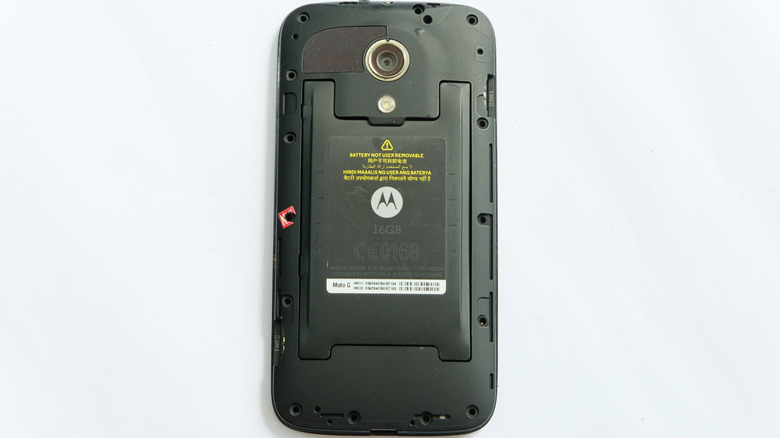
You probably know cheap from seeing it, such as the 720p displays on the Revvl 8, the Moto G Play 2026, and the TCL K32. The 4GB of RAM on the Moto G Play 2026 is another example, and Motorola actually specifies that its 6.7-inch panel is actually a liquid crystal display (LCD). Modern LCDs shouldn't be knocked by any means, but they're still well behind on what an OLED panel can deliver on picture quality, which is the display type most flagship phones use. You have to consider the chipset used. For example, the TCL K32 uses the Qualcomm Snapdragon 4s Gen 2 chipset, while devices in the $400 and $500 range have Snapdragon 6 and 7 series chips, and flagship devices use the Snapdragon 8 Elite Gen 5 chip.
Samsung is the only manufacturer still producing budget smartphones for North America that guarantees security updates for five years. You might get occasional patches every couple to few months for maybe two years if you're buying another brand, but not necessarily major software updates. If all of these compromises are giving you the heebie-jeebies, well, that's part of the real cost you're paying for a $200 Android phone.