

5 Tech Brands You Might Not Realize Are Owned By Lenovo
Lenovo, the Chinese tech brand that owns brands like Motorola and what was once IBM's ThinkPad line of laptops, owns some companies that you might not have realized. Over the years, the PC hardware maker has gained controlling shares or outright bought several companies to gain a better foothold around the world. It's also an easy way for Lenovo to then have that roster of tech products under its wings, with established manufacturers being subsumed.
Of course, it is a major brand in and of itself, with the various Lenovo-branded PCs and laptops available. But since this list is focused on lesser-known brands, we'll exclude Lenovo itself and its big-name sub-brands like Legion, Yoga, and Think, alongside Motorola's phone output, which is looking to shake things up with a Graphene OS phone that doesn't run Google's flavor of Android. With the Legion Go S, the company has even stepped into the ring with handheld PCs, launching one of the first non-Valve, non-Steam Deck or Steam Machine devices to run SteamOS out of the box.
So where else does Lenovo have its fingers, and in what pies is it sticking them? Some of these might have missed your news radar in the U.S., and it's an interesting selection.
Medion AG
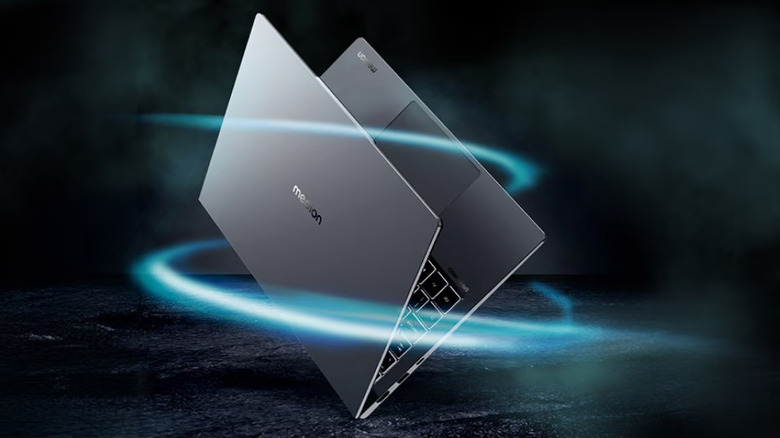
In 2011, Lenovo became the majority shareholder in Medion AG, a German PC retailer. The deal was for $900 million, which would allow Lenovo an easy gateway into Europe, not just Germany. In Germany, Lenovo's share of the market grew to 14% — and across the whole of Western Europe, that figure rose to 7.5% of the market.
However, it wasn't until 2025 that Medion was bought outright. In January 2025, the company announced that it was pulling its stock exchange listing and transferring everything over to Lenovo. That said, Medion has continued to exist as a sub-brand for Lenovo, even providing a larger variety of products than its parent company does.
Medion produces and sells its own brand of TVs, laptops, PCs, and even kitchenware. U.K. retailers like eBuyer, Box and Scan have positioned the Medion Erazer line as an alternative to major brands in the gaming laptop space. Unfortunately, much like every other tech device at the moment, even these alternative brands won't come cheap.
Fujitsu Client Computing Limited
Lenovo doesn't own Fujitsu outright, nor does it own any notable stake in the main Fujitsu brand. Rather, Lenovo has a major controlling stake — 51%, in fact — in the computer-manufacturing arm of the company, known as Fujitsu Client Computing Limited. The new ownership of the FCCL in 2018 was split, with 44% being owned by Fujitsu and 5% by the Development Bank of Japan Inc., alongside Lenovo's 51%.
This cost Lenovo $269 million, again, to get in the door via an already established entity — this time in Japan. At the time, Lenovo saw its stock rise 5%, and this power grab came just months after it had snapped up another Japanese PC division. NEC had also entered an agreement with Lenovo for a joint venture, again split 51% to 49%, but in 2016, it sold off shares to Lenovo, leaving it at 33.4% of shares owned.
Fujitsu mainly focuses on the business and enterprise side of things nowadays, with its Lifebook line of laptops not typically marketed for outside of work. However, while Fujitsu is doing fairly exciting things within the world of server processor chips, Lenovo doesn't own this side of the company's business, with its role starting and ending at the consumer-level products.
FCNT
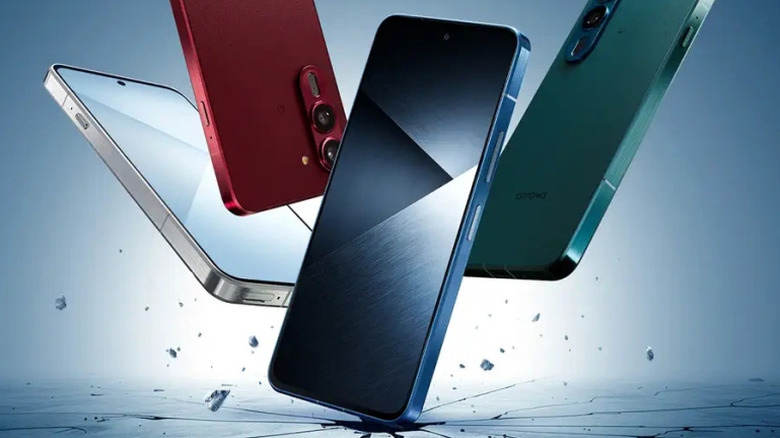
Lenovo didn't stop at Fujitsu and NEC with its designs on getting into Japan. In 2023, it bought up FCNT, a Japanese phone brand that makes Raku-Raku and Arrow smartphones. FCNT was originally Fujitsu Connected Technologies Limited, but Fujitsu split from the division entirely in 2016. In 2018, it transferred the Arrow and Raku-Raku branding to FCNT, ending its ties with consumer smartphones.
FCNT did not make a good go of it before Lenovo snapped the company up in 2023. That same year, FCNT announced it was filing for bankruptcy, after the pandemic and the ensuing semiconductor shortage ate into business. Meanwhile, more budget-friendly brands began to outpace FCNT's offerings — even the Raku-Raku brand that is aimed at the elderly.
FCNT still continues to make its own branded phones for the Japanese region, recently launching a rugged phone, the Arrows Alpha 2. Its other lineups include We, with the phone series now on its third iteration, the We 3. As expected, the company has also launched some AI features with the phone under its "Arrows AI" branding. In the press release announcing the deal, Lenovo was very clear that it intends to help FCNT grow, with its resources backing the company.
Phoenix Technologies' firmware business
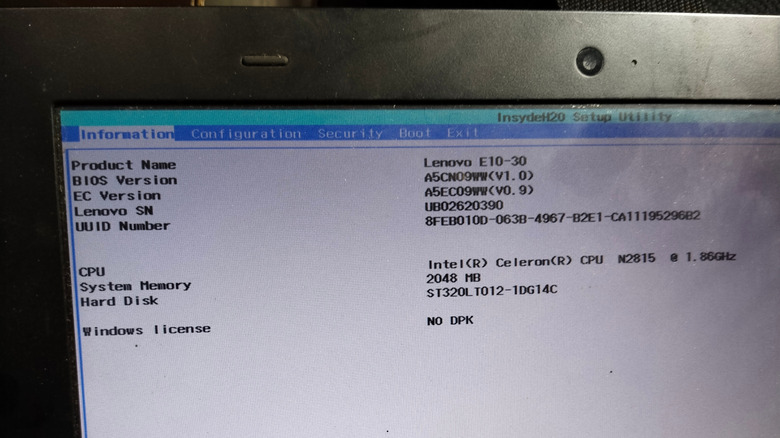
Lenovo's most recent major acquisition at the time of writing is a firmware technology maker. Original owner Phoenix Technologies sold off its consumer BIOS business to Lenovo, which had been providing firmware for more than 20 years. It has primarily been found in devices from the ThinkPad line of laptops. No financials were disclosed for the sale.
Phoenix Technologies is still a private company that provides software for enterprise, but it got its start on a much smaller, possibly more complex level. It originally started by producing its own version of the operating system DOS, and eventually cloned IBM PC BIOS in a "clean room design."
That meant not using any machine already active, or an engineer who had even seen IBM code. Instead, it was done using documentation published by IBM to recreate it step-by-step, then code was developed on another processor to essentially translate it into a wholly, and more importantly, legally distinct BIOS.
Stoneware, Inc.

As with its other purchases, Lenovo snapped up Stoneware, Inc. to expand its cloud computing offerings. In its press release, Lenovo elaborated that it intended to integrate this into its then "PC Plus" offerings, which was around the time when Lenovo began to pivot into hybrid designs. That said, it's not clear where exactly this would come into play, or if it ever really did.
Now, Stoneware, Inc. is in the enterprise and educational sector. According to its LinkedIn page, Stoneware provides a "Unified Workspace solution," which leverages its cloud technologies from within a browser for a file manager and application launcher. It also develops classroom management and monitoring software for educators to use. While there are no details on who, it states that it works alongside manufacturing and healthcare as well.
Lenovo, like a lot of other companies, is secretly just about everywhere. Unlike its major competitors like Apple and Dell, Lenovo appears to still allow some companies it acquires to work in an independent fashion.