

10 Phone Carriers You Might Not Realize Are Owned By Verizon
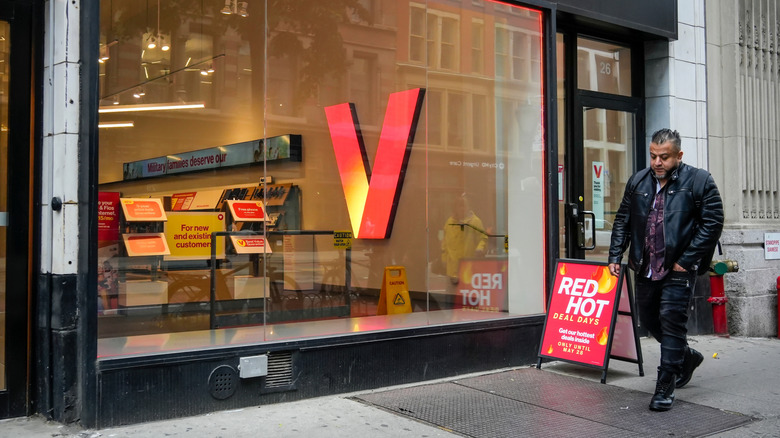
Verizon is America's largest cellular service provider, with nearly 150 million subscribers. About nine out of ten customers on Big Red are paying large chunks of their hard-earned money for a postpaid plan with access to its 5G network, plus amenities such as texting via satellite, and additional digital subscription bundles.
That leaves about 19 million users who are on one of the company's many prepaid brands, each of them offering cell service with their own little twist. In fact, Verizon has ten active prepaid brands excluding the company's in-house label — the one that's selling a $70 monthly plan with access to its premium 5G Ultra Wideband network.
But never mind Verizon Prepaid. We're about to give you a quick tour of the other carriers, explaining how they came to be, how they got into Verizon's hands, what they specialize in, and which ones are going away come November 2026.
Visible
In 2018, Verizon expanded from its Verizon Prepaid operations by launching a separate brand called Visible. The company was last of the then-Big Four to open a dedicated prepaid carrier as AT&T already had Cricket Wireless, Sprint had Boost Mobile and Virgin Mobile, and T-Mobile had Metro. While it initially kept insisting it wasn't an MVNO, Visible eventually clarified that Verizon executives were leading its charge and that the telecoms giant was putting in backing capital.
It targeted younger audiences by shunning brick-and-mortar retail and going with a fully-online service model, distributing SIMs to iPhone owners before expanding to Android phones and opening up its own device sales. Data was unlimited, though capped to 5Mbps in its early days — I personally never experienced that cap in my usage at the time — but the limit was removed soon thereafter.
Today, it offers three plans with increasing amounts of premium speed access for video streaming and hotspot data starting at $25 per month and going up to $45. It's now officially branded as Visible by Verizon.
TracFone
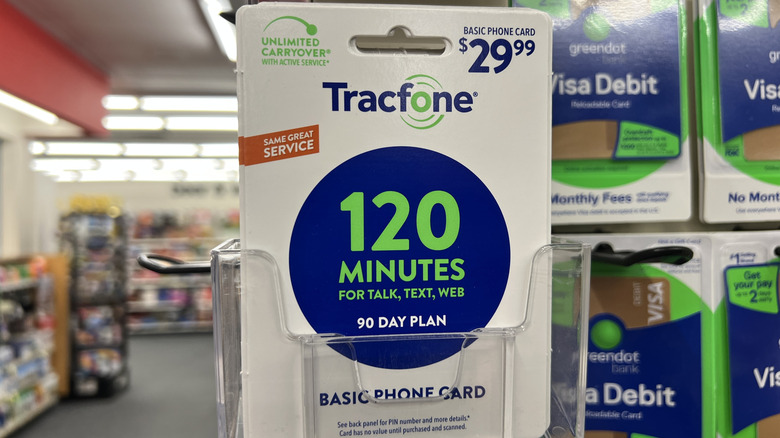
TracFone began life as Topp Telecom in 1996. It picked up cash from Mexico's Telmex in 1999 before that company spun off its cellular division into América Móvil the next year. América Móvil then acquired controlling interest in TracFone, growing it to become the masthead of a variety of prepaid cellular businesses in the U.S. Verizon acquired TracFone's portfolio from the Mexican telco in 2021. All of the following carriers in this list were brought in with the TracFone deal.
Currently, TracFone offers monthly plans with options for longer terms at lower rates, kind of like what Mint Mobile and a few other carriers with cheap plans do — the $50 unlimited plan drops to $40 per month if you pay for a year's worth of service at once.
It also sells one-time allotments of minutes that are used between talk, texting, and web usage valid for as little as 30 days and as long as a year — customers can purchase top-ups for these single-use plans. You can also get cellular home internet service through TracFone.
Straight Talk Wireless and Walmart Family Mobile
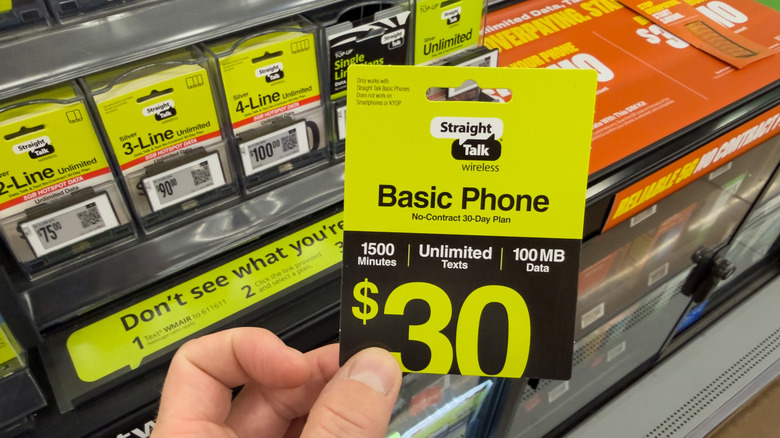
TracFone launched Straight Talk Wireless in conjunction with Walmart in 2009, utilizing a network of more than 3,000 stores to sell a capped monthly plan for $30 a month and an unlimited plan for $45. That $45 plan has remained at the same price, and is currently dubbed Silver Unlimited. Of course, the name implies the existence of other tiers: Bronze Unlimited goes for $35 while Gold and Platinum are pegged at $55 and $65, respectively. The biggest gains going up the chain are in hotspot data and access to Verizon's Ultra Wideband spectrum. Straight Talk also sells home internet and wireline phone service.
But just like its electronics section, Walmart's story doesn't end there: the big box chain signed a later agreement with T-Mobile in 2010 to launch a different MVNO on that network, but the first one under its own name: Walmart Family Mobile. As the word 'family' suggests, Walmart was seeking multi-line accounts with an initial price scheme of $45 per month for one line and $25 for each extra line. T-Mobile sold its part of the venture to TracFone in 2016. Verizon's rendition of Walmart Family Mobile now offers multiple plans from $20 to $47 per month, but will only charge $20 per additional line on any plan.
As a sidenote, T-Mobile wasn't Walmart's only MVNO partner in 2010, as the retailer also hitched with Sprint to debut Common Cents. Sprint deprecated Common Cents in 2011, wrapping it into its Virgin Mobile-branded prepaid operations.
Total Wireless
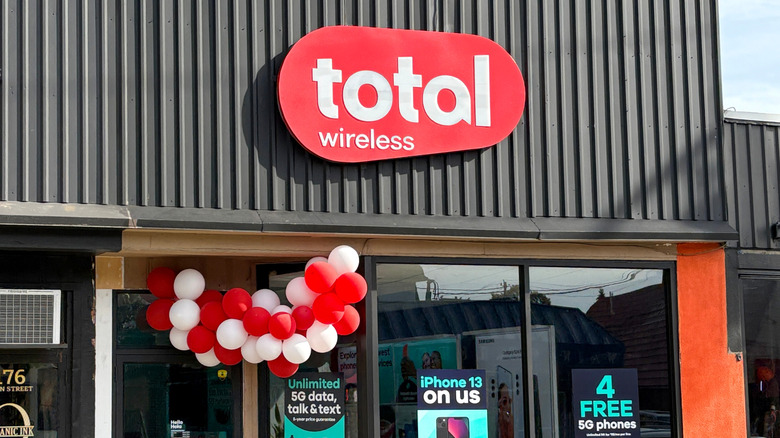
TracFone launched Total Wireless in 2015 as a Verizon-based MVNO focused on affordable multi-line plans. It started out as another Walmart-exclusive carrier before branching out to franchise retailers. Many stores had the Total Wireless branding above their doors, but customers could buy phones and plans from any of several TracFone brands.
After acquiring TracFone, Verizon decided to leverage the Total name and its web of brick-and-mortar stores to ramp up its prepaid market presence. The company tweaked the brand to Total by Verizon in 2022, only to undo the move in 2024.
Over time, marketing has increased, plans have been revamped, and more locations opened. In 2026, Total Wireless notched its 2,000th store. Total MAX 5G is one of our favorite $50 unlimited phone plans, but you can get it for $20 if you're a new customer bringing your own phone. Total also has data-only plans for home internet, tablets, and mobile hotspots.
Simple Mobile
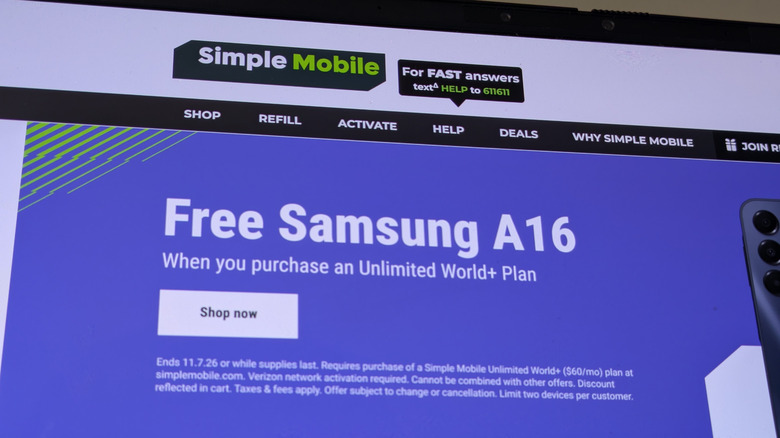
TracFone bought Simple Mobile, a T-Mobile-backed, BYOP-only MVNO, back in 2012. It offered a $60 monthly unlimited plan at the time, and still does as its premium product today. Four other plans are also available, and they start at $25.
While it still encourages prospective customers to bring their own devices in, Simple Mobile does have some phones in its inventory, such as the iPhone 16e or Samsung's Galaxy A27. You might be better off going elsewhere to pick up a budget phone actually worth buying.
During Verizon's tenure, Simple Mobile has bolstered its sweeteners to include international roaming data as well as unlimited global calling on every plan. In 2024, the state of California selected the carrier to deliver LifeLine service to foster youth up to age 21 under a renewed program. Simple Mobile is one of three Verizon Value brands to offer LifeLine service: TracFone and SafeLink Wireless are the others.
SafeLink Wireless
SafeLink Wireless, much like Assurance Wireless under T-Mobile's cadre of prepaid carriers, a participant of the federally-funded Lifeline program that provides subsidized internet access to low-income, indigenous, and certain other populations at little to no charge.
Upon annual determination of eligibility, signees can bring an existing, Verizon-compatible smartphone and get unlimited talk and text, 10GB of data, and a separate 5GB pool of hotspot data for free every 30 days. The carrier does offer phones, top-ups, and paid plans for sale, but requires shoppers to verify eligibility to see those options.
SafeLink also provides a free three-month subscription to Amazon Prime for new customers who haven't taken advantage of a prior promotion. After that period, users enrolled in certain government benefits can re-sign with Amazon's Prime Access Program at a rate of $7 per month, down from the full $15. Other programs, such as Amazon Prime for Young Adults, also offer discounted pricing.
Page Plus, Net10, and GoSmart
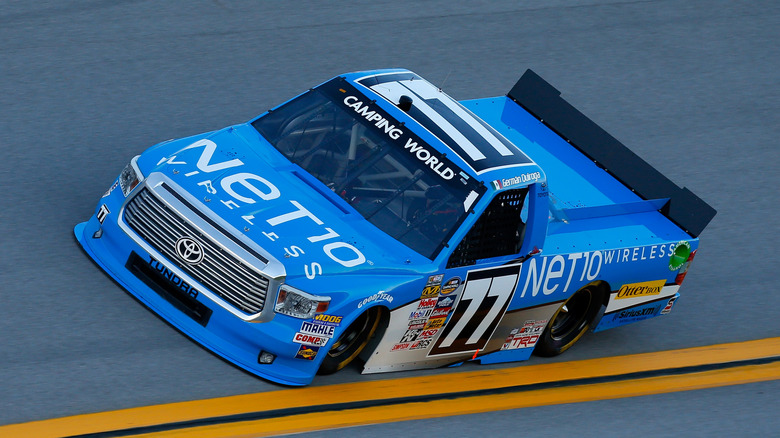
Verizon is just about ready to finish shutting down three former TracFone brands in Page Plus, Net10, and GoSmart. The trio ended service to most of the U.S. in November 2024; service to California continues until November 2026. Net10's homepage features messaging encouraging customers to join sister brand Simple Mobile.
TracFone launched Net10 in 2005, late in an era of minutes-based plans and tables of premium call rates: calls were 10 cents a minute, texts were 5 cents each. GoSmart was spearheaded by T-Mobile in 2013 and dealt in unfussy unlimited talk and text plans with varying data allowances priced between $30 and $45 per month. While not explicitly mentioned at the time, TracFone did pick up GoSmart from T-Mobile with the Walmart Family Mobile acquisition. 2013 was also the year TracFone bought Page Plus. Its contemporary offerings were headlined by a $70 plan tailored towards smartphones.
Sunsetting these MVNOs, TracFone hopes, should streamline operations and help make Verizon, a rookie in the prepaid business, more competitive against other carriers owned by AT&T and T-Mobile.