

This Arizona Solar Farm Became An Unexpected Home For Dozens Of Burrowing Owls
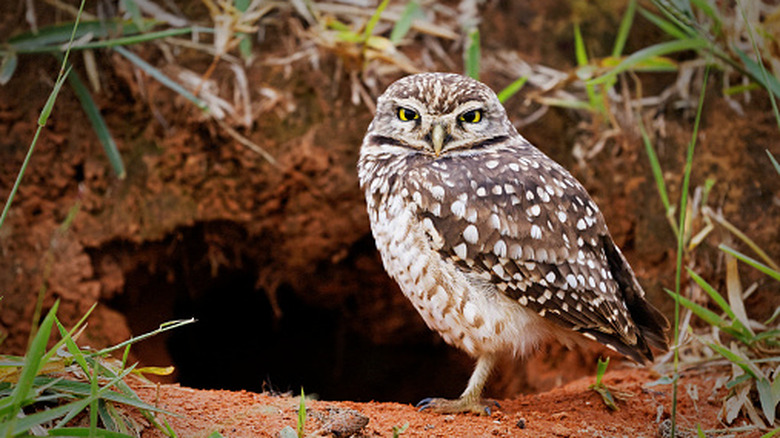
Solar energy comes with plenty of obvious environmental benefits like generating clean electricity and reducing air pollution emitted by burning fossil fuels, but solar farms can also help ecosystems in unexpected ways. An example of this comes from Maricopa County, Arizona (one of the U.S. states with the most solar panels), which includes the city of Phoenix. There, local raptor rescue organization Wild at Heart conducted an experiment to see if a massive solar farm could provide a suitable home for displaced burrowing owls where they can successfully reproduce.
Wild at Heart worked with Longroad Energy, which runs several massive solar farms in the Phoenix area. As reported by Audubon, the experiment involved moving 19 burrowing owls (nine pairs and one bachelor) from a housing development where their homes were set to be destroyed, to artificial tunnels made on a solar farm. From there, the researchers monitored the owls through their breeding season, feeding them for a while as the birds adjusted to their new home.
It didn't take long for the experiment to prove successful, no doubt helped by the fact that burrowing owls prefer taking over existing holes rather than digging their own. Within the first month, all of the female owls had laid eggs, resulting in 29 owlets in the span of three months. Most of the birds have since left the solar farm, an expected and desired outcome, though three pairs remain as of December 2025.
Solar farms can provide unexpected refuges for animals
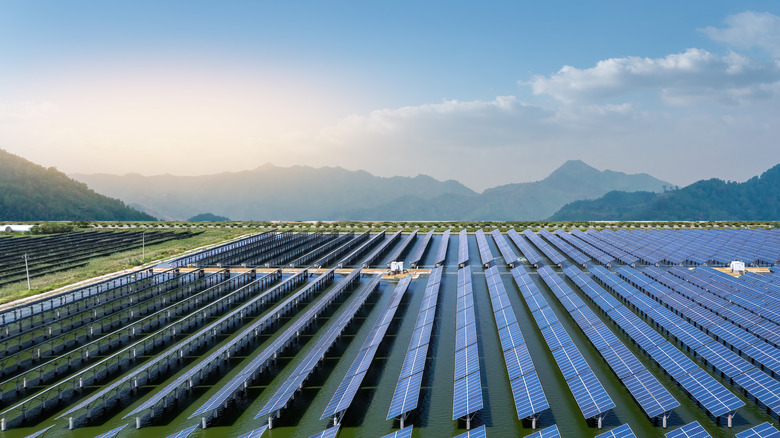
Results from the Longroad Energy experiment are great news for those concerned with threatened bird species like burrowing owls, which are protected under the Migratory Bird Treaty Act and the U.S. Fish & Wildlife Service's Birds of Conservation Concern list. Burrowing owls are primarily impacted by habitat loss and other human activities like pesticides, hunters, and extreme weather caused by climate change. Solar farm relocation projects like Wild at Heart's can help rebuild populations, and they have the potential to help other species, too.
This isn't the only way that solar farms are helping ecosystems and promoting biodiversity. In central California, solar farms are protecting the endangered San Joaquin kit fox with fences specifically designed to allow these foxes in while keeping predators out. There's also a proposed solar farm in Oregon that intends to build a massive wildlife corridor to prevent the facility from disrupting deer and elk migration patterns.
On top of that, solar farms can improve degraded land beneath the panels, creating conditions where microbes and plant life can thrive. While expanding our solar power capabilities often involves habitat destruction that displaces wildlife, creative and well-designed conservation efforts can mitigate the damage and even help endangered and threatened animals.