

4 Non-Negotiable Features To Look For In Bluetooth Headphones In 2026
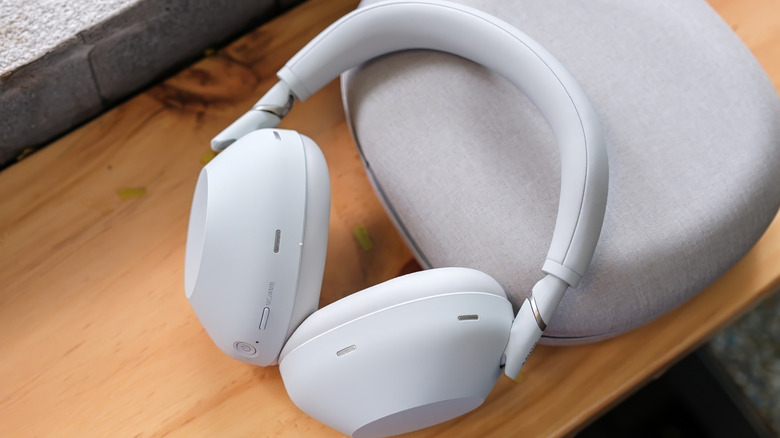
Bluetooth technology has come a long way from the days of single-ear headsets. In 2026, almost everyone owns at least one pair of Bluetooth headphones or earbuds, and you can usually find multiple sales on top-tier products from companies like Sony, Bose, and Apple. But what are some of the non-negotiable features to look for in modern Bluetooth headphones? That's a fair question, and after careful consideration, we came up with four legitimate answers: active noise-canceling (ANC), strong battery life, multipoint capabilities, and a companion app.
Our list runs in descending order, too, with the most important feature (ANC) leading the pack. Many of the cheapest headphones on the market are supported by some type of ANC system, so it just doesn't make sense to own a product that can't attenuate distracting noises. Sure, there are plenty of decent headphones without ANC, but we're simply not interested, and we don't think you should be either. There's plenty to discuss between all four of our Bluetooth headphones checkboxes, though, so without further ado, let's start the learning.
Active noise-canceling
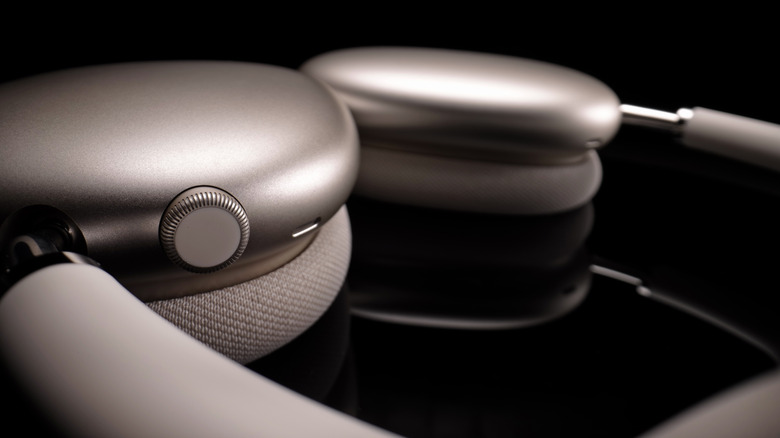
ANC is one of the best features ever to grace a pair of headphones or earbuds; in most cases, we'd even choose an objectively bad pair of cans or buds over a product that doesn't include ANC, even if we knew the audio would be better. We won't get too in the weeds with the science, but we will provide this quick explainer: Active noise-canceling uses built-in microphones on your Bluetooth headphones and earbuds to analyze environmental sound. When distracting frequencies are detected, your headphones generate opposing sound waves to "cancel out" the unwanted noise.
ANC is no longer the boutique investment it was when the technology first rolled out to consumers. It's not a feature that's merely shared by multiple manufacturers either; Brand A can wield an entirely different ANC system than Brand B. When it comes to class-leading ANC, you can always rely on companies like Bose and Sony to deliver some of the best attenuation in town. Apple is no straggler, too; the AirPods Pro 2 deliver exceptional ANC that we never, ever turn off.
Audio manufacturers have also started implementing adaptive ANC systems, which automatically analyze and adjust your noise canceling in real time. This prevents you from having to open up your headphones' companion app to adjust ANC settings manually. Sennheiser even has a feature called Sound Zones, which lets you build a custom audio profile — complete with ANC and EQ settings — for a specific location.
Strong battery life
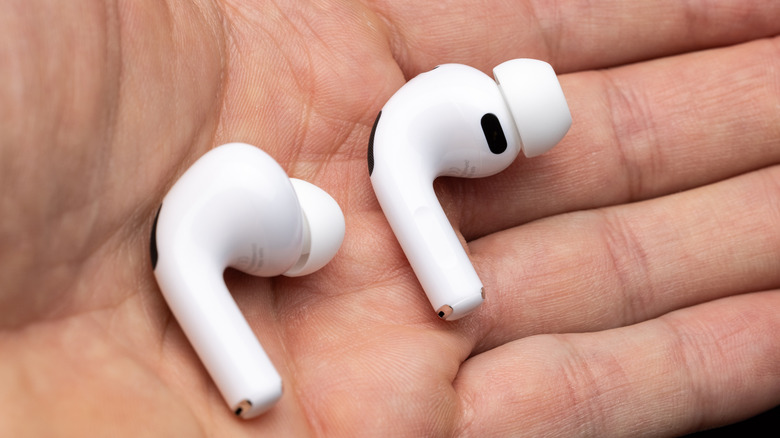
Part of what makes a pair of Bluetooth headphones or earbuds "wireless" in the first place is that they don't need to stay connected to a host device for power and audio data. In lieu of the former, headphone manufacturers build batteries into their wireless on-ear, over-ear, and in-ear products. You'd be surprised at how long some of these cells can carry a set of cans or buds; we've also been spoiled by the likes of the Sennheiser Momentum 5 (over 50 hours with ANC enabled) and the Anker Soundcore P31i (up to 7.5 hours, with four extra charges from a topped-off case).
Generally speaking, we wouldn't want to own a pair of Bluetooth headphones that delivers less than 25 hours with ANC enabled; we also wouldn't suggest wireless earbuds that last less than five hours on a full charge. USB-C has all but dethroned USB-A and Micro USB when it comes to charging ports, allowing modern headphones to charge faster than ever before. But we're still betting most of us will want our daily drivers to last an entire work shift without worry, or for the majority of a cross-country flight.
ANC isn't the only variable that affects battery life either; volume level and the types of audio files you listen to can have an impact, too. Customizing certain parts of the sound profile can also increase or decrease battery longevity (e.g., more bass = less battery).
Multipoint capabilities
Debuting back in 2010, Bluetooth Multipoint was created by the Bluetooth Special Interest Group (SIG), and the feature has evolved into a staple of Bluetooth headphones and earbuds. Quite simply, Multipoint is a feature that allows you to have a single pair of headphones simultaneously paired to at least two host devices (e.g., phone, tablet, laptop). When it works correctly, Multipoint delivers an almost instantaneous switchover to a second or third device. Here's an ideal scenario:
You have Multipoint enabled on your Sony WH-1000XM6, so your headphones are connected to both your smartphone and work laptop. This means you should be able to listen to tunes or watch a YouTube video on your phone, while still receiving audible notifications from your work PC. From one Bluetooth generation to the next, Multipoint has drastically improved, thanks in part to the LE Audio standard introduced with Bluetooth 5.3. While it's still not a foolproof feature, it's one we couldn't live without at this point.
The writer of this article uses Sony WH-1000XM4 headphones every day with the cans paired to both a phone and a laptop. Multipoint isn't necessarily a feature you rely on all the time; it's when you know you need to divide your attention between multiple apps and devices that it comes in handy the most.
A companion app
Last but not least, we come to the part of the list where we discuss the ancillary software you'll be able to download for most Bluetooth headphones. Big brands like Sony, Bose, Anker, Sennheiser, and countless others offer a free companion app for wireless headphones and earbuds. Some apps are relatively basic, while others offer a dizzying array of features and customizations. There are actually two major reasons why we won't buy a pair of cans or buds that aren't supported by an app, with software updates being the first.
As with our phones, tablets, computers, and game consoles, headphone developers are able to release patches to address security loopholes in their apps. Updates also allow developers to roll out new features and to improve existing capabilities. We've seen a number of headphone updates hit the market to address ANC issues across multiple brands; without access to a companion app, affected buds and cans would have no way to receive those crucial fixes. The other major reason why a companion app is a must for us is audio customization.
Out of the box, most headphones deliver a warm, bass-forward sound profile that works well for music, movies, TV shows, and video games, but not everyone is going to dig the defaults. Fortunately, most headphone apps contain a library of listening presets you'll be able to choose from; many even include a graphic EQ that you can use to shape your own audio profile. Again, nothing app-related is mandatory, but it feels like a huge piece of the puzzle is missing when mobile software isn't an option.