

Apple Watch Series 12 Review: Better Health Tracking Makes This A Worthwhile Upgrade
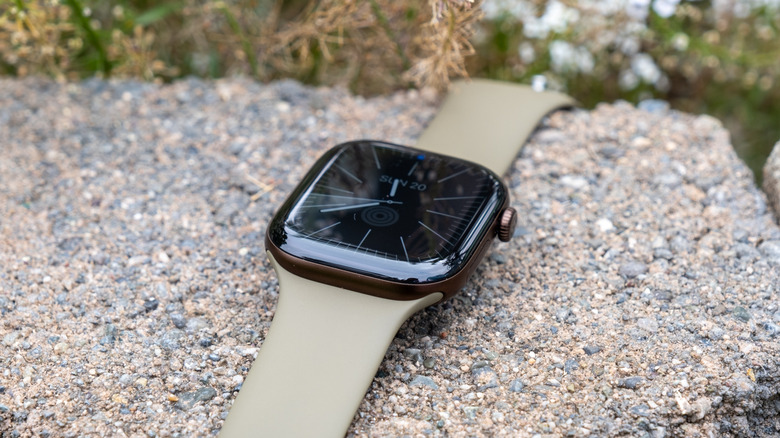
The Apple Watch arguably hasn't gotten a major revamp in a while. Each year, a new sensor or feature gets added, the chip gets a modest bump (sometimes), and the design stays recognizable. The $399 Apple Watch Series 12 follows that playbook on the surface — it looks almost identical to the Series 11, and the battery life hasn't budged from its 24-hour rating. Underneath the familiar exterior, though, Apple has made the most consequential internal changes to its smartwatch in years.
The changes essentially amount to a redesigned health sensing platform paired with a new S11 chip. Together, they shift the Watch from sampling your heart rate every few minutes to checking it every five seconds, split HRV into two distinct metrics, and power a new Readiness score that puts Apple in direct competition with the $399 Oura Ring and the subscription-based Whoop.
Sure, there may not be much of an external design change, but internal changes can make a big difference too. I've been wearing the Series 12 for a while to figure out who actually needs this and who can wait for a bigger leap from Apple.
Design
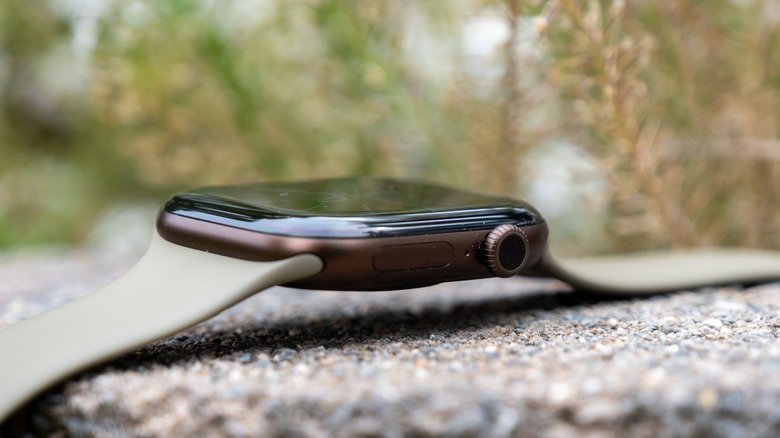
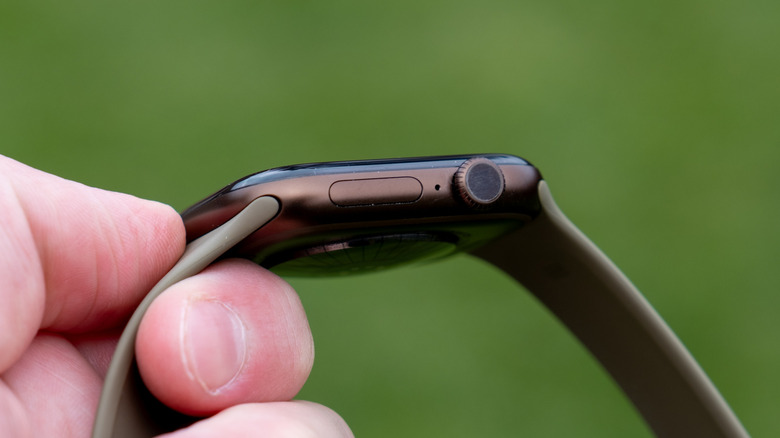
Not much about the design of the Apple Watch has changed compared to previous models. Basically, the Apple Watch Series 12 looks like an Apple Watch. If you've seen a Series 10 or 11 on someone's wrist, you've essentially seen the Series 12. The case shape, the Digital Crown, the side button — all unchanged in any way you'd notice without a caliper.
There are some changes in materials, though. Apple offers the Series 12 in aluminum (Dark Bronze, Light Gold, Black, Space Gray), titanium (Radiant Gold, Natural), and ceramic (Pearl White, Night Blue). Ceramic returns to the Apple Watch for the first time since the Series 5 era, and it's aimed at fashion-conscious users more than anything else. At a premium price, it's for buyers who want their Watch to feel like jewelry. Ceramic models are marginally thicker at 9.85mm versus 9.7mm for aluminum and titanium, though that's not something you'd feel on your wrist.
Aluminum models now get Ceramic Shield 2 glass over the display. Apple claims it's 60% tougher than the Ion-X glass used on previous aluminum models, so hopefully it won't scratch or shatter as easily. Water resistance remains rated at 50 meters, with IP6X dust resistance — unchanged and perfectly adequate for swimming, rain, and the occasional sink mishap. It isn't rated for deep diving though. That's Apple Watch Ultra 4 territory. As a whole, the design is nice — I still quite like the look of it, even if it's aging. It's well-built, comfortable, and looks good on the wrist.
Display
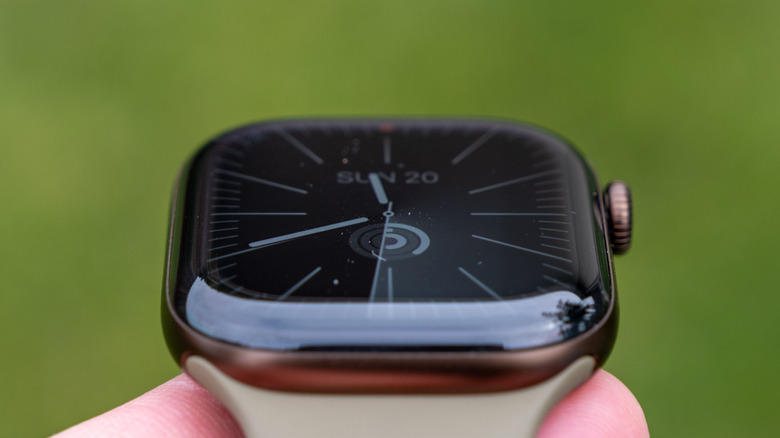
The display is the same, too, though there's no need to fix what isn't broken. The display is crisp and detailed, plus, like last year, it's very bright, peaking at 2,000 nits and dropping to one nit on the low end. That makes it easy to see outdoors even in direct sunlight. That said, Apple isn't introduced any new panel technology, nor are there any changes to how the screen looks compared to last year.
The display comes in two sizes determined by the size of watch you get. The 46mm model that I'm reviewing does give you more room for complications and text, which can be helpful, especially if you want to use the newer health-focused watch faces. I haven't actually worn the smaller model in many years, so it's hard to compare. But I do appreciate having the screen space that I have on the watch I use. All that to say, the display has been excellent on the Apple Watch for a few generations now, and that hasn't changed — it's not a reason to upgrade, but it's certainly not a weakness.
Battery and charging
Here's another thing that's unchanged — battery life. Apple rates the Series 12 at up to 24 hours of normal use and up to 38 hours in Low Power Mode. Those numbers are identical to the Series 11, which is in some ways impressive and others disappointing. It's impressive because of the fact that the new S11 chip is powering considerably more frequent health measurements in the background. And it's disappointing because, well, there's no additional battery life to help avoid charging as often. Apple says the chip's efficiency offsets the increased workload, and in my testing, that seems roughly accurate — I didn't notice much of a difference in the actual battery life of the Apple Watch Series 12 compared to previous-generation models that I've tested.
Outdoor-workout runtime is up to 10 hours — a 25% increase over the Series 11 — which is a meaningful bump if you track long runs or hikes. The bigger practical improvement, though, is fast charging. Apple says 15 minutes on the charger delivers up to 12 hours of use, and just five minutes gives enough juice for 10 hours of sleep tracking. That's handy for me given the fact that I do wear an Apple Watch for sleep tracking — so I usually charge it for 10 minutes or so while I'm getting ready for bed and then another 20 to 30 minutes in the morning when I get up and shower.
If you're looking for an Apple Watch that can get you through multiple days of use, unfortunately, this isn't it. On the one hand, I'm glad that the device at least retains its battery life despite the addition of new features. But on the other hand, there are plenty of health trackers, like those from Garmin, that routinely last far longer than Apple's wearable. I hope Apple makes an effort to improve on actual battery life in the next few generations.
Performance
The S11 chip is the first significant platform change since the S9, and it's the engine behind everything else that's new. Apple says it packs a faster CPU, GPU, and Neural Engine, along with an always-on processor that handles background tasks — like those every-five-seconds heart-rate checks — without draining the battery.
In everyday use, the Series 12 feels snappy. Apps launch quickly, scrolling through the Smart Stack is fluid, and Siri responses come back reasonably quickly. The difference isn't dramatic if you're coming from a Series 11, but it's noticeable from anything older. Siri still exhibits some processing delay on more complex queries, which seems to be a server-side limitation rather than a hardware one.
The chip also includes what Apple calls a Secure Exclave, a hardware-isolated area dedicated to processing microphone data tied to the new Audio Intelligence features. Apple is clearly trying to address privacy concerns head-on by keeping audio processing sandboxed. Whether that actually reassures people who are uncomfortable with an always-listening device is a separate question, but the architectural approach is thoughtful.
Day to day, the S11's real contribution is invisible. You don't feel a faster chip on a watch in the way you feel a faster phone. But if a faster chip is required to power the new features, then so be it.
Health tracking
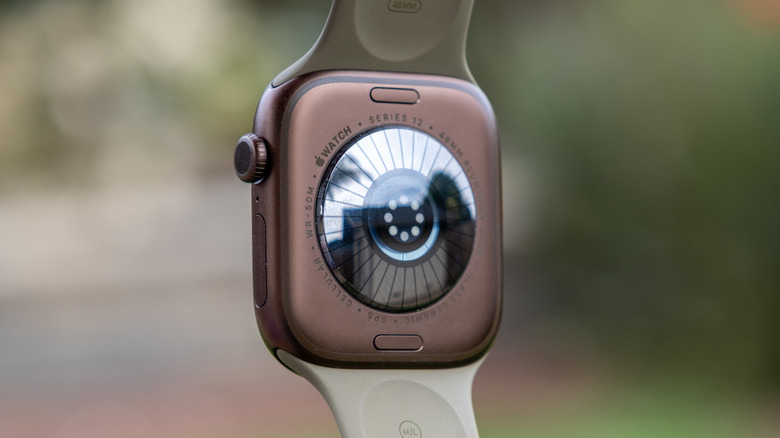
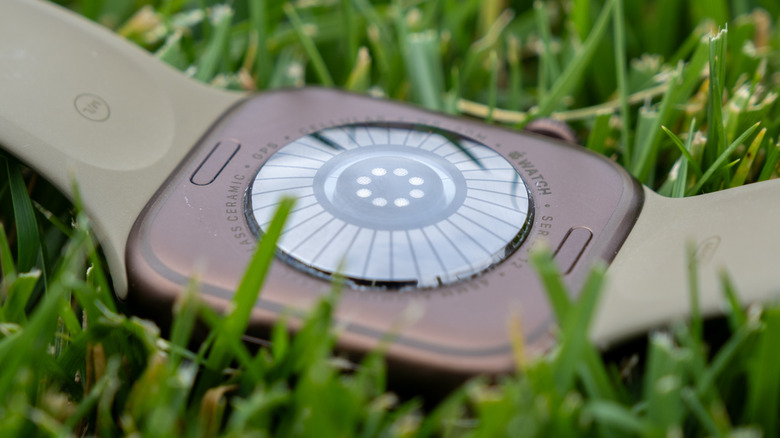
Health tracking represents the biggest change for the Apple Watch Series 12. Apple has redesigned the sensor array on the back of the watch with a second-generation electrical heart sensor, ring-arranged photodiodes, larger and more efficient green LEDs, and a larger electrode contact area for ECG readings. The practical result is that background heart-rate checks now happen every five seconds, whether you're sitting at a desk, walking, or working out, compared to roughly every five minutes on prior models when stationary. That's a dramatic increase in data resolution.
Apple claims this is the most accurate heart-rate sensing in any wearable, citing a company-sponsored study of over 1,000 participants. HRV tracking has gotten more granular too. Apple now splits it into Recovery HRV, which captures short-term stress and fatigue signals, and Overall HRV, which provides longer-term cardiovascular context. The Vitals experience adds a daytime view with finer classifications — notably off, slightly off, typical, favorable — giving you a more nuanced picture of how your body responds throughout the day. The sheer volume of data can surface patterns you wouldn't have noticed before.
The Readiness score is Apple's most direct answer to the recovery metrics offered by the Oura Ring, Whoop, Fitbit, and Garmin. It combines activity, training load, sleep score, overnight vitals, daytime heart-rate and HRV data, and recent behavior into a 0-to-10 score across four tiers. "Recover" sits at the bottom, "Go For It" at the top. Unlike most competitors, the score updates throughout the day rather than locking in each morning — a nap or a hard workout can shift it. And unlike Oura, Apple provides the underlying factors and long-term trend data without a paid subscription, which is a meaningful differentiator.
A caveat on the Readiness score: it requires at least seven nights with roughly four hours of sleep to establish a baseline, which means I've only had a few days of usable data. The early readings seemed reasonable but it's best treated as a prompt to check in with how you're actually feeling, not a definitive verdict on whether to push through a workout.
Apple also says a redesigned ML-powered pedometer delivers more accurate step counts and indoor walk and run distance, calling it the most accurate step tracking in any smartwatch. A new Steps complication on the watch face is a welcome addition — it's useful to glance at a live count without opening an app. In practice, I didn't notice an obvious leap in step-count accuracy after a week, though I'm also not someone who regularly pays close attention to my steps.
The existing health and safety feature set carries over in full. ECG, Blood Oxygen (where available), sleep stages and scoring, sleep-apnea notifications, temperature sensing, Cycle Tracking, Fall Detection, Crash Detection, Emergency SOS, and more are all present. Availability varies by region and regulatory clearance, and none of it substitutes for professional medical diagnosis, though I can't help but wonder when or if that might change. I've talked about this before, but some of the health tracking features in these kinds of wearables can be genuinely life-changing for medical scenarios. An Apple Watch was the first device to give me an indication that I might have atrial fibrillation — something that I took to my cardiologist and eventually led to surgery.
Software
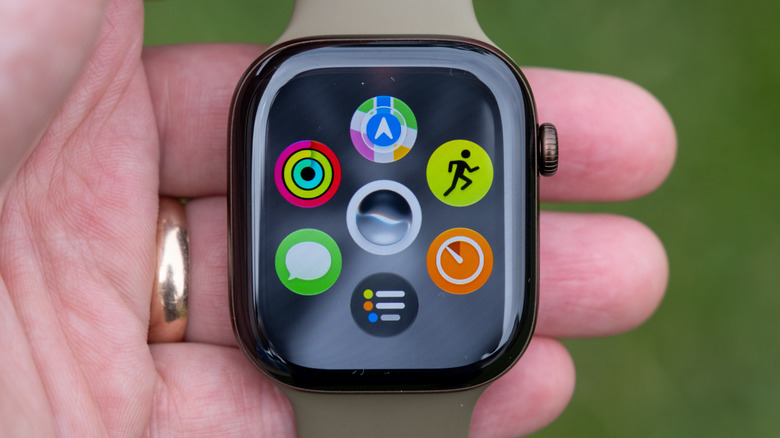
The Series 12 runs watchOS 27, which brings interface refinements that are easy to overlook but can still be helpful. The app layout now emphasizes five Siri-suggested apps alongside the Siri app and full grid access, reducing the time you spend hunting through a dense wall of tiny icons. New one-handed gestures let you single-tap to select Smart Stack widgets, double-tap to scroll through them, and flick your wrist to return to the watch face, dismiss alerts, or silence timers.
Other watchOS 27 additions include updates to Cycle Tracking, Workout Buddy, Smart Stack suggestions, and a new Siri Modular face. Some of these features reach older compatible Apple Watches too, which narrows the list of features exclusive to the Series 12 hardware.
Perhaps the most controversial software changes will come with Audio Intelligence — an always-listening feature that can summarize meetings, conversations, and other recordings. It powers features like Live Rewind, which is designed to display a text snippet of the preceding 15 seconds. Sound Recognition can alert you to sirens, doorbells, alarms, or a baby crying, which could come in handy of you're wearing headphones or have a hearing impairment.
More controversial is Siri Recap, which generates conversation summaries in the Siri app. All of it is opt-in, and Apple says raw audio is processed in isolation within the Secure Exclave, inaccessible to apps, the OS, the user, or Apple itself, and deleted immediately. Live Rewind reportedly stores no recordings and emits an audible chime plus a visual mic indicator when activated. The privacy architecture is more deliberate than what most AI-wearable competitors offer, but it's worth noting that none of the dedicated AI devices have really taken off yet. That said, I wasn't able to test these features — they weren't available during the review period.
Related is a redesigned Health app, which is also currently in beta and will roll out later this year. It has features including Insights powered by Apple Intelligence, a Longevity tab, a Health Age metric, and an optional $119 Quest Diagnostics lab panel covering over 50 biomarkers. I really like the changes, as they make it easier to see what health data actually means without having to dig through different measurements. Insights in particular is Apple's attempt to start taking on the likes of Whoop and Oura, and it offers some features without even needing an Apple Watch (though most insights do). Compare that to services that largely require not only a first-party device but also a subscription, and this could end up being another case of Apple "sherlocking" services that cost users way too much money as it is.
Conclusions
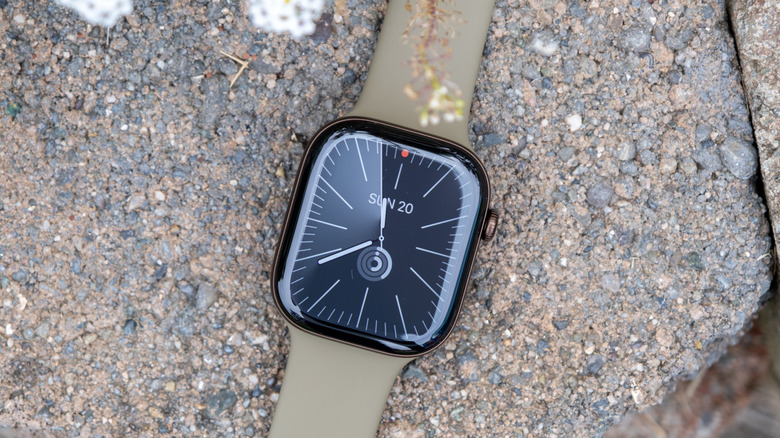
The Apple Watch Series 12's updates may be internal, but internal updates are important too, even if Apple hasn't changed the external design of the Apple Watch in a number of years now. In classic Apple Watch fashion, the biggest updates come in the form of health tracking improvements, with much more frequent and accurate tracking data, and much better presentation of that data in both the Watch and iPhone apps.
On top of that, fast charging eases the daily battery routine, the S11 chip keeps everything running smoothly without sacrificing battery life, and the sensing platform is genuinely a generation ahead of what came before. For anyone upgrading from a Series 9 or older, the cumulative improvements are substantial. Apple's Readiness score also puts the Series 12 in direct competition with dedicated health wearables like the Oura Ring and the subscription-based Whoop, with the advantage of offering recovery insights and trend data without a monthly fee.
Within Apple's own lineup, the Apple Watch SE 3 remains the smarter pick for first-time buyers who want a capable smartwatch without paying for advanced health sensors. The Apple Watch Ultra 4 is the better choice if you need a larger display, rugged build, or materially longer battery life. And if you already own a Series 10 or 11, the shared watchOS 27 features and unchanged battery rating make this a targeted upgrade rather than an automatic one. Series 11 owners in particular may find denser health sensing and partially available Audio Intelligence features a hard sell at full price. Ultimately, the Apple Watch Series 12 is worth considering for anyone upgrading from a Series 9 or older — the health sensing platform alone justifies the price.