

The OnePlus 16's Rear Lights Take A Page Out Of Nothing's Playbook
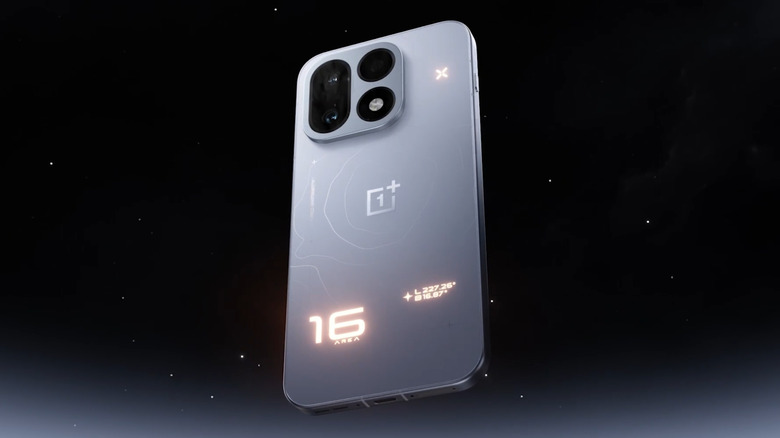
Oppo subsidiary OnePlus is setting up for a new flagship phone launch in China and the press is eating up every last bit of a tiny preview it can get. The OnePlus 16 will be the company's first major release that Americans won't be able to buy as the brand has lost its identity and halted sales in North America and Europe. The OnePlus 16 has shiny, glowing lights on the back of the phone, though. And that has people talking up a storm and making comparisons to its close competitor, Nothing.
Specifically, on what OnePlus is calling the "Tomorrow's Starlight" colorway, the company has designed an "Interstellar Lighting Effect" that's aimed at alerting owners to incoming notifications. The glass surface of the device has special three-zone lighting, each of them carved with specific designs: at the bottom-left corner, there's text reading "16 AREA;" to its right, celestial coordinates that point to an indeterminate location between the astral constellations of Hydra and Monoceros, and; an 'X-marks-the-spot' location marker at the top-right corner. It's not exactly clear what level of settings control users will have over these lights, but as far as we can surmise from previews, the LEDs are only meant to glow in warm, solar hues.
Galactic theming aside, Oppo's new OnePlus design echos a similar feature from Nothing, the phone brand founded by Carl Pei, himself a co-founder of OnePlus. When Nothing's first phone launched in 2022, it drew praise for its fashion-forward aesthetic choices that include the distinctive Glyph Interface. Nothing has changed its Glyph LEDs over the years: it started on the Phone (1) as concentric bands of white LEDs replete with user-assigned pulse patterning. The design has morphed several times since, before arriving in its current form as a retro-style pixel array on the latest Phone (4a) Pro. But Nothing, as it turns out, is just the beginning of the story.
Nothing's Glyphs weren't the first and aren't the last of its kind
Front-facing notification LEDs were once a standard feature on many smartphones through the mid-2010s. They were displaced as phone makers began expanding screens to fill as much of the surface area as possible. Some manufacturers utilized the camera flash LED as an alternate medium, but as users had to opt in for this feature, it hasn't really caught on. At the same time, the industry was gradually transitioning from using LCD panels to punchier, more power-efficient OLED displays. As each individual pixel could turn on or off, the humble always-on display became more viable as a passive notification feature. That luxury, however, doesn't come without a considerable amount of power draw.
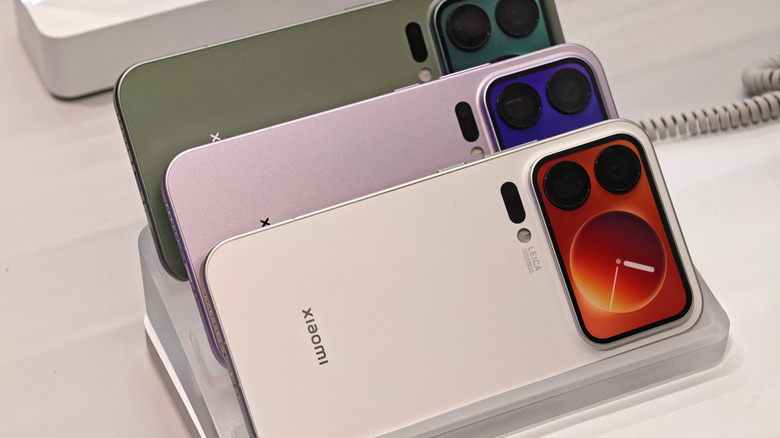
This confluence of developments would lead to the reinvention of the notification LED. Nothing, which released its first phone in 2022, has been the splashiest about its takes, but it was not the first. Asus, for example, launched its Republic of Gamers series of handsets in 2018 and they featured customizable RGB lighting in the rear from the start. More recently, Google's colorful HiLight on the Pixel 11 Pro launched in 2026. Heck, Xiaomi went even further with its 17 Pro and Pro Max, converting the camera plateau into a full-fledged, albeit tiny, screen. For our curiosity's sake, we can only hope that OEMs continue to push the envelope in the future.