

AirPods 5 Review: The Best Noise Cancellation In Affordable Earbuds
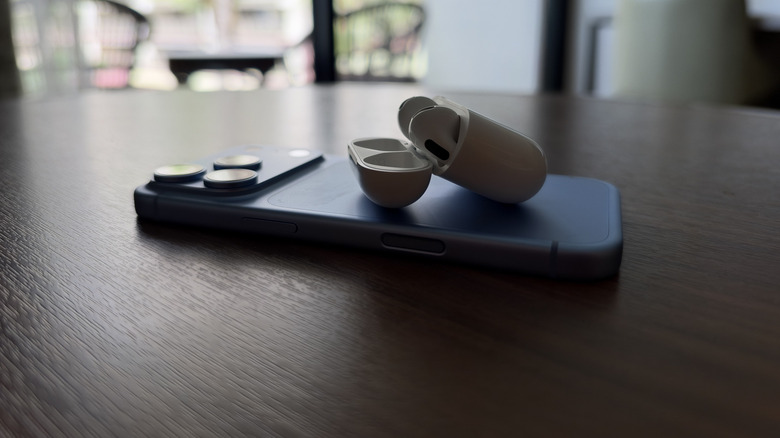
Apple charges $129 for the entry-level AirPods 5 and $149 for the version that comes with a wireless charging case. While there are again two models, Active Noise Cancellation (ANC) now comes as standard on both models, unlike with the AirPods 4. AirPods 4 with ANC cost $179 at launch, so the entry price to get noise cancellation in the AirPods lineup has dropped by $50, and the hardware has gotten even better.
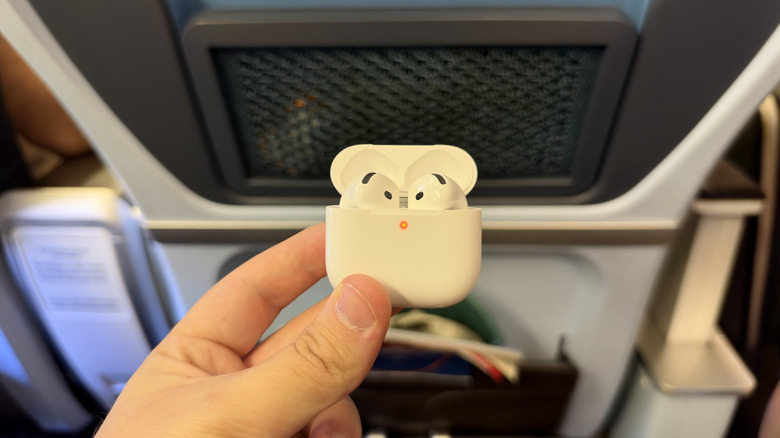
I've had the $149 model for a week. I brought them on a flight to Hawaii with me, on multiple walks outdoors, and use them for a lot of videos and listening to music at home, which is roughly how most people will use this pair of open-ear earbuds.
The active noise cancellation is arguably the best feature on these AirPods. Apple has managed some of the best cancellation I've heard in earbuds at this price without any ear tips involved, which is a software accomplishment more than a hardware one. Sound gets a small improvement from AirPods 4, but the voices tend to lose a little something along the way. Battery life is my only real complaint, however, at 4 hours with ANC switched on on the $129 model, and around 5 hours on the $149 model. AirPods Pro 3 remain the better earbuds if you're looking for Apple's best, though AirPods 5 are the better deal for many.
Design
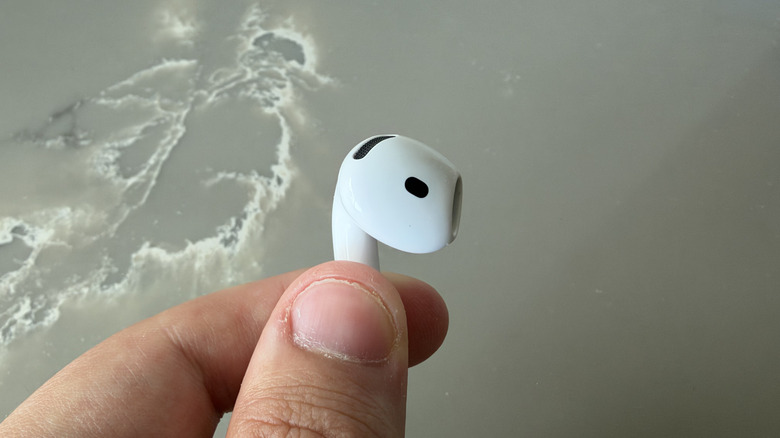
With the AirPods 5 buds themselves, nothing has changed visually. The buds are the same shape as they have been for the past few generations and weigh the same 4.3g as AirPods 4. Anyone hoping the new generation would look or fit differently will be disappointed.
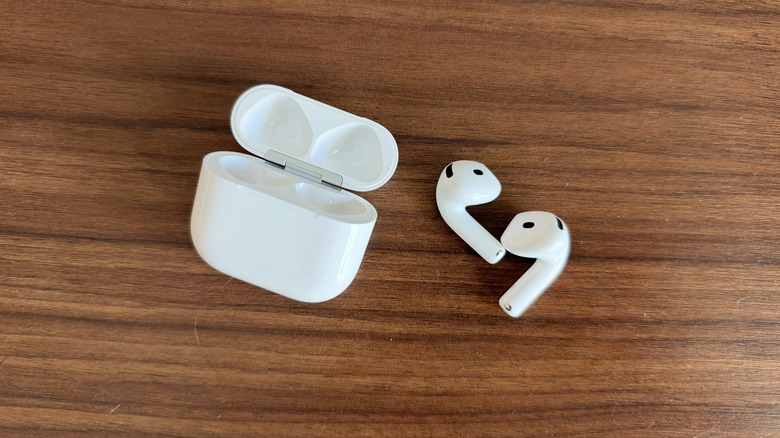
But looking at the case, you'll spot a few differences. At 34.7g, it's considerably lighter and smaller than the AirPods Pro case, and it disappears into my pocket the way the Pro case never quite does. Apple doesn't carry over the lanyard loop that the Pro case offers, though I've never once attached anything to the charging case, so I didn't miss it.
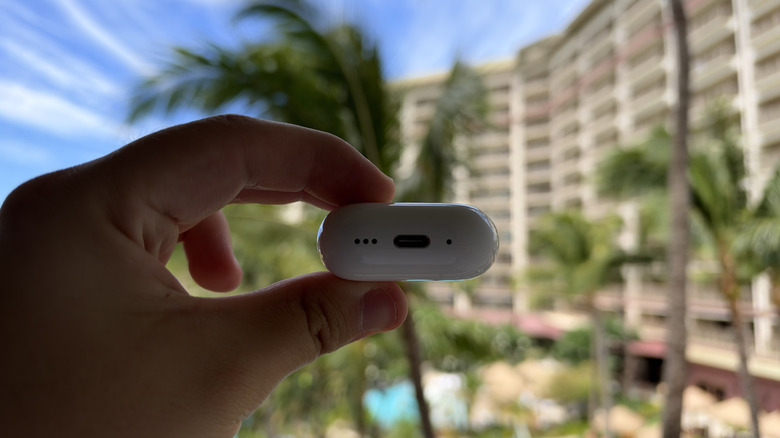
The case that comes with the $149 model keeps the built-in speaker that allow you to find the case through Find My, and individual buds can be tracked as well. I needed that once during the week when one of the buds fell out of my pocket, and it worked perfectly, which justifies Apple including the feature. To charge the case, you can use USB-C, Qi wireless charging, or an Apple Watch charger.
My one complaint with the earbuds themselves is the force sensor. Volume swipes on the stem work well and are a nice feature to have carried over from the Pros, but squeezing the stem gives you no physical confirmation at all. AirPods Pro 3 have haptic feedback for this, and the AirPods 5 going without it means guessing whether the press actually registered until the music reacts. The IP57 water and dust-resistance rating, however, is an upgrade over the IP54 rating on AirPods 4.
Comfort

Since the AirPods 5 buds have no ear tips, that also means there's no seal. Silicon ear tips create a plugged sensation and a pressure buildup that some people never get used to, and AirPods 5 sidestep that issue entirely. The one downside of this is often security and how well they fit. This was better than I expected. There's nothing to hook into or onto your ear, and nothing plugs into your ear canal, but I was never worried about one of the AirPods 5 buds dropping out while I was on a walk.
Strenuous exercise is a different matter. Tilting my head quickly would produce enough movement that I wouldn't trust AirPods 5 to stay in my ears for a run the same way I trust the Pros. The open design gives you nothing to adjust if the fit isn't quite right. Since there are no interchangeable tips, the shape either fits your ears, or it doesn't.
Since the AirPods 5 noise cancellation relies on computational work rather than a physical seal, I noticed a pressure effect in my ears that I haven't felt on other AirPods models. I gradually got used to it the more I used AirPods 5, but it was distinct enough on the first day that I checked if I had inserted them correctly.
Features
All the listening modes from AirPods Pro 2 arrive on the cheapest AirPods 5 model now. You get Transparency, Adaptive Audio, and Conversation Awareness alongside ANC on both versions of AirPods 5. The $149 model adds the volume swipe ability, wireless charging, the Find My speaker in the carrying case, as well as an extra hour of battery life.
Live Translation works, and Apple deserves credit for putting the feature on AirPods this cheap. But it is slightly too slow for a real-life conversation; by the time the translation finishes, the person you're talking to has likely moved on to saying something else, so it's better suited to listening to an announcement or for a short exchange rather than having a conversation with someone. It also needs an Apple Intelligence-capable iPhone, which rules out plenty of buyers with older handsets.
Hands-free Siri AI and the head gesture controls, such as nodding to accept a call or shaking to dismiss notifications, work across all AirPods models, including AirPods 5. iOS 27 arrived on September 14 and brought something more useful to AirPods: a three band custom EQ for any AirPods with the H2 chip, which includes AirPods 5. This lets you adjust the lows, mids, and highs for audio, which you were unable to do before. Three-band is rather thin compared to the EQ options Sony and Bose offer in their companion apps, but it's the first time Apple has let anyone tune any AirPods. Plenty of these AirPods settings arrive switched off, and the AirPods features worth enabling manually apply to the AirPods 5 as much as any other model in the lineup.
Call quality on AirPods 5 is excellent, with decent noise isolation for your voice to the person on the other end of a call. Pairing and device switching behave as they always have with AirPods and are just as easy to use as you'd expect. The hearing health features and heart rate sensing remain exclusive to AirPods Pro 3, but Bluetooth 5.3 carries over from AirPods 4.
Battery and charging
Apple claims the $129 model of AirPods 5 clocks in at 4 hours of battery life with ANC switched on and 6 hours with it switched off. The $149 model I had is rated for 5 hours with ANC on and 7 with it off. The more affordable model gets 20 hours total with the charging case, while the slightly more expensive version gets 22 hours in total, and across both, 5 minutes in the charging case gets you roughly an hour of listening.
While I didn't run a battery test myself, what I can tell you is that on my flight to Hawaii, the charging case did a lot of heavy lifting. 5 hours of battery on the buds doesn't quite cover a long-haul flight — the shortest flight in my total journey was 6.5 hours long, for example. That battery duration may not cover endurance workouts such as marathons, either, or a full day working at a desk. If you're the sort of person who drops earbuds back into their case between calls or podcasts, you'll likely never worry about the battery. But if you listen continuously, you'll probably find yourself charging your AirPods 5 pretty frequently throughout the day.
That makes battery life one of the weakest parts of the AirPods 5 package. AirPods Pro 3 can last up to 8 hours with ANC running, which is probably how you'll be using them the most. The $20 upgrade to the AirPods 5 model with the wireless charging case bags you an extra hour of battery, which is one of the several reasons it's the version I'd recommend buying.
Noise cancellation
Apple claims that AirPods 5 offer the "industry's best" ANC and will remove up to 50% more noise than AirPods 4 with ANC switched on. The "industry best" claim only covers open-ear headphones, measured against the best-selling open-ear headphones available when it ran its tests. While that's not quite the claim you might first think it is, it's still an incredible achievement for wireless earbuds that are so affordable. In fact, this is the best noise cancellation I've heard from earbuds at this price ever, and there's no physical seal doing any of the work.
Blocking out continuous noise is where AirPods 5 will perform the best. It'll cancel out air conditioning, road hums, and general background noise pretty convincingly. Aircraft noise was the biggest exception that I noticed, which is one of the use cases that matters the most to me. The engine noise stayed present throughout the entire flight, and I could hear conversations in the airport and voices from the crew on the plane or passengers in nearby rows in a way that I would never hear with my AirPods Pro 3. In fact, I often use my AirPods Pro 3 as earplugs on the plane, but I couldn't imagine using AirPods 5 that way.
Now, those results aren't particularly surprising; Apple's comparison page says AirPods Pro 3 offer up to three times the noise cancellation of AirPods 5, which more or less matches what I heard. BGR's AirPods Pro 3 review after three months covers exactly what else the more expensive model offers.
There was one other big irritation I noticed while using AirPods 5. Touching the outside grill while adjusting the fit in your ears will reset the noise cancellation, and all the noise it's cancelling out will flood back for a moment. The AirPods Pro 3 do this as well, but the larger grill on AirPods 5 is much easier to catch, and with no passive noise isolation, you can hear the whole room when it happens. Transparency mode, for what it's worth, is the most natural I've ever heard on non-Pro AirPods.
Sound quality

Apple worked on majorly overhauling the acoustics for AirPods 5, with a multi-port architecture and a next-generation adaptive EQ borrowed from AirPods Pro 3. For earbuds that start at $129, the sound quality holds up rather well against rivals. The bass has more weight than I expected from an open design. Vocals are clear, instrument separation is decent, and there's real detail across the soundscape. Against AirPods 4, the improvement is slight, and anyone upgrading from that generation for sound alone may wonder where their money went.
Music is where AirPods 5 work the best. In videos and podcasts, they fare a little differently. Speech is where I push back hardest on Apple's sound quality claims. Voices often sound flat, with the subtle modulation that puts across the speaker's personality getting lost somewhere in the audio processing. In this kind of content, the high ends are also rolled off, and everything sits a little lower than it should. For a pair of earbuds that plenty of people use mostly for podcasts and YouTube, that's a pretty big limitation.
Spatial Audio is weaker on AirPods 5 than it is on the AirPods Pro 3, with much less depth to the soundstage. Dense or complex tracks can even turn rather muddy. There's also a volume quirk I noticed that's worth knowing about if you plan on buying AirPods 5. At the same volume level, AirPods 5 play quieter than AirPods Pro 3, so you turn them up a little higher, but with no seal, that means more sound leaking out to whoever is sitting next to you. I was pretty conscious of it on the plane in a way I never am using the AirPods Pro 3.
For most people, most of the time, AirPods 5 sound pretty good. But if you care about audio quality, the AirPods Pro 3 are noticeably better.
Conclusions
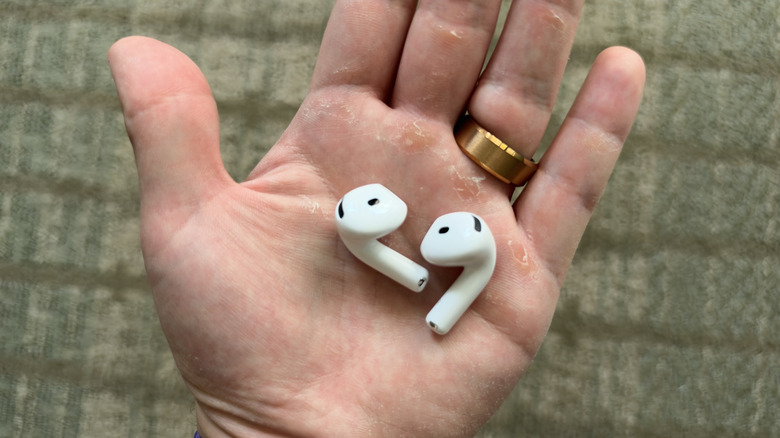
AirPods 5 are the best value offering in Apple's current audio lineup — no doubt about it. They offer noise cancellation from just $129, slightly better sound than AirPods 4, IP57 water and dust resistance, and the same software features the rest of the AirPods range offers, for less money than the generation they replace, which is rare for an Apple launch.
Before I got my hands on the AirPods 5, I wrote that they might replace the AirPods Pro 3 as my recommendation for most people, and a week has reaffirmed that initial expectation. For flights and anywhere you'd want the best noise cancellation, I'd suggest putting AirPods Pro 3 in your bag, as the noise cancellation gap is too wide to pretend otherwise. AirPods Pro 3 are also the better buy if you listen for hours without a break or if audio detail is what you're after.
But for pretty much everything else, I'd recommend AirPods 5, as they do mostly the same job for $120 less. I'd also recommend AirPods 5 if silicone tips irritate you, if you want to hear traffic while you're running outside, or if you've been using an older pair of base model AirPods and want noise cancellation without spending the kind of money AirPods Pro cost.
All that being said, the $149 AirPods 5 model is worth the extra $20 for the addition of volume swipes, the wireless charging case, and the extra hour of battery life. If you're struggling to decide between the two, I'd spend the extra $20 without thinking twice about it. Besides, after AirPods 4 owners had to pay $179 for noise cancelation, the AirPods 5's $149 price looks much more attractive.
AirPods Pro 3 will set you back $249, which buys you better noise cancellation, better audio quality, 8 hours of battery life, and heart rate sensing during workouts. AirPods 4 are currently being reduced by third-party retailers, with Amazon reducing the base model to just $99. Outside of the AirPods lineup, Bose offers one of the best alternatives in open-fit audio. It's Ultra Open Earbuds start at $299, though Bose is adding a second-generation model for the same price and a slightly cheaper $199 Sport Open Earbuds model on October 1st. However, both cost more than AirPods 5, and neither offers noise cancellation, which is the whole reason to buy the latest AirPods in the first place.