

What Is An Extended Range Electric Vehicle (EREV)?
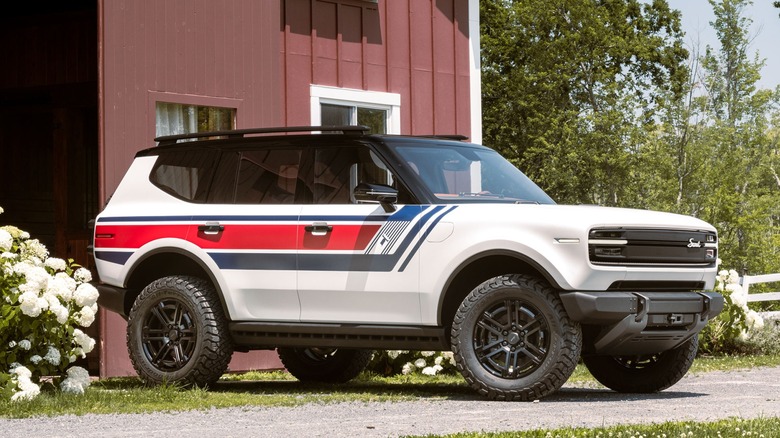
Given the ever-increasing cost of gas, you might consider investing in electric vehicles. The former don't require gas but have several noteworthy problems, such as a lack of reliable public charging stations. Meanwhile, hybrids save on gas by swapping between two motors. But a third option exists: the Extended Range Electric Vehicle, which is the antithesis of the Hybrid.
Extended Range Electric Vehicles, or EREVs, are a form of EV that use both a battery and a gas tank. However, unlike Hybrids, which swap between motors that use these separate power sources — although some consider EREVs a form of Hybrid — EREVs use a special powertrain and have only an electric motor. At first, the battery provides all the power, but after the charge falls below a certain threshold, a gas engine charges the battery to provide additional range. Think of it like an emergency gas-powered generator that activates during a blackout, except instead of powering emergency household gadgets, it charges a large battery that stores energy. Sure, that's one more step, but you don't have to use all of the electricity at once.
EV range is a touchy subject since calculating how far one can travel on a single charge isn't an exact science. You can extend your car's range in any number of ways, from coasting to keeping tires properly inflated, and sometimes EVs exceed their advertised ranges — and sometimes they fall short. While EREV batteries are smaller than those of most EVs and hybrids, estimates place EREV ranges at 600 miles or more, depending on the manufacturer. The first 120 to 150 miles come from a full battery charge, and the rest comes from gas.
Who makes EREVs?
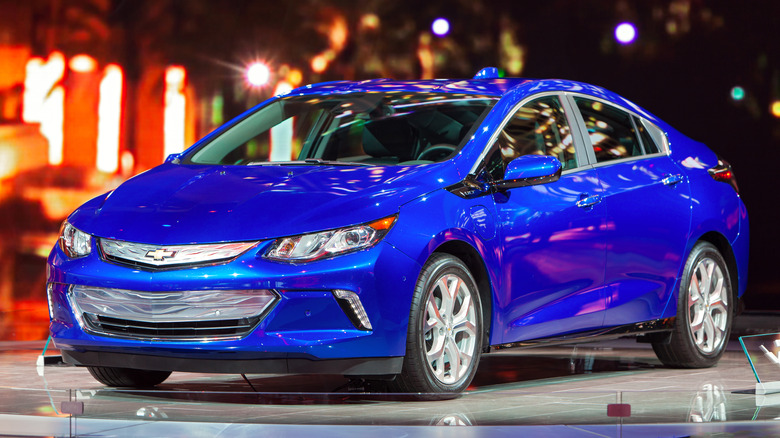
The rise in EV reliability has allowed more companies to join the electric vehicle industry and produce EVs in a variety of shapes and sizes. However, since EREVs are a relatively new breakthrough, the number of manufacturers and body styles is comparatively limited. Except EREVs have been around longer than you think.
The 2011 Chevrolet Volt is widely considered the first true EREV to hit the market. However, the technology didn't really catch on, and GM discontinued the Volt in 2019, citing lack of popularity and profitability as the key reasons. However, technology has come a long way since the Volt, and now customers are giving EREV capabilities a second chance. EREVs may also be more efficient than Hybrids because the single-engine design allows easier optimization and can squeeze out more miles per gallon.
So who is making upcoming EREVs? Scout Motors (a subsidiary of Volkswagen) is one such company, as its upcoming SUV will come in EV and EREV varieties: The Traveler and the Harvester, respectively. More well-known companies such as Hyundai, Ram, Jeep, and Ford have also announced they plan to sell EREVs, but these vehicles won't hit the market until 2028 at the earliest. But if you look through all of the plans, not a single one includes a sedan. Virtually all upcoming EREV cars are trucks and SUVs. If they're successful, we might see a compact EREV revival, which could lead to a Chevy Volt successor.