

5 Reasons To Buy An iPhone 18 Pro Max Over A Galaxy S26 Ultra
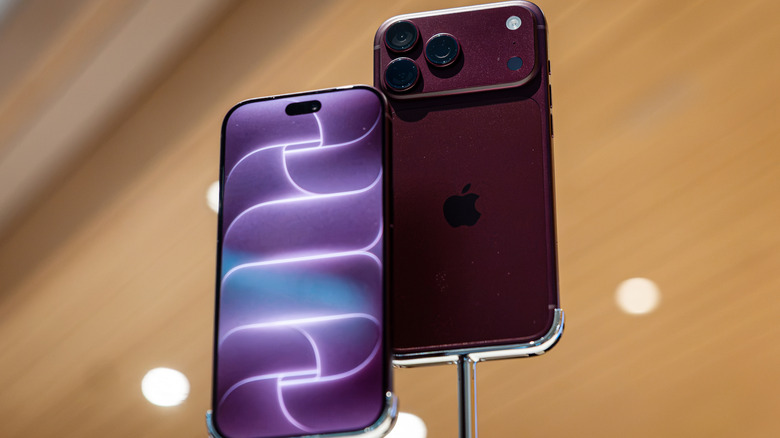
Smartphone users looking for a new flagship in the fall of 2026 have plenty of good choices to consider, including the best phones Apple and Samsung manufactured this year, the iPhone 18 Pro Max and Galaxy S26 Ultra, respectively. But if you were to choose between these two devices, which are priced similarly before instant discounts and trade-in deals are applied ($1,299 vs. $1,299.99), the iPhone 18 Pro Max may be better than the Galaxy S26 Ultra.
The iPhone 18 Pro Max features the brand-new A20 Pro chip that offers a significant performance boost over the previous iPhone generation and most Android flagships. The handset comes with a variable aperture camera that doesn't have many equivalents on the newest Android phones. It offers better battery life than the Samsung phone and features matching charging speeds. Separately, Apple has finally introduced its Siri chatbot in iOS 27, which is a good reason to choose the iPhone over the Galaxy AI that the Galaxy S26 Ultra has to offer. Finally, buying the iPhone 18 Pro Max will make more financial sense, as iPhones have historically retained their value much better than Samsung devices.
There is one category of buyer who may think twice about choosing an iPhone, and that's the longtime Android user who has already invested in the Android ecosystem. On the other hand, the iPhone 18 Pro Max is easily the better choice for consumers who already own Apple hardware, including Macs and iPads, as these devices work well together under Apple's Continuity suite of software features.
The massive performance boost
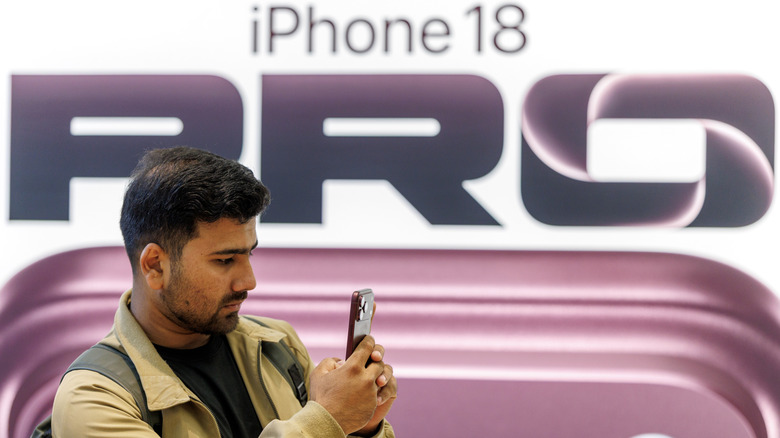
Flagship smartphones offer some of the best mobile chips in the industry, and the iPhone 18 Pro Max and Galaxy S26 Ultra are no different. They feature Apple's A20 Pro and Qualcomm's Snapdragon 8 Elite Gen 5 processors, respectively, with Apple having a significant advantage. The company has been designing its own silicon for years, allowing it to optimize the chips to offer high-end software experiences, while also increasing battery life. Samsung also makes custom Exynos processors for Galaxy phones, but it often used alternatives from Qualcomm in Galaxy flagships.
Apple devoted ample time to the A20 Pro chip during the iPhone 18 Pro presentation, stressing its design. Built on a 2 nm process (compared to 3 nm for the Snapdragon chip), the A20 Pro features a six-core CPU, seven-core GPU, and two 16-core Neural Engines. The company said the two CPU super cores offer desktop-grade performance and are "by far, the fastest in any smartphone." The GPU offers a 40% speed boost over the iPhone 17 Pro Max and features new, faster Neural Accelerators for on-device AI. Also, Apple increased the memory bandwidth by 50% and moved the RAM to the side to improve cooling. A significantly larger vapor chamber cools the iPhone 18 Pro Max to sustain performance for longer than before.
These details may not convince potential buyers that the newest iPhone is a better choice than the Galaxy S26 Ultra, so benchmark scores may be clearer. The iPhone 18 Pro Max scores 4,677 (single-core) and 12,561 (multi-core) in Geekbench 6 tests compared to 3,698 and 11,093 for the Galaxy S26 Ultra. Tom's Guide GPU testing showed the iPhone 18 Pro Max scored 79.4% stability (3DMark Wild Life Extreme) compared to 53.9% for the Galaxy S26 Ultra.
Battery life and MagSafe
Battery life is a key reason why smartphone buyers upgrade their devices, and it's another strength of the iPhone 18 Pro Max. Apple has not only increased the battery size of the handset (5,567 mAh vs. 5,088 mAh for the U.S. iPhone 17 Pro Max), but it also analyzed real-world iPhone use to create new battery usage models so it could improve the handset's battery. That's on top of the efficiency gains made possible by the new processor. As a result, the iPhone 18 Pro Max can offer up to 45 hours of video playback or up to 40 hours of streamed video playback. By comparison, the Galaxy S26 Ultra's 5,000 mAh battery offers up to 31 hours of video playback, according to Samsung.
Real-life battery tests, like the one performed by YouTube channel Mrwhosetheboss, showed the iPhone 18 Pro and iPhone 18 Pro Max both offer better battery life than the Galaxy S26 Ultra. The smaller iPhone 18 Pro lasted for 10 hours and 27 minutes, and the 18 Pro Max died after 12 hours and 32 minutes of mixed use. The Galaxy S26 Ultra's time was 10 hours, or 36 minutes shorter than last year's iPhone 17 Pro Max battery life.
The iPhone 18 Pro Max also supports charging at up to 60 W, matching the Galaxy S26 Ultra. Apple's handset will reach a 50% charge in 15 minutes. Samsung says its phone reaches 75% in 30 minutes. Both devices support wireless charging, but only Apple has magnetic wireless charging (MagSafe). Samsung hasn't built magnets into the Ultra's rear panel, but magnetic wireless charging works with compatible phone cases. MagSafe speed goes up to 25 W, while the Galaxy S26 Ultra supports 25 W wireless charging.
The variable aperture camera
The iPhone 18 Pro Max and the Galaxy S26 Ultra share plenty of similarities. Both devices have 6.9-inch screens with dynamic refresh rate support (1-120 Hz) and very similar resolution (2,868 by 1,320 vs. 3,120 x 1,440). The iPhone comes with 12 GB of RAM and 256 GB of storage in the base model, just like the cheapest Galaxy S26 Ultra model (though Samsung uses 16 GB of memory on the 1 TB version, and storage goes up to 2 TB on the iPhone). But the phones feature different camera modules.
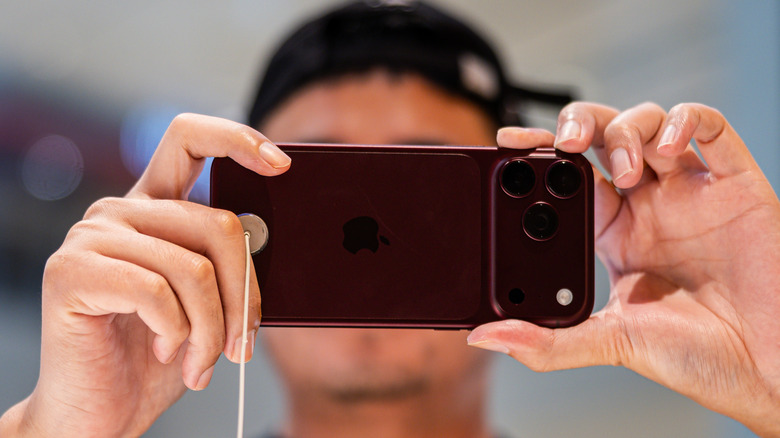
The iPhone has an 18-megapixel selfie camera that can take landscape and portrait photos without rotating the handset. The Ultra has a 12-megapixel selfie lens. On the back, the iPhone 18 Pro Max has three 48-megapixel lenses (wide, ultrawide, and telephoto), compared to four lenses on the Galaxy S26 Ultra: 200-megapixel (wide), 50-megapixel (ultrawide), 50-megapixel (telephoto), and 10-megapixel (second telephoto). Only the iPhone features a wide camera with a variable aperture lens, which allows the user to control the amount of light hitting the sensor in various scenarios.
Photographer Austin Mann reviewed the iPhone 18 Pro Max, finding that the variable aperture offers "natural, shallow depth of field when we want it, deep depth of field when we don't, and 50% better light-gathering ability in low light." His camera samples include plenty of night sky shots but also portrait images and indoor photos that highlight the variable aperture. The photographer concluded that letting the iPhone automatically choose the correct aperture may be the way to go for most people. Apple has also included more software features for the Camera app on the iPhone 18 Pro models, including manual camera controls and new Photographic Styles to go with the camera hardware upgrades.
The smart Siri chatbot in iOS 27
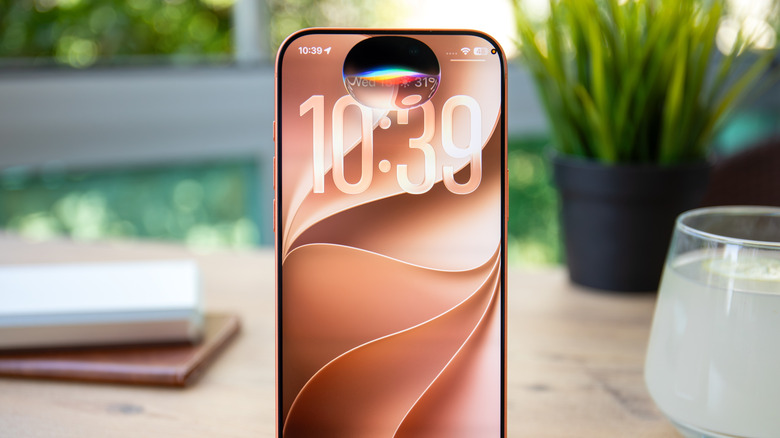
Samsung had a variable aperture camera well before the iPhone 18 Pro (the Galaxy S9), but the Galaxy S26 Ultra lacks one. Samsung also offered customers a richer native AI platform on Galaxy phones in recent years, while Apple stumbled. Despite presenting its bold Apple Intelligence vision during the iOS 18 launch event in 2024, Apple was not able to ship that complete AI experience for the iPhone 16 or iPhone 17 models. On the other hand, Samsung has been releasing new Galaxy AI features with every new flagship phone since the Galaxy S24 series in 2024.
But Apple is catching up in the AI department, and the new Siri chatbot in iOS 27 has seen positive reactions from users. Siri is now significantly smarter than before, featuring a ChatGPT-like interface. Users can interact with Siri via voice to ask it complex questions just like they would do with competing chatbots. Also, Siri can access personal details from iPhone apps to offer more contextual assistance. The big difference is that Apple Intelligence and Siri can offer better privacy than competing alternatives, including the Galaxy AI suite, which uses a mix of proprietary and third-party AI models to power AI experiences on the Galaxy S26 Ultra. Apple's commitment to on-device AI where possible, and its private AI compute infrastructure for cloud processing, favor the iPhone.
AI features do not stop at Siri, as Apple included AI editing options in the Photos app, including upcoming watermarking support (SynthID) in metadata to show the provenance of an image. Finally, Apple introduced an on-device Apple Reference Image feature that authenticates images captured on the iPhone 18 Pro models when the images are captured.
The value for money
Speaking of privacy and security, the iPhone 18 Pro Max continues to support Face ID, despite featuring a smaller Dynamic Island than its previous models. That's possible thanks to Apple's new under-display Face ID camera that works through the OLED panel. While Samsung does not support 3D face authentication on its phones, the Galaxy S26 Ultra offers an in-display fingerprint sensor, like its predecessors. Also, the latest Ultra comes with a unique Privacy Display feature that renders the entire screen or parts of it invisible from side angles.
As seen so far, each of these two handsets will offer premium experiences to consumers looking to pay the $1,299 price tag, with the iPhone 18 Pro Max having several advantages over its direct rival. That price tag is another reason customers may want to choose the iPhone over the Galaxy S model, especially buyers who upgrade phones often. Samsung phones depreciate faster than iPhones, which means buyers may recoup more of their investment by purchasing an Apple device.
According to Swappa, the iPhone depreciates by 28 to 33% in the first year compared to 47 to 66% for the Galaxy S. The company also offers real-time price data for used devices. The 256 GB iPhone 17 Pro Max has an average sell price of $1,018 (vs. its $1,199 launch price) after a year, while a used 256 GB Galaxy S26 Ultra sells at an average price of $851 (vs. $1,299.99 at launch) as of this writing. It's likely the iPhone 18 Pro Max, which saw increased demand during the preorder period, will also retain its value better than the Galaxy S26 Ultra.