

If Your Expensive Bluetooth Headphones Sound Underwhelming, This Could Be Why
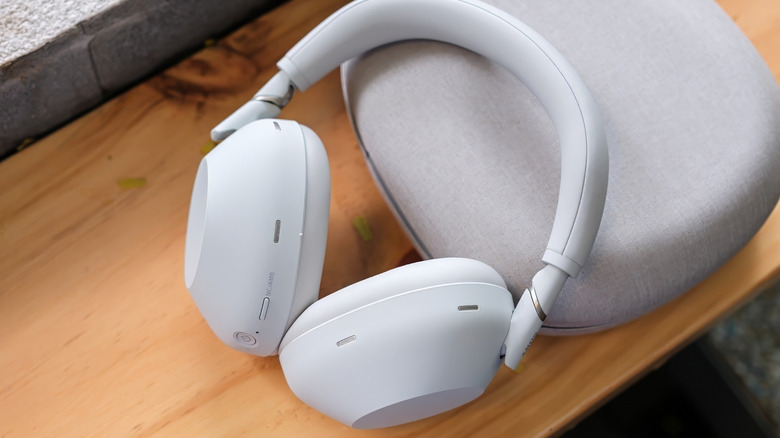
You dropped a serious chunk of change on your brand-new Sony WH-1000XM6 Bluetooth headphones. These cans are industry-lauded when it comes to noise-canceling and overall sound quality; they even support Sony's proprietary LDAC codec for enhanced playback. So why does your pricey new purchase sound fairly underwhelming? First and foremost, take a good, hard look at the types of music genres you like listening to. One pair from a premium headphone brand may have entirely different strengths than another, and genres like rock and metal are fast tells for what sounds good or bad.
Here's a personal story: the first song I ever listened to with my Sony WH-1000XM4 was Rush's "YYZ," a progressive rock track that's been around for 40-plus years; it sounded fantastic. But when I tried listening to anything from Knocked Loose or Vein.fm (intense metal bands), the mix was way overamplified. Fortunately, expensive headphones typically include impactful companion software with audio presets and/or a custom EQ. I was able to use the Sound Connect app — available for iOS and Android devices — to create a "metal-friendly," V-shaped sound profile (high treble, low mids, high bass). Problem solved.
Unfortunately, lackluster audio isn't purely attributed to a non-optimized sound profile; factors like the audio source you're streaming from and what type of device your headphones are paired to can also have an impact on final sound quality.
Beyond EQ, you'll want to be mindful of the streaming services you're using
Streaming platforms like Spotify and Apple Music are great for reliable, high-quality audio streams. Codecs like SBC and AAC rule the roost, and both streamers offer a massive archive of tunes to indulge in (millions of tracks). That said, platforms like Tidal and Qobuz are far better for those who a.) own a playback device that accepts higher-end audio codecs, and b.) own headphones that can reproduce hi-res audio.
Both Tidal and Qobuz give you access to FLAC streams at up to 24-bit/192kHz. If you happen to own a compatible Android phone, and your headphones have a USB-C port, you'll be able to experience hi-res playback. Technically, this negates Bluetooth altogether, but most premium over-ear and on-ear headphones are Bluetooth-capable regardless. Unfortunately, the iPhone audience is left in the dust; there isn't an iOS device on the market that can decode lossless audio.
You can still plug your headphones into the USB-C port on an iPhone 15 or later; wired playback is always more stable and less compressed than a Bluetooth connection. That said, the difference may be difficult to hear, particularly when comparing standard wired playback over USB-C/3.5mm auxiliary with Bluetooth audio streamed using the SBC or AAC codecs. Unless you're extremely picky about mix details, Bluetooth is probably fine for most folks.
ANC and so-so recordings can impact your experience more than you think
Active noise-canceling (ANC) is one of the greatest features ever to grace our wearable audio. But the technology isn't as simple as "turning off" distracting sounds; ANC uses microphones and noise-canceling software to attenuate them. If your expensive Bluetooth headphones are ANC-ready (most are), you may notice a difference in playback quality with ANC mixed into the mix. Try listening to the same song with ANC toggled on, then listen again with it turned off; you may notice an improvement, or it may sound exactly the same.
And don't forget the quality of the original recording. We all love the Beatles, and the Fab Four have received their fair share of catalog remasters over the years, so even an old song recorded with old tech can sound great. The same probably can't be said for an old band like Bloodrock, whose song "D.O.A." made the Billboard charts in 1971, and that's about it. The actual mix is a product of the time, and without a good remaster, an expensive pair of headphones is going to amplify fuzz, distortion, and other analog anomalies.
Cheap headphones may miss these parts of the mix entirely, but only because they can't properly render certain frequency ranges. You can also have a similar experience with modern tunes; an overly aggressive mix (e.g., too much low end, a peaking treble range) on a brand-new album can sound all the more overwhelming when pumped through an expensive pair of detail-driven Bluetooth cans.