

Owners Say These Are The Most Underrated Laptop Brands

If you've been shopping for a laptop lately, you may have noticed a few things besides those inflated prices thanks to industrial artificial intelligence and data centers. The first is probably the prominence of Apple's MacBooks in non-Apple retail stores. Next, the Windows section tends to be dominated by the likes of Lenovo, HP, Dell, and Asus—laptop brands most people can and have relied on. But have you ever considered underdog alternatives? What do owners say about those laptops?
The reality is that it's pretty difficult to find a label that's truly underrated. Many companies that produce laptops at the margins of mainstream appeal or straight up for a niche group tend to make most of their money from a companion product such as phones, TVs, or even other PC-related components. Each come with their own pros and cons, but all of them tend to get buried in search results unless you know to look for them. We'll run through a handful of brands and let you know what to expect from the people who know them the best: their customers.
LG
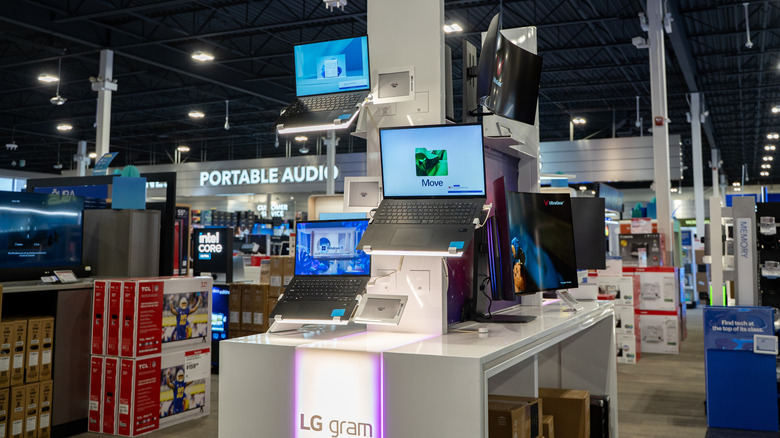
LG might be better known for TVs and home appliances, and some of you might even remember the South Korean company made phones until 2021. It is easy to overlook its thin-and-light Gram series of notebooks, which have been available since 2015. As the name implies, these devices are designed for svelteness, along with a high-performance Intel or AMD processor along with discrete Nvidia GPU for hardcore work and play on the go.
Customer reviews say an LG Gram meets their needs pretty well. While there are a couple of reports on overheating, we were surprised it wasn't a more widespread complaint, given that thin tech typically struggles with heat in general. More surprising is that the LCD screens get a fair bit of praise as they're less prone to glare. A couple more reviewers have criticized the Gram for not supporting advanced features like swappable RAM or storage, or when their discrete Nvidia GPU can't power an external display. Outside of those kinds of power users, however, LG generally gets good marks.
We did find a quick review of 2023's foldable all-screen LG Gram Fold laptop which saw a limited release in South Korea from an average consumer who shelled out close to $4,000 for the device. Their overall impression was that it felt more like a prototype than a full-fledged product, which makes sense considering folding phones still haven't reached mainstream popularity yet.
Microsoft
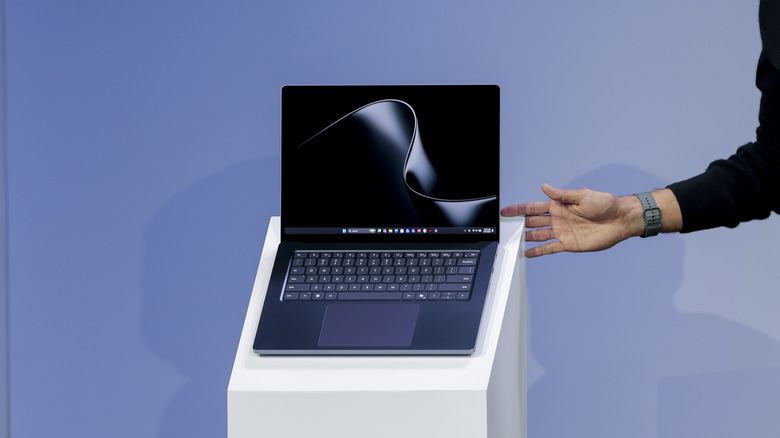
2027 marks 15 years since Microsoft began producing its own PCs under the Surface brand. It started out with 2-in-1 machines, then began including all-in-one PCs and large touchscreens before the first proper Surface Laptop made its way to buyers in 2017. The line has come a long way from its entry-level specs, with its latest "Ultra" model slated as a premier device for the new Nvidia's RTX Spark chips and graphics. We at BGR have talked about the perks of switching to a Surface Laptop, but it also helps to get backed up by owners.
Many users praise recent Surface Laptops that were powered by Qualcomm Snapdragon X-series processors, which provided long-lasting battery life. Strong build quality has also attracted some Mac users while the 3:2 displays that have been a Surface hallmark are highly favored for editing work with documents or videos. Unfortunately, rising prices are shutting more people out of buying new Surface gear, but some shoppers have expressed their willingness to pursue the used and refurbished markets for one of Microsoft's own PCs.
MSI
Taiwanese firm Micro-Star International, or MSI, is known in the PC building space as a major supplier of motherboards and graphics cards, but it's also in the business of pre-builds, handheld consoles like the MSI Claw, as well as laptops. In the latter category, the company offers several series across the price spectrum and attract the hardcore computing niche by including RGB lighting and pushing big specifications for the money.
Most sentiment about MSI falls into two bins. One is that focus on value for power with many users appreciating the games they're able to play and the benchmark scores they're able to achieve on a machine they picked up on sale. You'll also hear about getting what you pay for, especially at the lower end: Owners have complained about display and build quality with easily breakable hinges. At the same time, older budget models reportedly use more watts for the performance, suffer from thermal handicapping, and can whine with the fans at top speed.
Users do seem to report that build quality has improved, with newer affordable products including those in the Stealth series, but the consensus from longtime users is to save up for more premium models such as the Raider or Titan. That said, if you're looking for a computer that comes with its own display and keyboard and just stays open in one place all the time, you might just be tempted to dive into the bargain bins. Otherwise, perhaps look into laptop brands with better warranty coverage over anything else.
Tongfang, Clevo, and others
Much like how the auto industry has focused on streamlining baseline designs across different brands, there's a supply chain in the laptop sector that essentially does the same thing. Chinese firm Tsinghua Tongfang manufactures notebook chassis that are then filled with components by system integrators such as Tongfang itself as well as Clevo, Sager, and XMG. Eluktronics is one such integrator based in the U.S. that sells fully-built machines as well as build-your-own kits. The company also offers an external liquid cooling system for those laptops.
These brands have naturally garnered an enthusiast following with many customers trading posts about their experiences. Quality control is a persistent issue that comes up often between them, especially in cases where the screen conks out and the device has gone out of warranty. That said, many owners say they would buy from a Tongfang custom shop again, primarily to squeeze performance for value. Some people have specific itches that a niche label can scratch such as getting a high-performance laptop that runs Linux out of the box, while others value being able to put in their own RAM, storage, or even processor they've salvaged from another machine.