

iPad Mini 2024 Vs. OLED: Which Should You Buy?
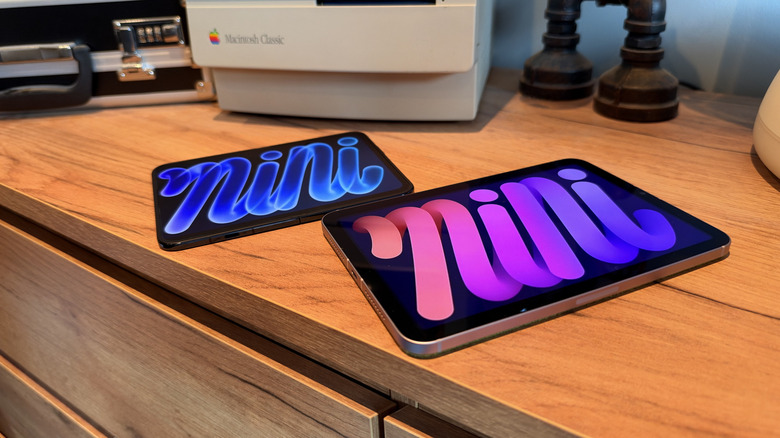
Apple announced a new iPad mini on October 26, replacing the 2024 edition of the iPad mini with faster chips and a new OLED display. It's one of the biggest generational leaps for the small iPad, and repositions the tablet as a much more capable device.
The eighth-generation iPad mini marks the first time Apple has switched screen technology on its smallest tablet since 2021, when the company ditched the device's home button for an edge-to-edge screen. The chip inside the 2026 iPad mini gets an upgrade as well, moving to the A20 Pro, plus the tiny tablet also sports an IP67 rating against water- and dust-resistance for the first time.
The cost reflects these upgrades, climbing to $699 from $599. That marks the second price increase for this part of its tablet line in 2026, after one in the summer amid widespread component shortages.
The iPad mini has always been my favorite in the lineup and sits at the top of BGR's list of the best compact tablets, so this new model already looks very appealing. But how does this model compare to the previous-generation iPad mini, which launched in 2024? Both devices are the same thing at heart: the only iPad I can comfortably use with one hand. But which one you should buy depends on what you primarily want to use your tablet for.
iPad mini 2024 vs. OLED: What's the same?
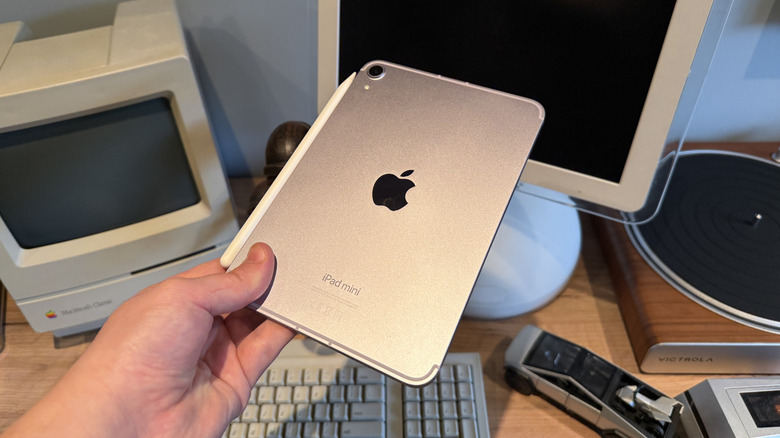
While the screen is larger, the new iPad mini is exactly the same size as the 2024 model. Apple said it fitted the new iPad mini's 8.5-inch panel into a body with the same width and height, but bezels that had reduced 24% in size. The result is a new tablet that takes up roughly the same space on a desk or in a bag as the 2024 model, though the new one is thinner too. You should be able to hold both models in one hand without your wrist complaining, which is part of the reason this compact tablet exists.
Apple Pencil support remains the same, as both tablets support the Apple Pencil Pro and Apple Pencil (USB-C), including hover features. The storage tiers also remain unchanged at 128GB, 256GB, and 512GB, with the entry configuration starting at 128GB on both models. This is a little disappointing, as some rumors suggested the new tablet might start at 256GB of storage instead.
Both have a 12MP Center Stage front camera and a 12MP Wide rear camera shooting 4K video at up to 60 FPS, and both carry a True Tone flash. Cellular specifications are available for either generation as eSIM only, since there is no physical SIM tray. Plus, both run iPadOS 27, including the new Siri AI, which has personal context, and upgraded photo editing tools. Neither works with a Magic Keyboard, and both still feature a USB-C port at the bottom.
iPad mini 2024 vs. OLED: What's different?
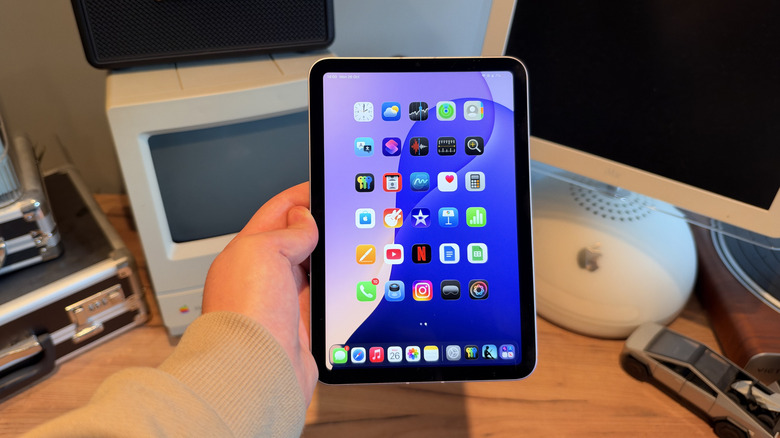
The display is is the biggest difference between the two iPad minis. The 2024 model features an 8.3-inch Liquid Retina LCD at 2266 x 1488 resolution with 500 nits of brightness. The new iPad mini switches to an 8.5-inch Super Retina XDR OLED with a peak brightness of 1,200 nits. It will hit 600 nits for full-screen SDR and HDR content and a 1-nit minimum for reading in the dark. A nano-texture option is available for the first time on the iPad mini.
The 2024 iPad mini came with the A17 Pro processor, which was a 3nm chip with a 6-core CPU, 5-core GPU, and 16-core Neural Engine. The new iPad mini sports the A20 Pro chip, which is built on a 2nm process with a 7-core GPU carrying Neural Accelerators in every core. Apple quotes up to 60% faster CPU performance, up to 2.7x the graphics performance, and up to 4.5x the AI performance. The 512GB storage configuration adds a Dual 16-core Neural Engine the cheaper versions do not get.
You'll find the new iPad mini has a thinner body, down from 6.3 millimeters to 5.4 millimeters. It's also lighter than the 2024 model. The new mini adds an IP67 rating for water- and dust-resistance, which is a first for any iPad. Alongside that, you'll find the Acoustic Display speaker system, a front camera moved to the landscape edge–like the M5 iPad Pro–Wi-Fi 7 and Bluetooth 6 through Apple's N1 chip, the C2 modem for cellular models, and fast charging. The new model's colors change from blue, purple, starlight, and space gray to just midnight and starlight.
Which iPad mini should you buy?
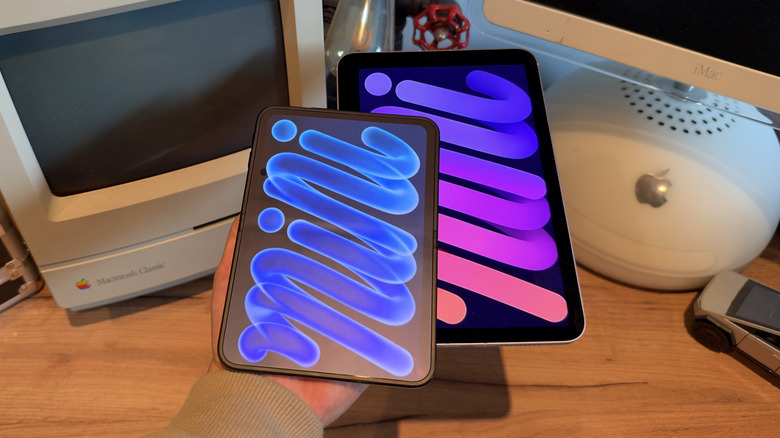
Though official reviews are pending, the new iPad mini is almost certainly the one to buy, given that you'll spend almost all of your time looking at the display. That new OLED panel fixes the weakest part of the 2024 iPad mini, and content will look an awful lot better on it. Plus, going from a tablet with 500 nits of brightness to one with up to 1,200 nits of brightness and a 1-nit floor offers a screen that'll work better both in daylight and at night. The IP67 rating and the improved speakers reinforce the same use case. If you are coming from a 2021 iPad mini or older, the new model is an easy recommendation.
If you already own the 2024 model, the A17 Pro inside can still handle everything most people will realistically do on a tablet this size. So, the upgrade should be about the screen, rather than speed. The 2024 model remains a sensible buy if you can find it discounted at a third-party retailer, since it will likely drop in price when the new model officially goes on sale in November. That is worth considering given the price increases Apple and other tech companies have rolled out across their lineups this year, as the AI boom continues to strain component supply chains.
The iPad mini's other major competitor is Apple's foldable $2,000 iPhone Duo, which many people have dubbed a folding iPad. Its screen measures 7.6 inches, just under an inch shorter than the one on the new iPad mini.