

How To Build Your Own Speakers (And When It's Actually Worth It)
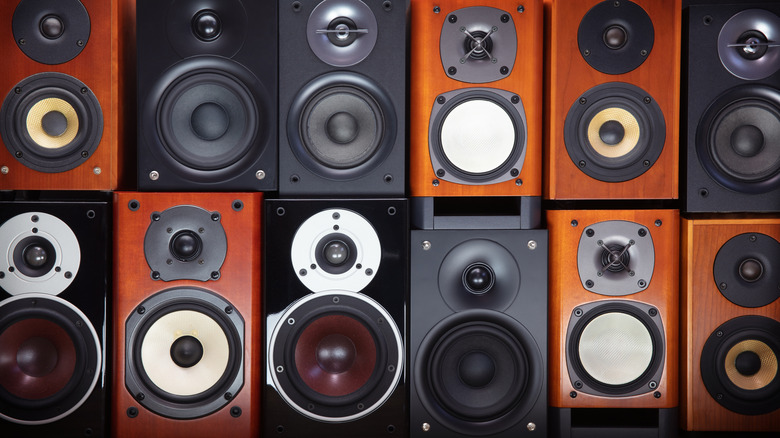
Is it cheaper to build your own speaker? For audiophiles who have a workshop setup, know a thing or two about wiring, and want to emulate mid- to high-end speakers, sure, it's a great project to take on. But for a budget entry-level speaker under $100, or speakers that are small enough to fit under a PC monitor, it's not worth it. Mass-market manufacturing supply chains are nearly impossible to beat on price alone, making a DIY build in this bracket hard to justify.
But at the mid-range to flagship level, a DIY build is well worth the time and energy, not to mention the financial savings compared to pre-assembled commercial speakers. For example, assembling a high-quality component kit like a $400 parts pack from GR-Research can deliver audio quality comparable to commercial speakers costing $1,000 or more.
At the high end, DIY builders can make world-class speakers for a fraction of retail pricing by using top-tier component kits and drivers. One builder on Instructables, for example, used Focal drivers from the same product lines found in JM Lab's Grande Utopia, a speaker that once sold for $40,000, to build a DIY version for around $3,000. That's less than one-tenth of the cost, though matching a flagship's sound depends heavily on the builder's skill.
Leading DIY audio retailers like Parts Express, GR-Research, Madisound, and DIY Sound Group offer expertly matched driver and crossover kits made for bookshelf, tower, and subwoofer projects. Custom speaker cabinet building is certainly rewarding for the right kind of builder, with high-end projects being one of the best audio upgrades for home theater enthusiasts wanting uncompromised soundstage clarity.
Technical complexity and hidden startup costs
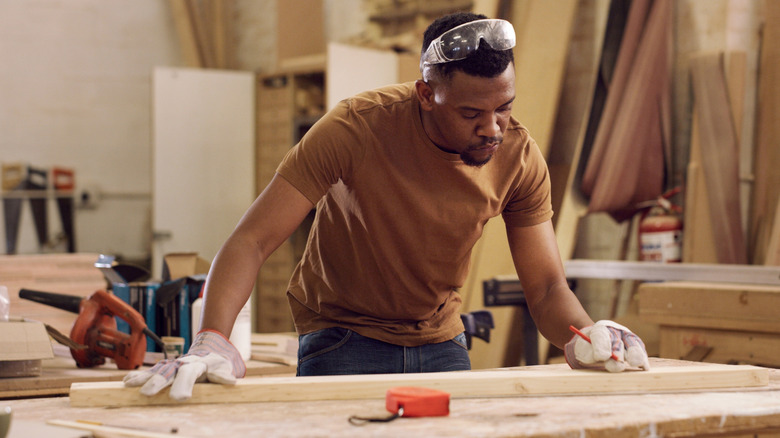
So how hard is it to build your own speakers? From an electronics standpoint, it's easier than building a PC, especially when using pre-matched component kits and pre-cut enclosures that handle all the complex acoustic mathematics. But understanding the core electromechanical components is going to make the process of building a custom DIY speaker easier to grasp.
Every basic speaker is built with transducer drivers, such as woofers, midranges, and tweeters. Then there's the passive crossover circuit alongside an airtight cabinet enclosure to separate in-phase and out-of-phase sound waves. Component kits certainly save money on speaker hardware, but beginners need to consider the hidden startup costs of setting up a woodworking environment if they want to make their own enclosures. Building a custom enclosure is going to require proper woodworking tools like table saws and plunge routers with circle jigs. Then there are pipe clamps for gluing panels together, a soldering iron for the electronics, and some nice veneers for a professional finish.
Enclosure material selection and airtight construction have to be right; otherwise, builders will introduce unwanted cabinet resonance and sound distortion. Dense, acoustically dead materials like medium-density fiberboard (MDF) or Medex combined with mitered joints and internal bracing are perfect for sturdy, non-resonant speaker boxes.
Acoustic principles, crossover design, and room integration
There are a few prerequisites to have in a builder's arsenal before diving into DIY speakers. Getting the most out of your speakers requires understanding audio setup guidelines, as no one needs to be in the middle of a project asking themselves, "What is the 83% rule for speaker placement?" In room acoustics and speaker setup, the 83% rule refers to maintaining proper proportional geometry, such as setting the distance between the left and right speakers to roughly 83% of the total distance from the speakers to the primary listening position to optimize stereo imaging.
Then there's the passive crossover circuit, which acts as the traffic controller within a speaker, directing specific frequency bands to the correct drivers. Passive crossovers use capacitors, inductors, and resistors to create low-pass, high-pass, and bandpass filters that prevent low frequencies from damaging tweeters. This can all be a lot to understand at first glance, but it's just a case of planning and mapping out components beforehand and sticking to the build plan.
Internal cabinet lining is also needed to absorb rear sound waves and prevent internal standing wave echoes from muddying the output. Lining the inside walls with self-adhesive acoustic foam, Black Hole 5, or dense polyester fill absorbs internal sound reflections without holding back driver cone displacement. Finally, ask yourself: "How many surround sound speakers does your living room actually need?" The answer will help builders decide on cabinet sizes, driver counts, and amplifier requirements. There's nothing worse than spending time on a DIY speaker setup only to find it's not fit for purpose.