

RedMagic 12 Pro Review: Classic Compromises
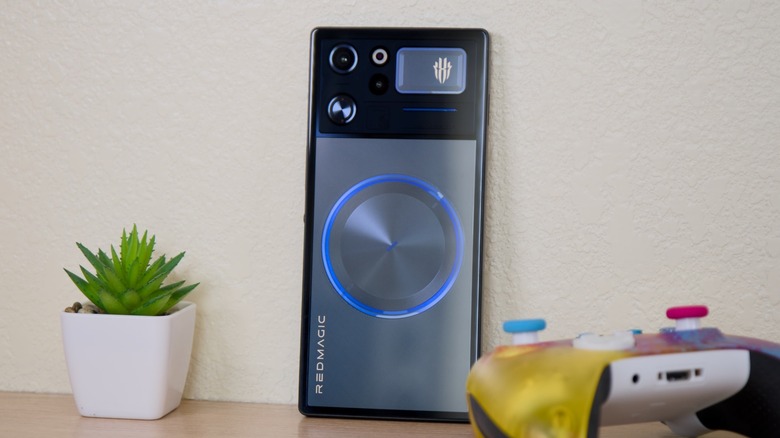
RedMagic wants to take its gaming phone series to the next level. The company recently took the wraps off of the new RedMagic 12 Pro, which happens to be one of the first phones to offer Qualcomm's new-gen chip, along with a huge 185Hz display, fast charging, and more. Of course, gaming phones have always occupied a weird niche.
They pack serious specs and gamer-centric hardware like shoulder triggers and active cooling fans, but they've also compromised heavily on things like camera quality, software polish, and general refinement. Some of those compromises are reasonable ones to make, but when other phones exist that have performance that's almost as good, but also offer high-end camera systems and better software, the compromises can still be hard to stomach.
So, does RedMagic continue that trend? At $949, how much better does the phone perform than the competition? Is it better enough to justify what is, spoiler alert, a camera that's pretty sub-par? I've been using the device for a few weeks to find out.
Design
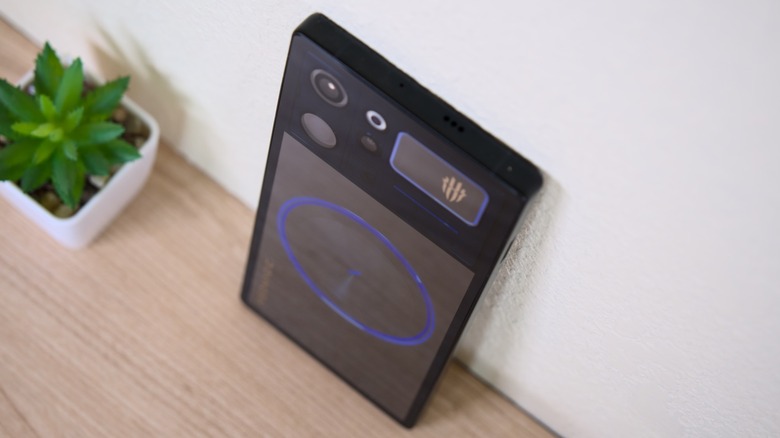
At 163.03 x 75.96 x 8.55mm and 223g, the RedMagic 12 Pro is a big phone — though not unusually so for a gaming device. It's thinner and lighter than the RedMagic 11 Pro, but again, don't expect a device that's super thin and very light. The frame is aluminum alloy with Gorilla Glass GG7i on both the front and back. It feels solid and well-built, for the most part.
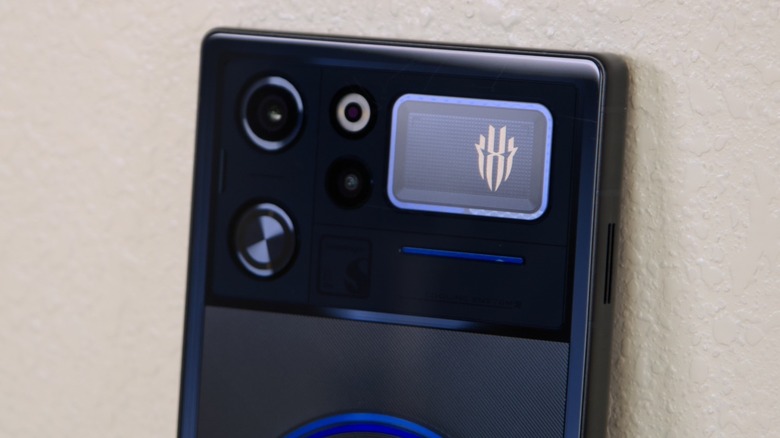
Like some previous-generation RedMagic phones, this one has a completely flat back; there's no camera bump whatsoever. That's unusual for a device with two 50-megapixel sensors, though as we'll get into later, there are clear trade-offs when it comes to camera quality. At least it means that the device doesn't rock on a table when you tap the screen.
The phone comes in three different colorways, including "Nightfreeze" (a transparent black), "Subzero" (silver), and "Skyfrost" (a blue option). My model is the black one, which is interesting enough given the transparent look, but not as cool-looking as some of the others. It also has RGB lighting, which you would expect from a phone like this.
Thankfully, RedMagic has also leaned into better water resistance for this device. It carries both IP68 and IP69 ratings — though the fan area itself is only rated IPX8, and the phone still has open air vents on either side of the body. Even with the asterisks, it's a meaningful step up for a gaming phone with an active cooling fan and an air intake, and a long way from RedMagic's own recent history: the 11 Pro was IPX8-only, and the 10 Pro was rated for IP54.
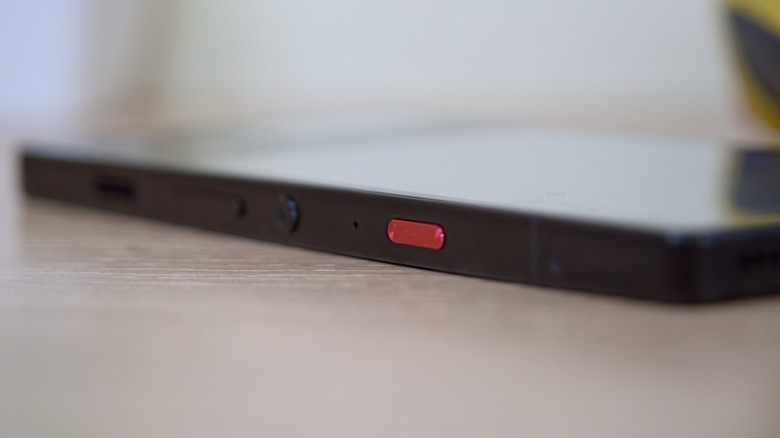
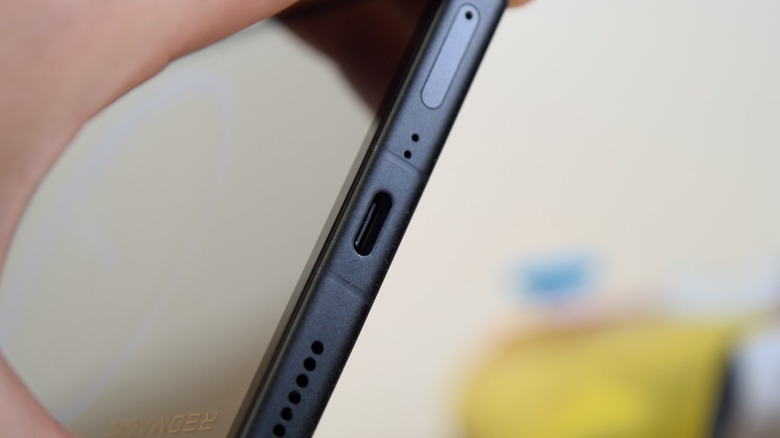
On the right edge is where you'll find the typical controls for a phone, including a power button and volume rocker. There's also a so-called Magic Key, which is a push-button this year rather than the 11 Pro's slider switch. By default, a long press of it launches and exits Game Space, and it can be reassigned to the camera shutter, the flashlight, the voice recorder, translation, or mute/vibrate. There are two 520Hz shoulder triggers for gaming, which might come in handy for gaming without a dedicated controller. On the bottom of the phone is the USB-C port.
Like most gaming phones, the RedMagic 12 Pro isn't quite my style. But as far as gaming phones go, it looks and feels solid overall.
Display
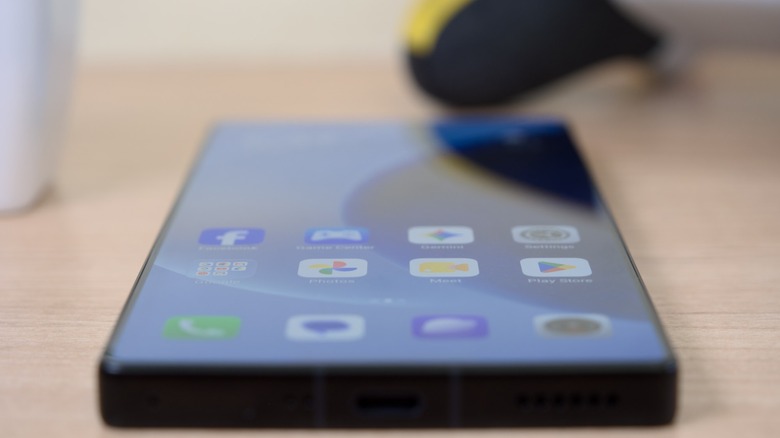
The RedMagic 12 Pro offers a 6.85-inch OLED display. It has a 2688x1216 resolution with a pixel density of a solid 431 pixels per inch. More interesting than that, however, is its refresh rate. The device has a full-screen 185Hz refresh rate, which the company says is enabled by a proprietary G1 display control chip that also supposedly cuts display power consumption by 30%.
In practice, the display looks very good. Colors are vibrant and reasonably bright, plus they're pretty accurate. RedMagic rates peak brightness at up to 5,000 nits, though I never got close to that. In fact, even with HDR content, I measured only 1,769 nits, which is still reasonably bright, but nowhere near RedMagic's claim. It was able to hold that brightness over time, though, and didn't throttle at large window sizes. In fact, my peak brightness measurement was at 100% window size, and at smaller windows, brightness measured lower, which is unusual.
Is this the best display out there? No. There are some things missing from it: For example, while it can reach very high refresh rates, it can't lower its refresh rate all the way down to 1Hz to save on battery. The panel isn't LTPO, so at its slowest, it sits at 60Hz. In Auto mode, it ranges between 60Hz and 144Hz, with 185Hz best thought of as a game-gated mode, rather than an everyday refresh rate. While the brightness is high enough, it could be higher, especially for outdoor use. And, while the resolution is perfectly fine, there are higher-resolution displays. All that said, content looks good, and most will be perfectly happy with the display on offer here.
Performance
Powering the RedMagic 12 Pro is Qualcomm's Snapdragon 8 Elite Extreme Gen 6, Qualcomm's latest and greatest flagship processor. The device is available with either 12GB or 16GB of RAM, paired with 256GB, 512GB, or 1TB of storage. There's no 24GB RAM option this year (the 11 Pro offered 24GB with 1TB) so the ceiling has actually come down at the top of the range, which is perhaps unsurprising given the RAM crunch.
RedMagic touts 40% better GPU power efficiency, 37% better CPU power efficiency, and 35% better NPU performance over the previous generation. Those are Qualcomm's platform-level figures, and real-world results depend heavily on thermal management. Thermals, however, happen to be one of RedMagic's greatest strengths. The so-called AquaCore 3.0 cooling system uses dual-loop liquid cooling with what the company describes as "AI server-grade fluorinated coolant," a large vapor chamber to spread heat across a wider area, Liquid Metal 4.0 thermal compound, and a 25,500 RPM turbo fan.
All that said, the RedMagic 12 Pro does perform very well. In Geekbench 6, it hit a single-core score of 4,090, which is very impressive. Multi-core performance is very good too, though perhaps not as much of a leap. At 11,916 the 12 Pro lands behind the RedMagic 11S Pro's 12,148 — though the 11S Pro runs a higher-binned "Leading" variant of the Snapdragon 8 Elite Gen 5, so a small deficit there is about what you'd expect rather than something strange.
Sustained performance is complicated, too. Over the 20-loop Wild Life Extreme stress test, the 12 Pro opened at 8,599 and fell to a floor in the mid-6,000s within about 10 loops, finishing as low as 5,555. That means it gives up roughly a third of its peak performance and then holds there. The 11S Pro, by comparison, held 81% and never dropped below 6,575 — again with that higher-binned chip. Compared to today's mainstream flagships, the 12 Pro still finishes ahead of the Galaxy S26 Ultra and the OnePlus 15 at their own sustained minimums.
And, of course, day-to-day performance on the device felt snappy, as you'd expect from a top-tier Snapdragon chip backed by active cooling. Apps launched quickly, multitasking was smooth, and the phone didn't heat up nearly as much as passively cooled phones tend to during extended use.
Battery and charging
The 8,400mAh battery is one of the largest you'll find in a flagship smartphone. It's up from 7,500mAh in the RedMagic 11 Pro — a 12% increase — and it fits inside a phone that's actually thinner and lighter than its predecessor. RedMagic claims 25 hours of video playback, 29.1 days of standby, and 9.09 hours of "Wuthering Waves" at full framerate. In my video playback test, which involves the display brightness being set to 200 nits and Airplane Mode on, I actually hit over 30 hours of playback, which is a good result. In more normal day-to-day use, I never worried about the phone losing power before the end of the day, and I think plenty of users will be able to stretch the device to two days.
Charging speeds are strong, too. The RedMagic 12 Pro supports up to 80W wired charging and 80W wireless charging, which is pretty neat; though as expected, you'll need RedMagic's own chargers to hit those speeds. Note that neither one comes in the box, though: Unlike the 11 Pro, which shipped with a brick, the 12 Pro ships with just the cable. With the appropriate chargers, I got to a full charge in around 66 minutes on a wired connection, and a little over 87 minutes on a wireless connection.
Camera
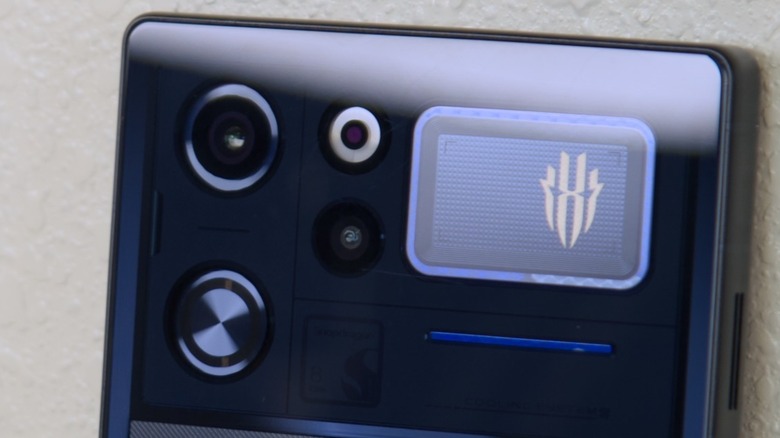
Gaming phones and great cameras have historically been a tough pairing, and RedMagic hasn't really been known for photographic excellence. The 12 Pro takes a dual-camera approach on the rear, pairing a 50-megapixel main sensor with a 50-megapixel ultrawide camera. It's a reasonable setup, but missing a dedicated telephoto lens puts it at an immediate disadvantage next to flagships like the iPhone 18 Pro and Samsung Galaxy S26 Ultra in terms of versatility.
The main camera resolves decent detail in good light, and while the detail isn't incredible, it stays fine as lighting gets lower. Colors aren't amazing, though. Automatic shots are pushed well past natural saturation in bright light, and while at times that can look "punchy," other times it just looks wrong. The absence of a telephoto camera is bad enough, but plenty of phones can still take decent shots at lower levels of crop. That's not quite the case here: As you move towards 4x or 5x, things fall apart pretty quickly.
The ultrawide is a step down in every dimension, too. Even in good light, it's visibly softer than the main camera, and it's the first lens to give up on bright highlights. Skies and windows blow out, whereas the main frame still holds detail. It's fixed-focus, with no autofocus, so close-up wide shots aren't an option either. For a system already short a telephoto lens, a soft, focus-locked wide-angle means there's no versatile second option at all. In low light, colors get worse, and while detail doesn't take a dive as quickly, it's still not as good as in brighter lighting
Up front sits a 16-megapixel under-display camera that RedMagic calls its ninth-generation UDC. The advantage to an "under-display camera" is obvious: No notch or punch-hole, which means an uninterrupted display. For a gaming phone, that might be a good trade-off, as the cutout won't interrupt your gaming. RedMagic says it uses AI to reduce the glare, ghosting, and haze that have plagued under-display cameras in general, and claims the camera "disappears" when not in use. Indeed, I found it very hard to see the cutout when the camera wasn't being used.
Under-display camera tech has improved over the past few years, and the RedMagic 12 Pro's front camera handles decent lighting adequately — though it's the softest lens on the phone, and no amount of AI processing fully hides the diffusion layer sitting in front of it. Quality drops off faster in dim light than the rears do, too. Compared to a conventional front camera like the 18-megapixel sensor on the iPhone 17 Pro, the RedMagic 12 Pro's selfie output is noticeably softer. For video calls and quick selfies in decent light, it works, but only just; and for any selfie you plan to keep, you'll want to flip the phone around.
If photography matters to you as much as gaming does, this probably isn't your phone — though to be fair, it was never designed to be. The camera system as a whole is competent, but that's it. The main camera is fine at best, and the ultrawide is quite soft and blows out highlights the main lens keeps. Add in no telephoto and a very soft front-facing camera, and you have a system that isn't going to compete with similarly-priced phones that aren't targeted at gamers.
Software
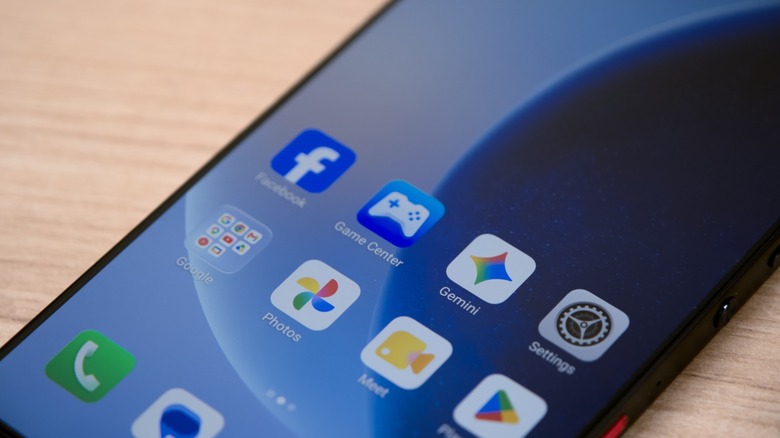
The RedMagic 12 Pro ships with RedMagic OS 12, built on Android 17. It's not my favorite implementation of Android by any means, but it's perfectly fine. As you would expect, Google Gemini integration is baked in, alongside a RedMagic AI input method and Game Space AI assistant.
Game Space is the hub for gaming-specific software, and it's been expanded considerably. The most interesting addition is X-Gravity, which lets you log into your Steam account directly on the phone and access Steam games. There's also a revamped PC Emulator with Steam Workshop and achievement support, plus a Host Mode that connects the phone to an external monitor with keyboard and mouse control. The concept is ambitious — positioning the phone as a legitimate PC gaming stand-in — and while actual mileage depends on the specific games and how well they run through emulation or streaming, having the option is neat. It won't truly replace a dedicated gaming handheld or PC for most people, but it adds versatility that few competitors even attempt.
There is plenty of bloatware, though. There are plenty of extra apps, including games you probably don't want and won't ever play. Thankfully, many of the extra apps can be removed, but it's still annoying that you'll have to do that in the first place. Again, the software is still fine: Just don't expect the level of polish you'll get from Google's Pixel phones, and don't expect it to stay current for long either. RedMagic promises only two major OS upgrades and three years of security patches in the U.S. (five years in the EU and UK), which is well short of the likes of Samsung and Google, which offer seven years of both.
Conclusion
The RedMagic 12 Pro doesn't flip the concept of a gaming phone on its head, but it's still a very good gaming phone. The combination of a 185Hz display, a Snapdragon 8 Elite Extreme Gen 6 chip with active cooling, and a huge 8,400mAh battery makes for a phone that's not only great to game on, but remains great to game on for hours on end.
As you might expect, there are some pretty clear compromises. The camera is the most obvious one: It's sub-par at best, and outright bad once the light drops, or you ask for any real zoom.
At this price, it also faces tough competition. It is one of the first phones with a Snapdragon 8 Elite Extreme Gen 6, but plenty more are coming, and many of those will offer better camera systems by a wide margin. They won't, however, have the same approach to thermals, nor will they offer the trigger controls for gaming or the 185Hz display. You'll have to decide for yourself if those things are important to you.