

Does Amazon Photos Actually Have 'Unlimited' Cloud Storage?
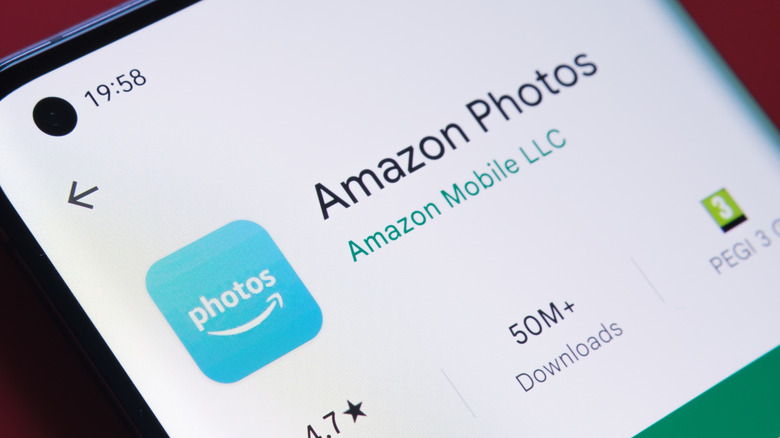
Cloud storage has become one of the most effective ways to manage large amounts of data, solving the restrictions of physical data storage. Losing a device doesn't mean losing data — backed-up files can be accessed through different devices with ease, and there aren't space constraints to storing large databases and galleries. Amazon Photos isn't as popular as some competitors like Google Photos, but its promise of unlimited cloud storage seems too good to pass up on.
That's right, Amazon Photos gives Prime users unlimited cloud storage for storing pictures. It's one of the many Amazon Prime perks people don't typically know about. It's also built for photo nerds, allowing you to upload images without any compression, which means they retain their original resolution and size.
For instance, a ProRAW Max 8K file shot using an iPhone 18 Pro or an ARW image capture from a Sony Alpha 7R V camera can be upwards of 100MB in size. If you're on the free 15GB plan on Google Photos, this means you'll run out of storage after backing up just 150 of these images. Upgrading to a terabyte plan means you get to store around 10,000 pictures, but that's hardly enough for a serious shutterbug on vacation. Amazon Photos allows you to upload hundreds of thousands of photos that take up multiple terabytes at no additional cost if you have a Prime membership.
Google offered a similar deal to Amazon's with the first Pixel phone in 2016, providing owners of the phone with unlimited cloud storage for files uploaded from the device. However, the company quickly toned this promise down with succeeding generations (though you can still use an original Pixel phone for unlimited cloud storage). As you might expect, Amazon Photos places its own restrictions on users for the feature to remain financially sustainable.
The unlimited cloud storage is only for images

The biggest caveat is that this storage is purely for image files, meaning users cannot use Amazon Photos' unlimited cloud storage to back up video files. Instead, Amazon gives you a separate 5GB to store videos. Getting extra storage for video costs $1.99 monthly ($19.99 annually) for 100GB, or $6.99 a month ($59.99 annually) for 1TB. Another related restriction is that certain moving image formats, such as Google Motion Photos and Samsung Motion Photos, are not supported — though iOS Burst Photos and Live Photos are.
Amazon also prohibits using Amazon Photos' unlimited storage commercially. You can still upload your entire high-resolution professional photography portfolio, but getting flagged as commercial use can lead to a ban. This only really happens if there are multiple people managing an account or if you're constantly sharing album links with clients, but it's still a restriction absent from competitors like iCloud and Google Photos. Users also express concerns with how Amazon manages data, but trusting any third-party cloud service provider inherently carries some risk.
Amazon Photos vs. Google Photos, Apple iCloud, and other cloud storage providers

Whether you should choose Amazon Photos over other cloud services depends on your needs. Amazon Prime costs $14.99 monthly or $139 annually ($7.49 monthly or $69 annually for young adults and students). This is quite a bit more expensive than competitors if used purely for cloud storage: 2TB of storage costs just $9.99 each month on both Google One and iCloud+, with smaller amounts costing as little as $0.99 monthly for 50GB on iCloud+ and $1.99 monthly for 100GB on Google One. However, getting a Prime membership comes with various other benefits as well, including Prime Video streaming, Amazon Music, faster shipping, and exclusive discounts.
If you're interested in the other perks that come with an Amazon Prime subscription or are already a Prime member, Amazon Photos might be your best choice for cloud storage — especially since you get it for free with Prime. However, it's not worth opting for Amazon Prime just for unlimited cloud image storage unless you're storing more than 2 TB of data, as other options provide better value for smaller libraries. Even if you have Amazon Prime, it might be worth considering a separate cloud service if you plan to back up large libraries. This is because dedicated cloud service providers like Google Photos offer a better user interface, a smarter search feature, and more privacy options.