

7 Of The Best Home Speakers With HDMI eARC Support

We may receive a commission on purchases made from links.
HDMI ARC and eARC aren't the most eye-catching A/V selling points for day-to-day media enthusiasts, but for those who yearn to experience excellent audio fidelity on a relatively simple TV setup, they're of utmost interest. You may have noticed ARC or eARC ports on smart TVs or soundbars before, but these connections also appear on a handful of bookshelf speakers, floorstanding speakers, and other non-soundbar speakers.
ARC, which stands for Audio Return Channel, is an HDMI protocol that enables audio passthrough — albeit compressed — from systems connected to your ARC-enabled TV to your ARC-enabled external speakers (instead of through your TV's built-in speakers, which tend to deliver lesser audio quality than even cheap soundbars). ARC is a boon for minimalists who want audio from multiple video sources, such as consoles and Blu-ray players, flowing seamlessly from their TV to their external speakers.
eARC is the enhanced version of ARC that came out in 2017 alongside the HDMI 2.1 spec. It supports higher-quality, uncompressed audio and reduced latency owing to its beefier bandwidth compared to ARC. eARC can accommodate premium codecs like Dolby Atmos and DTSX, but support varies depending on manufacturers and hardware compatibility.
All the speakers herein are among the best eARC-enabled home audio options you can get, with each one offering stupendous sound and an overall hefty feature set with few actual drawbacks (unless you consider high cost a drawback). Beyond having an HDMI eARC port, each selected speaker system had to earn respectable ratings across the board from reputable outlets and be named the best option in a particular category. Options exist for most price ranges, but because eARC is a "premium" feature, no budget speakers made the cut.
Edifier M90
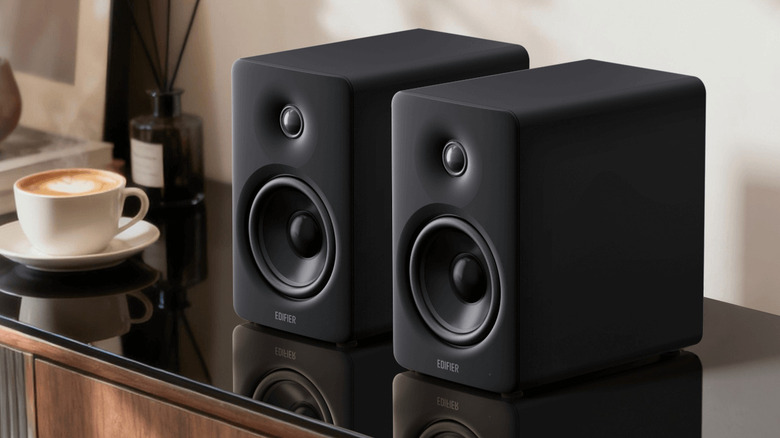
If cost is your foremost consideration in an eARC-enabled sound system, the $370 Edifier M90 speakers are a solid option. They have a remarkable feature set for the money, including impressive connectivity chops. Besides HDMI eARC, they come with USB-C, optical, and 3.5mm input jacks, as well as a subwoofer out. They also support the hi-res LDAC codec via wireless Bluetooth 6.0, which is great news for Android users eyeing this unit. With its versatility, it could feasibly replace other parts of your setup.
Despite being so compact, these are active speakers with a Class-D amp. Even with a 4-inch aluminum mid-bass driver and a frequency response range that bottoms out at 50Hz (and caps at 40kHz), the M90s deliver exceptionally well on bass, with no dedicated sub necessary. Per Headfonics, they specifically have "very good bass response through HDMI (eARC)." The clarity on these speakers is consistently praised, although TechRadar noted slightly weak treble from the speakers' 1-inch silk-dome tweeters. Then again, The New York Times' Wirecutter had the opposite impression, and it even marked the M90s as its top powered bookshelf speaker for stereo audio.
These speakers come with an omnidirectional remote control for ease of use, and the Edifier ConneX companion app allows you to tweak EQ settings to your heart's content. The speakers aren't strictly meant for TV use, either. Standing at under half a foot wide and roughly 8 inches tall, the M90s could easily fit into a home office or gaming setup — in fact, SoundGuys specifically said they work "just as well on a desk as [they do] beside a TV." They might not be the cheapest option for upgrading your gaming station, but they are among the most affordable and versatile compact audio solutions with HDMI eARC.
Klipsch The Fives II
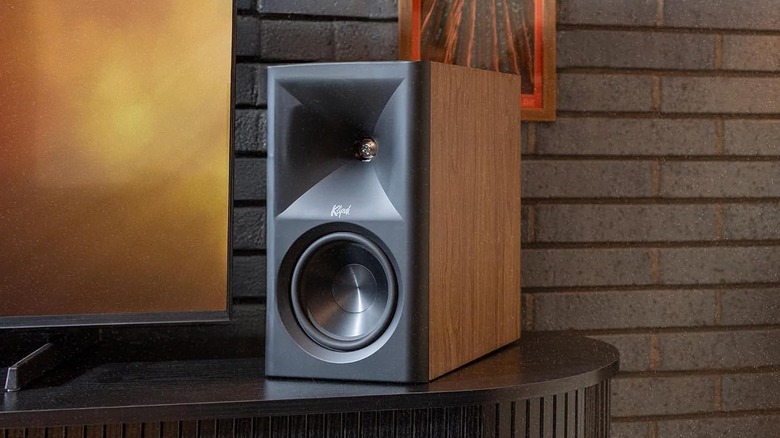
For a lifestyle option with depth, the Klipsch The Fives II are compelling. Men's Journal cited them as the best bookshelf speakers of 2026, pointing out their extreme level of detail and wealth of connectivity options. These include HDMI eARC, USB-C, optical, and even RCA phono connections for use with a turntable sans preamp, plus a subwoofer output. The powered bookshelf speakers also have wireless connectivity, with Bluetooth and Wi-Fi support for use with services like Spotify Connect, Qobuz Connect, and Apple AirPlay 2.
The Klipsch The Fives II support Dolby Atmos over their HDMI 2.1 eARC port, which is an upgrade from the preceding Klipsch The Fives. This feature was made possible with the help of engineering by Onkyo, Klipsch's sister company. Onkyo makes some of the best AV receivers out there, so the fact that it designed the amp in these bookshelf speakers, complete with input switching and Dolby Atmos decoding, is quite the selling point.
Each speaker features 5.25-inch woofers made of Klipsch's own material known as "Jet Cerametallic," an anodized aluminum compound coated with ceramic, which ostensibly yields more accurate, full-bodied sound reproduction. The primary speaker features manual volume and source controls, and the system comes with a backlit remote control. The Klipsch Connect app is, according to Wired, easy to use and helpful.
All that is available wrapped in wood veneer (per Klipsch custom) that stands about 13 inches tall. At $1,349, the Klipsch The Fives II cost substantially more than some competitors, but that's to be expected from a speaker system with premium features like eARC and Atmos support, which Wired believed "more than justifies the higher price tag."
PSB Alpha iQ
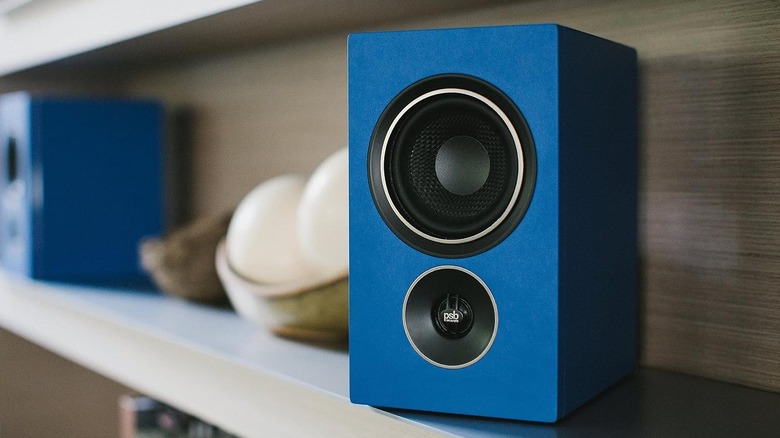
Yet another powered bookshelf speaker with wireless streaming, the Canadian PSB Alpha iQs defy the aesthetic conventions of Hi-Fi — making them go "from off-putting to accessible," as Trusted Reviews put it — with their vivid color options, teensy form factor, and overall minimalist design. These $1,499 speakers are just shy of 10 inches tall, yet they still deliver wide, balanced sound for a TV or desktop setup. They're not quite small enough to fit underneath your computer monitor, but they're remarkably sized given what they offer.
Future Audiophile highlighted these as one of the best-value audiophile products of 2025, and in a separate review, it noted a wealth of relevant features beyond HDMI eARC support. These include bountiful connectivity and streaming options (including BluOS), surprisingly competent bass, and 180 watts of energy-efficient Class-D amplification pushed through a 4-inch polypropylene mid-bass driver and a 19-mm aluminum-dome tweeter, which sits beneath the woofer for improved performance when the speakers are placed high.
Trusted Reviews pinpointed eARC as a key feature on these speakers, and while they don't support Dolby Atmos or DTS (only aptX HD via Bluetooth), they still deliver a notably consistent, immersive, and "vigorous" sound regardless of connection type, per AVForums. They also have a handy subwoofer output so you can configure a 2.1 setup, if you wish.
PSB did follow up the Alpha iQ in June 2026 with the eARC-enabled iQ1 and iQ2, which are distinct from PSB's Alpha product line. Since they're so new, they haven't been tested or reviewed as widely as the Alpha iQs have been, but one reviewer at Ecoustics did note significant eARC connectivity issues with the iQ2s. If PSB is your top choice for an eARC-ready setup, the previous-gen Alpha iQs are more reliable.
Cambridge Audio Evo One
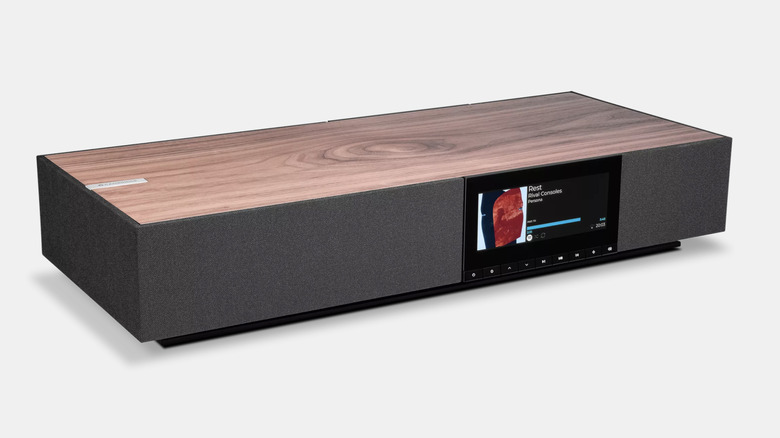
Even though it technically works like one, the Cambridge Audio Evo One isn't a soundbar. Instead, it's a "complete all-in-one music system," as Cambridge Audio calls it, that's marketed as a plug-and-play home audio solution in a single cabinet. The low-profile unit includes RCA inputs for vinyl, onboard support for every popular music streaming service, and, of course, an HDMI eARC input for home entertainment needs. The British company makes all sorts of audio equipment — headphones, amplifiers, DACs, and even high-quality retro-style CD players — but the $1,799 Evo One is its first streaming speaker, which Stuff called a "stunning" debut.
In a feature, Men's Journal not only defined the Evo One as the "best all-in-one wireless speaker of 2026," but it also described it as the best overall speaker out of dozens of other models. Connectivity options were just one deciding factor alongside sound quality, design, audio format support, spatial realism, value for the money, and raw performance.
The unit may look simple, but its internal hardware isn't. It runs 700 watts of power split between 14 individual loudspeakers — four silk-dome tweeters, four aluminum midrange drivers, and six woofers — to produce a soundstage that What-Hi-Fi? called "expansive" and "room-filling," albeit in a form factor that it found slightly too large. Stuff gave it a perfect numeric score alongside both Tom's Guide and T3, with each source complimenting the unit's sound quality and polished design.
The unit also comes with a remote control, the StreamMagic companion app, and a color screen to show off album artwork and display active inputs. It doesn't have a dedicated subwoofer output for extra bass boost, but its six woofers will suffice.
Cambridge Audio L/R X
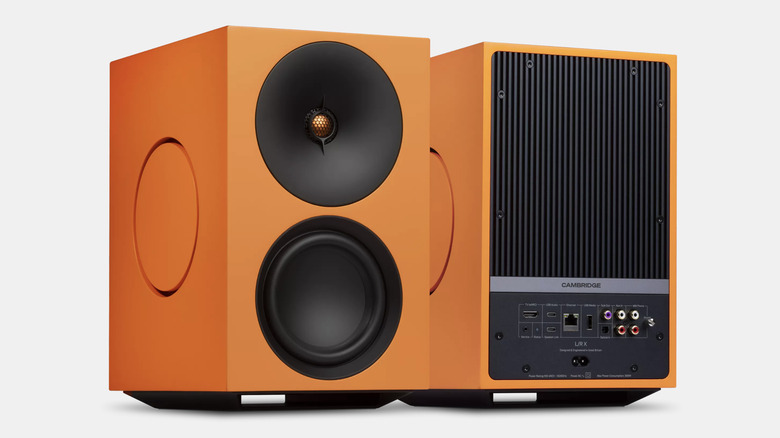
This is where the eARC speaker options start shifting into noticeably high-end price ranges. The Cambridge Audio L/R X speakers are bona fide Hi-Fi offerings that deliver on sound quality even in larger spaces; their two 6-inch passive radiators complement two 5-inch woofers and a 28mm tweeter with low-end performance capable of outperforming dedicated subwoofers across genres, as Stereo Guide said, later calling the L/R X the "best compact active speaker with streaming."
Clocking in at roughly 13 inches high, 8 inches wide, and 10 inches deep, Tom's Guide referred to them as the best option for "space-constrained hi-fi enthusiasts." The outlet found the L/R X's MSRP of $2,399 cost-prohibitive compared to competing options, but all things considered, cost is the only real drawback with this unit.
Besides having nearly every wired connectivity option one could want — USB-C audio, phono and RCA, optical, HDMI eARC, and even USB-A for media — these speakers support a number of wireless streaming options, including Spotify Connect, Tidal Connect, Amazon Music, Qobuz Connect, and more. The L/R X speakers come in a range of unconventional colors for a Hi-Fi system. Navy, dark olive green, and bright orange accompany the more classical offerings of black, white, and walnut veneer (which costs extra).
Rated at an impressive 800 watts with a frequency response of 35Hz to 24kHz, these speakers are Cambridge Audio's flagship offering in its L/R Series. While the L/R X's smaller and cheaper L/R S counterpart is a speaker system worth looking at, especially at $549, it doesn't have HDMI connectivity at all, let alone eARC.
KEF LS50 Wireless II
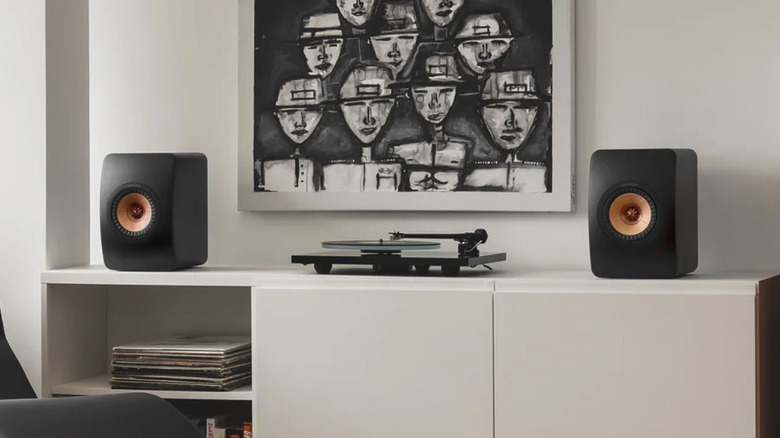
British audio company KEF has been a leader in the Hi-Fi space since the 1970s, and the brand has since become a staple in the realm of top-of-the-line consumer audio. Having launched in late 2020, the LS50 Wireless II speakers aren't new to their product category, and they continue to receive accolades. What Hi-Fi? named them as a winner in its 2026 What Hi-Fi? Awards with "all-encompassing connectivity," Crutchfield said they're still the "best powered speakers" you can buy in 2026, and TechRadar described them as "truly phenomenal stereo speakers" whose only caveat is — wait for it — price (they typically retail for $3,000).
Beyond improving upon the model that came before it, KEF optimized the LS50 Wireless IIs to make the most of their onboard tech. KEF's own 12th-generation Uni-Q driver array, a technology the company pioneered back in 1988, expands the optimal listening area in a room to multiple spots, not just one. By strategically positioning the tweeter in the speaker's acoustic center — and by leveraging its proprietary Metamaterial Absorption Technology (MAT) to practically eliminate unwanted sounds — KEF designed the LS50 Wireless IIs so you can experience their clarity and detail across the whole frequency range, regardless of where you are in the room. That hyper-advanced audio tech is largely what you're paying a premium for.
The cabinets, which were optimized to work with the Uni-Q drivers specifically, feature a touch-screen control panel for ease of use, though you can also control the LS50 Wireless IIs with the KEF Connect app. Beyond HDMI eARC, the system has ports for optical, coaxial, and 3.5mm wired setups, plus Ethernet ports for when your Wi-Fi connectivity isn't getting the wireless streaming performance you want.
KEF LS60 Wireless
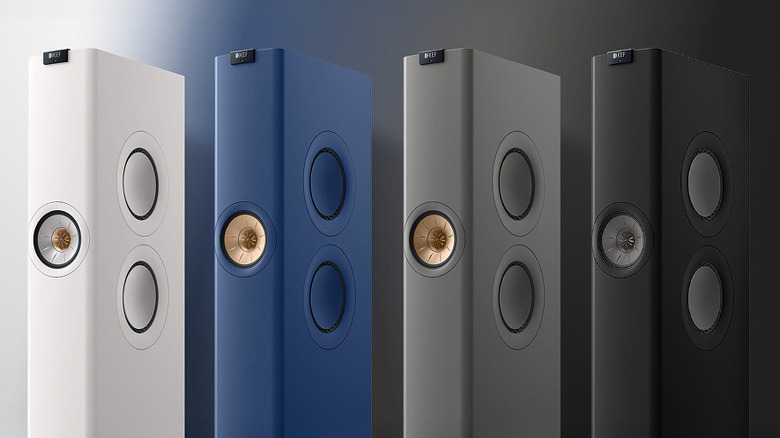
Like the LS50 Wireless IIs, the KEF LS60 Wireless speakers aren't new; they came out in 2022 to commemorate KEF's 60th anniversary. They're floorstanding speakers that deliver a rich audio experience by virtue of their size and design. With their intricate driver engineering, wealth of connectivity options, and sophisticated looks, the LS60s were named Crutchfield's "best floor-standing powered speakers" to buy in 2026. What Hi-Fi? described them as "everything a modern all-in-one hi-fi system should be" in terms of performance, aesthetics, and feature-richness alike.
As written on KEF's product page, popular reviewer Darko Audio pointed out that having four "Uni-Core side-firing bass drivers is one reason the LS60 Wireless is not just a floorstanding version of the LS50 Wireless II." This "Single Apparent Source" driver design, as KEF calls it, makes it seem like lows, mids, and highs all originate from the same point on the speaker. This feature builds upon the design philosophy of the LS50 Wireless IIs, and it also mirrors the tech found in KEF's $35,000 Blade Meta flagship speaker. In contrast, the LS60s go for $6,000 — still expensive, yes, but competitive given how advanced they are.
Driver arrangement is the standout feature on these slim 8.3-inch-wide Hi-Fi towers, but they also have remarkably strong connectivity options. You can send audio to them wirelessly over Wi-Fi, Apple AirPlay 2, Google Chromecast, or Bluetooth 5.0; wired setup options include optical, coaxial, analog RCA (in lieu of 3.5mm), and HDMI eARC for a simple setup with your TV. It also includes Ethernet ports for wired network connectivity. The system has two separate subwoofer outputs, one on each speaker, so you can really drive the bass with these floorstanders.
How we handpicked these HDMI eARC home speaker options
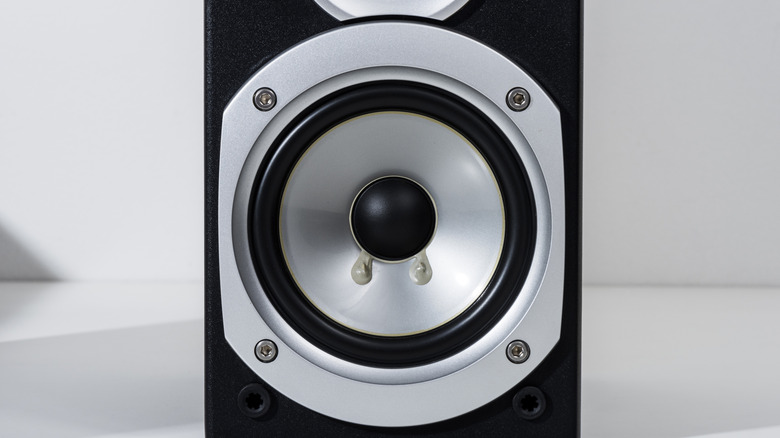
Every option here featured HDMI eARC connectivity and received excellent ratings across the board from a number of reputable sources, including Wired, What Hi-Fi?, TechRadar, Tom's Guide, and more. No expert ratings we reviewed for any of these products were under four out of five stars (or equivalent).
Each model had to have been recognized as the best in a given category or for a specific use case, according to reputable sources. Since eARC connectivity is a premium, gold-standard HDMI feature, there aren't exactly any "budget" speakers that feature it, but we made sure to include options within different price ranges for this roundup.