

9 Robot Vacuum Upgrades That Just Work
We may receive a commission on purchases made from links.
Robot vacuums are perhaps the most sci-fi modern invention that has proved realistically practical. The idea of an autonomous robot that goes around cleaning your home is nothing short of insane, yet unlike most sci-fi gadgets we wish really existed, it is a technology that is actually seen in action in many houses today. Of course, it wasn't always smooth sailing. The early days of robot vacuums were fraught with challenges, as the emerging technology grappled with the real-life conditions of operating in a messy home environment.
There are many barriers to simply getting around the house, navigating through the obstacles big and small, and dealing with carpets and thresholds between rooms. Then there are factors like handling especially dirty areas or avoiding tangles in clumps of pet hair, which proved tricky even for the most expensive vacuums. And that's before we get into the new factors introduced by integrating mopping into robot vacuums: dealing with dirty water, the reach of the mops, and not running out of charge between vacuuming and mopping.
But robot vacuums see innovation year after year, and the issues we outlined above have already been solved by the latest models. The robot vacuums of today are smarter, faster, and more efficient than ever before, packing a lot of convenient features that make them completely hands-free. So let's look at some robot vacuum upgrades that just work.
Real-time 3D mapping
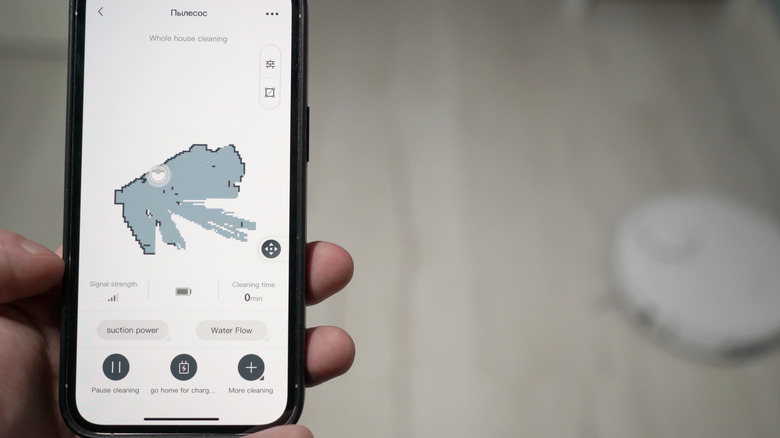
What is the most fundamental feature of a good robot vacuum? It is not the suction power or mopping technology; it is the mapping. Mapping out the house accurately is the first step toward navigation, and without it, the robot vacuum cannot efficiently traverse the area, let alone understand which areas to clean. Of course, older vacuums skipped this step entirely, relying on random bump navigation, but we have long realized the issues with that approach. Now, every modern vacuum has mapping built-in.
On the surface, it may appear that the technology used for this has not changed at all, as LiDAR is still present in every robot vacuum. But the actual implementation of this sensor has changed. Older robot vacuums used LiDAR LDS (Laser Distance Sensor), with a spinning laser turret on top of the robot to determine the positions of objects. New robot vacuums like the MOVA V70 Ultra Complete have moved to a different variant of the technology: dToF (direct Time-of-Flight) LiDAR.
Instead of roughly computing the distance, the dToF LiDAR sensor measures the time taken by the reflection of every pulse of light, calculating the precise distance involved in real time. This means that modern robot vacuums can now rapidly construct extremely accurate maps of the environment, and then retract the sensor when needed. This also translates to more precise customization of the maps, letting you designate virtual no-go zones or extra cleaning zones to control your robot vacuum's behavior.
High-temperature self-cleaning
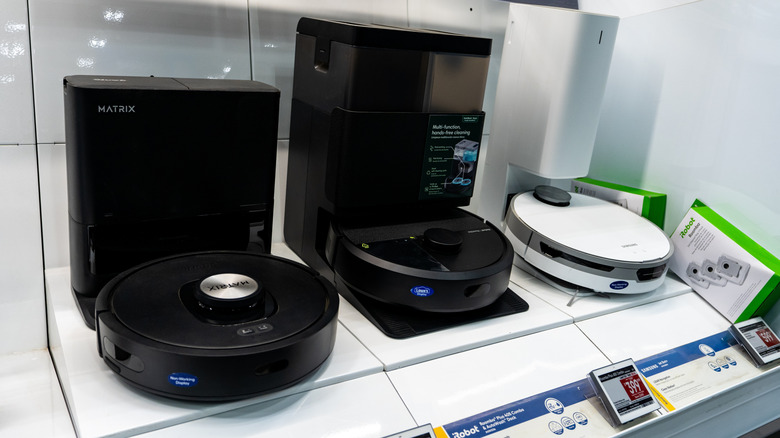
When we talk of robot vacuum technologies, it is the robot vacuums themselves that get all the attention, but their humble charging docks have also come a long way. They aren't just basic charging stations anymore, but fully featured cleaning stations in their own right. The changes started simple – docks featuring self-emptying bins, pulling the robot's dirt into a larger bag in the dock. But the introduction of a mopping feature in robot vacuums means that they need a lot more maintenance now. Water has to be filled, detergent loaded, and the mop pads themselves cleaned after every cycle.
Doing all this manually is a tedious chore, defeating the purpose of an automated cleaning machine. So robot vacuum docks have also evolved to make the robot vacuum hands-free again. New-age robot vacuum docks like the Saros 20 Flow will not only empty the robot's dustbin, but will also clean the mop pads. Not just by dousing them in water, but with hot water jets, which kills germs and eliminates sticky residue, ensuring zero smell and complete sterilization.
Of course, this is followed up with the regular mopping maintenance. The water chamber of the robot is refilled, new detergent is loaded up, and a hot blower dries the mop pads, leaving the robot ready for the next cycle of cleaning. This, along with the other advanced features, makes the Saros 20 one of the best robot vacuums you can buy in 2026, according to experts.
Dynamic mops
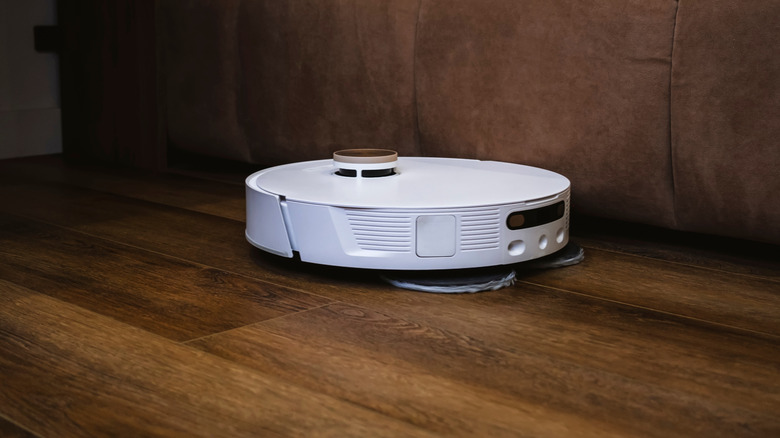
All leading vacuums feature high suction power already, but what about mopping? It is still a relatively new feature, with a lot of nuance in functioning, and quite a few moving parts. The design of the mop itself, the cleaning process used, or the methodology for handling different types of surfaces. Many factors governing a robot mop's cleaning performance, and therefore plenty of innovation in this space.
The simplest robot vacuums with mops simply add a spinning mop pad at the bottom (or even several) to mop the floor as it moves. But there are many problems with this approach. For one, this leaves edges and corners untouched. It also struggles with carpets, as, unlike vacuums that can universally run on both floors and carpets, a mop must only be used on floors. Even leaving aside carpets, taking the same mop through different types of flooring — say kitchen tiles with a spill and your bedroom floor — just drags the dirty mop through the house.
The latest robot vacuum mops fix these issues with more dynamic mopping systems. The mops are attached to little arms, which means they can be lifted over carpets and extended outward to reach corners. The best vacuums even come with the ability to change their own mop pads now. The Dreame Matrix X Pro, for example, will swap out its mop pads after every type of area, with separate cleaning solutions for each as well.
AI obstacle avoidance
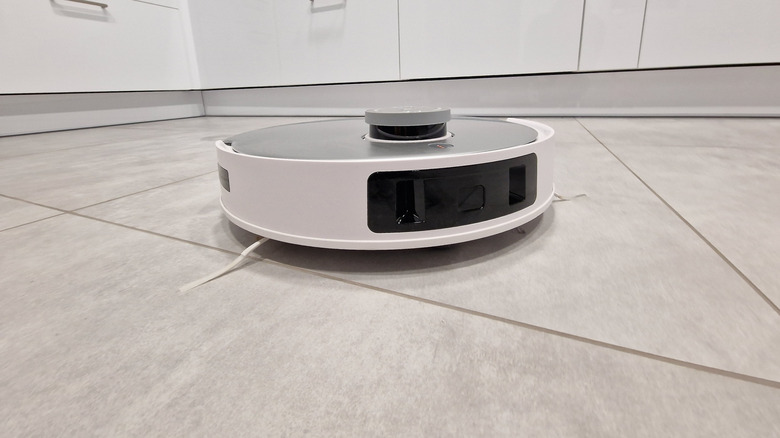
How a robot vacuum navigates the world is one of its most key features. We touched upon this briefly when we discussed mapping, but detecting walls and furniture to construct a map of the surroundings is just one half of the puzzle. The robot vacuum also needs to navigate past the smaller obstacles along the way, from things like toys to random socks on the floor. These smaller objects are more of an issue than walls because the robot won't just bump off them, but get stuck.
The standard LiDAR module that serves as a robot vacuum's primary sensor is useless in this regard. The LiDAR is mounted on top of the machine and cannot fire lasers at tiny objects in the way. To cover this blind spot, robot vacuums started integrating other sensors like 3D structured light, or even an RGB camera. But while these did improve the object avoidance of robot vacuums, each method had its own shortcomings, as the robot lacked the intelligence to combine them all.
With improved AI models, however, that's possible now. We are getting robot vacuums that can put together a comprehensive picture of their surroundings through multiple sensing methods. The Narwal Freo Z10 Ultra, for example, features two high-definition cameras to accurately recognize even the smallest objects. This might seem concerning, as robot vacuums have a big problem with privacy, but the Freo has dual AI chips onboard to process the video feed locally, not uploading to any server.
Robot legs
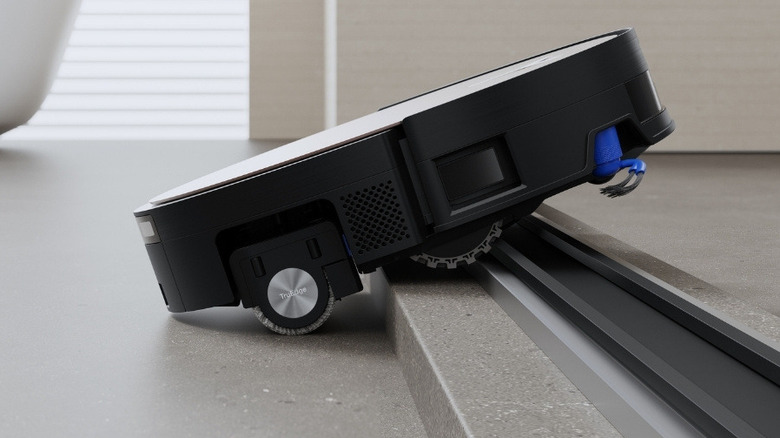
Robot vacuums are great for apartments with smooth tiled floors, as the little robot can zoom through the whole place without an issue. But what about houses with elevation differences between various rooms? Sometimes it could be a floor that is a couple of inches higher, or an elevated threshold in the doorway. Both of these stump most robot vacuums running on wheels, preventing them from accessing most of your house and cleaning it.
Failing to prepare the house for a robot vacuum is one of those common mistakes that robot vacuum owners should try to avoid, but it is tricky. Even with ramps, things like jutting legs of furniture can still get the robot stuck. So robot vacuums started adding threshold climbing to their models. Most are capable of pushing their chassis up for a few millimeters of clearance, which can only cross the shallowest thresholds. Modern robot vacuums improve upon this by also featuring proper folding legs to lift the robot even higher, letting it more easily cross higher thresholds.
The Dreame X50 Ultra, for example, can go over chair legs and room thresholds without getting stuck, thanks to its retractable legs. It (and any other flagship robot of today) is also capable of the opposite, retracting the LiDAR sensor and using its slim profile to slide underneath furniture to clean even hard-to-reach areas. We are even starting to see robot vacuums that can climb staircases, though only in tech expos — for now.
Fast Charging
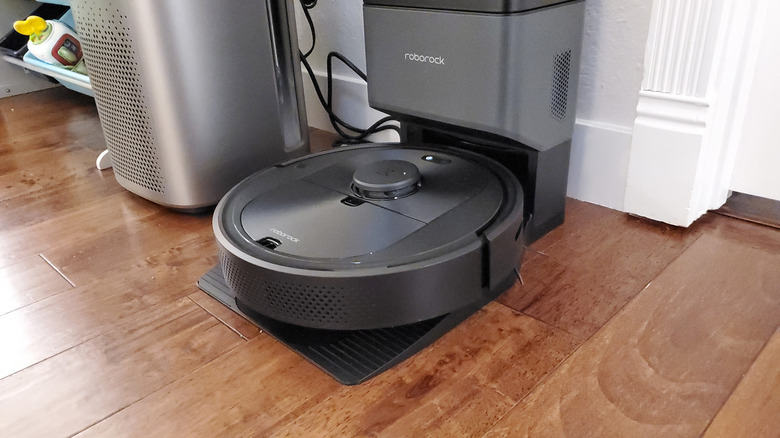
Every modern robot vacuum features powerful suction, which is good for cleaning. But this also has a drawback in that the robot uses more power, and its battery drains most quickly as a result. For the most part, robot vacuums are designed to be able to complete a cleaning cycle on that one full charge, heading back to the dock to spend hours getting back that juice, but for larger houses, this does not work out. The average 60 minutes of runtime cannot cover the whole area, especially for models that mop and vacuum both.
Even with a smaller home, if you have a lot of clutter, the robot will backtrack a lot and will end up being less efficient in cleaning the area, wasting time. This can also lead to a scenario where the robot runs out of charge mid-cleaning and has to return to charge before resuming the cleaning cycle. And since charging these powerful vacuums with big battery capacities takes a while, that slows down the cleaning process significantly.
To solve this issue, modern robot vacuums like the Ecovacs Deebot X11 have started incorporating fast charging. This is the same technology you see in smartphones, but on a larger scale, capable of quickly topping up the robot vacuum batteries. This GaN-based fast charging activates even as the robot returns to the base station to refill its water tank or empty the dustbin, giving it a little more charge to complete the cycle.
Anti-tangle brushes
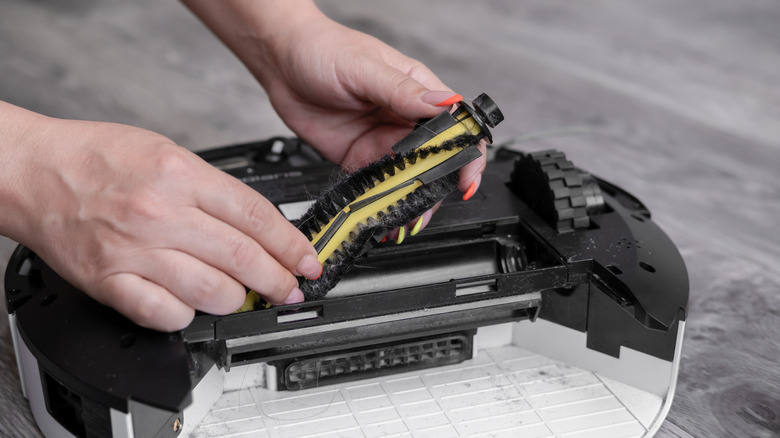
Dealing with pet hair scattered through the whole house is one of the main reasons people invest in robot vacuums. Only a tireless robot can keep up with the steady stream of hair shed by your pets — assuming the hair doesn't clog up their vacuums. Pet hair is coarser and hardier than human hair, with longer strands. This means that the tiny suction port of a robot vacuum easily gets choked up on pet hair, requiring manual cleaning to de-tangle the hair and let it work again. Even vacuums with brushes end up getting the hair tangled in the brushes, rendering them useless.
The solution undertaken by new robot vacuums like the Narwal Freo Pro is two-fold. Firstly, specialized brushes. Instead of a standard roller brush, detangling brushes feature a spiral grooved design that ensures the hair is not caught up in the brush but is separated and funneled into the suction port. They usually feature rubber bristles instead of plastic to be able to detach from the hair strands more easily.
These new Freo vacuums also come with a second anti-tangle brush to force hair coming in from any directions into the detangling brush without getting stuck on the surface. This is paired with a better dustbin management system. Since a house with pets will fill up the robot's tiny bin in a single run, modern robot vacuums will use self-emptying functions to frequently clean out the vacuum's own bin, and even compress the dirt collected.
UV stain detection
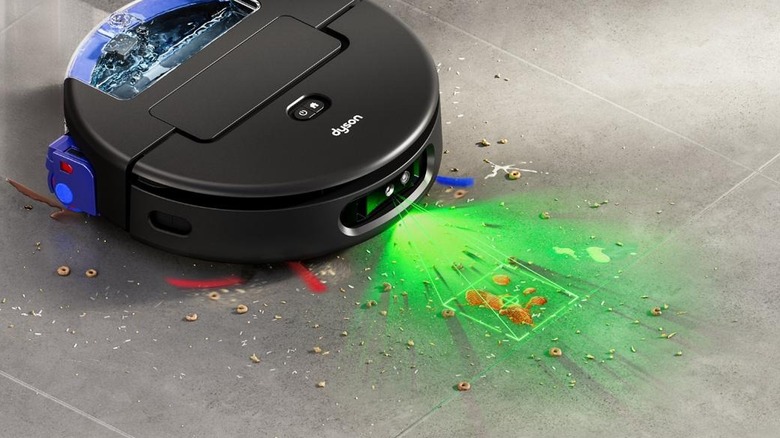
The mapping capability and the object avoidance take the focus when talking about sensing capabilities, as that is central to the navigation ability of a robot vacuum. But for a device meant for cleaning, what about a method for detecting dirt itself? Traditionally, robot vacuums aren't equipped to assess the cleanliness of the house. They simply go over the whole house, vacuuming and mopping the floor they come across, irrespective of how clean or dirty any particular part is.
This means that while robot vacuums are good at evenly cleaning out the daily dirt buildup, they can struggle with spills or filthy patches that need more dedicated cleaning. Of course, you can try to manually fix that by forcing it to do another cycle, or limiting it to a particular area to clean it again, but these are convoluted workarounds. The actual solution would be for the robot vacuum to be able to somehow see stains.
And that's what the latest robot vacuums like the Shark PowerDetect are now doing. Just as black light flashlights can be used for spotting stains, robot vacuums can detect spills or stains with UV light, even when invisible to the naked eye. Then the onboard AI categorizes the type of mess to respond with the right cleaning method, vacuuming debris, mopping up light spills, and on some models, even scrubbing it clean with hot water. The robot will take multiple passes if required to clean up any mess completely.
Smart scheduling
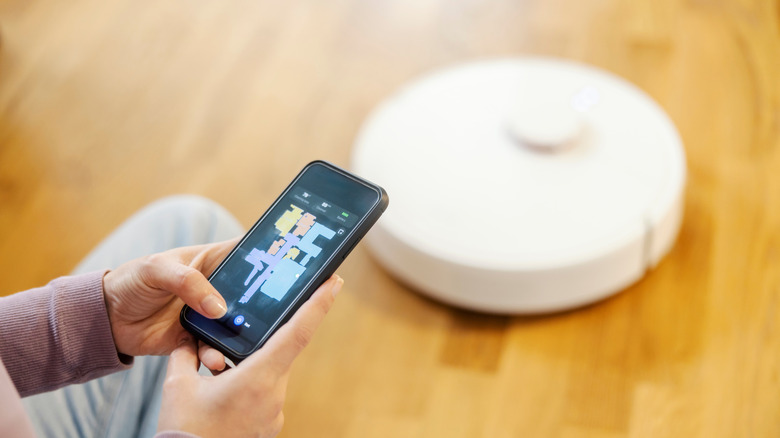
The whole premise that makes robot vacuums appealing is a machine that will clean your house automatically without you having to do a thing. But the logistics of this also need to be considered. If your robot zips around trying to clean the kitchen while you are cooking in it, or has to dodge people going about the living room, it becomes more of a nuisance. This is not an aspect that can be handled with better sensors or smarter AI. It requires smart scheduling from your own end.
Which may sound simple, but is anything but. Even with older robot vacuums, you could always set up cleaning times, which in theory ensures that your house is cleaned without conflicting with your own day. In practice, however, the cleaning process itself takes a while, and not every room is occupied at the same time. The schedule for cleaning your bedroom should be different from the one for your hallways. With new-age robot vacuums, this kind of discrete control is actually possible.
Thanks to better navigation systems and more detailed maps that robot vacuums can create these days, it is easy to designate various rooms and schedule them individually. You can even split vacuuming and mopping schedules, or vary the cleaning intensity. The Dreame X60, for example, has a comprehensive scheduling feature that gives complete, granular control. It is one of the reasons owners say it is one of the most reliable robot vacuums.