

4 Of The Oldest TV Brands Still Sold In The US
We may receive a commission on purchases made from links.
Leading TV brands like Samsung, LG, and Hisense are the usual limelight-grabbers, especially when it comes to innovation. These manufacturers care a lot about wowing the viewer, and industry-lauded TVs like the Samsung S95H and LG G6 Series are proof that none of these titans are resting on their laurels. But in order for these companies to run, there were numerous TV brands that needed to learn how to walk — quite slowly, in fact.
Evolving from one type of display technology to something completely cutting-edge isn't beyond the pale for TV makers. That said, it pays to acknowledge the great pioneers of an industry, and there are plenty of O.G. champs to commemorate in the world of TVs. A handful of these companies remain relevant as we pen this piece, and still actively sell TVs today. You may just have to look beyond Amazon or Best Buy to find some of them.
TV technology is more than a century old at this point, so we thought it'd be fun to spotlight the oldest TV manufacturers you can still buy a Mini LED or OLED TV from in the US. There's a lot of ground to cover, so let's jump right in by talking about a global brand that most of the world is familiar with: Sony.
Sony
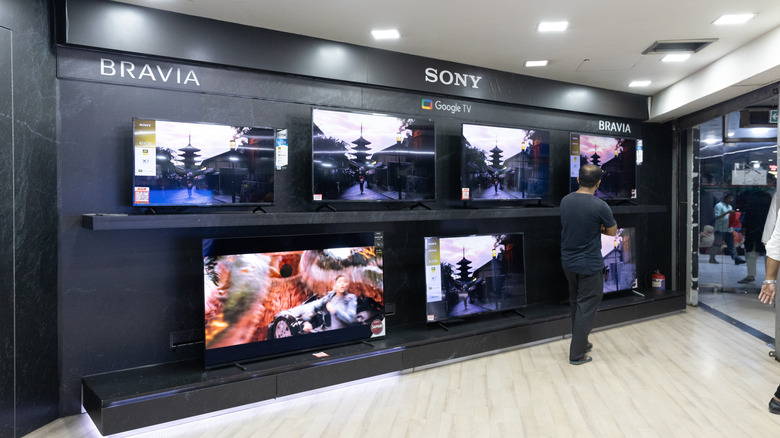
Sony is one of the oldest TV manufacturers the world over, as well as one of the oldest electronics conglomerates. The company was founded in May 1946 as a telecommunications firm, and started selling its first TV in 1960. It was called the TV8-301, a portable transistor set that retailed for $250 (about $2,800 when adjusted for inflation). This would also be the same year that the company founded Sony Corporation of America, and the rest is history.
Sony has given us year after year of award-winning TVs. As the industry's been shifting toward LED LCDs and OLED panels, Sony's BRAVIA lineup has been one of its leading brands. Currently, the company offers a collection of well-reviewed TVs with prices starting at $300 for the 32-inch W830K Series. You can also spend thousands of dollars on a flagship unit, with the likes of the 85-inch BRAVIA 9, whose sticker price is $6,500. Sony TVs aren't too difficult to find either, in part because the company has manufacturing facilities around the world. Most of Sony's current-year sets are sold through retailers like Amazon, Best Buy, Walmart, and Target.
You'll also be able to find Sony TVs through numerous third-party sellers. You might even be able to get your hands on an older model for a reduced price. If you end up going the third-party route, we recommend you read the terms and conditions for returns and the warranty period carefully, because those services can sometimes be much more daunting than the more well-known shops.
Panasonic
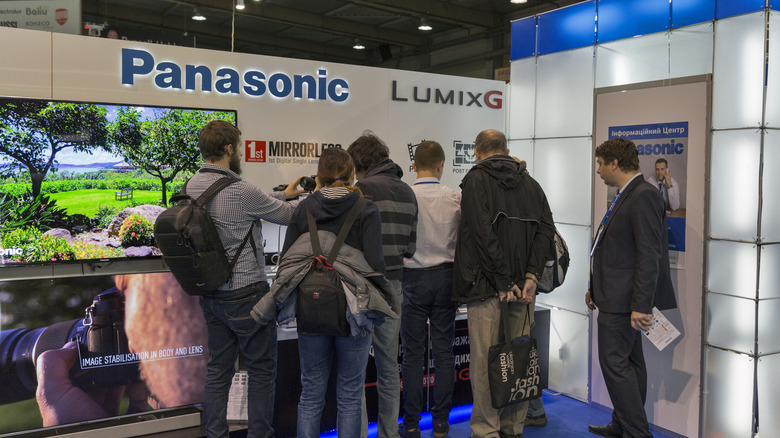
Panasonic was once a market leader champion of plasma TV production. Models like the ZT60 truly pushed the envelope of what a consumer set could do, and paved the way for OLED TVs. It was hard to beat the color accuracy and inky black levels of a Panasonic plasma. The company's expertise has translated well, and reviewers say Panasonic's OLEDs are similarly impressive.
Panasonic TVs date all the way back to 19652, with its first sets delivering black-and-white broadcasts. In 1960, the company started selling color TVs, just in time for the 1964 Tokyo Olympics, which broadcast in color, too, and spurred even more sales. Buying a Panasonic TV in the U.S. today isn't as easy as it was in decades past, but they're still around. A good place to start your search is on Panasonic's TV site. Once you've found the model you're interested in, you can see what retailers have it in stock.
The company is currently marketing its upcoming Panasonic 55-inch Z95B 4K OLED ($2,100) and its 65-inch counterpart ($2,700). We should also mention that Panasonic's North American and European TV manufacturing, sales, and distribution go through Skyworth , a Chinese TV maker. As part of the agreement, Panasonic continues to provide technical expertise and quality control for Skyworth, it just simply isn't making TVs in those markets anymore. (Skyworth sells its own TVs in the U.S. as well.)
Toshiba
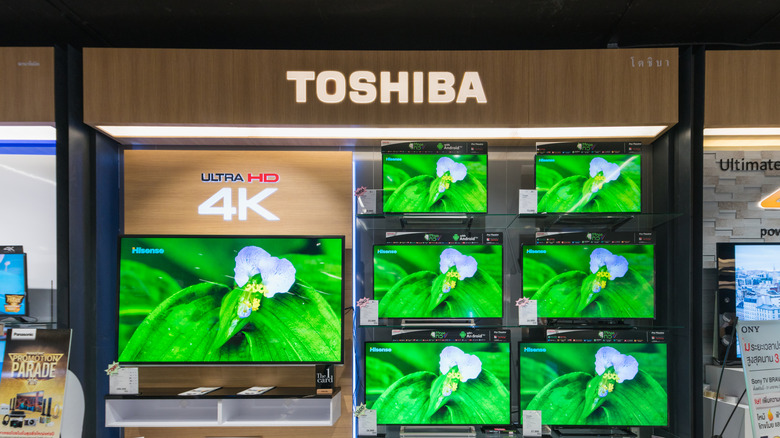
Toshiba is another international TV manufacturer that's had a U.S. presence for several decades. The company started making its first black-and-white TVs in 1952, with its first color receiver made in 1960. Toshiba partnered with Sears during its U.S. launch. Fast forward to 2026, and Toshiba's expanded well beyond its early partnership, now selling products on Amazon and at Best Buy, as well as third-party shops and sites.
While Toshiba may not be as heavily marketed or widely discussed as in the past, it's still there. If you're interested in seeing what the brand has to offer, you can start on Toshiba's US TV site. From there, you can look through its selection of models and where they're sold. The company also prices its TVs competitively, offering its 65-inch Z760R marked down to $500 at time of writing, which is a pretty good deal for a 4K Mini LED with quantum dots and a 144Hz refresh rate.
Conveniently, Toshiba also makes its own soundbars too. Most TV speakers are fairly lackluster, so separate audio systems can help improve sound quality. You can mix-and-match brands however you please, though, so feel free to go for any from BGR's top-ranked list of soundbars.
Sharp
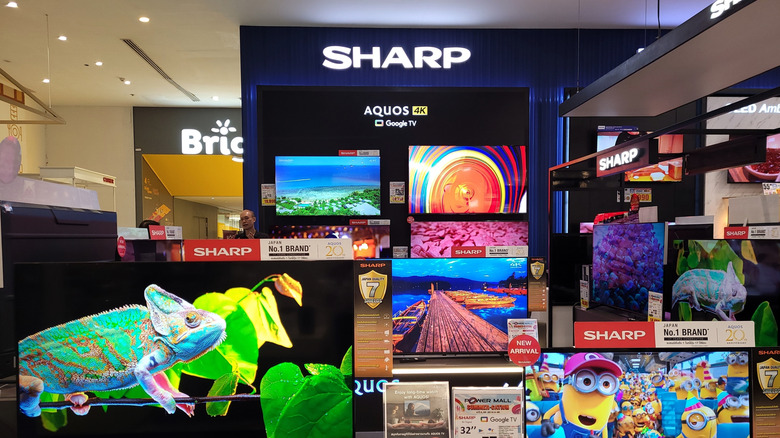
I used to work retail, and I remember the hoopla around Sharp's LED-LCD TVs. I was in the home theater section, and Sharp's Aquos and Quattron sets were some of the biggest TVs on display. Sharp's U.S. television presence actually stems all the way back to 1962, when the manufacturer launched its first sales subsidiary in New York City. Back then, the brand's forte was compact black-and-white TVs and transistor radios. Nowadays, Sharp is often considered a budget-friendly TV brand.
Of the four brands we've mentioned in this roundup, we'd also argue that Sharp is the toughest manufacturer to buy a product from. Its TV inventory is pretty scant for stateside customers, and major retailers like Amazon, Best Buy, and Walmart don't carry the company's consumer TVs as of writing. If you want to buy Sharp, you'll need to look at third-party retailers, so make sure there's a return policy and warranty period.
When we were looking at Sharp's current lineup, it looked like the Sharp Aquos 4K QLED was available through Electronics Express in 50, 65, and 85-inch sizes. The 65-inch was discounted to $380 from its $730 suggested price, which bodes well for those of us looking to score the best price possible on a TV that's already inexpensive.