

11 Cheap Cell Phone Brands Ranked Worst To Best
We may receive a commission on purchases made from links.
Budget phones are without a doubt closing the quality gap separating them from higher-end devices in 2026. Some of these phones are so good that the everyday user can get most things done without feeling the need to get a flagship. There are so many options available to choose from, but not all cheap phones deliver on their promises. Some brands and specific models like the Google Pixel 9a and Moto G Stylus offer great performance, but others are best avoided for various reasons.
We've curated a list of cheap brands you can have a look at in the budget phone market ($500 and below) and ranked them from the worst to the best. You'll get at least one phone model that we'd recommend you buy from each decent brand to ensure you get the best value for your money. Of course, we'll also let you know which brands or specific models to avoid altogether, according to expert and user reviews. Here they are starting from the worst brand and working up to the best.
11. Blu carries trust issues from a past privacy scandal
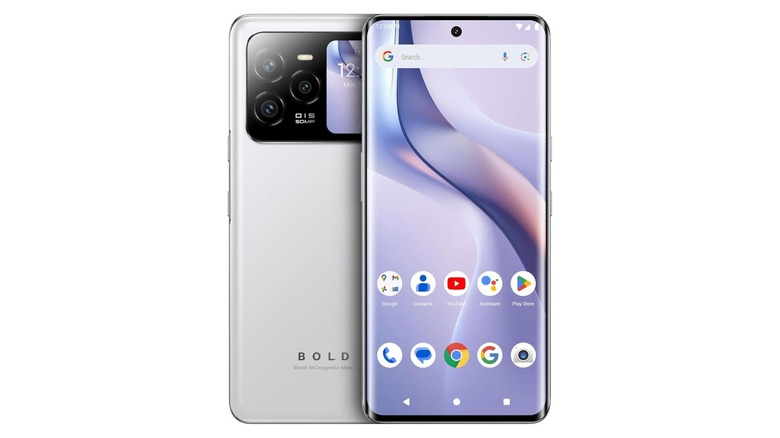
Blu learned a hard lesson back in 2017 when it was revealed that the company installed spyware on its phones to collect personal data without consent and had it sent to servers in China. The company neither confirmed nor denied the claims but then had to settle with the Federal Trade Commission. This outcome casts a long shadow over whether Blu devices can be trusted for the everyday user. You can't rebuild trust overnight, no matter how good your devices might be in the phone market.
Despite the privacy concerns, Best Buy customers have given recent Blu models decent ratings. For instance, users rate the Blu G64 highly, often citing great battery life and a decent camera for the price of just over $100. The $250 Blu Bold N4 5G takes overall performance to the next level and even comes with a curved display and a secondary display on the back. If you're looking for an emergency phone, or something dirt cheap, what Blu has to offer currently isn't too bad. However, skip this brand if the past privacy scandal is a deal-breaker for you.
10. Alcatel lags with outdated processors
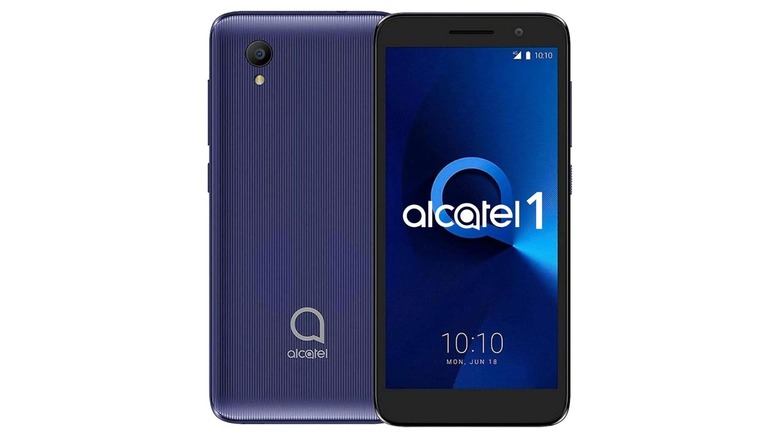
Despite being a household name in the phone industry at one time, Alcatel is virtually invisible in the current market. One of its most recent models, the Alcatel 3, came out in May 2025 with a price tag of around $130, a 5010 mAh battery, and the Android 15 Go platform. These specifications may look good on paper, but the phone has one glaring deal-breaker — it came with a below par and old UniSoc chipset from 2018. The most recent release at the time of writing is the Alcatel A62, which you can find for way below $100, though it's not readily available on Amazon or Best Buy.
Most phone models from this brand are available in and built for specific markets such as India and Europe. However, just like the Alcatel 3, you may struggle getting a lot done with the A62 if you manage to get your hands on one. The 2025 Alcatel V3 Ultra is the best of the most recent models if you want a phone that has a good camera and offers decent midrange performance. If you are considering this brand, note that Alcatel uses hardware that's a bit dated, and you could find better alternatives at every price point.
9. Nokia/HMD Global is exiting the U.S. market
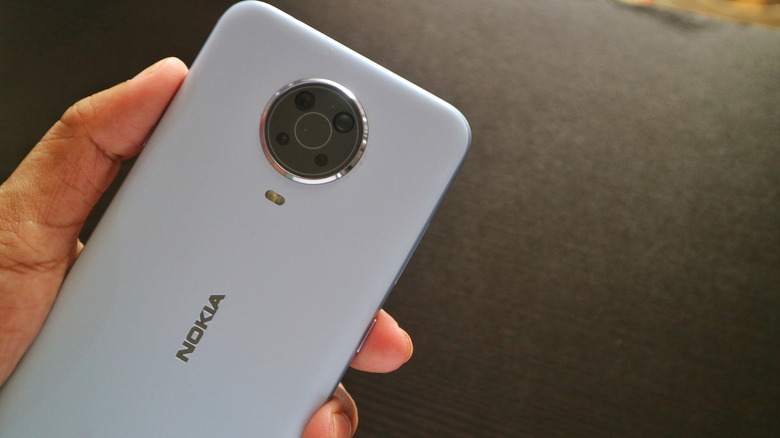
Unlike Alcatel, HMD Global, which gave Nokia phones a new lease of life, was officially selling its phones in the U.S. until recently. That may sting if you love the Nokia name, but the company announced in July 2025 that it was leaving the U.S. market entirely due to tariff wars. Nokia phones are no longer being sold through HMD's U.S. website at the time of writing. Despite this turn of events, HMD will still offer warranty support and security updates to existing units in the U.S.
Since options are limited at the moment, you'll have to bear with whatever inventory remains on Amazon or Best Buy by the time you're reading this. That aside, Nokia Android phones have been known to run clean stock Android and have great battery life. However, software updates are usually slow, and camera complaints are common issues worth pointing out. The company also still makes some of the best feature phones if that's your thing. All in all, the brand's exit from the U.S. market means Nokia isn't a viable cheap phone option anymore.
8. Realme faces warranty and compatibility headaches
Realme makes decent phones and usually highlights the impressive battery capacity. Take the 2026 Realme P4 Power, which comes with a humongous 10,000 mAh battery. Although this device is currently not in the U.S. market, it's worth mentioning since it's still a normal-sized phone despite the massive battery. It weighs just 219 grams thanks to the new silicon-carbon battery technology. To grab this specific device, you'll have to check alternative listings like eBay where you can get one for anywhere between $300-$400 depending on the seller. But please note, not being officially distributed in the U.S. means potential network band and warranty claim issues.
The main selling point of new Realme phones in the market is the large battery, but what about general performance? Most of the devices run smoothly, especially when new, but some users complain about bloatware and intrusive ads. These issues can be easily resolved, though. Realme 16 is a cheaper option that has a massive 7,000 mAh battery. You can go for any recent Realme phone if you're willing to chase down international warranty support or risk network compatibility issues.
7. Ulefone sacrifices everyday performance for ruggedness
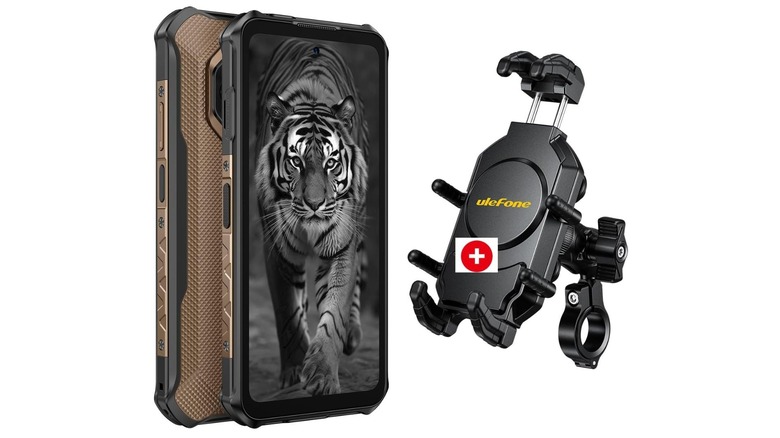
If you work in accident prone places like construction sites or near water bodies, you'll need a phone built for such environments. Ulefone makes rugged phones for this purpose, and they are generally inexpensive. The company releases both rugged and standard phones each year across all price points. One standout model is the 2025 Ulefone Armor X16 Pro. This device comes with a reinforced exterior to survive drops, a IP68/IP69K durability rating, and a massive 10,000 mAh battery that supports reverse charging. It will only set you back just over $200 on Amazon.
One thing to note about Ulefones like the X16 Pro is that they are built for durability and resilience in tough conditions, which means it may be a bit overkill for the everyday smartphone user. If you're in this category of users, you'll be paying for military-grade reinforcement that you don't need and processing power tuned for power efficiency rather than raw speed. Apart from the extended battery life, these phones offer nothing else for the average user. Go for any of the available Ulefone lineups only if you want a device that can survive massive drops or you work in an accident-prone setting. For normal use, better phones exist, and you'll see some of them below.
6. OnePlus delivers almost-flagship performance for less
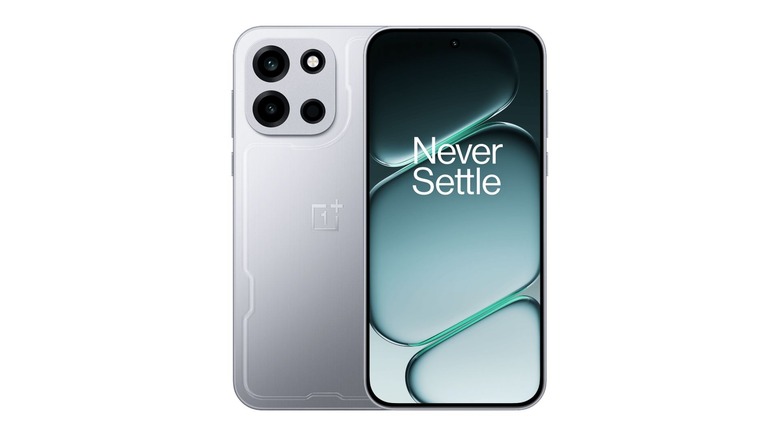
OnePlus makes flagship devices, but there are two budget series from the brand worth giving a shot — the Nord Series and the new 2026 Turbo series. Specifically, we recommend the OnePlus Turbo 6 or OnePlus Turbo 6V Both come with a massive 9,000 mAh battery, impressively quick 80W fast charging, and a Snapdragon 8s Gen 4 and Snapdragon 7s Gen processor, respectively, making both devices good for gaming. You also get IP68/69K water and dust resistance, an AMOLED display, and a 50-megapixel dual camera setup that performs impressively in good lighting conditions.
Besides the processors, the other difference between these models is storage speed and maximum screen refresh rate. The Turbo 6 comes with UFS 4.1, while the Turbo 6V is slower with UFS 3.1. Price difference is just about $50, with the more expensive Turbo 6 costing around $350. Both are great phones for the price, and you should go for the Turbo 6 only if you intend to take advantage of the better processor. In real-world use, the differences aren't immediately noticeable.
The two phones are great picks if you're looking for a 5G device with great battery life, a fast screen, and a decent camera without forking out flagship prices. One thing to note is that these devices are available in China, and there is no official announcement yet on whether they'll be available in the U.S. For now, you can have to scavenge one from international importers.
5. Motorola provides solid all-day battery on a budget
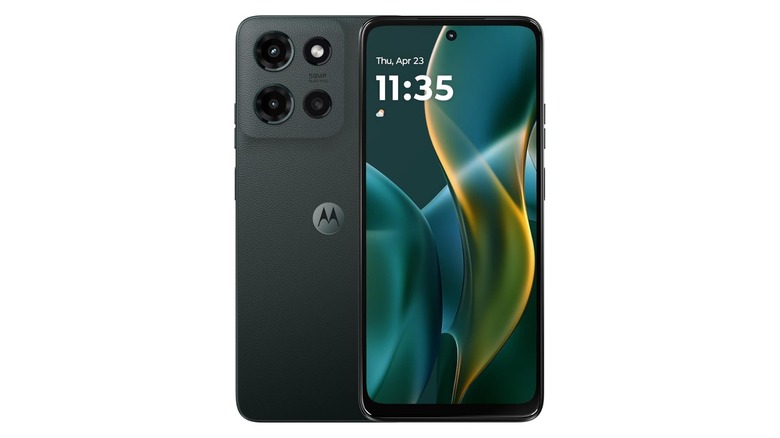
Motorola is one of the oldest cell phone brands still around. It's not as big as it used to be, but the brand still makes some decent phones, especially for the budget phone market. The Moto G lineup is an example of phones that just work reliably without all the bells and whistles that modern smartphones come with.
One of the best cheap phones from Motorola right now is the 2025 Motorola Moto G that is packed with features. It will set you back $170 and packs a 5,000 mAh — not as big a capacity like some of the previous recommendations but decent enough to get you through the whole day. It features an average 50-megapixel camera that works well enough as long as lighting conditions are good.
Customers consistently laud the battery and overall performance for the price in online reviews with some noting occasional lag when working with heavy apps. It comes with Android 15 with a guaranteed two more upgrades — so you have to be keen to make sure you're getting the latest Moto G possible since there are older models still in the market. Don't expect exceptional performance on this device, but if you're looking for a phone that just works, a spare phone, or something for your kid, this is a good buy. If you have a little bit more money to spend on a better device, you could also check out the 2026 Motorola Moto G Power.
4. TCL offers eye-friendly displays with decent performance
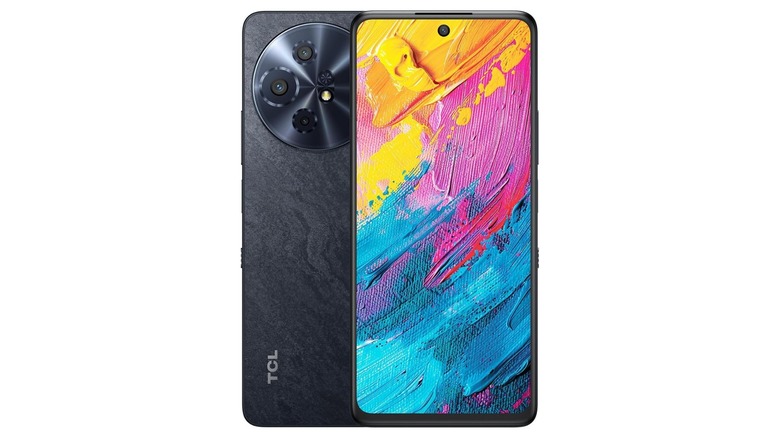
TCL is known mostly for making some of the best TVs in the market, but it also has a tiny stake in the smartphone sector. It makes phones that punch above their price tag like the $199 TCL 60 XE NxtPaper. Aside from the complex naming, it comes with a 5,010 mAh battery with 18W charging and a 50-megapixel main camera. Its standout feature is TCL's signature NxtPaper 120Hz display tech. What makes NxtPaper a good addition is the fact that it has a matte texture that significantly reduces eye strain by cutting down harmful blue light by as much as 61% plus zero reflections. The idea here is to look and feel like paper. Plenty of people seem to love this type of display even if it means sacrificing a bit of brightness.
Camera performance is generally good, especially when there is good lighting, but the back camera module isn't the best-looking, and it has a little bit awkward positioning. The battery performance isn't too bad, but it feels like it should offer more, given the display technology. Nevertheless, get yourself the TCL 60 XE NxtPaper if you read a lot on your phone or if you struggle with eye strain. There are several other TCL phones with NxtPaper displays available on Amazon.
3. Nothing impresses with specs but import hassles limit appeal
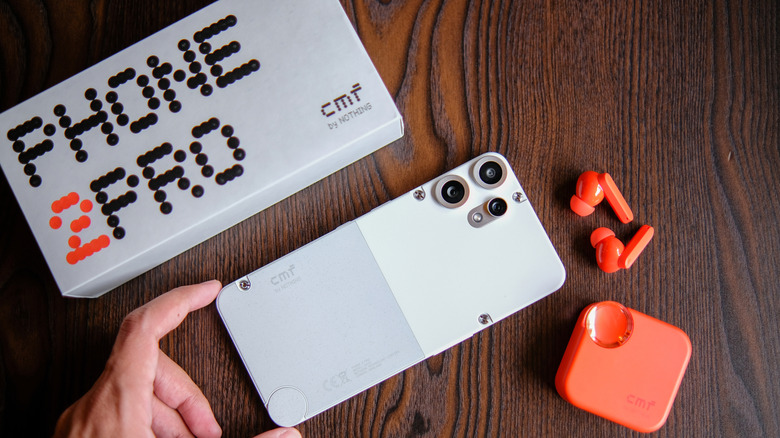
There aren't many options when it comes to Nothing phones, but what's available is just perfect. In the spirit of getting the best value for your money, the two models you should consider if you want a sleek device without breaking the bank are the Nothing Phone 3a Lite and the Nothing CMF Phone 2 Pro, which is unbeatable at its price. The specifications and the hardware on these two devices are almost identical. The only noticeable differences are in the design and a small improvement on the triple camera setup specifications for the older CMF Phone 2 Pro. Price is around $300 for both, so you can go with either depending on which look impresses you the most.
The only catch with these Nothing Phones is that they are not readily available in the U.S. Also, they tend to sell out fast and are usually sold out even on the brand website because of how popular they are among budget smartphone users. That aside, both phones perform admirably well for the price and are arguably some of the best-looking phones in the current phone market. The camera on both is great and works decently even in low-light conditions. They come with Android 15 out of the box with a promise of three major future updates, which is not too bad in this price category. The CMF Phone 2 Pro and the 3a Lite are exceptional if you can bear with the importing and potential warranty limitations in the U.S.
2. Google Pixel offers best-in-class cameras and seven-year support
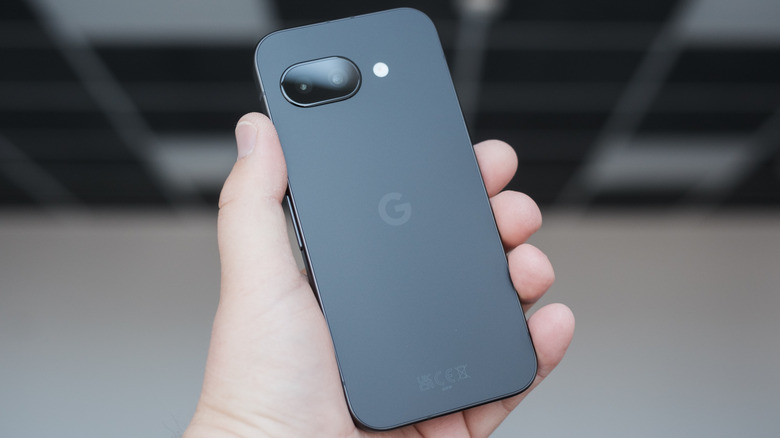
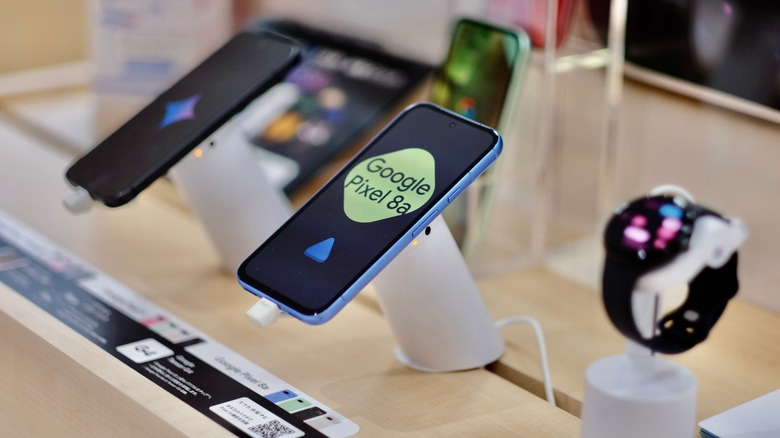
Google Pixel is known for its main flagship series, but the company offers some of the best mid-range phones with the cheaper Pixel-A series devices. Unlike the other brands you've seen here, the Pixel A-series isn't particularly cheap, but going for the older devices in the series will be significantly cheaper, and you'll still get flagship-level performance. The $400 Google Pixel 9a is the first choice we'd recommend in this series. The main attraction on this device is the best-in-class dual camera that produces excellent images and videos as we saw in our Google Pixel 9a review.
The Pixel 9a comes with a 5,100 mAh battery that should easily last through the day, Google's Tensor G4 processor, and, most importantly, clean stock Android plus guaranteed seven-year OS upgrades. If you buy this device at the time of writing, you should still get the latest Android version until 2032. Stock Android means zero bloatware or unnecessary customizations that slow things down as the phone ages. The only legitimate complaint with this phone is thermal throttling when subjected to sustained gaming, but this isn't a big deal for typical everyday use. If you want to save a little bit more money, you can go for the older Pixel 8a, which offers almost identical performance and comes with guaranteed support until 2031.
1. Samsung offers unbeatable value with six years of guaranteed updates
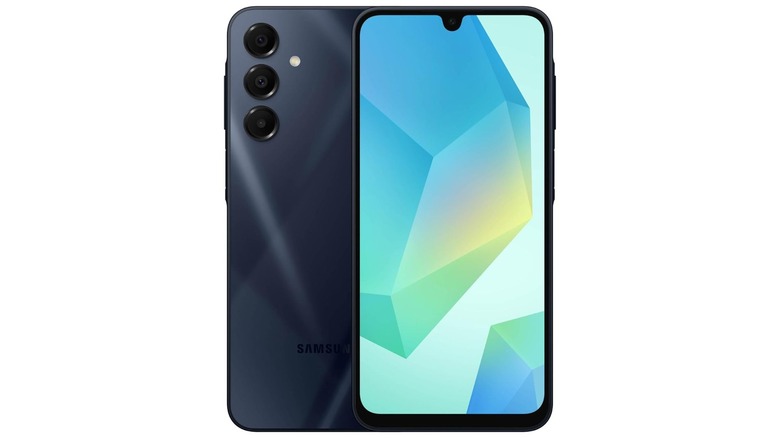
Samsung has the best deals when it comes to its budget phone A-series lineup with a wide variety of cheap, high-quality phones to choose from. To narrow down the many available options, we highly recommend the Samsung Galaxy A16, which is surprisingly better than the newer Galaxy A17. This device will set you back just $160 on Amazon, and you get 5G, 5,000 mAh battery, 25W wired charging, and a 50-megapixel main camera. Most importantly, you get six years of guaranteed OS updates, meaning you can still have this device running the latest Android all the way until 2030 since it came out in 2024. The newer A17 will see you through to 2031.
Battery performance on the Galaxy A16 is well above average. Display quality is impressive for this price category, and the camera isn't too bad with just one glaring issue — it struggles in low-light conditions. One other issue we can think of is the lack of wireless charging, but that might be asking for too much at this price point. You can explore other A-series options like the even cheaper Galaxy A06 and A07 or the more expensive A35 and A36 that will still cost you no more than $400. Galaxy A-series phones are some of the good Android phones that still come with expandable storage in case the built-in storage isn't enough.
Methodology

To come up with this roundup, we focused on what matters to everyday users, not just specifications. We looked at what the major phone brands have to offer and limited our picks to phones under $400 and leaned into expert reviews, customer feedback, and some of our previous reviews. The core criteria included battery life, camera quality, and long-term software support since Samsung and Google lineups stand out here. We also considered brands with phones no older than 2024 and gave preference to 2025 and 2026 models when available. And the guiding question we asked for any recommended phone was whether it could work reliably as a daily driver.