

5 Underrated Android Phone Brands That Can Compete With Google And Samsung
Samsung and Google are among the best Android phone brands, and the duo makes some of the most popular devices you can buy. If you go on the internet and search for the best Android phones at any time, you'll certainly come across swaths of articles recommending at least one device from either company. While phones from these two manufacturers might be at the forefront when it comes to the best phones across different price points, these brands aren't the only good choices available. There are underrated Android phone brands that have been putting out solid devices and are worth considering.
Some of these brands are even giving Samsung and Google a run for their money in some categories. So the next time you want to upgrade your Android phone, don't just consider these two. Instead of paying a premium for a phone from Google or Samsung because of their brand value, you can also consider alternatives from these five underrated phone brands. We've selected these Android phone brands based on their limited popularity in the U.S. and how rarely their devices are featured in lists of the best smartphones online.
Realme
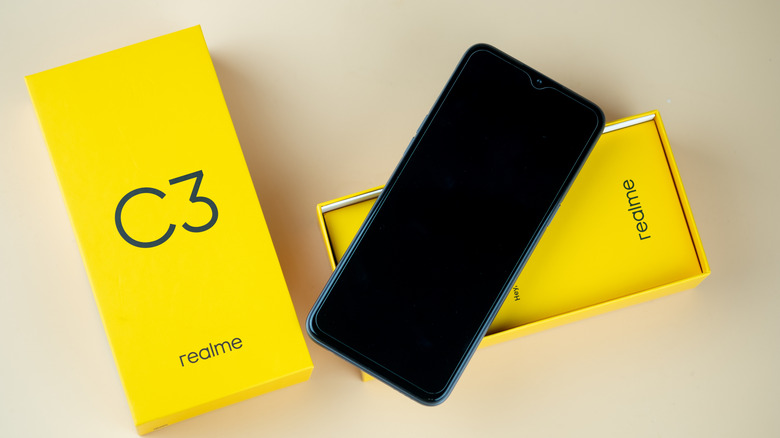
Realme is a Chinese smartphone manufacturer that started as a subbrand of Oppo, then went independent in 2018. Because Realme is a Chinese smartphone company, you might mistake it for a low-quality brand. However, that couldn't be further from the truth, as Realme is, in fact, a reputable brand that has been putting out phones solid enough to compete with the likes of Samsung and Google. Say you want to buy a new Android flagship phone. As of this writing, you can pick between the Samsung Galaxy S26 Ultra, starting at $1,300, and Google's $1,200 Pixel 10 Pro XL. But instead of paying a premium for these two, you can save a lot by opting for Realme's GT 8 Pro flagship, which starts at slightly over $800 and features flagship-level specs.
For that price, you're getting a phone powered by Qualcomm's flagship Snapdragon 8 Elite Gen 5 (the same chip that powers the S26 Ultra), a 7,000 mAh silicon-carbon battery with 120W wired (and 50W wireless) charging, and a 6.79-inch LTPO AMOLED panel with a QHD+ resolution, 144 Hz refresh rate, and 7,000 nits of peak brightness. Throughout its entire lineup of phones, Realme's strategy is going all out on the specs and pricing its devices competitively, thus offering better value across its entire lineup. However, the key downside is that the company doesn't officially sell its phones in North America, and it doesn't offer the best software support.
Honor
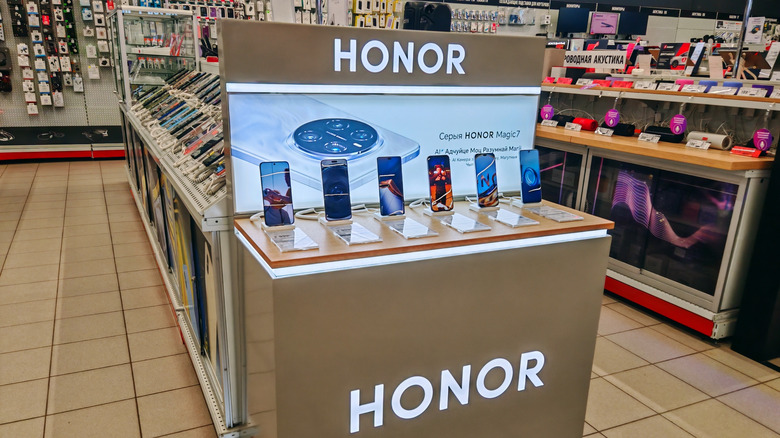
The Honor name might not be as prominent as Google, Motorola, or Samsung, but if you examine the company's smartphone lineup closely, you'll realize it has what it takes to compete with the best phone brands in the world. The company is well-positioned to take on Google and Samsung with its diverse lineup of phones that target different price points, and with an excellent software update promise of up to six or seven years of updates on some models. As of this writing, one of the best phones from Honor is the Magic 8 Pro, which includes solid hardware specs that can rival what you get on Samsung's and Google's flagship devices.
The company has also proven to be a capable rival by launching its line of foldable phones. In fact, its Honor Magic V5 foldable phone is considered among the best folding phones by users. A major issue that seems to be holding back Honor is that its phones aren't sold widely. As a result, you can't buy Honor's smartphones through official channels in some places, like the U.S., which makes its devices overlooked by many potential buyers.
TCL
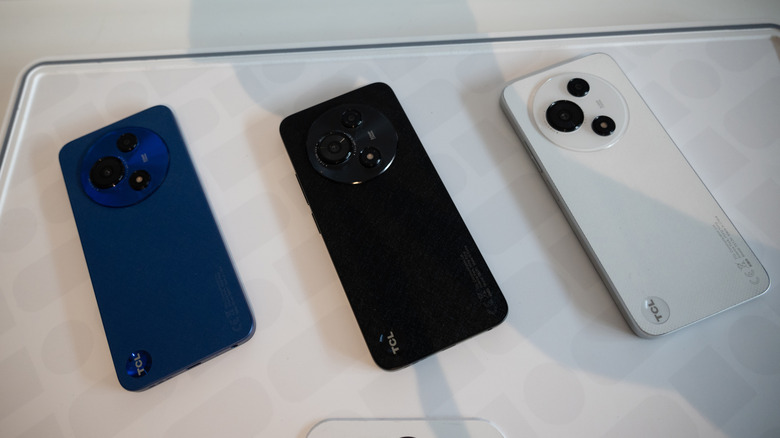
You might know TCL as the manufacturer of cheap TVs, but the company has a presence in other segments of the consumer electronics market, including smartphones, routers, and laptops, to name a few. Sure, it might not be as prominent in the phone market, and its brand name might not cross your mind when shopping for a new phone. However, considering its smartphone portfolio, TCL is simply underrated as an Android phone brand. For example, if you have a tight budget, the Samsung A17 is a cheap Android phone sporting a 6.7-inch FHD+ display with a 90 Hz refresh rate, 4 GB of memory, 128 GB of storage, and a 5,000 mAh battery.
That same $200 will get you a better-specced phone from TCL. The TCL NxtPaper 70 Pro costs $200, and it sports a 6.9-inch display with a 120 Hz refresh rate, FHD+ resolution, and a maximum brightness of 900 nits. The phone is powered by a 5,200 mAh battery and uses a Mediatek Dimensity 7300 processor paired with 8 GB of memory and 128 GB of storage. It features a 32 MP selfie camera along with a dual rear camera setup with a 50 MP primary shooter. Put all of these specs together and on paper, TCL's NxtPaper 70 Pro is clearly a better device than the Galaxy A17. Perhaps a part of the reason why TCL's phones haven't gone mainstream is limited software support and the fact that it doesn't produce a wide variety of models.
Tecno
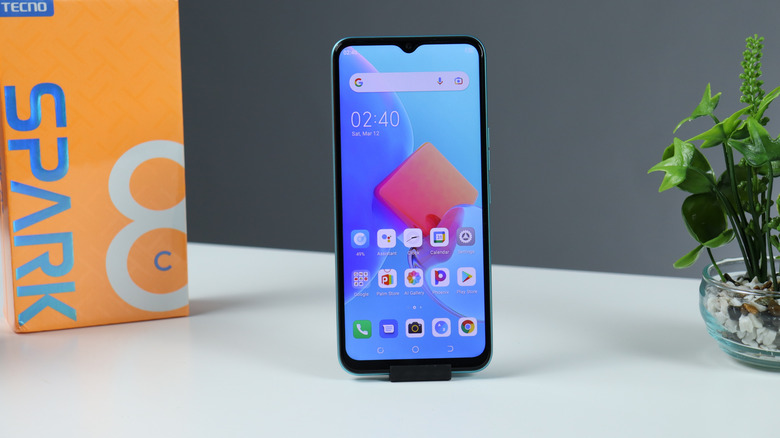
If you aren't familiar with this brand, Tecno is a Chinese smartphone manufacturer that's owned by Transsion Holdings, whose phones have found success in Africa and India thanks in part to the company's affordable pricing. This company is very capable of competing with Google and Samsung due to its diversified portfolio of phones. At the entry level are the budget-focused Spark and Pop series, and the company also sells devices under the Camon, Pova, and the high-end Phantom series, which includes foldable phones like the Phantom V Flip 2 and Phantom V Fold 2. The Tecno Camon 50 Pro falls in the mid-range category and starts at an equivalent of about $300; it comes with specs that trump Google's budget-focused Pixel 10a in some categories while costing about $200 less.
For example, the Camon 50 Pro is powered by a larger 6,500 mAh battery and is capable of charging at speeds of up to 45W via USB-C, while the Pixel 10a tops out at 30W. It also has a larger 6.78-inch AMOLED display with a faster 144 Hz refresh rate and offers 256 GB of storage as the minimum — twice that of the base configuration of the Pixel 10a. Based on the spec sheet alone, the Pixel 10a only has a leg up on the Camon 50 Pro in terms of software support and wireless charging. But to properly give Google and Samsung a run for their money, Tecno needs to improve the software experience on its phones, provide longer support, and expand its presence into more markets.
Nothing
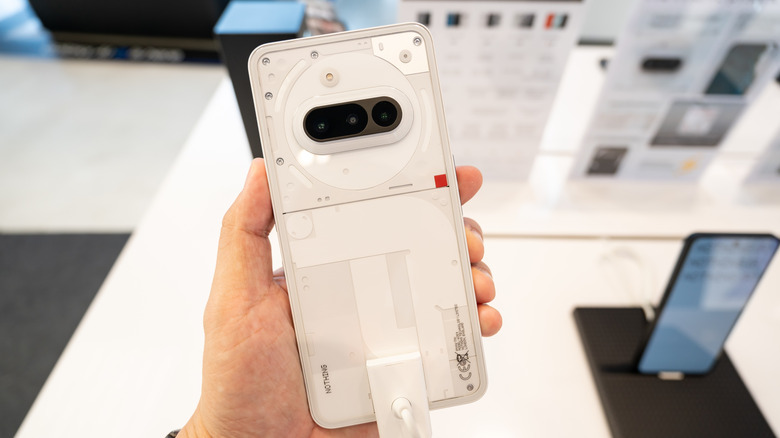
Nothing is one of the youngest smartphone brands on the market. It was founded in 2021 by Carl Pei, a co-founder of OnePlus. The brand's phones have a distinct design with glyph lighting at the back. Its distinctive glyph lighting may seem like a gimmick to some, but don't overlook this brand, as it's capable of giving Google and Samsung a run for their money. The Nothing Phone 4(a) Pro, for example, is a solid demonstration of how capable the brand is. Similar to the Pixel 10a, this phone costs $499, offers competitive specs for the price, and it even bests the Pixel 10a in some aspects. It has a larger, brighter display, can charge faster, and comes with a more versatile camera setup on the rear with a 50MP wide camera, a 48MP telephoto camera with 3.5x optical zoom, and an 8MP ultrawide camera.
In fact, CNET's review of Nothing's Phone 4(a) Pro found that the device offers better camera quality than the Pixel 10a, although it lags in some areas like performance. In general, the brand is behind Samsung and Google in terms of software support, as it offers a shorter software update period. The company also doesn't sell all of its devices in the U.S. — some models are usually restricted to some regions. For example, the base Nothing Phone 4(a) is available to buy in the U.K. but isn't listed on the U.S. site.
How we selected these Android phone brands
We came up with this list by researching phone brands whose phones aren't popular in the U.S. and don't generate huge sales figures compared to the likes of Samsung and Google, according to Counterpoint Research. Additionally, we considered brands whose phones aren't featured regularly in articles about the best phones. We then compared the portfolio of these phone brands with what you get from Google and Samsung.
For each phone brand, we've included examples of how certain models from their lineup stack up against devices from either Google or Samsung to give you a clear picture of why we believe the brand deserves more recognition.