

5 Disadvantages Of Owning A Kindle You Should Know About
We may receive a commission on purchases made from links.
A Kindle feels like the perfect upgrade to many readers. You can store thousands of books on a single device, access any title in seconds, and the battery lasts for weeks. Many readers have been using their Kindles for years and would never give them up. But that doesn't mean there aren't any downsides to owning a Kindle. Some of these drawbacks are major reasons many people still avoid buying Kindles, and a few become obvious only after long-term use.
You can't ignore factors like high upfront cost, being tied to the Amazon ecosystem, and the unintuitive interface. Remember, using a Kindle isn't anything like an Android tablet or iPad. The e-ink display is easier on the eyes than backlit text, but the touch isn't as responsive, and the UI can feel basic and outdated. Many users also dislike the power button's placement, as it's easy to accidentally press while holding the Kindle. And we can't overlook the fact that a Kindle can never really replace the feeling of holding a physical book for many readers. Even those with Kindles loaded to the gills still occasionally purchase physical books just for that feeling.
If you are on the fence about buying a Kindle, it's worth realizing that convenience comes at a cost. And that cost is often a deal breaker for many book lovers. Understanding these trade-offs can help you decide whether a Kindle is worth buying.
High initial cost
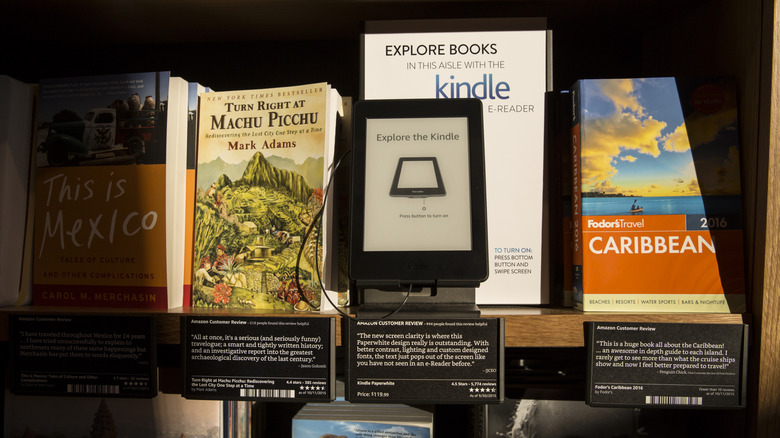
One of the biggest disadvantages of owning a Kindle is the high upfront cost. Even the most affordable model, Kindle (16 GB), costs $109.99. And that's the one with ads on the lockscreen. If you want to buy a base Kindle without lockscreen ads, you will have to shell out an extra $20. The same applies to the Kindle Paperwhite, which is priced at $159.99 with lockscreen ads, and $179.99 without them. We haven't yet factored in the cost of Kindle accessories, say a protective cover or a charging adapter. Add those to the mix, and you are staring at an even higher initial cost.
To those who read a lot of books, the upfront cost could be justified. For many, a Kindle eventually pays for itself through discounted e-books and subscriptions, but that takes time and a lot of purchases. If you plan to read only a few books, there may not be much value to the purchase, especially when you can also buy physical books at discounts or in second-hand marketplaces. So before you get a Kindle, it's important to factor in the initial cost and the number of books you plan to read. This will give you an idea of whether a Kindle will be a more cost-effective option over physical books.
You are locked into Amazon's ecosystem
Another major downside, and one that became more apparent recently, is that a Kindle ties you to the Amazon ecosystem. First, buying or loading books from outside the Kindle Store isn't nearly as seamless as buying books directly from Amazon. Although workarounds exist, they aren't exactly easy for the average user. Second, the books on your Kindle aren't yours in the true sense. If Amazon deletes your account, which can happen for a variety of reasons, you lose access to all the Kindle books.
You will also temporarily lose access to your books if you sign out of your Amazon account on your Kindle, although logging back in restores access. That's something you need to be mindful of. Unlike physical books that are truly yours, you are paying just to access them on a Kindle, not for full ownership. If you ever plan to free yourself from Amazon's ecosystem down the line, there's a real risk of losing your entire Kindle book collection.
Let's also not forget how Amazon recently dropped support for several older Kindle models. Perfectly fine, fully functional Kindles can no longer access the Kindle Store. That means users won't be able to purchase new books on models that Amazon dropped support for, although existing books will remain available in the Kindle library. That's the uncomfortable truth of owning a Kindle, or any device for that matter. You never know what lies ahead.
The user interface feels basic
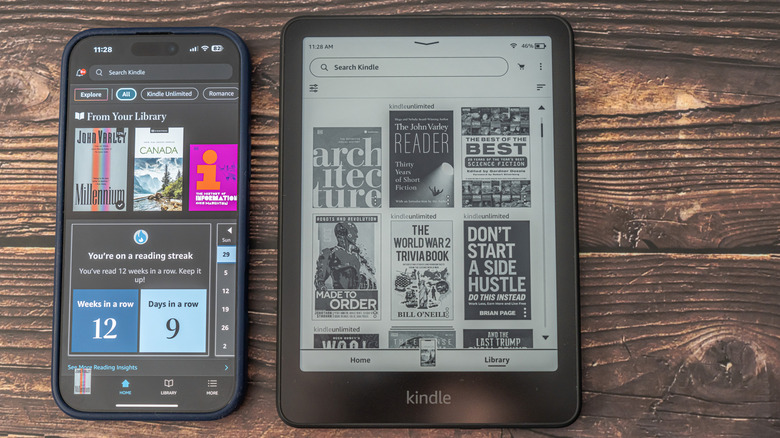
If you have ever used a Kindle, you would probably know that it isn't the easiest to work with. Compared to a smartphone or tablet, the Kindle's user interface (UI) feels slightly outdated. Additionally, the touch response and performance can feel slow at times. Navigating to settings, loading books, or even performing other simple actions always takes a second or two. Sometimes, as you add more books over the years, the Kindle becomes even slower.
There are reasons for that. The e-ink display has a lower refresh rate than LED screens, and Kindles aren't exactly optimized for performance, but rather for longer battery life and a more comfortable reading experience. That doesn't change the fact that if you are looking for something more modern or blazing-fast, a Kindle might not be the best option.
Apart from that, users have long raised concerns about the time and effort it takes to organize the Kindle library, primarily because of the unintuitive interface. For a device that costs a decent amount of money, many users expect the UI to be more polished.
Sharing Kindle books remains a challenge
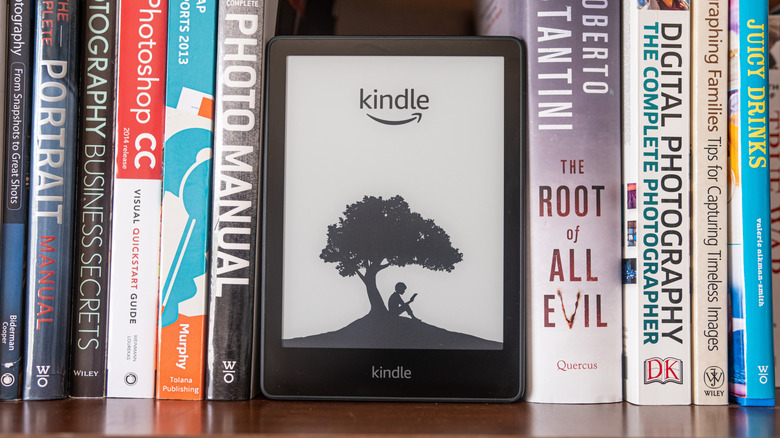
One of the biggest advantages of owning physical books is the ability to share them with others, be it a family member, friend, or co-worker. A Kindle, on the other hand, offers limited functionality in this regard. While you can technically share Kindle books with others, it requires setting up the Amazon Household, and you can only share books with one other adult and up to four children. Amazon earlier had a simpler option to lend books to others for a two-week period, but that was discontinued a few years ago. There's also the option to lend the Kindle itself, but that approach comes with privacy concerns.
So if you are someone who loves sharing books, the Kindle experience can feel a bit restrictive, something even the discounted book prices can't make up for. For book lovers, this is a major disadvantage of owning a Kindle. And if you ever want to donate a book, that isn't an option either.
Can't replace the feeling of owning physical books

Even the best Kindles can't truly replace the emotions attached to owning books. For many, books are a prized possession, something people display on shelves. For those folks, even if they have hundreds of books on their bookshelf, they still remember where they bought many of them and which ones were gifted by family and friends. A Kindle takes all that away.
It may not matter to many readers, given that Kindles offer a strong actual reading experience. But there are others, people who cherish the smell of new books or the act of turning pages. There's also the bookstore experience of browsing shelves loaded with books and meeting fellow book lovers. Kindle books, though convenient, can never replace the connection people have with physical books. That's one reason why so many Kindle users still occasionally buy physical books.
Keep in mind that owning a Kindle has advantages, too, even for lovers of physical books. The device does make your life a lot easier, allows you to carry your entire library, makes reading more convenient, and even saves money in the long run if you read a lot. So, whether a Kindle or an alternative e-reader is worth the investment ultimately comes down to your reading habits, preferences, and expectations.