

4 Reasons You Should (And 4 Why You Shouldn't) Mount Your TV On The Wall
We may receive a commission on purchases made from links.
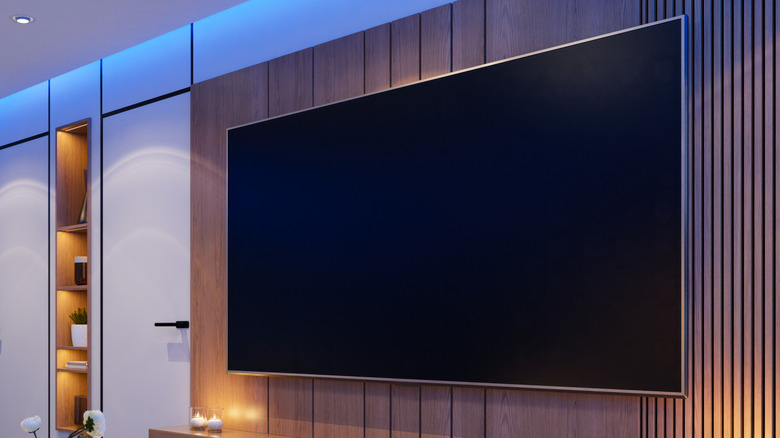
With old CRT TVs, the only wall-mounting you'd ever see was in places like hospitals or the DMV, and then only for the smaller sizes and only with the help of some sort of bottom tray to support their weight. Those TVs were so heavy and bulky that building them into a wall made more sense than mounting them against a wall. Modern flat panels aren't any thicker or larger than a portrait, so it feels almost natural to integrate your smart TV into your living room's aesthetics.
Put a fine art slideshow on your TV and you'd hardly even know there's a TV in the room. Wall-mounting allows our living spaces to feel like they aren't designed around a screen. It feels stylish and looks upmarket, but mounting a TV isn't a surefire win for you. There are challenges in doing it right, and even if the installation goes smoothly, it's not always the best solution for everyone, in every situation. Before you call that installer or whip out the stud-finder yourself, let's go over some reasons you should (or shouldn't) wall-mount your TV.
Do it: You don't have anything to plug in
With the advent of smart technology, your television is technically a self-contained device. With streaming apps, you don't actually have to plug in any external devices. So, if you're not using a streaming box, gaming console, or other device that needs to be set on a stand of some sort, you might as well save the space such a stand would take up and mount your TV on the wall. This is the cleanest, most minimalist solution.
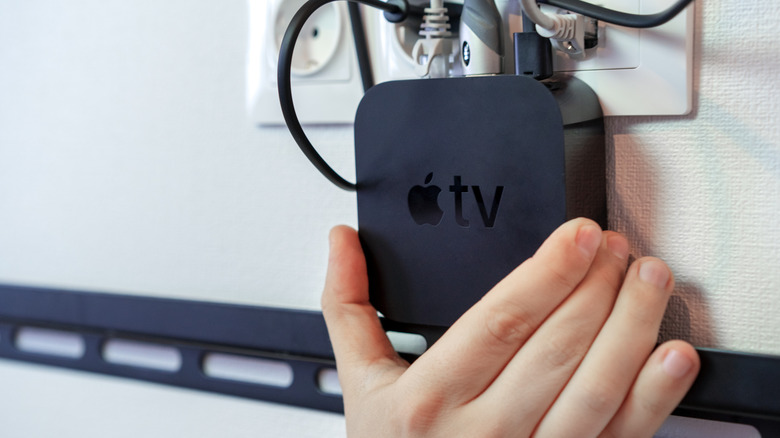
In fact, even if you have some of these devices, you can still avoid having to put them on a table or stand. Some wall-mounting solutions allow you to put something like, for example, an Apple TV unit behind the TV set. This works because the Apple TV remote does not require line-of-sight to work. There are also small streaming sticks that are designed to fit behind a TV one way or another.
Alternatively, you can hide large devices like gaming consoles out of sight and use a long HDMI cable to connect to the TV. Whatever your reason, if you want the most minimal TV setup, at least from a visual perspective, wall-mounting is the way to go. The only more extreme solution is to have your TV on a motorized system that hides the whole set inside a wall, in the ceiling, or inside a cabinet. These solutions exist! For those with the budget, there are many ways to cleverly hide your TV.
Do it: Your TV was designed to sit against a wall
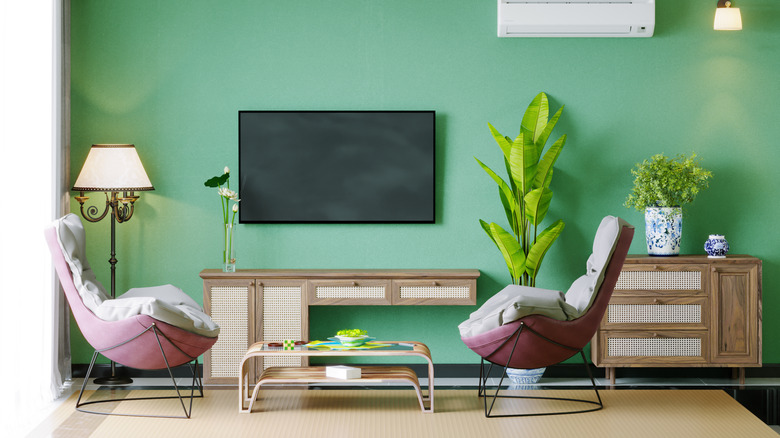
Early flat panels were pretty thick compared to modern models, but they are now so thin that wall-mounting seems to be how they're meant to be used. This is especially true for OLED TVs, which can be just a few millimeters thick at some points. But are they actually designed with wall-mounting as the intended use case?
It's complicated, but some TVs do work better when wall-mounted. For example, if you have a TV that uses rear-firing speakers, the audio engineers can take advantage of the hard surface behind the TV to project sound forward. This still works if the TV is free-standing, but has a wall behind it. It just works better if the TV is properly mounted perfectly perpendicular to the wall. On some TVs, this is a mode that you can set in the audio menus, so the TV knows it's wall-mounted.
Some specific models of TV are definitely designed to be hung on a wall. Samsung's The Frame TV might be the most literal (and infamous) example of this.
Do it: Lots of TV stands are pretty bad
While flat-panel TVs have improved in most ways over the past few years, TV stands haven't really followed suit. There are a few likely reasons for this. The TVs themselves are getting thinner and lighter, so the stands don't have to be all that robust. Many TV makers probably expect you're going to wall-mount the TV anyway, so why waste time and energy engineering a nice stand when it's just going in a closet somewhere?
Whatever the reason, even expensive TVs can come with minimal, cheap-looking, flimsy stands. Those with a central support tend to let the TV wobble sideways if someone walks across the floor, and the models that just have the little feet on either end don't allow for tilt adjustments. By using a wall mount, you get around all of this. Your TV is solidly held and shouldn't vibrate from your own subwoofer. Also, if you pick the right wall mount, you can get tilt and swivel functionality too.
That said, there are some other alternative setups to mounted TVs worth considering. You can buy universal TV stands that use the same VESA wall-mounting system as a wall mount, but add all the versatility and strength your stock factory stand lacks. I actually mounted my second TV on a rolling stand so I can move it to any room I like as needed.
Do it: It's safer for your TV
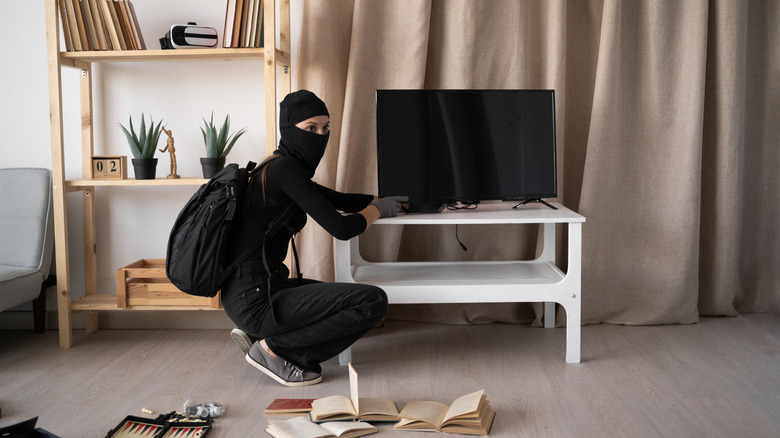
Your TV was probably pretty expensive, and even if it wasn't expensive, you don't want to lose it to a crash ... or something else. Well, if you wall-mount your TV, it will actually help protect it. It might sound a little far-fetched, but if you think about it for a minute, it makes a lot of sense.
First, even though there's no such thing as perfect theft prevention, wall-mounting does make a TV less appealing as a target for thieves. When someone breaks in with larceny on their mind, they want to get in and out as quickly as possible. A wall-mounted TV offers a little more hassle. A touch more friction, if you will. If you buy a mount with an anti-theft feature, you'll make it even less likely that your TV will be on the list of things taken.
It's not just theft that you need to worry about, though. If you have pets, children, or just particularly clumsy friends, you run the risk of a free-standing TV getting knocked over. CRT TVs were so heavy that knocking them over wasn't something that happened often, but modern TVs are light, so even a small bump can send them flying.
Don't do it: You don't have a spot that's low enough
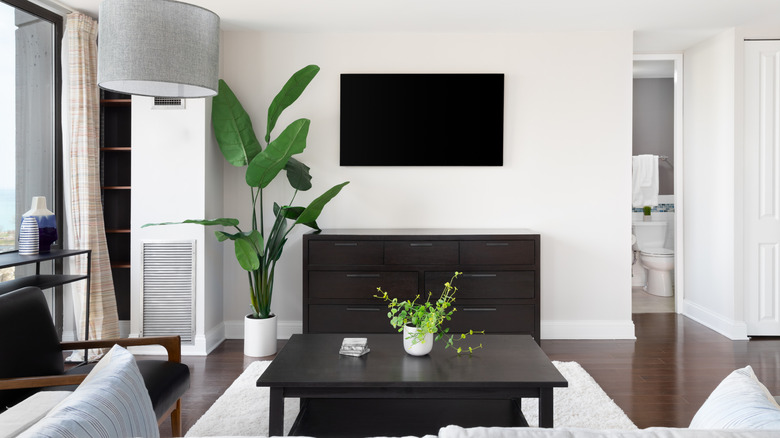
It's very common for a TV to be mounted way too high. It's so common that there's a subreddit called r/TVTooHigh, where people do nothing but post photos of TVs that have been mounted higher than they should be. If you follow the general consensus, then the correct height for a wall-mounted TV (or one on a stand, for that matter) is with the center of the screen at or slightly below eye level.
That's eye-level from your viewing position, of course. So if it's a TV that's meant to be watched while standing (like in your home bar or pool house), then that's pretty high. But most people watch TV seated in an upright position, and that should be your guide. In my case, I mounted our TV based on us reclining and looking up, so I also tilted the TV down. With this general height requirement in mind, a good reason not to mount your TV on the wall is that you simply don't have a suitable spot on a wall that's low enough for comfortable viewing.
Don't do it: The only available spot is above a fireplace
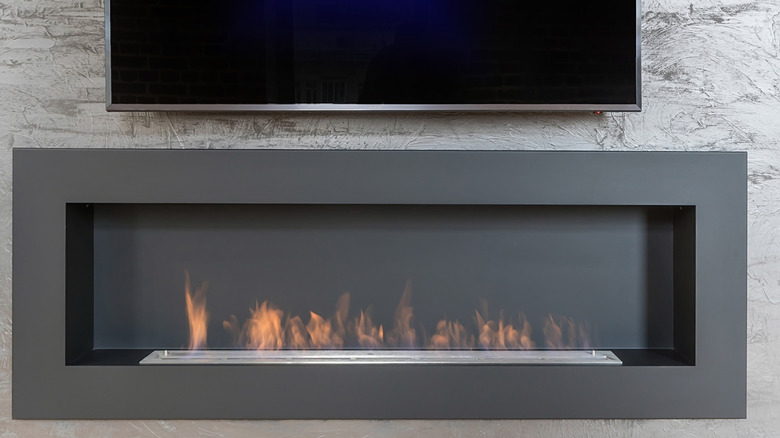
Mounting a TV above a fireplace is an inexplicably popular option. Well, maybe it's not really all that inexplicable. If you have a living room with a fireplace, all the seating is probably arranged around that fireplace — the hearth has been a home centerpiece for centuries. But even if it feels right to mount your TV above your fireplace, it's almost always a bad idea, especially if we're talking about a traditional fireplace.
The first problem relates to the issue we just covered: the TV will be too high. The fireplace itself is probably right at the height the TV should be. So if you mount your set above it, everyone will end up with sore necks after watching for a few hours.
But the more pressing issue is that you've mounted your TV above a strong heat source. It's the main reason we listed "above a fireplace" as one of the worst places to put a TV in your home! Unless you're sure that no excess heat or soot is reaching your TV, you might be facing a situation where the TV's life is shortened by a higher operating temperature, or the screen itself could be stained or otherwise negatively impacted by particulates or that aforementioned rising heat. Some modern fireplaces might be less of an issue, and perhaps you rarely, if ever, light yours anyway, but give it some thought before doing what seems like the obvious thing.
Don't do it: You need access to ports
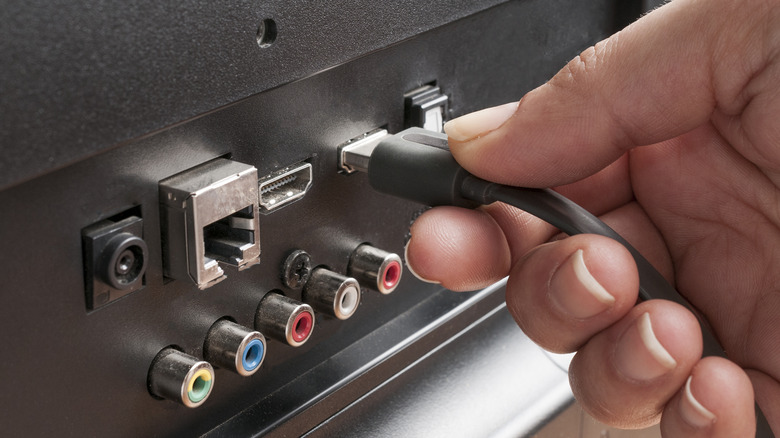
If you've got all of your devices connected, routed, and cabled the way you want them, basically forever, then a wall-mounted setup can be ideal. However, if you need access to the rear of your TV often to change out devices or plug in USB ports, then wall-mounting might not be for you.
Now, it is possible to access the ports on some modern TVs while mounted, if they're on the side of the TV rather than the rear. But even then, it's quite a hassle to tilt the TV up to get your hand in there, trying to plug things in based on feel alone. Be thankful if you've never had to stick your phone behind a mounted TV to take a photo so you can see where the ports are.
That said, there are some ways you can have it both ways, though it will require a few accessories. The best solution is to use an HDMI switch as a sort of breakout box. If you do the cable management well, then you can hide the box, but still access it more easily than getting behind the TV. If you prefer, you can have one switch for every HDMI port on your TV. For USB ports, it should be as simple as installing a USB extension cable so you can plug in, for example, a flash drive with photos or videos with ease.
Don't do it: You're renting

If you own your home, then there's no one you have to ask before wall-mounting a TV. Well, perhaps you want to inform your significant other, but that's about it. However, many people these days rent rather than own their homes. In that case, mounting your TV on the wall is more complicated than just grabbing your tools or paying someone to install the equipment.
Before you go ahead and spend a single cent, carefully check your rental contract and get written permission from the landlord. There may be special conditions, such as using an accredited installer rather than installing things yourself.
When you move, you may not be allowed to take your mount with you, or alternatively, you'll have to pay to repair the wall if the mount is in a location the owner doesn't want. These are just some potential pitfalls, but the lesson here is that if you don't own the home, it's probably better to stay away from permanent alterations unless they're done by the landlord.
Some extra food for thought
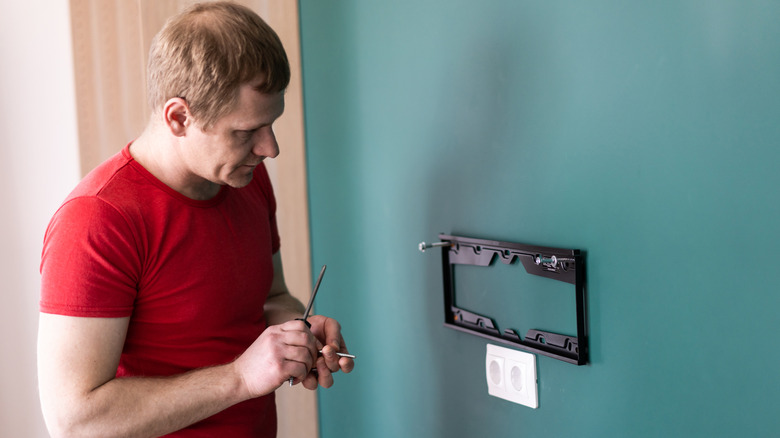
It feels a little silly that something as simple as hanging a TV on a wall requires so much forethought, or has so many "rules," but once you've had a wall-mounting go wrong, it won't seem so overblown. There's no getting around the appeal and utility of mounting your TV on a wall. It's genuinely a space saver and can improve the aesthetics of your living space to a larger degree than you might expect.
At the same time, it's harder than it looks to do right. It's messy to fix if it goes wrong, and you might end up spending more time and money getting it to where it needs to be than you expect. Compared to the simplicity of just using the stand that came with your TV or buying a better stand and calling it a day, you have to ask yourself if it's really worth the hassle.
Some walls just aren't right to bear a TV, so upgrading to a new set might involve redoing the whole thing, and mounting a soundbar makes it even more complex. Personally, now that I've experienced the convenience of an aftermarket stand, I doubt I'll go the wall-mounting route again.