

Why Are People Getting Rid Of Their Ring Doorbell Cameras?

During the 2026 Super Bowl, Ring placed an advertisement for a new feature called Search Party that would allow neighborhoods to scan for missing pets using its cameras. The ad, still watchable online, explains that the function relies on AI to scan live feeds and compares available footage with photos of the missing pets, helping to identify them and reunite them with their owners. Ring makes it clear that users can opt out of the program, but since Ring devices that save video to the cloud are automatically enrolled, it left many with a bad taste in their mouths. People realized their home security footage might be used for purposes beyond their control. This prompted some Ring owners to return their cameras. USA Today reports that one Seattle-based owner recorded a video of herself taking down her camera and flipping it off. Additional outlets reported that people began uninstalling cameras or calling on peers to do so in viral videos online.
A major point of contention is that Ring, an Amazon company, previously partnered with Flock, a technology and surveillance firm that uses license plate readers, cameras, and gunfire detection systems to improve incident response. The idea was to allow law enforcement access to Ring surveillance footage for investigations. Following a public boycott, the two companies canceled their partnership, though Ring cites it would have required "significantly more time and resources than anticipated" to make it all work. Since the integration never launched, "no Ring customer videos were ever sent to Flock Safety."
There's no evidence of a mass exodus yet, but user videos continue to be shared online. Privacy groups such as the ACLU and the Electronic Frontier Foundation have also spoken out against the rapid deployment of state surveillance and, specifically, Flock.
You can install security cameras without the creepy stuff
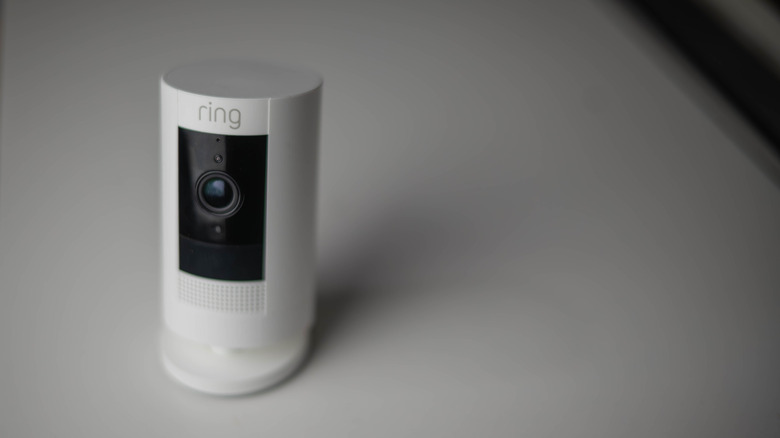
You likely know by now, but there are some uncomfortable truths about using Ring cameras for local surveillance in your home or around your property. For starters, using one automatically enrolls you in Neighbors, its community feature to facilitate information sharing. Moreover, new features can be added to Ring's products at any time, whether you support them or not, like Search Party. But outside of Ring, you can find solutions that drop some of the creepy stuff.
Several Ring camera alternatives are actually worth trying. My recommendation is to spring for solutions like security cameras that store footage locally, rather than uploading to the cloud. I personally use Reolink cameras, including a video doorbell, and sync them to a home hub that stores the footage. Even if you didn't want the home hub, you can save footage to MicroSD cards installed in most of the brand's cameras. It still lets you use a mobile app to access the devices and feeds, and you can access them remotely, provided your router is connected to the internet. At the very least, you can spring for security cameras that don't require a subscription, as many of them avoid the extra costs by skipping out on cloud features.
There is a chance those security devices can be hacked if they are public-facing and connected to the internet. You can take measures to improve security, such as using strong passwords, enabling two-factor authentication for accounts, and keeping software and firmware up to date at all times.