

9 Incredible High-Tech Hearing Aids Features That Help People Hear Again
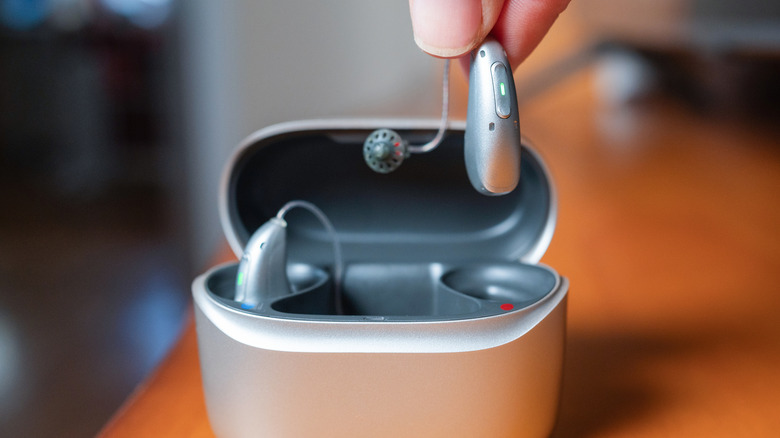
Hearing loss is seldom an all-or-nothing deal. Most people go through degrees of hearing loss, where they cannot properly comprehend sounds, while still faintly hearing them. In these situations, the answer is to use a hearing aid. As the name implies, a hearing aid attempts to improve the person's hearing, aiding their ability to listen to sounds and understand them. Primitive hearing aids did this by simply amplifying the audio, which wasn't all that effective. An approach like this amplifies the noises of the environment as well, drowning out the useful sounds.
Thankfully, hearing aid technology has come a long way from those days, and modern options are packed with a variety of advanced features that improve hearing in ways beyond simply making things louder. This includes both hardware changes, as well as software-level audio processing to improve the legibility of the sound picked up.
Of course, just because a feature exists does not mean it is universally supported. Hearing aids might be a crucial medical device, but they are still a tech product, and like any gadget, they come at various price points with different features. It is even possible to turn Apple AirPods into hearing aids of sorts with a cool AirPods health feature, but this doesn't mean it comes with every feature of a medical hearing aid. To be fair, not every advanced feature is necessary or helpful to every user, but it is good to be aware of all the possibilities out there to make an informed choice.
Bluetooth

If you go over the sources of sounds we hear during the day, you will find digital sources outnumbering real-life sounds. We may listen to music, television, and our phones just as frequently as we listen to the voices of our family and friends. Even beyond entertainment, you will find that we rely greatly on electronic audio sources. Calling someone, for example, also plays their speech over the speakers of your phone.
Normally, hearing aids would just work to improve the pickup and consistency of the sound reaching your ears, regardless of whether it was produced by a speaker or an in-person source. But digital audio compression can reduce the clarity of the sound, making it much harder to understand for someone with hearing loss. Add to that all the background noise that creeps in as the sound travels from the speakers to your ears, and you have a challenge. So why not cut out the middleman?
Hearing aids equipped with Bluetooth can directly connect to any digital audio source and play the sound right in your ears. This eliminates the attenuation of speaker output and ensures that you can listen to the accurate reproduction of the source audio without any background contamination. Some people fear that Bluetooth will deplete the battery faster, but it may not make as much of an impact as you think. Even on smartphones, turning off Bluetooth to save battery barely makes a difference.
Telecoil

We just talked about how Bluetooth can enable hearing aids to connect with electronic devices and get the audio directly, but there is a limitation with this method — it cannot accommodate audio broadcasts. Bluetooth is designed for one-to-one connections, wirelessly pairing two devices. This is great for personal usage, where you can link your hearing aids to your TV or phone, but what about listening to public broadcasts?
Things like public speeches, musical concerts, or college lectures are recorded through a microphone on stage and broadcast to the audience via powerful speaker systems. But the crowd may mean there is also a lot of background noise mixed in, making it really difficult for someone with hearing loss to understand the audio, even when the volume is high. And Bluetooth, in its current iteration, cannot handle multiple connections, making it unusable.
Enter the telecoil. A telecoil is basically a little antenna built into the hearing aid. When a venue has a corresponding "Loop" installed, it can directly transmit the audio signal to any telecoils in range. This means any compatible hearing aids just need to press a button to clearly hear the audio broadcast. Needless to say, this is an incredible invention, letting people with hearing aids enjoy public performances easily. Auracast, a version of Bluetooth allowing for multiple connections, will eventually make this possible without specialized hardware. Android 16 already added Auracast, though finding speakers capable of supporting it is still tricky.
Noise reduction

A recurring theme in the technologies we have talked about so far is to eliminate the background noise by directly transmitting audio to the hearing aid. But what do you do when that isn't possible? How do you ensure that everyday sounds in real life, from conversations with friends to music from actual instruments, can also be heard without any background noise? The answer is noise reduction. While traditional hearing aids could just amplify all the sound reaching the ears, modern models have the ability to prioritize useful sounds to some extent.
Hearing aids achieve this through digital noise reduction. This is different from how noise-cancelling headphones work, being a form of audio processing. The software analyzes the audio recorded and adjusts the levels of the various sounds to reduce the degree of noise. This is effective in dealing with constant repetitive sounds like the noise of a motor or the whistling of the wind, as it is a clearly distinct type of noise that can be suppressed. But digital noise reduction can struggle with dynamic situations like a crowded restaurant, where a variety of short-lived noises are mixed.
That is where AI noise reduction is starting to make an impact. Instead of fixed criteria, the AI algorithm can dynamically analyze the sounds and pick out even the smaller disruptive noises, like the scraping of a chair or the background buzzing of the crowd, reducing their intensity. This is a great feature to have for most environments.
Directional microphones
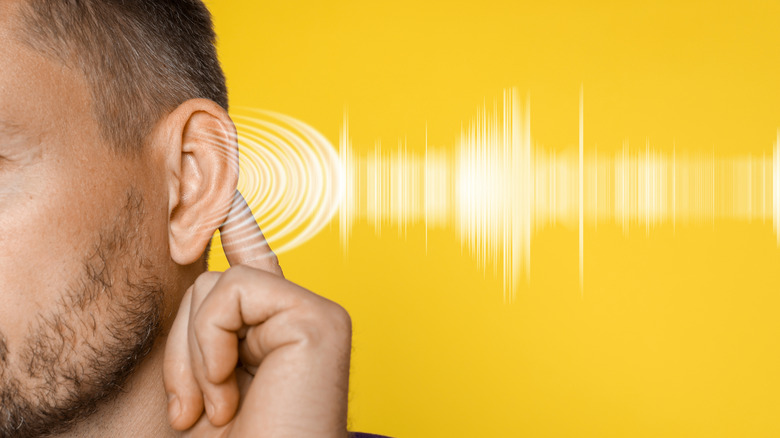
The basic functionality of hearing aids is straightforward; a microphone picks up the sound reaching the ears and then amplifies it, playing the result through speakers near the ear. Now normally, the microphone just records every sound reaching it, including the background noise. But our actual ears don't work that way. Just like our vision, our hearing has the capability to focus on sounds of interest, managing to hear them even when the environment is filled with loud sounds. To emulate this capability, some modern hearing aids use directional microphones.
Directional microphones, as the name suggests, are designed to pick up audio coming from a specific direction. Of course, even sounds from other directions will bleed in, but their intensity is lowered, with only one direction getting clear audio pickup. In hearing aids, this direction is usually set to the front, so that you get better audio pickup of a conversation you are having while reducing the levels of the other noises behind you.
Some directional microphones go a step ahead and can adjust their orientation. Called adaptive directional microphones, these are designed to turn in any direction, selectively focusing on certain sounds. Hearing aids with such microphones analyze the audio profile of your surroundings to determine the important sounds and focus on them, mimicking the natural behavior of our ears. This makes a big difference in the quality of hearing, making it important to figure out whether a directional hearing aid is fixed or adaptive.
Speech enhancement
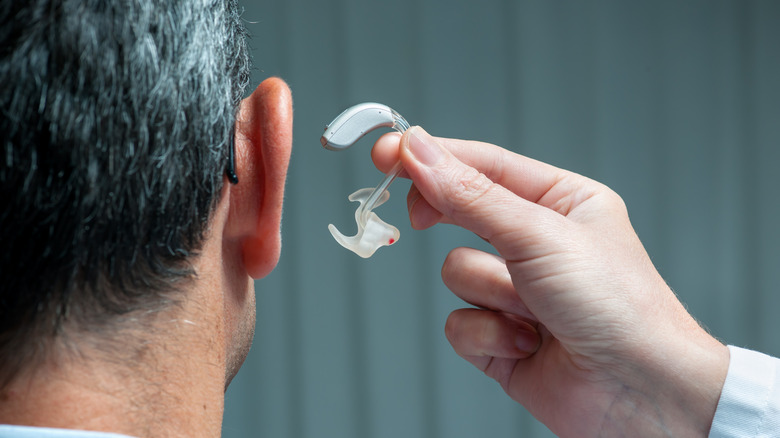
So far, we have discussed features that can reduce noise levels in various ways, but sometimes that's not enough. For relatively quiet environments, simply suppressing the noise is good, but for louder situations, the speech itself can get garbled. Some words can end up too quiet, which makes them hard to hear for someone with hearing loss. To combat this, modern hearing aids feature speech enhancement technologies in addition to noise reduction.
Speech enhancement is essentially another form of digital processing. The hearing aid software analyzes the sound recorded to detect the exact frequencies of speech and selectively enhances them, leaving the rest of the soundscape untouched. And enhancement doesn't just mean amplification. It involves isolating the sounds of speech from the background noise and processing them separately, making the result stand out clearly and be more intelligible.
AI-based methods have further improved the success rate of such techniques because speech recognition is an area in which neural networks excel. An AI-based speech enhancement algorithm can more accurately detect spoken words and, based on the contextual information, decide how to improve them. The most advanced hearing aids use this information to adjust the directionality of their built-in microphones, amplify the softer speech frequencies, and reduce the noise levels. The result is a dynamically adjusted audio output that improves the clarity of speech without any latency or manual adjustment required.
Customizable settings
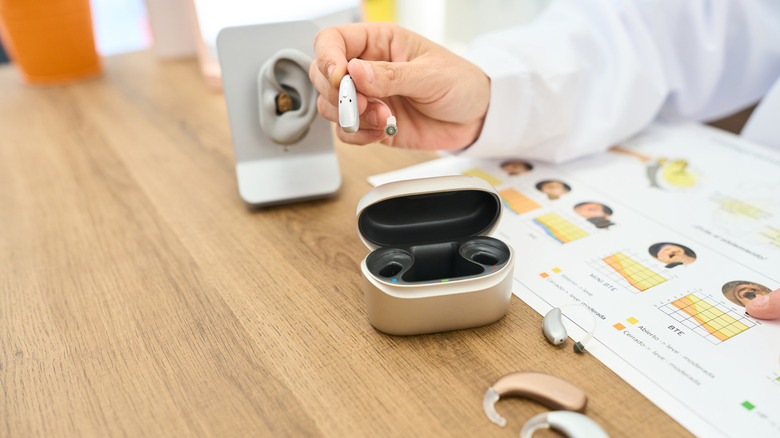
As we have seen, there are a variety of features that can deal with different kinds of environments, ensuring the best hearing experience no matter what. The problem is that the settings need to vary between environments, as no two situations are the same. The type of noise reduction needed, the "gain" of the amplifier, etc., are all parameters you need to be able to adjust based on the situation.
Now, some hearing aids will come with pre-programmed plans or modes that you can switch between. These are basically presets covering a broad range of use cases, such as outdoors, travelling, calling, or home usage. This saves you the effort of manually customizing the settings, but it also doesn't work that well, since the preset cannot account for your own personal requirements. This is why most hearing aids come with the ability to be completely customized. Usually, an audiologist will take care of the initial settings, conducting a hearing test to accurately understand the degree of your hearing loss and adjusting things accordingly.
But it is still important to have a hearing aid that you can modify further yourself, as the audiologist can't test every environment you will go into. Good hearing aids will let you create personalized audio profiles and switch between them based on the situation. New models these days are even coming with AI to do this dynamically. The algorithm automatically tweaks the settings by analyzing the environmental sounds, giving you a personalized audio profile.
Tinnitus management

Traditional hearing aids are just devices to try and improve hearing. But hearing loss is often accompanied by other conditions as well, such as tinnitus. Tinnitus is basically any kind of ringing or hissing sound that you involuntarily hear, whether constantly or from time to time. It is not an actual sound in the environment, but a sound that only you hear. Many causes have been theorized for it, including a connection between tinnitus and sleep. But generally, it is seen as a symptom of hearing loss.
Solutions for tinnitus take two main forms — masking and habituation. Masking involves overpowering the sound of tinnitus with a louder white noise. This can be done by amplifying background noises or introducing a preset tone like ocean sounds. The masking approach is particularly effective when the masking sounds occupy the same frequency range as the tinnitus itself. This is because for most people, tinnitus is a result of the brain being under-stimulated due to hearing loss, and introducing an artificial audio stimulus in that range alleviates the issue.
The second approach is habituation. The idea is to let the brain get used to the tinnitus sound and stop paying active attention to it, enabling the listener to once again clearly identify more external sounds. This is usually achieved through sound therapy — filling the background with calming sounds to make the tinnitus feel less abrupt, while not completely masking it. And the best way to do this is through a hearing aid, as, unlike speakers or headphones, you use them all the time.
Binaural processing

There are also a few tech features that don't necessarily help users hear better, but improve balance, cognition, and orientation. For example — there is a reason we have two ears instead of one. Hearing the same sound source using two different organs lets us pinpoint where exactly the source is — a critical function of our ears. It may sound like a small thing, but it is this spatial awareness through sound that lets us navigate our surroundings safely. Our vision is an important factor, of course, but our eyes can only see so much. We rely equally on our hearing to keep track of the unseen environment and achieve something as simple as walking around without losing our sense of balance.
This is also why hearing loss often increases the chances of falling. While a hearing aid can improve your ability to hear distinct sounds such as music or speech, it cannot restore this environmental awareness. The reason is simple: independently amplifying the sound reaching one ear creates an imbalance, hindering our natural ability to combine the information to localize sound. The solution is to wear hearing aids in both ears, each customized to alleviate the hearing loss of that organ. This automatically creates a more balanced perception of sound, just like how a pair of speakers can create depth when watching a movie. Some hearing ads can go even further by actively supporting binaural processing. These binaural hearing aids can communicate with each other, actively adjusting the sound profile to simulate a combined audio source, radically enhancing our ability to perceive the dimensionality of any sound.
Fall detection

We touched on this briefly when talking about binaural hearing, but hearing loss is often accompanied by an increased risk of falls. This is because reduced hearing has a more far-reaching impact than just making it harder to hear conversation. There are many other advantages of our hearing that we take for granted, and are key to navigating a world full of obstacles. This includes creating an unconscious "map" of our surroundings through the localization of sounds, responding accurately to the sounds of other moving people or vehicles, or just being able to properly assess the feedback from our own movement.
Now, the usage of hearing aids can significantly improve the situation. Especially if you use binaural hearing aids, which can help restore a bit of that spatial awareness. But even so, it will not return to the level enjoyed naturally, and an increased risk of accidents remains. This is why many new hearing aids also possess a fall detection feature. Using motion sensors, the hearing aid can accurately detect a person falling to the ground and alert a list of contacts to get timely help.
Hearing aids with such sensors expand this functionality to include other health tracking metrics as well. These are features you usually find in fitness bands. Conversely, some fitness watches also have fall detection. For example, it is one of the Apple Watch safety features most don't realize exists. This can make fall detection on your hearing aid a bit redundant.