

9 Common Gadgets That Are Actually Illegal In Some Places

There's nothing as horizon-expanding as traveling the world, but regardless of your sense of adventure it's just plain common sense to become acquainted with the laws of the lands you intend to visit. Foreign law enforcement might have more patience for visitors who don't know they're doing something illegal, but ignorance of the law is never a valid defense.
There's a good chance that you own at least one piece of technology that, if you're in the wrong country, could see you in serious trouble, or at the very least out of pocket as your gear is confiscated.
This list isn't exhaustive by any means, it's just a collection of surprising examples which go to show that you should take the time to check the legality of everything you pack into your bags before you leave for the airport. Even if something seems completely innocent, it may save you from facing potentially serious problems abroad.
Satellite phones
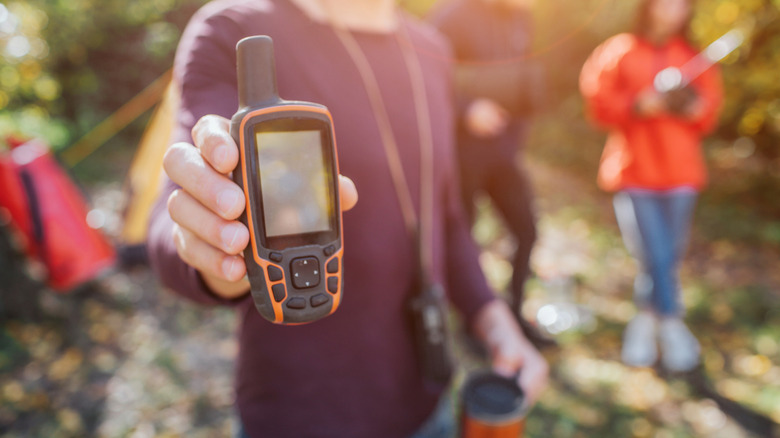
It's perfectly sensible to invest in a satellite phone for your travels. These devices don't rely on local infrastructure to work, so if you're ever stuck in the middle of nowhere, or some disaster occurs, you can send an SOS directly into space. Who wouldn't approve of that?
Well, it turns out there's a decently long list of countries that either ban these devices entirely, or have harsh restrictions on them. For example, in Chad satellite phones are completely illegal and there's no such thing as a permit. In Cuba, importing satellite phones is completely prohibited – but the same goes for many basic electrical items.
This does raise a question however, as satellite connectivity now works on many smartphones. The iPhone 14 was the first iPhone to have a satellite SOS function, and you can use satellite services on your Google Pixel. It isn't clear how the laws in various countries will respond to regular cellphones gaining access to satellites, since the key concern seems to be sending information and GPS locations over the satellite network, which these new phones can do. Satellite 5G could also be in our future, and Starlink is already rolling out direct-to-cell services where you don't even need a special phone.
VPN hardware and encrypted communication tools
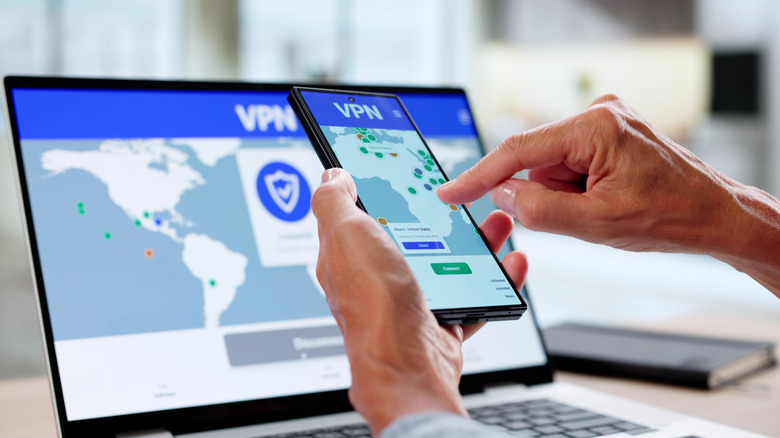
Virtual Private Networks (VPNs) are a popular type of service that you'll often see promoted on the web. There are numerous VPN providers — we've even ranked the major VPN services for you — and for just a few dollars a month you can have one set up in minutes.
A VPN creates an encrypted tunnel between your device and a remote server. This means that the internet service provider (or the government) can't see the websites you visit or the information you're sending while you use a VPN. They can however see that you are using a VPN. This technology is mainly a privacy tool, but you can also use it to spoof your location, because, to the websites you visit, you appear to be in the location of the VPN server.
If you're an authoritarian government monitoring everything your citizens do, VPN technology may be a problem. Countries such as Turkey, Russia, and Pakistan have complete bans on VPNs, or at least for the common folk. China heavily restricts them to licensed use only, and the VPN provider has to keep records and supply them to the government upon request. Before you travel to another country, check what the exact policy on VPN use is there. While you're at it, you should also read up on why using a VPN isn't as safe as you think.
Consumer drones
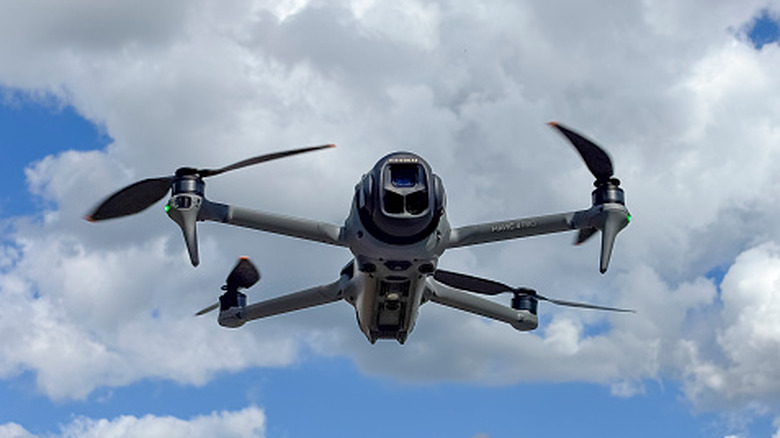
Camera drone technology has come a long way since those first Parrot AR drones. These days even small, foldable travel drones offer 4K video quality, sophisticated auto-piloting, and surprisingly strong flight characteristics and range. Given how capable these devices are, it's common for their use to be regulated globally.
There are a number of countries where private drone use is banned or strongly regulated. Egypt completely bans tourists from bringing any type of drone into the country. In Morocco you must get permission from the country's civil aviation authority first, or you risk fines and confiscation. It's important that you check drone laws not just for your final destination, but also for any countries where you have to stop over. It can be legal for citizens or permanent residents to have drones with a registered permit but tourists might not qualify.
Drones below 250g might be treated differently. For example, in Canada this is classified as a micro drone, and doesn't require registration to fly in most areas. The regulatory regime for drones is complicated and constantly changing, which can make traveling with these popular flying machines a real minefield.
Dash cams
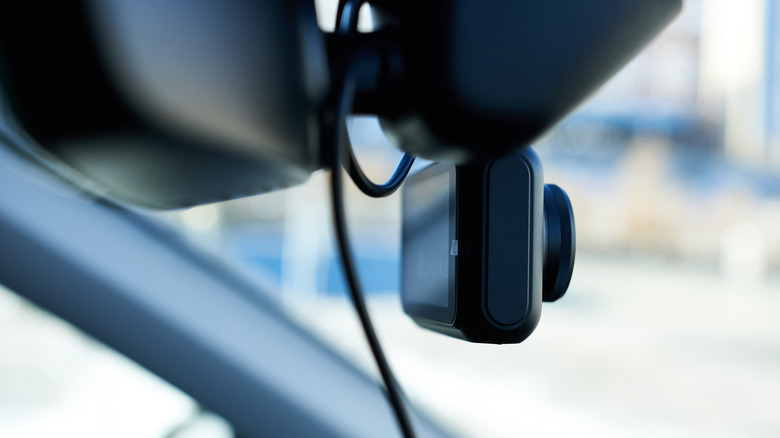
Dash cams are another type of device that's become quite popular in recent years. They're a great way to get an automatic record of incidents on the road, or of criminals who try to steal your vehicle while it's parked. It's seen as a safety tool, but not every country in the world is thrilled by this technology.
In the EU in particular, some interpretations of the GDPR privacy framework designate a dash cam as an intrusion of privacy. Portugal is known to fine those drivers found using one, as is Luxembourg and Austria. Some European countries permit them under certain conditions, and others including Spain and the Netherlands allow their use freely.
The problem with differing interpretations of GDPR and dash cam legality is that the EU has freedom of movement between countries. This means that if you're visiting Europe, you might inadvertently drive from a place where dash cam use is allowed, to another region where you could get in trouble. Therefore, check if the places on your itinerary are dash cam friendly. Built-in continuous monitoring features like Tesla's Sentry Mode will also run afoul of regulations.
High-powered laser pointers
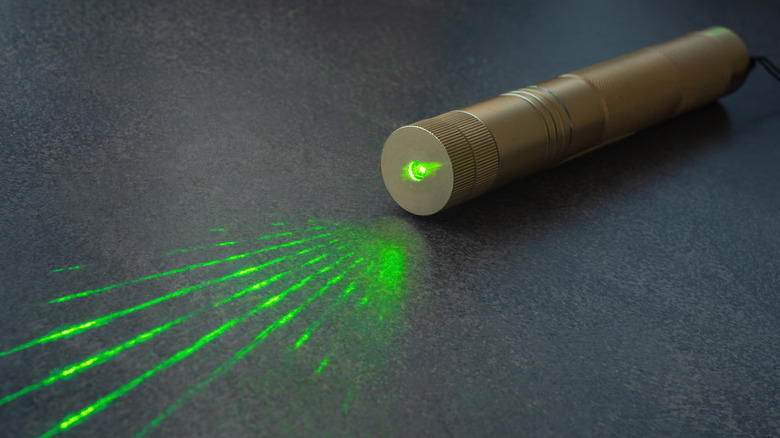
Laser pointers don't seem like a big deal, but when you power up a laser beam things get dangerous real fast. Some people found out the hard way that a car's lidar can destroy a phone camera, for example, and that level of energy is nothing compared to some of the handheld lasers you can order online.
In Australia, thanks to attempts to blind aircraft pilots with laser pointers, the laws governing the devices are among the most restrictive in the world. Any laser with a power greater than 1mW is banned. To put that into perspective, it's common for consumer lasers to be as powerful as 5mW, but anything above that will require a permit.
A significant issue is that many lasers that are sold online are far stronger than they're advertised to be. Even if a country hasn't outright banned laser pointers, their use alongside other people, vehicles, and machinery is strictly prohibited.
Walkie-talkies
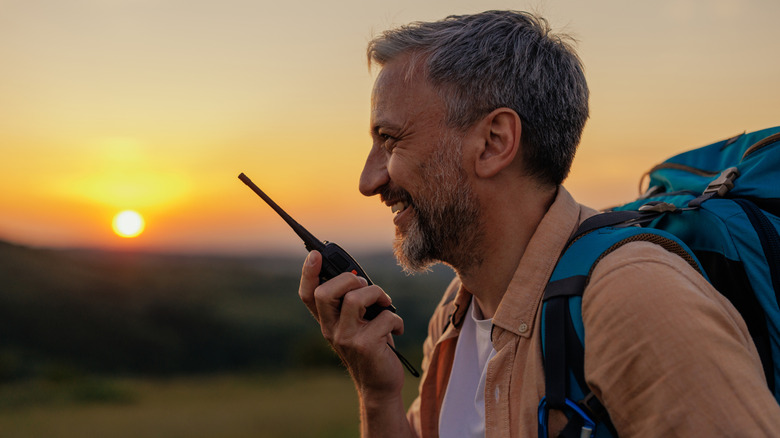
We might all have smartphones these days, but there's still an obvious need for walkie-talkie radios when you aren't in a covered area, or you're busy with an activity that's better suited to two-way radios than constant phone calls or voice messages.
A two-way radio set might seem like a totally innocent thing to pack into your bag when going on a trip. If you like hiking, you probably use them to stay in touch with other people in your group. However, most countries have strict laws around using the radio spectrum within their borders. In the UAE, for example, you need to apply for a permit from the proper authority for anything from the radio on a yacht to personal walkie-talkies. In Thailand, all legal devices need a specific frequency permit. Those without one are likely to be confiscated.
Any set of walkie-talkies must be compliant with the radio spectrum regulations of the country in which they are. If you buy yours in one country, where they are licensed, and then cross a border into another country which has different regulations, the devices could get you in trouble. The safest thing to do is purchase new walkie-talkies in the place you're visiting, from an authorized dealer who can clue you in on any legal issues.
Night vision goggles

While it might be rather unlikely that you've thought about owning a pair of night-vision goggles, just in case you had, you should know that the legal situation around them can be complicated. As this is a device most commonly used as military equipment, the quite natural worry of authorities is that night-vision goggles could also be used nefariously, in dangerous crime or even acts of terrorism. Therefore, many countries have restrictions on them.
These restrictions generally don't ban all night-vision goggles outright, but views on what's too close to "military grade" night vision are not consistent around the globe. At the strict end of the spectrum are countries like Thailand, which strictly prohibit any use of military equipment, even non-lethal gear like night-vision goggles. In most of Europe, including the UK, consumer level night-vision goggles can be used, unless for hunting, but those with generation 3+ military grade specs, are illegal.
Crypto mining hardware

Cryptocurrency mining isn't the hot activity it used to be. Thanks to rising energy costs and the insatiable hunger of AI data centers pushing hardware prices, there isn't that much gold in the hills of crypto anymore. Still, there are many serious cryptocurrency operations across the world, often chasing the lowest power costs.
The impact of big crypto mining operations, or the aggregate of many small operations can be significant. Angola banned crypto-mining in 2024, with crackdowns on operations siphoning power from an already strained grid. China has banned cryptocurrency itself, for economic reasons. So it's certainly not wise to be caught with crypto mining hardware in either country.
The traditional financial world has struggled to deal with the realities of cryptocurrency since Bitcoin became popular, and legislation to make the decentralized currency illegal has been preferred by some, rather than an attempt to regulate the complexities.
GPS devices

A global positioning system (GPS) device is probably not something you expected to see on a list of illegal gadgets, but it's true. In some countries having a GPS device can get you arrested. For example, the U.S. embassy and consulate in India released a notice in 2025 warning U.S. citizens that people were being arrested for the possession of GPS devices in the country.
This was alongside a satellite phone ban, though it didn't ban regular smartphones, which are also GPS devices. The rationale is unclear, however the long and short of it is that you can bring your iPhone into India, but leave your dedicated GPS device at home.
In China, while a GPS device itself is not illegal, what you do with the data gathered on it can get you in hot water. China's strict internet controls mean that you aren't allowed to transmit or export mapping data from China without government permission.