

8 Of The Best Instant Cameras With A Vintage Aesthetic You Can Buy In 2026
We may receive a commission on purchases made from links.
For years, the best smartphone cameras were all about cramming bigger image sensors, increasing the megapixel count, and adding genuinely useful features like night mode. This made instant cameras almost obsolete, as why would you worry about films? Fast forward to today, and there has been a change. Almost every phone takes similar photos, regardless of whether it's a Samsung or an iPhone. That's because of post-processing. These cameras try their best to balance everything perfectly, but real-life scenarios aren't perfect, far from it, actually. This was best evidenced in MKBHD's recent video, where older phones with less aggressive processing sometimes looked better.
Maybe that's one reason both instant and digital cameras are cool again. With them, there's almost zero processing, and some even have retro film simulations for that vintage look. Beyond that, you get an instant photo that you can keep in a wallet, give to someone, or use as a memory on your fridge.
The problem is, choosing an instant camera is confusing. It all depends on your needs, as some offer exceptional film simulations, while others are more geared towards point-and-shoot buyers. Not to mention the price, which can range from a hundred bucks to a grand. We've looked at dozens of instant cameras on the market and found eight of the best to consider in 2026.
Fujifilm Instax Wide Evo
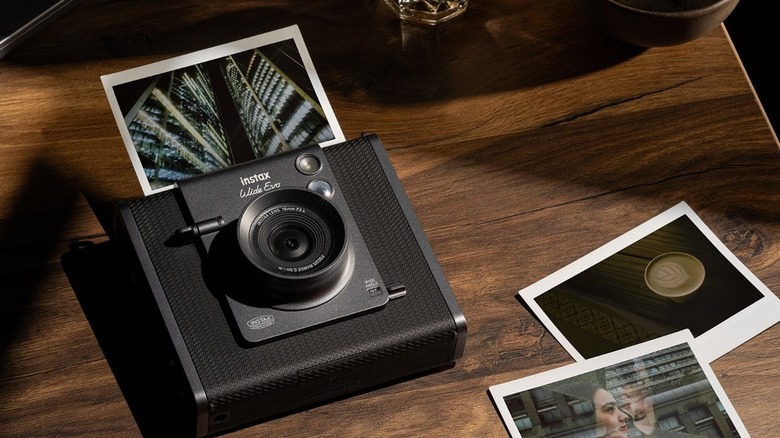
You don't get a second chance with a traditional instant camera. There are no digital backups or spare shots, which can intimidate first-time camera buyers accustomed to taking hundreds of shots. Hybrid cameras solve this problem, and one of the best on the market is the Fujifilm Instax Wide Evo ($384 on Amazon). It takes digital photos like a phone, and lets you choose which ones to print or save on a fast SD card. That aside, the Instax Wide Evo is a beautiful vintage camera. It's a bit bigger than others, but Fujifilm has trimmed the width to make it slimmer. The body is textured, so gripping won't be an issue.
While buttons are aplenty, they don't perform standard actions like exposure settings. The scroll wheel on the side changes the colors, while the top button is reserved for different film emulations. It's important to choose these effects before taking the shot because you can't add them afterward. The sheer number of vintage filters and border options makes experimenting surprisingly fun. Still, the best part about the Evo is the manual crank that you need to turn to print images.
This convenience comes at a cost. That's usually image quality. Don't get us wrong, the Wide Evo's photos are really good, with a vintage look that still feels balanced in different lighting. The wide prints are great for groups. However, because it relies on a relatively small digital sensor, photos don't have quite the same contrast as those from fully analog instant cameras.
Polaroid Go 2
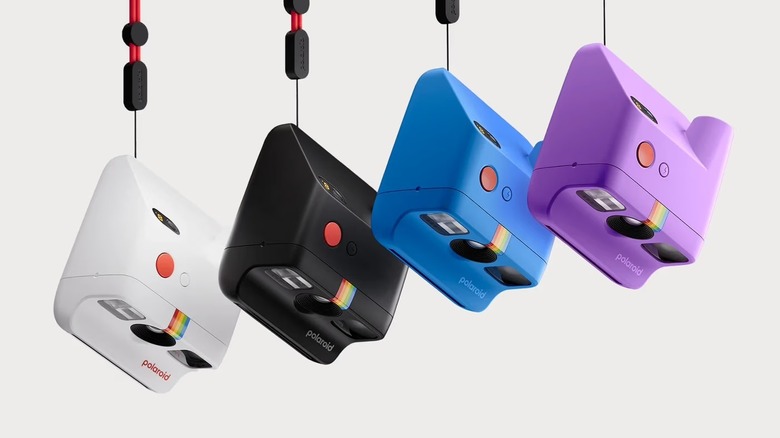
When most people think of instant cameras, Polaroid is usually the first name that comes to mind. And the Go series, which debuted in 2021, is the brand's attempt at a travel companion. That said, some readers might point out that the Go 3 is already out. That's true, but reviews of the camera are yet to come. Until then, the Go 2 takes a spot on this list because it's still very good. These praises stem mostly from a few things. The first is the price, which, at $80 on Amazon, is decent for casual travelers in need of a memory-making machine. The $19 price tag for a standard 16 print film might seem steep, but it's better than the competition.
People also love the Go 2's size. It uses small instant film, meaning Polaroid was able to shrink the dimensions. We'd call it fun size; small enough to fit in a jacket. The shape is fairly standard, with the top dominated by a large red capture button and a switch to turn off the flash. You also get a viewfinder to frame the shots.
Optics are handled by a 51.1mm fixed lens, with a minimum focusing distance of 1.5ft. It's super easy to shoot because the camera handles everything itself. You don't get manual exposure controls or fancy film simulations, but the photos still have plenty of character thanks to Polaroid's signature blue-heavy vintage style. There's a haze around objects, and compared to the first gen, the Go 2 handles exposure in bright sunlight much better and avoids blowing out skin tones.
Polaroid I-2
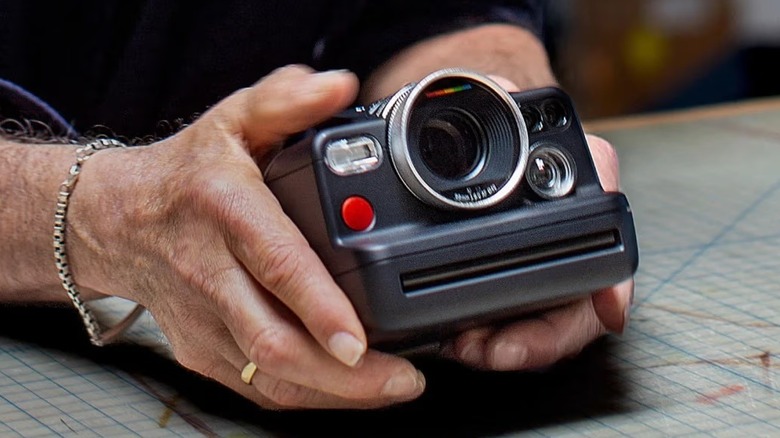
Some instant cameras are for regular people wanting a new perspective, while others are for serious analog photographers who need total control over their shots. The Polaroid I-2 is for the latter, and it's one of the few cameras with full manual exposure controls. You get to choose between several settings, including Full Auto or Manual, both of which are pretty self-explanatory. But beyond those, there's Shutter Priority, Aperture Priority, and four stops of Double Exposure. These settings can be changed using the Polaroid app, or, for a vintage feel, the tiny display or dedicated exposure dial.
Another big sell of the I-2 is the LiDAR autofocus system. Reviews say it works great to lock onto objects fast, without messing up. The minimum focusing distance is 0.4m, and you only have to lightly press the shutter button for it to work, just like a normal camera. If you still love the old SX-70 type film, don't worry, as the I-2 is compatible. Just remember to change the film-type settings, as the camera does need to adjust accordingly.
Images here are sharp thanks to the glass lens, and the f/8 aperture allows for subtle background separation. Colors are, once again, Polaroid's signature desaturated style, which most people do like. However, all of this control and image quality costs $599 on Polaroid's website. Couple that with a $17.99 price tag for an 8-film pack, and the I-2 suddenly becomes mainly exclusive to professionals.
Nons SL660
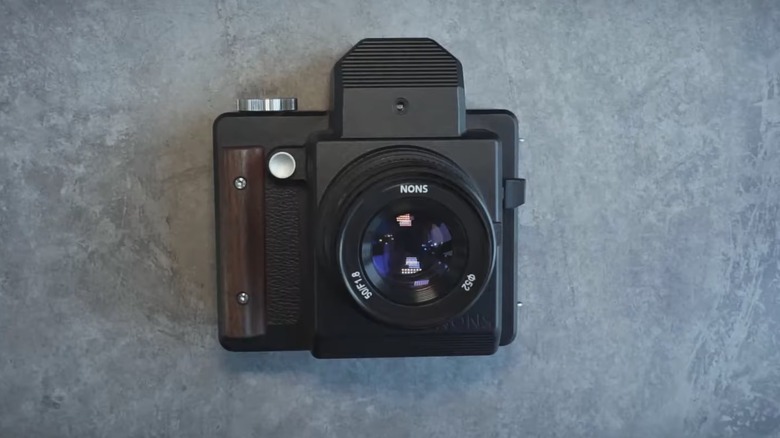
Imagine this: you're a professional photographer looking to dabble in instant photography. The Nons SL660 ($599 on Amazon) is made for exactly that type of person, thanks to one simple trick: external lens support. The camera uses a Canon EF lens mount, with an option to get a Nikon F adapter. This opens up a wide range for experimenting with focal lengths and aperture. Just remember to get a manual lens.
That's not all. The SL660 is one of the very few cameras with a Single Lens Reflex (SLR) viewfinder, which is a clever solution to parallax error caused by a regular viewfinder. The SL660 uses mirrors and a pentaprism to reflect the actual image. The rest of the design is refreshing. Instead of the usual inexpensive plastic, it's made out of aluminum, which is very sturdy to hold, along with a wooden grip and a physical crank for printing.
The photos are detailed and have a retro aesthetic that's super pleasing. Lighting is handled beautifully, and colors are vivid. Shots are captured on Instax Square film, which is great if you don't want to spend extra on proprietary film. However, ISO 800 film struggles in challenging lighting conditions, especially direct sunlight.
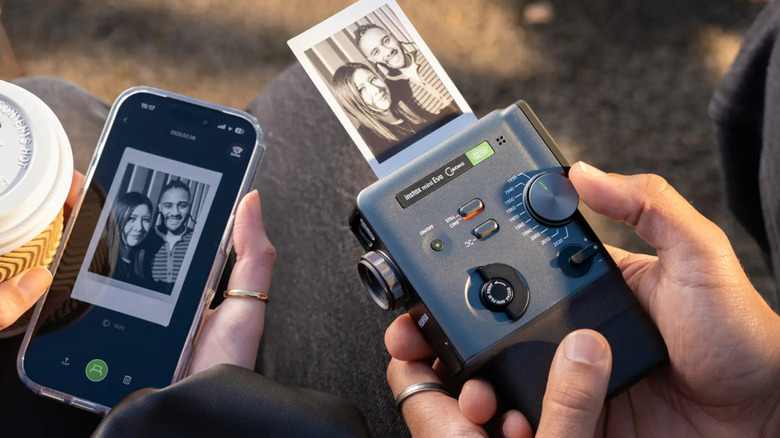
Fujifilm Instax Mini Evo Cinema
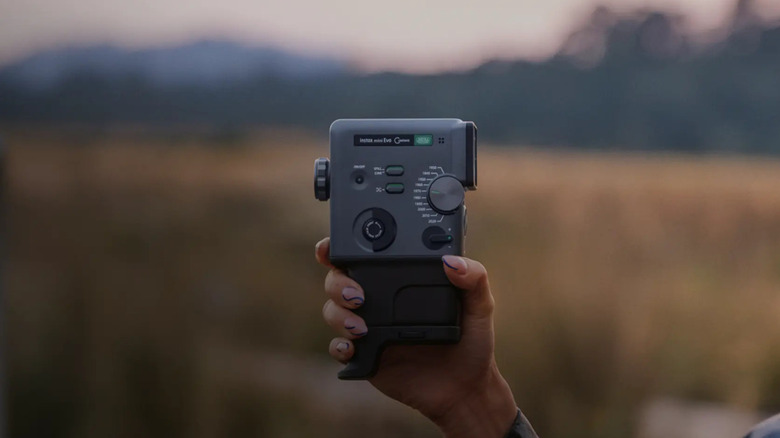
Remember those grainy home videos your parents used to record? While such media formats are now obsolete, those videos would be among the happiest memories, and the Instax Mini Evo Cinema ($409 on Amazon) wants to help you remake them, because it's the only instant camera that can take videos.
The camera's main appeal is the Era Dial. From the 1930s to the 2020s, each decade comes with its own visual style that changes how your videos look. There's a rotating dial on the lens that lets you adjust the intensity of each filter. In practice, the effects range from black-and-white film to the digital camera look we all remember. Some even resemble old TV broadcasts with scan lines running across the screen. That said, videos can only be recorded for 15 seconds tops.
Aside from videos, the Evo Cinema is also an instant camera. You can use the same era filter on photos. It's a fun camera to play around with, but it doesn't produce the most detailed photos. Yet, it's hard not to think they're cool. In fact, Fujifilm also found a way to bake videos into prints using a QR code. You can access all your content on the app. The retro design is charming. The gun-type grip is great for shooting, and the viewfinder works well for previewing a shot. The only gripe some have had with the Evo Cinema is that it isn't very fast. Every operation takes time, and you'll need some patience.
Lomo'Instant Wide Glass
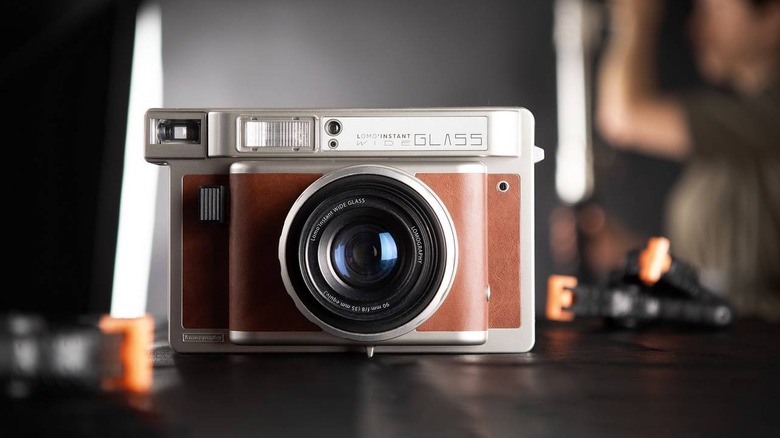
Almost all professional-grade instant cameras we've mentioned so far cost more than $300. That's not exactly cheap, and once you factor in the cost of film, things can add up. If you'd like to save some money without compromising image quality, the Lomo'Instant Wide Glass is worth a look. It costs $249 on the official store and prints on the Instax Wide film.
Design is the best thing about the Wide Glass. It's made from metal, with brown leather accents all over that make it look super sophisticated. The metal barrel lens does add some weight, but it's not unmanageable. The shutter button is positioned exactly where your finger naturally rests, and the other controls feel tactile. There's even a switch dial to cycle between different modes.
Still, the biggest reason to consider the Lomo'Instant Wide Glass is the glass lens. Lomography markets it as the sharpest instant camera, and based on many reviews, that seems to be the case. The images are extremely detailed, to the point that you can make out the small facial features. Colors are retro-inspired, often leaning towards warmer tones. The camera does an excellent job of exposing objects correctly. There's even a dedicated double-exposure mode that works surprisingly well with the larger Instax Wide film. It's not all perfect, though. If you're new, manual focusing can be a problem, and there's a learning curve before you start taking sharp photos. Also, the viewfinder is way off to the right side, so good luck framing your shots.
Fujifilm Instax Mini 41
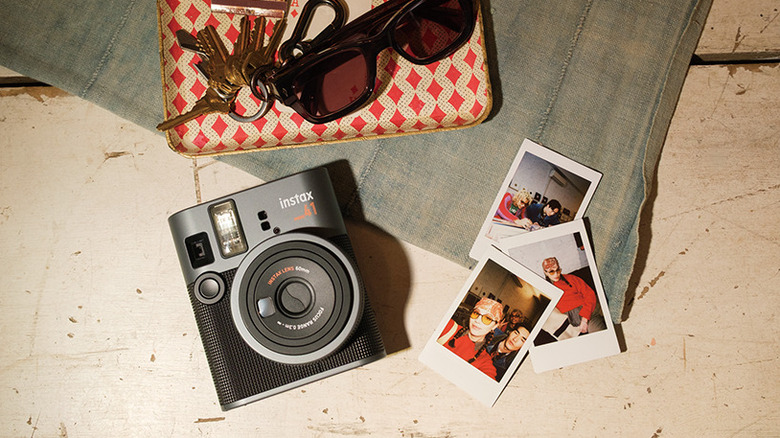
Instant cameras are vintage for a lot of people. There's just something great about taking photos of loved ones at an event and handing them that memory instead of using AirDrop on iOS and now even Android. If that's you, but you don't want the hassle or expense of a manual camera, the Fujifilm Instax Mini 41 is where your search should end, and for good reason. The first is the price: at $100 on Amazon, it's affordable for almost everyone, and even the Instax Mini film doesn't cost a ton.
Instead of the leather look on the Mini 40, the successor has a grippier pattern cut finish, with silver plastic lining the top. The only real compromise of the design is the need for AA batteries, which can be a headache. That said, controls are pretty simple, with a capture button and a focusing ring on the lens, which has three modes: Off, On, and Close-Up. There's even an optical viewfinder on the right, and Fujifilm has baked in a parallax correction feature to reduce discrepancies.
It's safe to say that the Mini 41 isn't trying to win any image-quality awards. The experience matters most. But are the photos bad? Nope. Shots have the signature Instax look of low sharpness and boosted contrast. Colors are decent, and the auto exposure works well. It's important to mention that the flash is always on, so if you take a selfie in a dim room, there's a high chance your face will be overexposed. Covering the flash should easily fix that.
Fujifilm Instax Mini 12
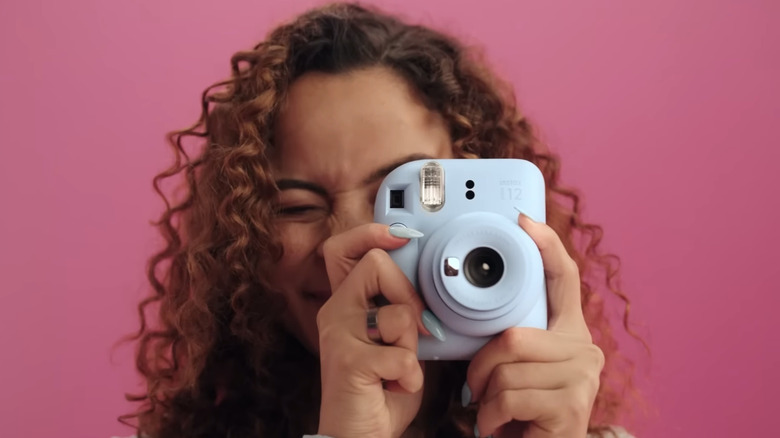
If you ever search for the term "instant camera" on Google, one of the first results will be the Instax Mini 12. It's the camera you've probably seen influencers use to capture memories. For enthusiasts, though, the Mini 12 isn't much to rave about. It keeps things deliberately simple, with virtually no manual controls. While this camera might go against the spirit of the list, we gave it a spot for two reasons. Say what you want about the controls, the fact that every kid on this planet can probably use the Mini 12 is a great thing. You can give it to your parents without getting a call from them an hour later asking to re-explain the controls. There's just one shutter button, and that's it.
Instead of being vintage, the design is somewhat playful, with several pastel colors to choose from. The second reason is the price, which at $84 on Amazon makes it very accessible. Images from the Mini 12 have a bit of retro charm, with softer details and punchier contrast. Colors are slightly desaturated, and exposure is handled well most of the time, except in the sun. Like the Mini 41, the flash is always on, meaning overexposure will be a problem when taking selfies. The Mini 12 runs on a couple of AA batteries, which the brand says can last 100 shots.
Methodology
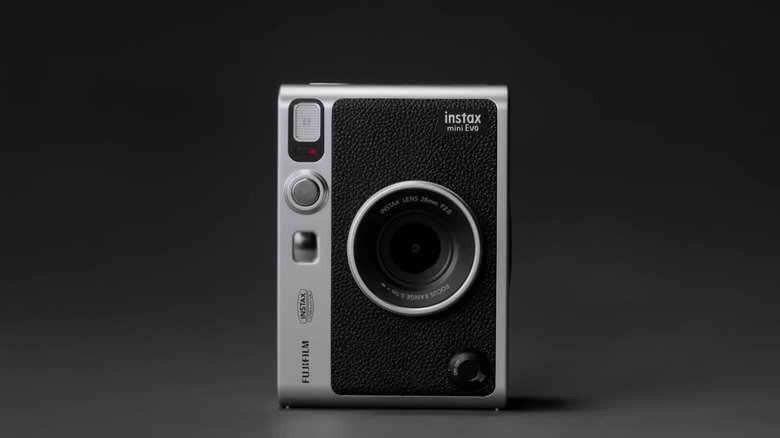
Picking the best instant cameras is not easy. Unlike a few years ago, when Fujifilm largely dominated the space, there are now a plethora of brands, each with its own take on the instant camera formula. To narrow down the options, we first scoured recommendations from reputable outlets, such as PCMag, Digital Camera World, and TechRadar, as well as YouTube channels like In an Instant.
Once we had a solid list, we cross-referenced these cameras against our own testing and individual reviews. Cameras were ranked primarily on their retro image quality. How well do the photos represent a specific look? Are the details still abundant? These were the questions we asked. After that, we also considered factors like manual controls, ease of use, portability, and overall value for money.