

8 Common Ways You Could Be Ruining Your Vinyl Records
We may receive a commission on purchases made from links.
The rebirth of vinyl records in the era of digital music has been fascinating to watch. Vinyl records are a music trend that's replacing Spotify and Apple Music for some people, and who could have predicted that? The reasons why people are turning back to this supposedly obsolete physical medium, however, vary.
A common opinion is that vinyl records sound much better than digital audio. This is, sadly, a myth that doesn't hold up under scrutiny. However, just the belief that vinyl offers superior audio is enough to help drive its return. And perhaps it doesn't really matter that vinyl sounds better, because the overall experience of buying, handling, and listening to vinyl records is what people seem to enjoy.
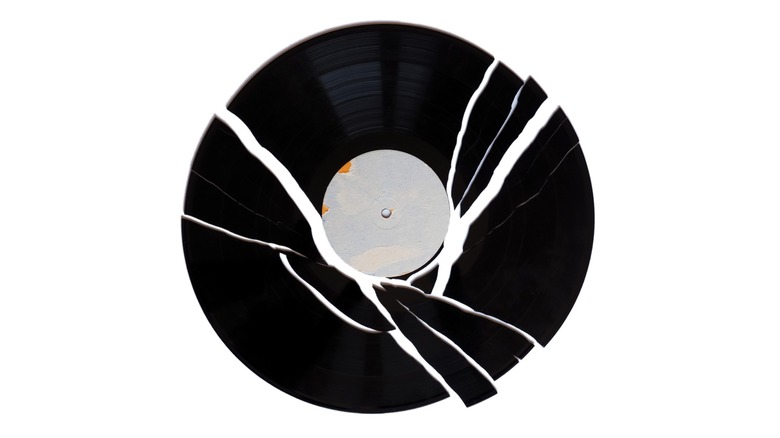
The thing is, as a physical medium, a vinyl record can be easily damaged or even destroyed by poor handling. Given that vinyl records are more expensive than CDs and much less durable, it's important that you help yours last as long as possible and retain as much of the original audio quality as you can. Your vinyl record will sadly never sound as good as it did the first time you played it, but if you avoid these common mistakes, you can preserve your vinyl collection for generations.
Using a cheap suitcase player
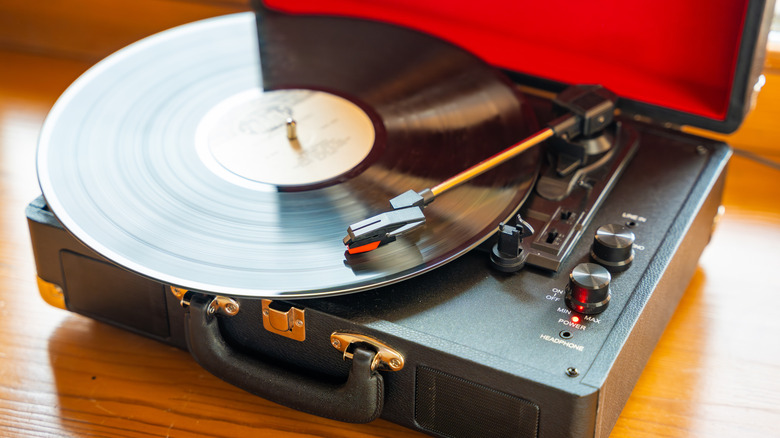
There are various reasons audiophiles choose turntables over record players, favoring the increased control and quality of individual components rather than an all-in-one solution. But while there are definitely decent record players to be had, one category of all-in-one player is best avoided by just about anyone: suitcase players.
These are the inexpensive players you see in supermarkets, advertised as a way to get into vinyl records. This is as close as you're going to get to a plug-and-play portable vinyl listening experience. So if you're all about the social aspect of vinyl and want to visit a friend's house with some records and a player, these seem like a good idea. Considering that even an entry-level turntable setup requires buying a separate amp and speakers, buying just a player at a single low price and listening to your music is tempting.
The problem is that most of these suitcase players are cheap for a reason. They use far too much tracking force (how hard the tone arm presses the stylus into the groove) and don't track consistently from the start to the finish of your records. They also tend to use cheap ceramic cartridges with sapphire styluses rather than diamond ones. This means the stylus wears out quickly, never sounds good to begin with, and does no favors for your records in the long term.
Touching the grooves with your fingers
You may be aware that when it comes to CDs, you're not supposed to touch the disc surface. If you do, you'll leave fingerprints and dirt, which can interfere with the laser's ability to read data. However, if this does happen and your disc is not scratched, it just takes careful wiping to fix.
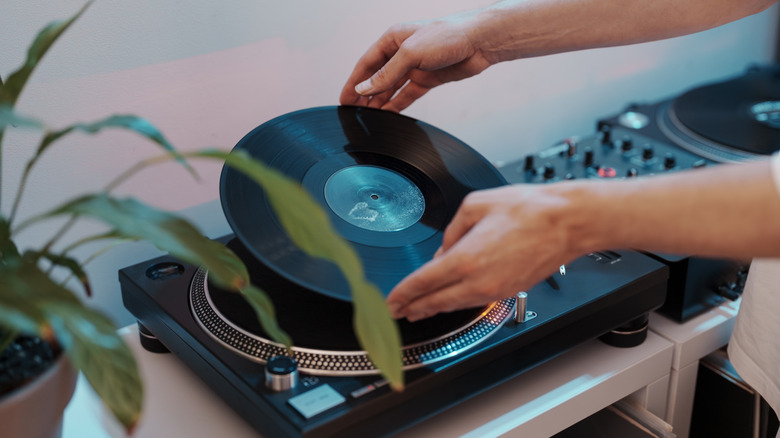
The impact of improper vinyl handling is quite different. The audio on a vinyl record is stored as a physical shape inside a cut groove. While a CD's digital data can be obscured by dirt and oil from your fingers, on a record, that gunk can physically enter the groove and alter the sound quality.
There is a range of effective ways to clean and restore your records to reduce distortion and other audio artifacts caused by debris in the grooves. However, this is very much a question of an ounce of prevention being better than a pound of cure. In other words, handle the vinyl only by its edges with your bare hands, and it should either be in its sleeve or actively being played. If you have a turntable or record player with a dust cover, close it to protect your vinyl record from dust when it's not in use.
Storing records flat instead of upright
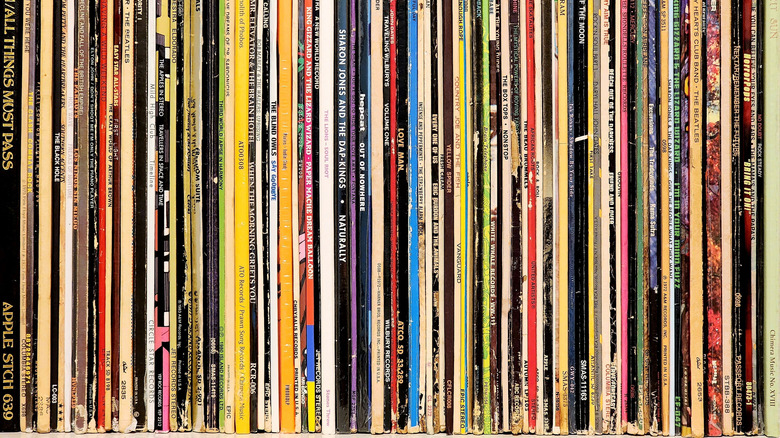
One of the great joys of vinyl is browsing thrift stores and vintage music shops for rare cuts. However, if you walk into one of these places and see the records stacked horizontally, you might as well turn around and walk right back out.
You see, vinyl is a flexible plastic. The name "vinyl" comes from PVC or polyvinyl chloride. Before the Second World War, records were made from a natural resin called "shellac," but because it was important for military use, PVC became the medium of choice. It's superior to brittle, shatter-prone shellac, but it can warp or permanently deform in a few ways.
Even a small amount of warping can ruin the playback of your songs, and vinyl records are light individually but heavy in aggregate. If you stack your vinyl on top of each other, those at the bottom can deform under the weight. It is possible to flatten a warped record, but you need a record flattening machine or a professional to restore a record that's worth the expense. Again, prevention is still the best choice.
Using a worn-out stylus
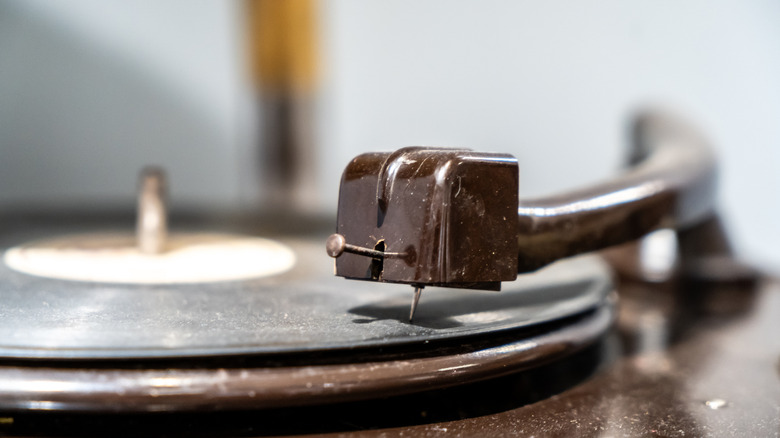
One of the great advances made by CDs over vinyl was the move away from physical contact between the disc-reading component and the disc itself. Sure, technically, the laser photons are touching the surface of the CD and might knock an atom or two out of place here and there, but that's nothing compared to the physical friction between stylus and record.
To be fair, as long as the tracking force has been properly calibrated, it's not actually wearing down the contents of the groove noticeably, but a worn-down stylus is adding more friction than necessary, and because it's no longer the correct shape, it's also not going to translate the analog signal correctly. Your music may start to sound fuzzy or muddy, with more inner-groove distortion. High-frequency treble sounds can start to sound harsh, and you may hear "sibilance," which gives "s" sounds an unwanted hiss.
Now, it's hard to get a firm answer when asking how long a turntable stylus lasts. It all comes down to total play time. For cheap ceramic cartridges with sapphire-tipped styluses, you might notice wear issues after less than 100 hours, while a moving-magnet cartridge with a diamond-tipped stylus might offer 1000 hours or more of trouble-free listening. It's no surprise that one of the first and most impactful upgrades you can make to a budget record player or turntable is to upgrade the cartridge and stylus.
Storing records where it's too hot or humid
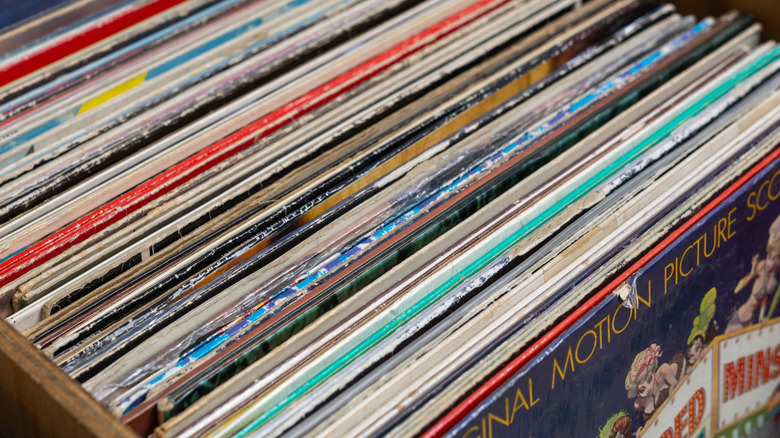
All physical media have ideal storage conditions, and in general, these are dry, cool, and dark. If you've ever visited an archival facility, you'll know that they store things in climate-controlled units. The thing about climate control is that it's not only about reaching a specific temperature or humidity level but also about maintaining them. Large swings in either number are also undesirable.
If your vinyl records get too hot, they can soften and warp. If things are too humid, you can experience the joys of mold growing on your records. It's not just the record itself, either. Presumably, you want to preserve the album sleeve with its artwork, too. The general guideline is a stable 65-70°F (18-21°C) and to keep humidity between 45% and 50%. This means keeping your records away from heat sources, including the sun and powerful electric lights. Remember that radiant heat from lamps, the sun, or heaters can make your record's temperatures swing up and down, so you'll want to store them in a box or cabinet that can close and block out light.
UV light will also fade the ink on album covers and make plastics brittle over time. Some album sleeves have a plastic coating that can yellow and crack from light exposure over the years. The rules are simple but surprisingly tricky to keep.
Leaving them in direct sunlight
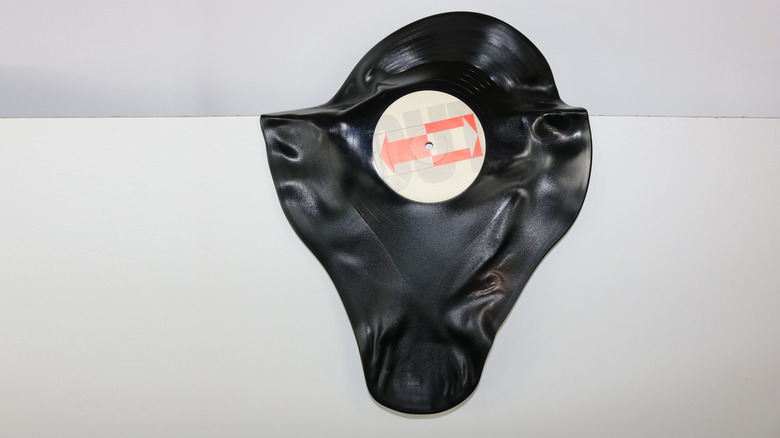
Warnings about not leaving your physical media in direct sunlight usually apply to 8-Track cartridges, cassette tapes, and later CDs because these media were used in cars. Everyone's learned the hard lesson of forgetting a tape or CD out in the open after parking their car, only to return and find their music is no longer in shape to fit in a player. Funnily enough, there was an automotive record player known as the Highway Hi-Fi, but it never really caught on.
That doesn't mean there aren't plenty of opportunities for records to end up in direct sunlight. Your player might be next to a window, or you could be transporting open boxes of records in your car. A more pressing concern is how used records have been stored when you're buying used ones. Are there sleeveless records in the shop window? Are sleeved records baking in direct sunlight all day, waiting for a buyer?
It's worth checking whether a record is flat before buying it, because you don't know if it's been exposed to direct sunlight. If the sleeve art looks significantly faded, that's a clue that the record has been exposed to direct sunlight, which could mean the temperature has been high enough to cause warping.
Using PVC sleeves
This is one of the lesser-known risks to records: some older or cheaper outer sleeves are made of PVC. That's the same PVC the record itself is made from, and there can be a chemical interaction between the two that degrades and damages the record.
There are numerous accounts of people finding "misting" on their vinyl, and the likely culprit is thick PVC outer sleeves. These sleeves "off-gas" over time, and may contain chemical plasticizers that make this worse. The PVC sleeve loses some material in gaseous form, which coats your record and becomes part of it.
The results aren't pretty, but it's not just a visual defect. Coating your record with oily, sticky PVC residue will negatively affect playback, as you can imagine. The issue is worse if you've got records tightly packed vertically in these protective sleeves, since multiple records can be affected. The answer is to remove all these sleeves and keep them far from your records. Use safe polyethylene or polypropylene sleeves sold specifically for the archival storage of vinyl records.
Cleaning your records the wrong way
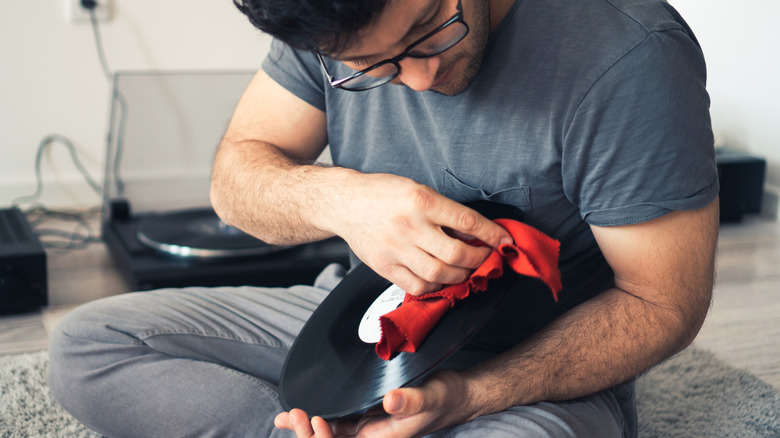
One of the best things about CDs is that they are easy to clean. Just use a soft microfiber cloth to gently wipe away dirt and fingerprints from the smooth plastic surface, and you're good to go in most cases. Vinyl records, on the other hand, need to be cleaned carefully and in a specific way, or you risk damaging the record.
You can't just use household cleaning solutions, abrasive brushes, cloths, or paper towels. The most basic maintenance for a vinyl record is removing dust. It settles in the grooves and is one of the primary causes of that hissing and popping sound vinyl records are known for. A properly cleaned vinyl should not have this hissing and popping noise.
If you're serious, you'll want to invest in a dedicated ultrasonic record cleaning machine, which will run you a few hundred dollars. However, record-cleaning vacuum attachments are a viable option, as is a carbon-fiber vinyl brush. If you really care about your records sounding as good as they can and for as long as possible, then spending some time and money to clean them properly is worth every penny. As Gen Z keeps ditching streaming for physical media, the need for proper maintenance will only grow if they want to preserve them for future generations.