

Modern-Day Tech You Might Be Surprised To Learn Existed In The 1960s
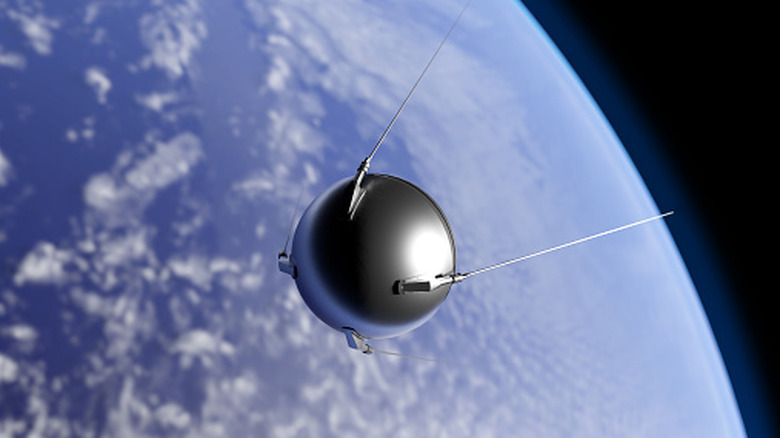
Including the mass cultural boom, the 1960s pushed boundaries everywhere. Before the moon landing, the Space Race was pushing the boundaries of what human beings could create. The Cold War drove investment in military technologies, some of which civilians wouldn't become aware until decades later. Corporations too were quietly investing in new ideas, with muscle cars, computers, and various visionary 1960s gadgets eventually hitting the market.
While the word "tech" in America during that era conjured images of heavy luxury vehicles, clunky metal science-fiction robots, and even things as simple as TV antennae, tech of the 1960s had an entirely different effect on the imagination. Record players shrank from pieces of furniture to teen necessities, microwave ovens shortened cook times, and with the prototype for a handheld calculator developed in 1967, it wouldn't be long before everybody could keep a checkbook balanced easily.
Now, it's typical to think of things like smartphones, electric vehicles, laptop computers, rocket ships, and deep space exploration when somebody mentions the word "tech." But the 1960s had a major influence on the technologies we interface with on a regular basis today. In fact, many things that feel modern now not only have roots in the 1960s, but existed in a nearly identical form. So let's take a look at some of that tech, and explore what the 1960s had to offer relative to our own time.
Drones
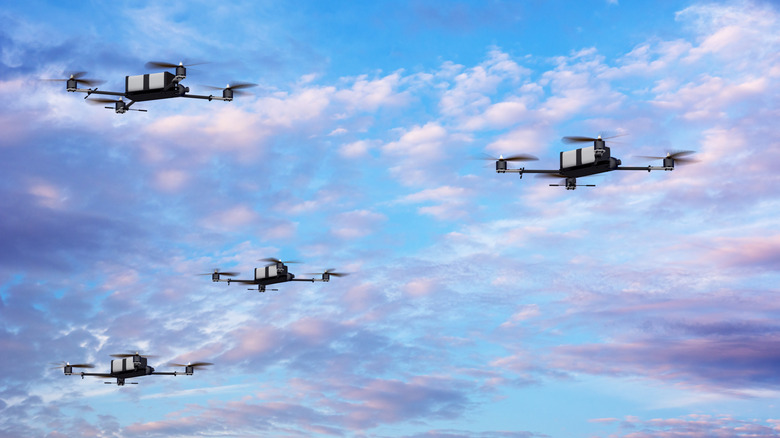
It's not uncommon to attend a concert today and find 4K drones flying around, nor is it that rare to come across kids playing with a toy drone at the park. Today, cheap and reliable drones can be found just about anywhere, with consumer brands like DJI packing them with tech for professional photographers and videographers. Drone piloting has all but become a popular weekend hobby.
But the drones of today started out much larger, with their roots in the Vietnam War — in particular, an airplane called the AQM-34 Ryan Firebee. This was a jet-powered, unmanned aircraft was launched out of, and controlled from, a larger host plane. It became a serious reconnaissance tool, flying more than 34,000 surveillance missions for the United States during the 1960s and 1970s.
The Ryan Firebee was a far cry from the small consumer drones we know today, but they do have a lot in common with today's military drones. Certainly, drone technologies would have never reached the masses without the idea of an aircraft being piloted remotely. The Firebee is recognized as a direct predecessor to modern surveillance drones, and the concept of unmanned aircraft has even influenced the way we explore space today.
Instant photography

It doesn't take much effort to snap a photo today. For most of us, it's simply a matter of taking out your smartphone camera. For those with a dedicated camera, it takes little more than pressing the shutter button and transferring the photo to a phone over Bluetooth or via USB-C SD card reader that can fit in a pocket.
But in the 1960s, photography was an entirely different game. Cameras were big and bulky, and with no digital option in sight for decades, photographers could only shoot on film. This meant loading film into the camera, taking enough pictures to finish a roll, taking that roll to a drugstore or photo lab, and waiting days, if not weeks, to get a look at the pictures. To share a photo meant giving it away, requiring picture-takers to pay for multiple prints.
In 1965, however, the Polaroid Model 20 Swinger was released. It was the first inexpensive instant camera sold in drugstores across the country for $19.95. Relative to most film cameras of the day, the Model 20 Swinger took essentially no time to produce a developed print. It cut the process down to minutes, and went on to become one of the top-selling cameras of all-time. Its influence can be seen in some cameras that make photography more fun, and believe it or not, there are similar instant cameras you can still buy today.
The touchscreen

Touchscreens have become so integrated into our daily lives that interacting with a physical button can seem strange now. Smartphones, tablets, ATM machines, kitchen appliances, self-checkout kiosks, and car infotainment systems nearly all require screen interactions. The technology has become second nature to the extent that it can be easy to not even recognize when you're interacting with it.
Most popular tech of the 1960s was consumer-focused, and while it lived on the pages of comic books and in the worlds of science-fiction movies, the touchscreen was more of a behind-the-scenes piece of 1960s technology. It was developed by an engineer named E.A. Johnson in an effort to help air traffic controllers interact with radar displays. The system he developed could detect a finger's position by measuring changes in an electrical field across the screen's surface.
Johnson received a patent for the technology in 1969, but it took a while for touchscreens to reach the masses. Several behind-the-scenes advancements were made over the decades, but it wasn't until Apple released the iPhone in 2007 that the touchscreen really reached its heyday. The popularity of the iPhone almost instantly normalized the touchscreen among consumers. Because it allows for less internal and external bulk in electronics, more and more gadgets have utilized touchscreens over the years, with them now even found in inexpensive electronic devices.
Satellite navigation
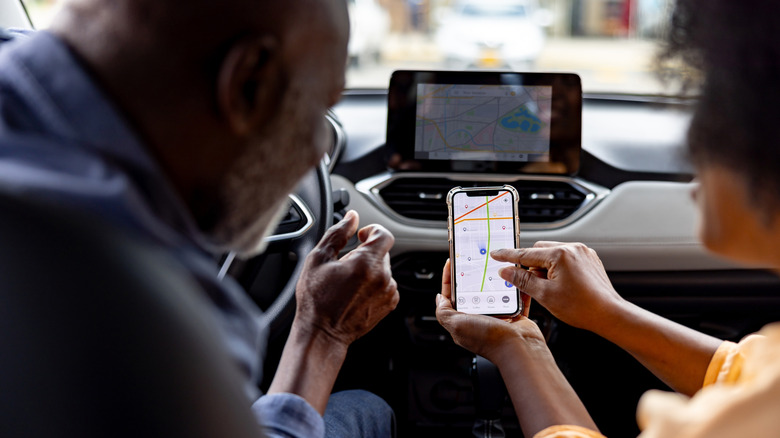
Satellite navigation is another technology that has become commonplace today, with GPS tech even saving the environment. It hit the masses in the early 2000s with services like Google Earth and MapQuest, and found its way into our hands with GPS devices designed specifically to mount in a vehicle. Today we can access satellite navigation right on our phones and smartwatches. New restaurants, parks, shortcuts, and traffic reports are just a touch of the screen and a quick glimpse away.
The foundation for all of this was laid in 1960, when the U.S. Navy launched Transit 1B, the first satellite in what would become a network of satellites designed to provide earthbound navigation. The project as a whole was known as Transit. Initially accessible only by the Navy, it entered full service in 1964 and by 1968 had become a system of 36 satellites. Transit was meant to provide accurate positioning data to ballistic missile submarines.
The technology was limited, however, and in the 1970s, the U.S. military began work on a successor. That program would become what we now know as GPS. It took nearly two decades to develop and spent years available only for military use. It was eventually made available with limited accuracy to the public until the government lifted all restrictions on GPS in the year 2000.
Video game consoles
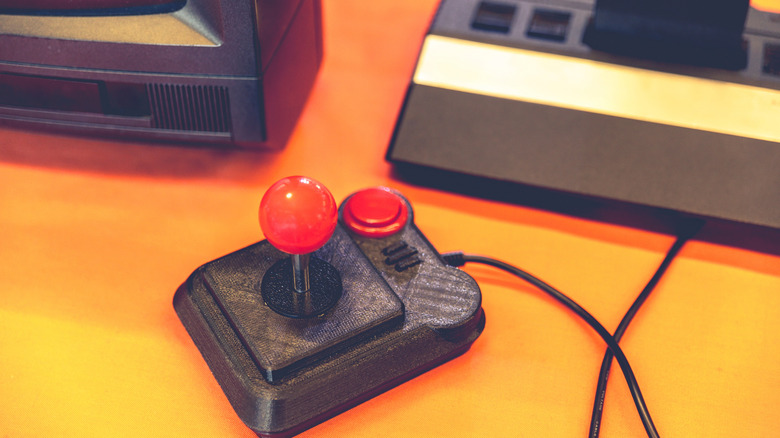
Gaming is now its very own market within the tech world, with consoles like the Nintendo Switch 2, Xbox Series X/S, and still-unreleased PlayStation 6 owning the headlines. Even the portable market has matured, with complex games available to play on smartphones in addition to handheld-console counterparts. It's still unclear which way the market will go with VR headsets, but there's a possibility video games will be entirely worn one day.
The 1970s are recognized as the decade that video games and home consoles hit the market. The 1980s saw it all hit mass appeal. The 1960s didn't see a defining public moment for home gaming, but in 1966, a man named Ralph Baer started planting its seeds. He developed a device known as the Brown Box, which was a wooden video game console prototype complete with two handheld controllers. The Brown Box was capable of playing ping-pong, checkers, and several sports games.
Baer's employer, an electronics company called Sanders Associates, licensed the Brown Box to Magnavox, which released it commercially as the Magnavox Odyssey in 1972. Baer would become known as the Father of Home Video Games, and while his prototype was short-lived, over the 60 years since its creation the Brown Box has influenced consoles like the NES, Sega Genesis, Sony PlayStation, and all of the more modern iterations we know today.