

Xiaomi 17T Pro Review: Undercutting Its Own Pricier Sibling
Every year, Xiaomi's numbered series gets the spotlight — the standard model, the Pro, and the camera-focused Ultra. But the T-series Pro is arguably the one that matters most for a lot of people, because it's the device that brings most of that flagship hardware down to a lower, more reasonable price.
The Xiaomi 17T Pro is exactly that kind of phone. It pairs a flagship-class MediaTek chip with a massive battery, fast charging, and an excellent display, all for less than you'd pay for a top-tier flagship. On paper, it looks like it gives up very little.
So, where does it actually cut corners, and are those compromises ones you'll notice day to day? I've been using the Xiaomi 17T Pro for a while now to find out.
Design
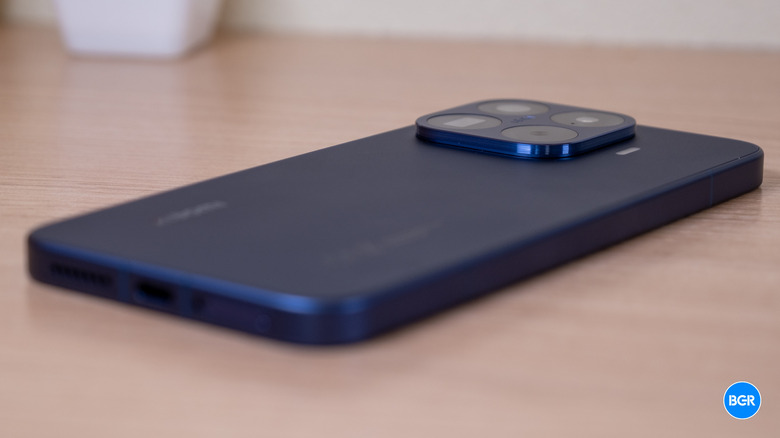
The Xiaomi 17T Pro doesn't reinvent the wheel. It has the flat-edged build that more or less every phone has these days, a flat display on the front, buttons on the right edge, and a USB-C port on the bottom. There's no extra AI button or camera button — just the usual power and volume controls. It's familiar, and familiar isn't a bad thing.
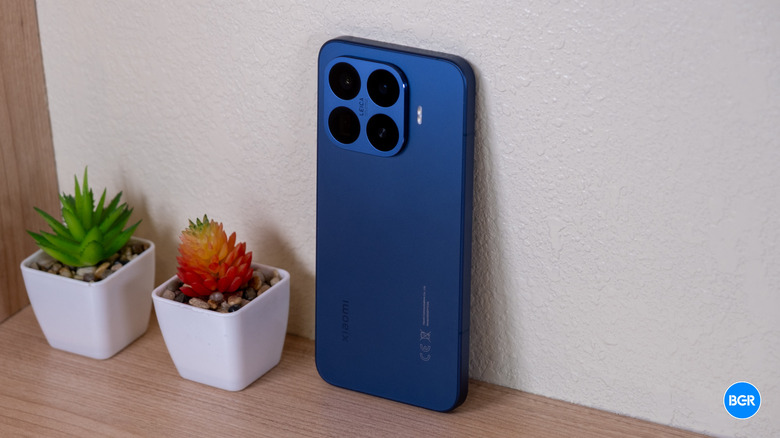
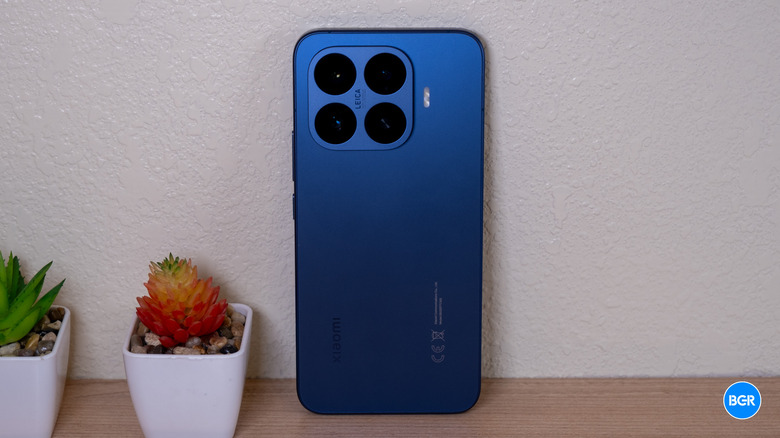
What's interesting is where it sits in Xiaomi's own lineup. The 17T Pro borrows the general look of the 17 series, but without the signature oversized circular camera module of the Xiaomi 17 Ultra, opting instead for a more restrained rectangular camera bump in the corner. It's a cleaner, less attention-grabbing look. If you found the 17 Ultra's giant module a bit much, this will feel like a relief.
The frame is aluminum, and the back is a fiberglass composite rather than glass. That sounds like a downgrade — and technically it is — but in the hand, you'd be hard-pressed to tell. It feels solid and premium, and I didn't clock that the back wasn't glass until I saw the spec sheet. The front is protected by Gorilla Glass 7i, which should hold up fine to everyday scuffs.
This is a larger phone, though. At 162.2 x 77.5 x 8.25mm and 219 grams, the 17T Pro is on the larger and heavier end of modern smartphones, thanks in large part to that enormous battery inside. It never felt unwieldy, but it's not a phone you'll forget is in your pocket, and smaller-handed users will probably want to consider that before buying. I'm used to using an iPhone 17 Pro Max, so I didn't mind the size — but that is the ballpark that it's in.
Xiaomi has included an IP68 rating, so you're covered for dust and submersion in up to 1.5 meters of water for 30 minutes. That's a step below the IP69 rating on the Xiaomi 17 Ultra, which can handle high-pressure jets and hot water, but IP68 is still better than most phones and absolutely fine for the vast majority of people. Sure, it's nice to have the IP69 rating, but I frankly can't imagine a scenario where the additional protection would be useful in my life.
While perhaps a smaller detail, one aspect of the design that I really like is how the phone handles haptics. They're precise and sharp, without feeling mushy or poorly tuned. This is becoming more common as companies try to match what Apple has done for years.
Xiaomi offers the 17T Pro in Deep Blue, Deep Violet, and Black. I'm reviewing the Deep Blue model, which looks quite nice. While I haven't seen the Deep Violet model in person, based on online images, it might be my favorite. Regardless, Xiaomi chose its colorways well.
Display
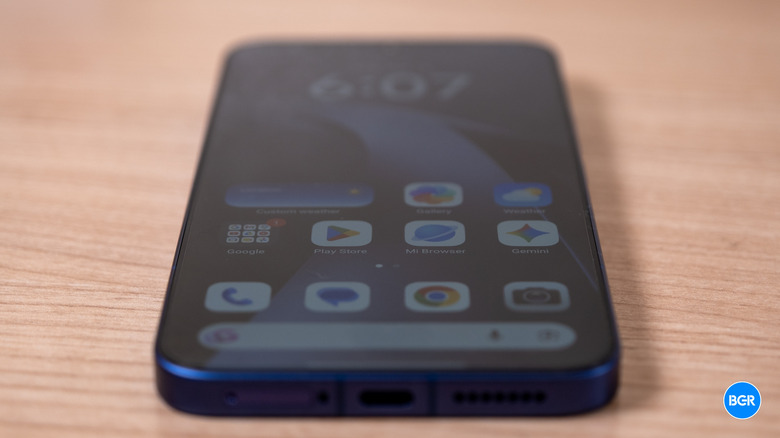
On the front of the phone is a 6.83-inch AMOLED display with a 2,772 x 1,280 resolution and a 144Hz maximum refresh rate. It's big, sharp, and smooth, and there's very little about it that I'd change.
The standout here is the brightness. In my testing, the 17T Pro hit a peak of around 3,650 nits in a small window of HDR content, which is brighter than the 3,500-nit rating Xiaomi quotes for both the standard 17 and the 17 Ultra. Perhaps even better is the fact that it managed to hold that brightness decently well at a 100% window size. Content was still over 2,000 nits, which is unusual, given the fact that phones usually throttle brightness much more significantly at larger windows. It was also good at sustaining its brightness over time, and managed to hold that full 3,500+ nits over 30 minutes.
It's perhaps not the most accurate display out there in terms of colors. Xiaomi has tuned the panel to be punchy and vibrant, which certainly isn't a bad thing for those who simply want a screen that looks nice. That said, if you care about reference-accurate color, you may want to dig into the display settings yourself. Again, this isn't something most people will care about, and to be fair, the screen still looks great.
The one display metric that I would change relates to refresh rate. The Xiaomi 17T Pro doesn't have an LTPO panel, which means that it can't range all the way down to 1Hz for static content to save on battery. To be clear, this doesn't impact how the screen looks, so don't assume that the display will look any worse than an LTPO panel would. Instead, it relates to how much power the display can conserve in use. As we'll get into later, though, the battery life still holds up.
Performance
Powering the Xiaomi 17T Pro is MediaTek's Dimensity 9500 coupled with 12GB of RAM and your choice of 256GB, 512GB, or 1TB of storage. In day-to-day use, it's exactly as fast as you'd hope. Apps open instantly, multitasking never trips it up, and the whole interface feels snappy and responsive. There's nothing about the everyday experience that betrays this as anything other than a flagship.
The benchmarks back that up. The 17T Pro turned in a Geekbench 6 single-core score of 3,331 and a multi-core score of 10,150, which puts it right in the conversation with the best Android phones around — including Snapdragon 8 Elite Gen 5 devices like the Xiaomi 17 Ultra and OnePlus 15. The Dimensity 9500 is a seriously capable chip, and on raw peak performance it gives up almost nothing to Qualcomm's best.
The phone also does a pretty good job at sustaining its performance. As with any phone, if you push the Xiaomi 17T Pro for long enough, it will throttle performance to keep temperatures in check. That said, its throttled performance still topped the Samsung Galaxy S26 Ultra, even if its peak wasn't quite as high. After 10 minutes or so of gaming, the Xiaomi 17T Pro will push slightly higher frame rates than the Galaxy S26 Ultra. It won't reach the heights of the Xiaomi 17 Ultra, though, which clearly has better cooling.
In practice, you won't really notice a difference. The Xiaomi 17T Pro, along with the Galaxy S26 Ultra and Xiaomi 17 Ultra, all perform extremely well. And while maximum frame rates may vary by a few frames per second, the Xiaomi 17T Pro is a very capable phone for mobile gaming. Overall, the 17T Pro handles everything you can throw at it in 2026, and the kind of performance gap that shows up in a benchmark loop rarely translates into anything you'd actually notice while using the device.
Battery and charging
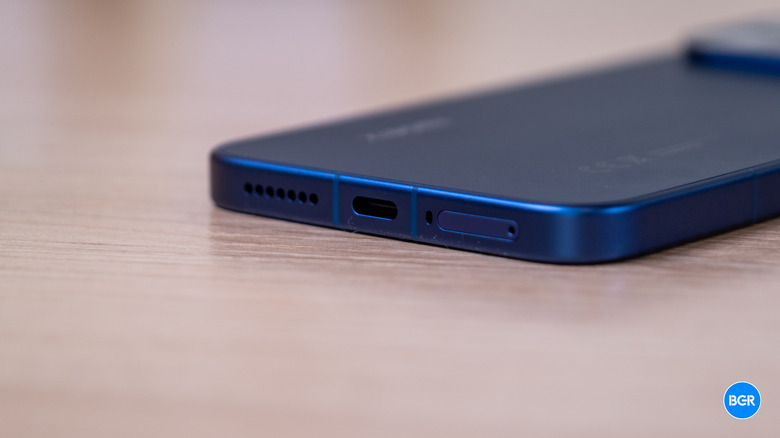
The Xiaomi 17T Pro boasts a huge 7,000mAh battery, and it's one of the best things about the phone. That's a bigger cell than you get in the global versions of either the standard Xiaomi 17 or the Xiaomi 17 Ultra, and it shows.
In my time with it, the 17T Pro easily lasted a full day of even heavy use, and non-power users will comfortably stretch it to two days. It's especially impressive given how power-hungry that big, bright display can be, and even extended gaming sessions didn't drain it as quickly as I expected. As long as you regularly charge it overnight, running out of battery mid-day simply isn't something you'll have to worry about. It's right up there with the longest-lasting phones I've used recently, like the OnePlus 15 and Honor Magic8 Pro.
Charging is quick, too. The phone supports 100W wired charging with Xiaomi's HyperCharge chargers, but you can also fast-charge with USB-PD, even if you won't quite hit the maximum charging speeds. I was able to fully charge the phone with a HyperCharge charger in around 40 minutes, which is very impressive.
There's also 50W wireless charging on offer, and again, you'll need Xiaomi's own wireless charger to actually reach that speed. It took my phone around 70 minutes to get to a full charge with a wireless charger. Between the enormous battery and the fast top-ups, the 17T Pro is about as worry-free as phones get on this front.
Camera
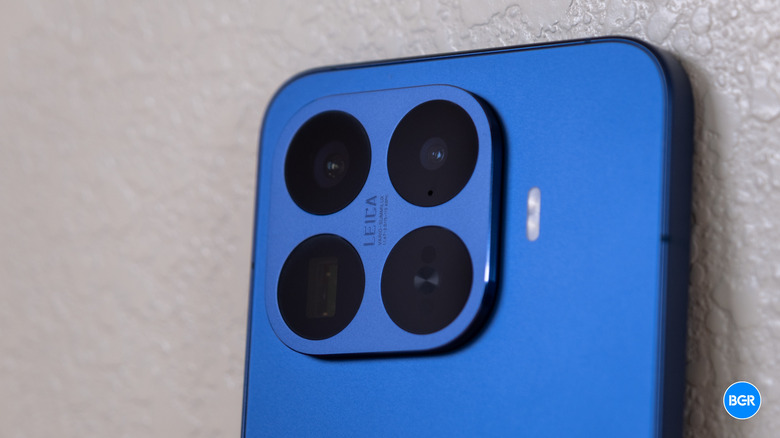
The Xiaomi 17T Pro has a triple camera system on the back — a 50-megapixel main camera, a 12-megapixel ultrawide, and a 50-megapixel telephoto with roughly 5x optical zoom. It's a versatile setup on paper, and plenty capable in practice, even if it's not quite at the level of the more expensive phones in Xiaomi's range.
The main camera is the highlight. It captures genuinely sharp, detailed images in good lighting, with fine textures coming through cleanly — noticeably crisper than the standard Xiaomi 17, and sharper than the Pixel 10 Pro's main camera in my side-by-side shots. Xiaomi leans toward a punchy, vibrant color profile here, which most people will love. Where it falls a little short is dynamic range, which is fairly average, and stabilization, which isn't quite as steady as some flagship phones when you're shooting handheld in tricky conditions. Those are the areas where you can tell this isn't the Ultra.
The ultrawide is arguably the weak link. It has a 12-megapixel sensor — a big step down from the 50-megapixel ultrawide sensor on the standard Xiaomi 17 and Xiaomi 17 Ultra. Despite the spec sheet, though, it still captured appealing photos. Images are a little softer than those captured by the main and telephoto cameras, but it's barely noticeable unless you really nitpick.
The telephoto camera was also impressive. The roughly 5x optical reach is far more useful than the 2.6x lens on the standard Xiaomi 17, and the 50-megapixel sensor holds up well, delivering detailed shots with pleasing, fairly accurate color at its native zoom. For framing distant subjects, it's easily the more flexible of the two telephoto options between this and the base model. I will say, however, the telephoto camera performed the weakest of the three in low light, even at native zoom. Images weren't unusable, but they were noticeably worse than low light photos captured by the main camera.
Once you start zooming in, you will notice that images soften up pretty quickly. They're still usable at 10x, but at 20x, you'll get noticeable artifacts, and details fall apart pretty dramatically. Of course, this isn't the only phone camera where that's the case, but it's still something to be aware of.
Up front, there's a 32-megapixel selfie camera. It's solid — it captures accurate color, but it's not as sharp or detailed as the rear cameras. It takes perfectly acceptable selfies for social media, just don't expect them to hold up to close scrutiny.
Overall, the camera system on the 17T Pro is a good one, anchored by a strong main sensor and a flexible telephoto. It's not as consistent between lenses as a Pixel — and it can't touch the 1-inch main sensor and overall polish of the 17 Ultra — but for the price, it covers most bases well.
Software
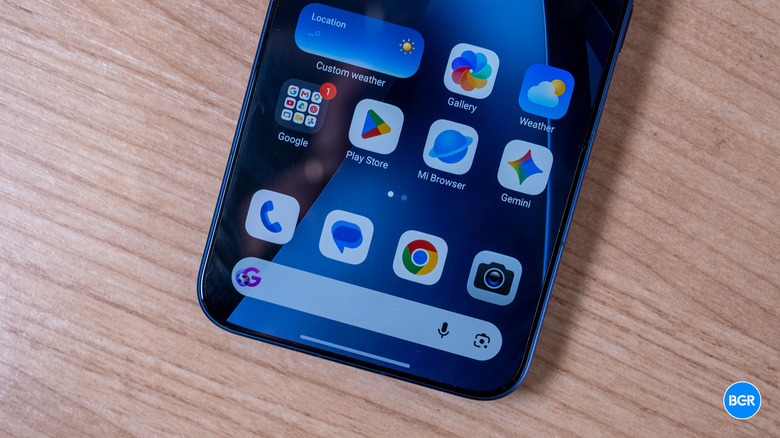
The Xiaomi 17T Pro runs HyperOS 3, Xiaomi's custom skin built on top of Android 16. It's responsive and easy enough to navigate, and if you've used a recent Xiaomi phone, there won't be any surprises. That said, it's still nowhere near as clean as what you'd find on a Pixel, for instance.
As you'd expect from a Xiaomi phone, there's some bloat to deal with out of the box. You'll find duplicate Xiaomi versions of apps Google already provides, along with a handful of third-party preinstalls like WPS Office and TikTok. It's not the end of the world, and most of it can be uninstalled, but it's always a little frustrating to spend your first few minutes with a new phone deleting apps you didn't ask for.
There's also a healthy pile of AI features baked in, including a writing assistant, an interpreter, and various photo and productivity tools. They work as advertised, but like on most phones, I didn't find myself reaching for them much in daily life. Your mileage will vary depending on how into that stuff you are.
On updates, Xiaomi is promising five years of OS updates and six years of security patches. That's not bad, and it matches the standard Xiaomi 17, but it's still a step behind the seven years of OS updates that Samsung and Google now offer on their flagships. For a phone you might want to hold onto for a while, that's worth factoring in, and I'd love to see Xiaomi push that further.
Conclusions
The Xiaomi 17T Pro is a textbook value flagship. It nails the things that matter most day to day — flagship-class performance, a bright display that sustains its brightness, an enormous battery, and fast charging — and it does it all for a price no flagship can beat. The sharp main camera and genuinely useful 5x telephoto are a nice bonus on top.
The competition
The Xiaomi 17T Pro's toughest competition comes from the OnePlus 15, which sustains performance better and has similarly excellent battery life, though the Xiaomi counters with a brighter display and a more flexible telephoto lens. The Samsung Galaxy S26 offers cleaner software and a longer update commitment, but it costs more and throttles under load. If cameras are your priority, the Google Pixel 10 and 10 Pro deliver more consistent results between lenses and cleaner software, even if the 17T Pro's main camera is sharper and its battery and charging are better. Step up to the Xiaomi 17 Ultra, and you'll get a far better camera and a more premium build, but you'll pay a lot more for the privilege.
Should I buy the Xiaomi 17T Pro?
Yes, if you want flagship performance, a huge battery, and fast charging without paying flagship prices.