

5 PlayStation 5 Limits You Won't Find On A Gaming PC
Convenience is the main selling point of owning a games console. They don't require tweaking; they look after themselves and just work out of the box (likely after an update). But this seamless experience comes with restrictions that soon become blatantly obvious when looking into PC gaming. For those who want complete control over digital libraries across different marketplaces, along with custom graphics settings and system hardware, console gaming will feel quite restrictive.
On the flip side, players moving from traditional consoles to dedicated PC gaming rigs find themselves sitting at the frontier of game customization and near-limitless options when it comes to hardware, budget allowing, of course. It's a case of weighing up the plug-and-play nature of the PlayStation 5 against the customizable, boundless power of gaming PCs.
The problem with console gaming is largely linked to storefront lockdowns and paywalled multiplayer functionality, which has been a tale as old as time when comparing to PC gamers benefiting from cheaper games and more sales from the likes of Steam, Epic, GOG, and more. Throw in the free multiplayer access for most games, and it's easy to see why players would invest in a boutique desktop or laptop PC gaming setup from Maingear over Sony's flagship beast. We're at the point in the current console generation where prices should be going down, but thanks to chip shortages that are driving up prices for manufacturers, console and PC components are at an all-time high. So if players are going to pick a side, why not offer unlimited options, including the option to turn a gaming laptop into an Xbox if gamers want to?
1. Strict hardware limitations
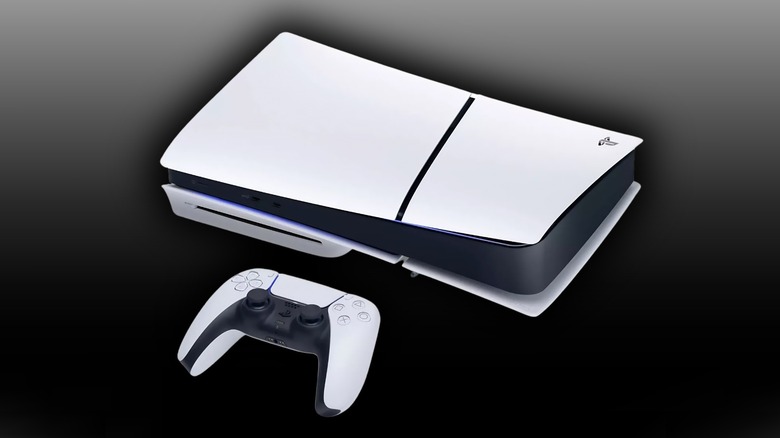
When buying a PlayStation 5, players are locking themselves into a specific level of performance for the entire lifecycle of the current console generation. With analysts believing that the PlayStation 6 will be pushed back to 2028 or 2029, some players will be stuck with the same performance for up to nine years with no option to upgrade components. This is due to consoles like the PlayStation 5 relying on a custom system-on-a-chip that fuses the processor and GPU pipeline together. Aside from installing a compatible M.2 solid-state drive to expand storage capacity, users can't swap out parts to upgrade performance and image quality. While players won't see many games that PlayStation 5 can't handle, developers have to work around the console's limitations via software optimizations. Gamers are subject to Sony's fixed ecosystem and developers' know-how to make their games run smoothly, which can often lead to a downgraded experience when compared to PC performance.
A gaming PC, like the Maingear Rush Artist Edition or the Ultima 18 laptop I run, eliminates this performance ceiling with more up-to-date components and the option to upgrade the graphics card, RAM, processor, or power supply. Granted, my Ultima 18 laptop is also a fixed platform, but the option to upgrade its RAM and SSD is still available. Regarding my desktop rig, I can keep its hardware relevant and up to date as I see fit, or build my own PC from the ground up for a fully custom experience.
2. A single digital storefront
Sticking to PlayStation 5 locks gamers into a closed platform ecosystem with a single storefront in the PlayStation Store. Sony goes one step further with digital content control by prohibiting third-party retailers from selling download codes, thereby granting it a monopoly over software pricing, discounts, and regional market rates (also known as dynamic pricing). Alongside PlayStation DRM updates changing how gamers digitally own games, it's a worrying time to have a game collection on PS5, as gamers can't even shop around for the best digital deal.
A gaming PC or laptop treats open commerce as its default setting. If users want to buy a game on PC, they can compare prices across Steam, Epic Games, GOG, and third-party resellers like Fanatical or Green Man Gaming. The website "Is There Any Deal" is a fantastic resource for bargain hunters. This fierce competition between digital storefronts naturally drives software prices down more quickly than on the closed platform of the PlayStation 5. There are plenty of bundles usually on sale across the board, too, which makes building a backlog ridiculously easy. There are even storefronts such as GOG that offer DRM-free games, giving gamers absolute ownership without needing a storefront program to install and run them. This is the exact opposite of what PlayStation 5 offers, which will result in players' games becoming inaccessible once Sony turns off PS5 servers down the line.
3. Restricted graphics settings
Console game developers build games around rigid performance specifications to ensure stable gameplay across all PlayStation 5 consoles, typically with a quality mode and a performance mode. These are predetermined graphics settings to either achieve 4K at 30 FPS in quality mode or 1080p/1440p at 60 FPS in performance mode. While it's an easy plug-and-play approach, it lacks the detailed settings gamers can adjust to further boost performance and quality. There's no option to adjust individual features like shadow mapping, ambient occlusion, motion blur, or field of view in most titles unless developers specifically include these settings in their in-game menus.
Once again, gaming PCs blow this wide open and treat graphics and performance settings as a core feature. If a game doesn't run smoothly on a particular PC, players don't need to settle for a massive drop in resolution or frame rate to get it running well. They just need to adjust the most demanding settings, such as volumetric fog and shadows, to see an instant jump in frame rates without dropping from 4K to 1080p. This level of control ensures players can select the settings that work best with their particular monitor or TV for the best possible experience.
4. Paying for online features
A major sticking point for PC gamers is paying for online multiplayer, which has never been an issue except for specific subscription-based games like "World of Warcraft" or "Final Fantasy XIV." But to access peer-to-peer matchmaking and dedicated multiplayer servers in-game on PlayStation 5, players will need to buy a PlayStation Plus subscription. PS+ is basically monetizing basic internet functionality, requiring a yearly or monthly fee to use the same network infrastructure players will already be paying their internet service provider for. Should a PlayStation Plus membership expire, players will also lose their online benefits, along with their monthly free games and any games they had downloaded that are no longer part of the catalog. Free-to-play games such as "Fortnite", "Apex Legends" and "Call of Duty: Warzone" do not require a PS+ membership.
PC gaming is, again, the exact opposite, as multiplayer doesn't cost anything, aside from the aforementioned game-specific memberships and passes. Developers for PC games and storefronts don't gatekeep the internet access that's already been paid for, allowing developers and publishers to handle their own multiplayer servers rather than forcing subscription models on players. For a basic subscription, PlayStation Plus Essential, gamers will need to pay $79.99 for 12 months. For someone who buys into this day one, this will end up costing them a ridiculous $639.92 over eight years. That's the same cost as an Nvidia RTX 5070 overclocked graphics card right now; let that sink in.
5. Poor game preservation

While the PlayStation Plus Premium/Deluxe tiers offer access to curated previous-generation games, the classics catalog receives additions and removals on every third Tuesday of the month. This is where PlayStation 5 falls flat on game preservation, which is at Sony's mercy. It can currently play most PlayStation 4 games, but any physical PlayStation 1, 2, or 3 games are left in the dust with no option to buy them digitally. Of course, remasters and remakes are an option, but that's if the developer or publisher still exists and actually wants to do it.
Gaming on PC pretty much means that any game that runs on the x86 (32-bit) architecture will boot up, with a little help from community patches, open-source ports, and the good work GOG does to preserve classic games. Today's gaming PCs run x64 (64-bit) Windows operating systems, which can also run x86 software, meaning players can play their old games, often with superior frame rates and resolutions. As a result, players don't need to buy the same game multiple times, making game ownership far easier for PC gamers. As previously mentioned, DRM-free platforms ensure players have 100% ownership of their games, which is something we'll likely never see on traditional consoles like the PlayStation 5 unless users have physical copies.