

10 Home Office Trends That Are Actually Useful
We may receive a commission on purchases made from links.
While the work-from-home trend isn't as strong as it was during the peak of the pandemic era, modern technology and a move to hybrid work arrangements mean there's a pretty good chance that (if you work an office job) you also have a home office. Once working from a home office becomes an established part of life, inevitably, people will try to optimize it, or at least make it more pleasant.
When you work in an office owned by your employer, you aren't responsible for ensuring that the office is safe, comfortable, and conducive to productivity. When you have a home office, even though your employer might set some minimum standards, that job largely falls to you. If you're freelance, it's completely up to you whether you work in a self-imposed sweatshop or complete your daily grind nestled in the arms of feathery angels. The problem is: Which of these trends pushes you towards the latter rather than the former?
Certain home office trends are questionable in their utility, but there are a few that seem genuinely useful, and anything that makes your work better, faster, or at least dulls the pain of being an office drone is fine in our book. Below lies the key to making you hate Mondays a little less. Actually, let's start by removing that "Garfield" poster. That's one trend we're ready to declare dead and buried.
Biophilic design integrating plants, natural light, wood, and stone
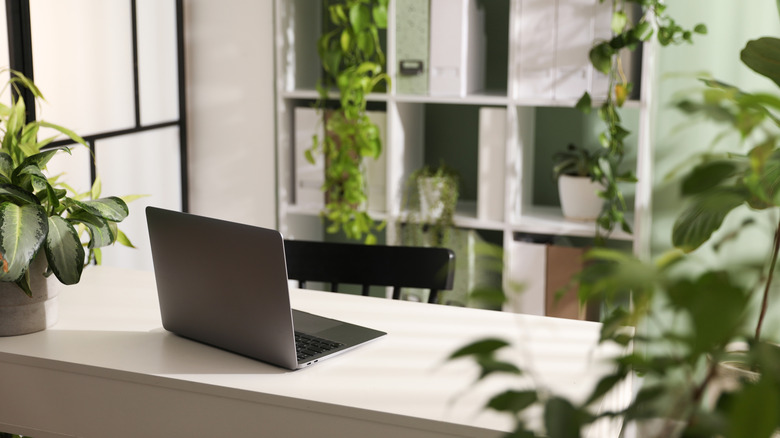
If you'd rather be sitting outside in a nice green park than in a stuffy office, the biophilic design trend is right up your alley. It's not hard to understand what the core principle is here. You want to feel connected to nature and the natural world, even when indoors, at your office.
The way to achieve this is manifold. A key principle is to use furniture and decor that uses natural materials. Think bamboo, stone, wood, and plenty of real plants. The plants are optional, however, and are largely there for aesthetic purposes. Researchers once declared that plants can clean toxic chemicals from the air, but later research didn't support this idea. You'd have to cover almost all your floor space in plants for them to make a difference, and that's probably not the corporate jungle you signed up for.
No, the benefit of using the biophilic design principle is largely to maintain and promote better mental and physical health. A biophilic work environment can have positive effects on sleep quality, stress levels, and mood. Obviously, a happier, healthier person is also more productive, so maybe you can start off with a nice potted plant in the corner, and work your way up from there.
Adaptive chairs offer next-generation ergonomics
Caring about ergonomics in the office is hardly new. There's evidence of body-conscious seating as far back as 3000 B.C. But the 20th century saw the birth of the formal science of workplace ergonomics, and from the '70s onward, there was a real boom in interest. A worker without a sore back or posterior was a worker who labored longer and harder.
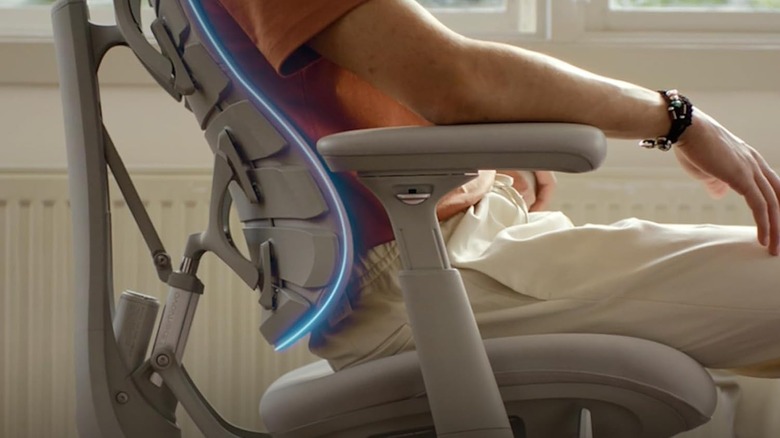
So we've had chairs that try to make you comfortable and healthier for decades at this point, but in the past few years, designers have really gone all-out on the technology front. The thing is, real human bodies don't stick to a single optimal posture all day. We fidget, we shift around, and don't even notice it. Traditional ergonomic chairs are designed around optimal postures that no one actually sticks to for long, so you don't get consistent support.
Then someone came up with the idea of making a dynamic chair, with the Libernovo Omni being a prime example. They're mechanically complicated, but surprisingly well-priced if you've ever dared look at the cost of enterprise-grade ergonomic furniture. The idea here is that, using a set of linkages that work in tandem, the chair adapts to all those in-between postures, ensuring you have adequate support no matter how freaky (no judgment) your sitting style might be. The jury's out on whether these are actually the best ergonomic desk chairs, but the idea is certainly compelling.
Smart technology integration like auto-adjusting desks and voice-controlled lighting
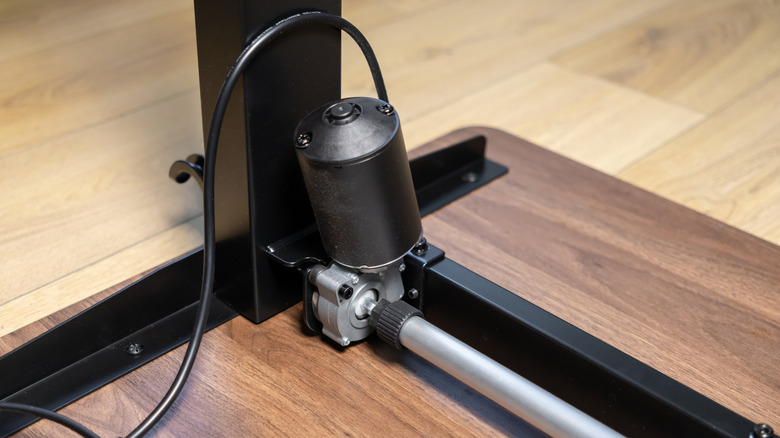
These days, there are many smart home gadgets you might consider essential, and your home office isn't immune to the broader smart home trend. Using smart home technology to upgrade your office can mean a better working environment, saved time, and the space and energy to focus on your work.
We've highlighted motorized blinds as a money-saving smart home automation before because controlling natural light automatically alongside smart lighting means you only use as much energy as you need to achieve a healthy amount of light. Using as much natural light as possible feeds back into the idea of biophilic design, too, so it's got some synergy going. Of course, this also means you need smart lighting systems and a platform like Alexa or Google Home to control it all and create presets that suit you.
Smart plugs can be used to turn devices like printers or "dumb" lights on and off. So imagine you have "routines" or "workflows" (or whatever your smart home flavor calls it) where you can activate "work mode" or "meeting mode," and your office lighting and other smart devices could change their status to accommodate you.
Acoustic enhancements like soundproof panels and noise-canceling technology
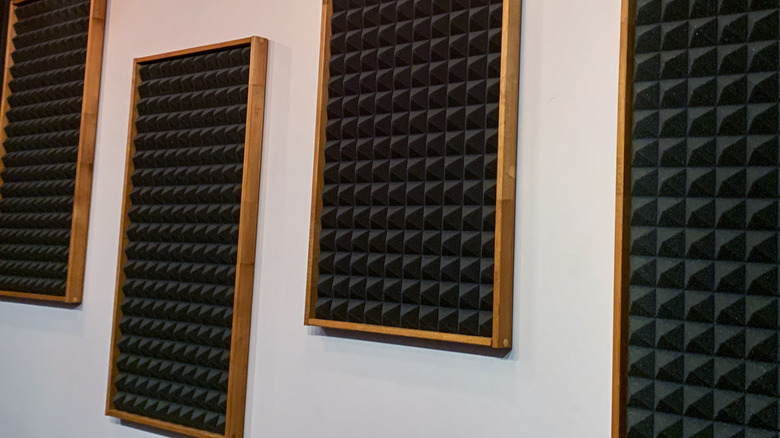
There are many ways to cut down on noise in your home office, but one of the most direct and effective methods involves installing acoustic panels. Some of these panels absorb sound, some diffuse it, and all of them can help make your office a quieter, less shrill place to work.
The global acoustic panel market is a multi-billion-dollar business with great growth expectations. It's obviously not just audio professionals investing in all this sound-control equipment, but modern homes and businesses play a significant part in it. While you could invest in a pair of noise-canceling headphones (or earplugs), this is not a total or sustainable solution.
The goal here isn't to soundproof things or create some sort of anechoic chamber, but to make the way sound propagates through your workspace less distracting. The acoustic paneling industry has noticed that it's not just studios and industrial customers who want these foam panels. Which is why you can now choose from a vast number of styles and colors. There are stylish panels that try to hide their purpose, or ones that play into the aesthetic, and let you create unique decorations that are a mix of form and function. At the very least, a few strategically placed panels can make your video calls or recordings sound much better.
Flexible workstations with modular furniture and cozy corners
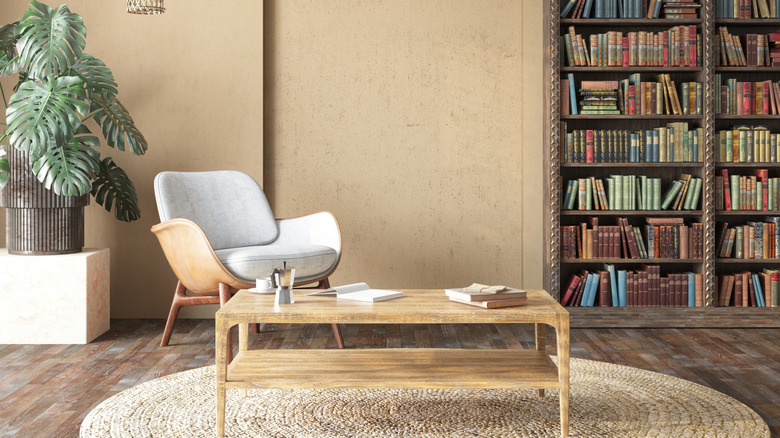
We have to assume that if you have a home office, it's not necessarily the most spacious, productive space in the world. This is why you want office furniture that can serve multiple purposes. You might also want to consider doing your work in more than one position or in more than one chair all day.
This is one reason we now have standing desks that can easily transition from standing to sitting. But, there's also a trend towards building cozy corners. This might involve having cushions, or blankets, or just a nice separate reading chair with a bookcase. So you can just change things up during your day and take a call in a more comfortable spot, or do work-related research in a different body position than when you write your report.
One feature of the fancier ergonomic chairs we've already mentioned is the ability to fully recline, so you don't have to sit in that super-productive mode all the time. If you use a productivity method like the Pomodoro technique, it's a great mode-switch option during your breaks.
Air quality monitoring

It wasn't that long ago that people literally smoked in the office, so clearly, air quality hasn't been a workplace concern for that long! These days, however, we know that poor air quality is linked to a long list of health issues, and the long-term effects of breathing bad air can be devastating. Just because you're working from home doesn't mean you can stop worrying. Clearly, people who live in cities or near industrial centers remain vulnerable, even as we live in the age of cheap, smart sensors and high levels of health consciousness. So it's no surprise that there's a trend towards measuring air quality in home offices.
An air quality monitor is an overlooked smart home device you should be using, and the good news is that these gadgets aren't that expensive. Big-name brands like Ring will sell you its Ring Air Quality Monitor for about $70, and often much less. Plop it down in your home office, connect it to your smart home system, and you'll know when the air pollution exceeds acceptable levels. At that point, you can open a window, switch on an air purifier, or it might help you figure out that something in your own home is a source of pollution.
Most of the monitors you'll find online, however, are standalone systems with a display showing all the parameters a specific device monitors. That's handy for measuring air quality in different spots, since you can just move it around.
Slick desk lighting and web-cam ready workspaces
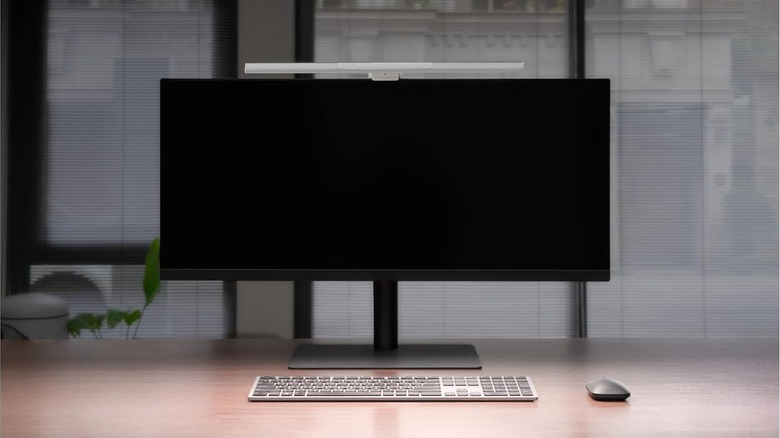
It's not often that a new product class comes along and jumpstarts a trend. However, that's exactly what's happened with products like the BenQ ScreenBar Pro. The concept is simple. The light sits on top of your monitor and uses directed light to illuminate your desk surface. Most importantly, it does this without causing glare on the screen itself. It's an elegant solution, and can even save you desk space if you were using a traditional desk lamp before. It's a great option if you work late or don't have enough overhead lighting in your home office.
The BenQ model above is a premium example of these devices and includes a motion sensor that turns it on as soon as you sit down. However, you'll find plenty of perfectly adequate alternatives (even from BenQ) that are significantly less expensive and just as effective.
Desk lights aren't the only illumination people are attaching to their monitors. Webcam ring lights are also trending as a way to make you look more professional in video calls or when making webcam recordings for training or other work-related purposes. Good lighting is one of the most affordable and effective ways to increase the perceived quality of your webcam footage. Spending money on a better webcam does little if your lighting is poor.
Active workstations to fight the sedentary lifestyle
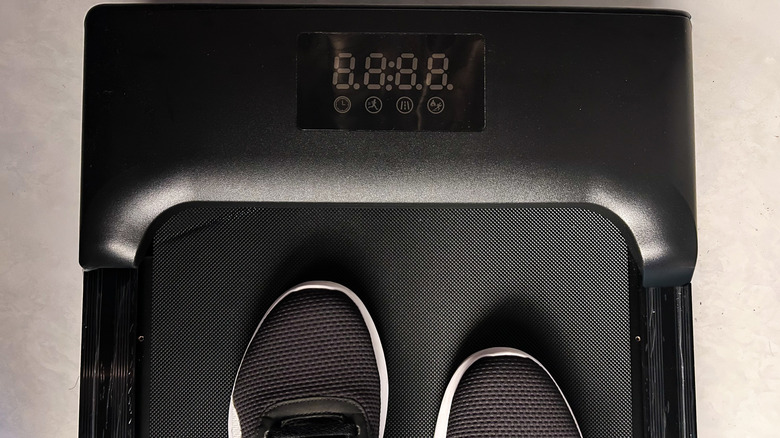
It's no secret that being sedentary and sitting all day is bad for us, which is why standing desks were such a hot trend for a while, but standing is not enough. So now people are installing walking pads under their standing desks that let them stroll (very) slowly while they work instead of just sitting in a chair.
If you prefer staying seated, you have options such as under-desk bikes or seated elliptical trainers. It might seem goofy, but research has shown that, at the very least, you can burn a significant amount of additional calories with one of these devices compared to just sitting still.
Whether that actually helps stave off the negative effects of working for hours sitting down is a question that can only be answered in the future when the data arrives, but people are putting miles on the clock while being on the clock, regardless.
Smart organization and cable management
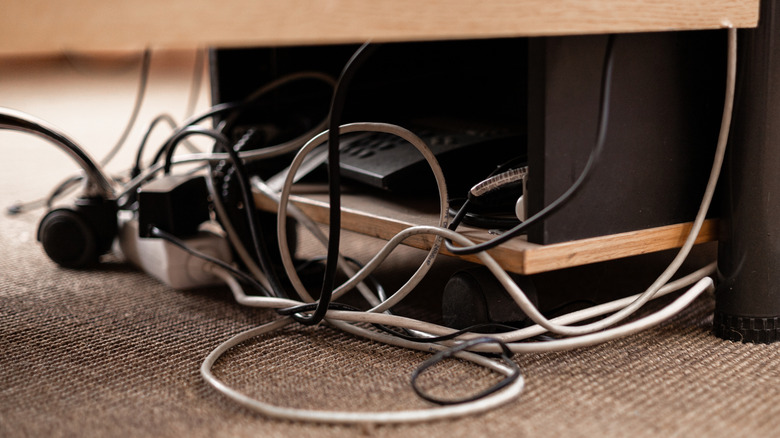
It seems the days of letting it all hang out when it comes to cables at your desk are well and truly over. Or, at least, it's highly unfashionable. Spend some time browsing r/battlestations, and you'll rarely see wires of any sort. Of course, these are the cable-managing and desk-organizing elite of the world, but there are many cheap gadgets that can fix cable clutter.
The trend towards clean desk setups is partly about aesthetics, but it's also practical. Cables are distracting, take up space, and pose a trip-or-tangle hazard for humans and pets. Not to mention children or pets chewing on them! Organizing your cables with, for example, an under-desk cable tray lets you lift them off the floor, and you can use the same type of trunking that neatens up wall-mounted TV installations to hide your HDMI and power cables.
These are just two examples. The number and variety of cable-management solutions seem endless, and that's before you bring in bespoke 3D-printed or otherwise DIY solutions to the table. Maybe, one day, we'll collectively decide that messy cables aren't a big deal. But, for now, the war on cables is still in full swing.