

5 Reasons To Buy A Cheaper Smartwatch Instead Of An Apple Watch
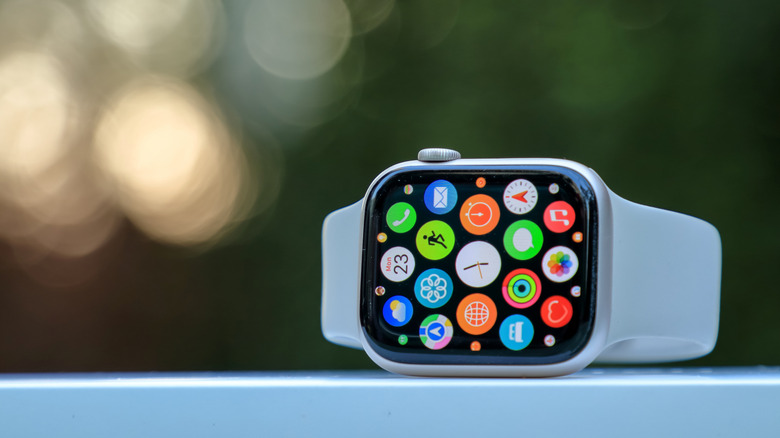
When you have an iPhone, the Apple Watch seems like the most logical smartwatch companion. But it's expensive no matter how you slice it. Yes, there are more affordable options like the Apple Watch SE models. You can also get an older model that still supports the latest OS (with watchOS 27, that only goes back to Apple Watch Series 9, however), or you can consider a refurbished option. But there are so many cheaper smartwatches that work well with iPhones, too. They have similar capabilities even if you can't do things like access Apple Wallet, Apple Music, Siri, and seamlessly track Apple Fitness+ workouts.
If you aren't going to take advantage of all the ecosystem perks, there are advantages with cheaper smartwatches that make them worth considering. The Apple Watch is a fantastic smartwatch with tons of benefits, but it's not the only choice you have, and you can save big with other brands.
Cross-platform compatibility
While you might declare yourself a forever iPhone owner, there are compelling Android phone options on the market that might entice you to switch. What if you do? If you're using a work-provided phone and your company switches to Android, your Apple Watch is effectively rendered useless. Further, if you want to hand it down to a family member or friend, or even sell it once you upgrade, your only option is other iPhone users.
Smartwatches from brands like Garmin and Amazfit work equally well with both iOS and Android. Both brands, as well as others, like Mobvoi, Withings, Fitbit, and Huawei, offer extensive lineups with smartwatches at various price points. While many cheaper Android smartwatches only work with Android, models like the Fitbit Sense and CMF Watch 3 Pro work with iPhones, too. Several of them are far less expensive than any Apple Watch, yet offer many of the same features and reliable tracking. Many can also sync with Apple Health so you can still view all your data in one place. It's worth considering if you want to connect the smartwatch to a tablet, too, so you aren't limited to just Apple devices.
Similar feature set and accuracy
Pretty much every smartwatch nowadays tracks the basics, like steps, calories burned, movement, sleep, heart rate, and workouts. Many also capture blood oxygen level, breathing rate, stress, temperature, and even ECG readings. In fact, some brands exceed Apple Watch with additional metrics in certain areas — things like Garmin's focus on runners, AI integration with brands like Amazfit, or even Fitbit's Google Health Premium, which works on iPhones, too.
Aside from the specific ecosystem features, there are few features only Apple Watches have. But in some cases, those features are available on competing smartwatches in different forms. For example, while you can't access Apple apps on non-Apple watches, you can usually access the same functionality through the watch maker's own apps. You can't integrate as seamlessly with Apple and Beats headphones, but you can connect any pair of Bluetooth headphones and enjoy audio just the same.
It's worth mentioning that hypertension notifications are currently unique to the Apple Watch Series 9, Ultra 2 and above. But not everyone will see that as a sole reason to get an Apple Watch unless they have serious concerns about the condition. Similarly, some people might benefit more from health features that are exclusive to other brands and aren't available on the Apple Watch, though these are generally less common with budget-focused smartwatches.
Longer battery life
The one big pain point with an Apple Watch is battery life. No matter how you slice it, you'll need to recharge your Apple Watch daily, or at least every day and a half. The only exceptions are the Ultra models like the Apple Watch Ultra 3 that can last up to 72 hours in low power mode, but these are also the most expensive models. I've had my Apple Watch Series 11 for a while now, and while its battery life far exceeds my Apple Watch Series 8, I'm still down to about 20% by the evening and need to recharge to ensure I get full sleep tracking.
Other brands blow Apple out of the water with battery life that lasts for days, some as long as a week, and solar-powered options that go even longer. In fact, there are some hybrid smartwatches like the Withings ScanWatch 2 that can last for up to about a month. Even if the smartwatch lasts a few days, cutting your charging time down to only a couple times a week makes a world of difference for busy individuals. That's especially true if you use heavy-draining features like GPS to track runs, walks, and cycles, or for turn-by-turn navigation.
Cheaper to replace
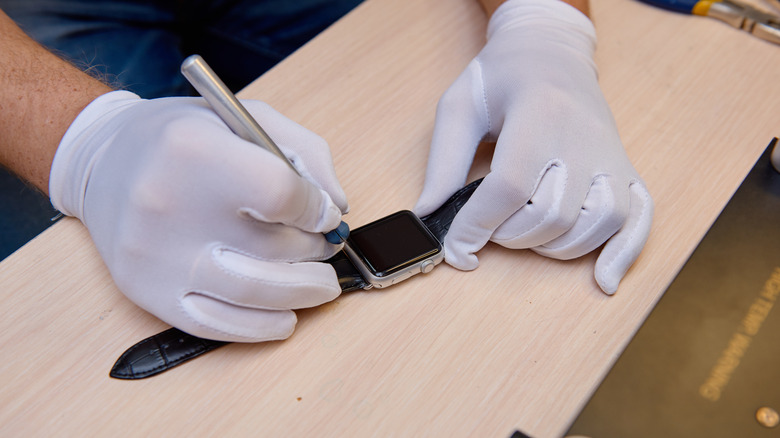
If you lose or damage your smartwatch, you may find that it's cheaper to replace or fix a smartwatch from another brand. Apple offers repair services for the Apple Watch that range in average cost from $99 for a new battery up to $399 for more extensive damage. You can get AppleCare, but that adds to the total cost and still comes with service fees. While other smartwatches may come with similar warranty periods, repairs or replacements may be easier. Rather than repair its products, Garmin most often offers a replacement product.
Even if you don't want to spend money to repair a smartwatch from another brand, there's the option to buy a new one that doesn't cost as much as even the cheapest Apple Watch. It won't be as tough of a pill to swallow as damaging or losing your Apple Watch and needing to replace it. Plus, you have an abundance of choices and can decide on a new model that better meets your needs, whether it's a step down or up or one with specialized features. Comparatively, the Apple Watch line is pretty standard, with only a few variations among models.
Choose different form factors
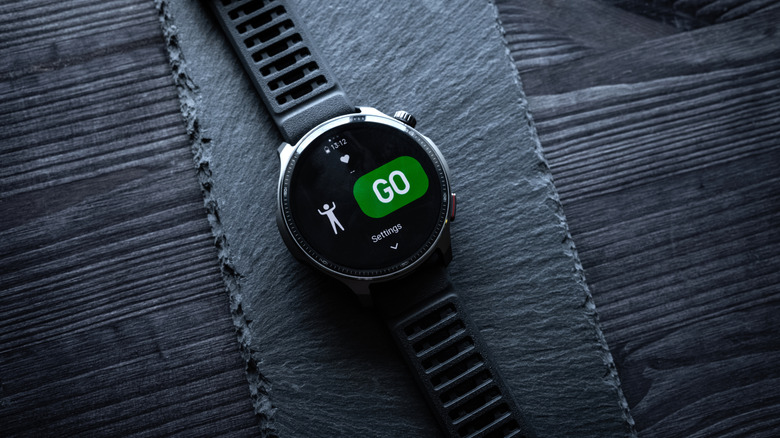
The Apple Watch lineup's relative lack of variety goes hand in hand with the fact that, along with offering different models with different feature sets (like Garmin's Forerunner series for runners and Withings' hybrid watches for people wanting something more discreet), cheaper alternatives can give you much more choice when it comes to aesthetics. The Apple Watch has its signature rounded-rectangle design for every model — there's no variation. By contrast, other brands have watches with "squircle" bodies, circular faces, squares, boxy rectangles, and everything in between. You can find models with rotating bezels, multiple buttons on either side, or even no buttons at all. Some have physical watch hands for a more analog look, and overall designs range from slim and elegant to bulky and rugged.
Smartwatches aren't a one-size-fits-all proposition, so having some choice when it comes to the look is important. Apple hasn't significantly changed its design since the watch's inception, instead opting for very subtle tweaks that have enhanced but not drastically changed the look and feel. It's still the same signature style. Beyond that, you can save a lot of money by buying a smartwatch from another brand — one that works with both iPhone and Android — while still enjoying many of the same feature benefits.