

5 Advantages To Buying A Mirrorless Camera Over A DSLR (And 5 Disadvantages)
Most of us don't need a dedicated camera. The best smartphone cameras you can buy are more than good enough for the vast majority of people. Photos are sharp, colorful, and high-res. So why spend money on a dedicated shooter?
Well, as soon as you try to take serious photos, either semi-professional or professional, you'll run into the limits of smartphone camera technology. So, when you turn to a dedicated camera, you're faced with the choice between a "mirrorless" camera and a traditional DSLR. What "DSLR" actually means is key here. DSLRs are essentially traditional single-lens reflex (SLR) cameras that used to use film but now use digital sensors. Inside the camera, there's a mirror that can move so that you can see what you're shooting through the lens itself. When you press the shutter button, it rotates to focus the image onto the film or digital sensor. These cameras were the professional gold standard because you can precisely control what ends up on film.
Mirrorless cameras dump all that analog-era baggage and offer a sleeker, more efficient design. It's like the difference between a car that's been converted to run on electricity and one designed from the ground up to be an EV. So it might seem like a mirrorless camera is the obvious choice, but for many people, DSLR cameras are still worth buying. Each type of camera has unique advantages you should know about before taking the plunge.
Mirrorless cameras have smaller and lighter bodies
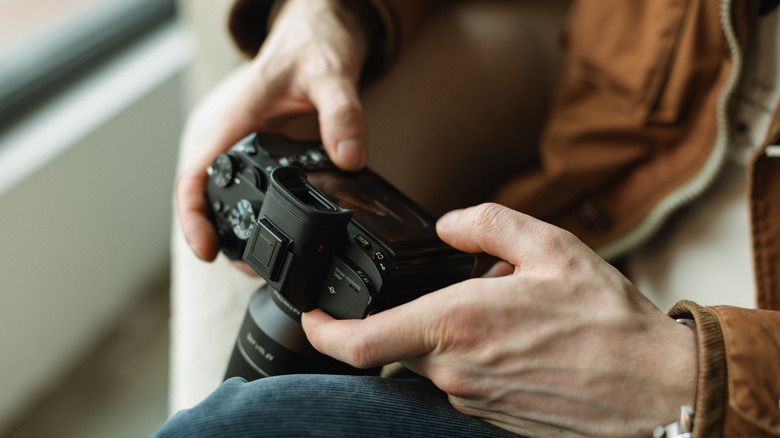
Inside a DSLR, there's a mirror box and components for the optical viewfinder. This whole system, originally meant to provide a mechanical solution for viewing through the camera lens, occupies a large amount of internal space. When you remove those components, you can shrink the camera significantly, and that's why mirrorless cameras are so much smaller than their DSLR predecessors.
This is a major advantage for mirrorless cameras on several levels. For one thing, it means you can shoot for longer without becoming fatigued. It also means it's physically easier to transport your camera and makes you less conspicuous when shooting in public. If you use a gimbal or like to put your camera on a long stick to get high or low shots, a mirrorless is likely the better solution because of that smaller size and weight.
It's not all good though. One advantage of bigger DSLR bodies is they can be more ergonomic with superlative grips. You might find the size and weight more conducive to steady, comfortable shooting. In particular, if you're going to shoot with big telephoto lenses or elaborate macro setups with diffuser hoods and the like, the size advantage is eroded somewhat. In which case the practical handling differences compared to a DSLR may be moot.
Mirrorless cameras have better autofocus
One of the best things that happened when we moved from film-based SLRs to DSLRs was the eventual arrival of digital autofocus. Before, you had to manually pull your focus while looking through the viewfinder. With DSLR autofocus, a sensor in the camera rapidly works out how to adjust the lens so that the image is perfectly in focus.
However, this wasn't always a fast or totally accurate process. Moreover, the sensor could usually autofocus only on the central portion of the lens. Mirrorless cameras, especially later models with improved autofocus, can perform autofocus across the entire image because they calculate focus across the entire sensor, not just the central portion.
Combined with modern AI software that can track subjects such as people, vehicles, and animals, you get exceptional focus with minimal manual effort. Modern mirrorless cameras also tend to eliminate "focus hunting," which isn't a big deal in photography but can often ruin videos because the camera has to make a few attempts to get the correct focus. New mirrorless cameras can automatically perform professional-looking focus racking by switching from one subject to the other. It's one of the reasons videographers favor them over DSLRs.
The electronic viewfinder shows the final image before you take it
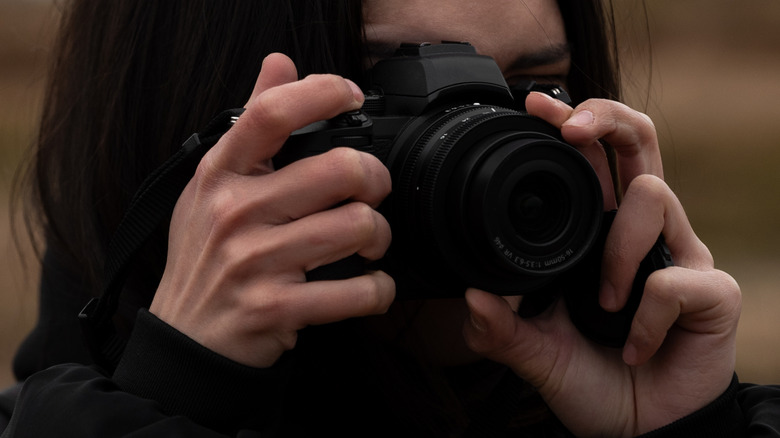
In an SLR's optical viewfinder, you see the raw image as it's framed in the lens, but you're not seeing exactly what the sensor is about to record. Sure, you can look at the LCD screen on the back, but that's not much help outside or in bright lighting conditions. Since the viewfinder in a mirrorless camera is just a small electronic screen, it can show you everything the LCD can.
A viewfinder on mirrorless cameras can even be optional. In many models, you can remove it when you're not going to use it, or add it when you're shooting in conditions that mandate it. It's versatile and offers real advantages over optical viewfinders that can make the difference between a photo you can use and one you can't. Which is pretty important when you only have one chance to get the shot.
Anyone can benefit from having this accurate preview that shows you the effect of your settings like exposure and shutter speed live, but those new to photography and used to taking photos with a smartphone will feel instantly comfortable using an electronic viewfinder (EVF). You can also use an EVF for video, which you can't do with an optical viewfinder, because the DSLR”s mirror is locked in position while shooting video.
Mirrorless cameras are better for video
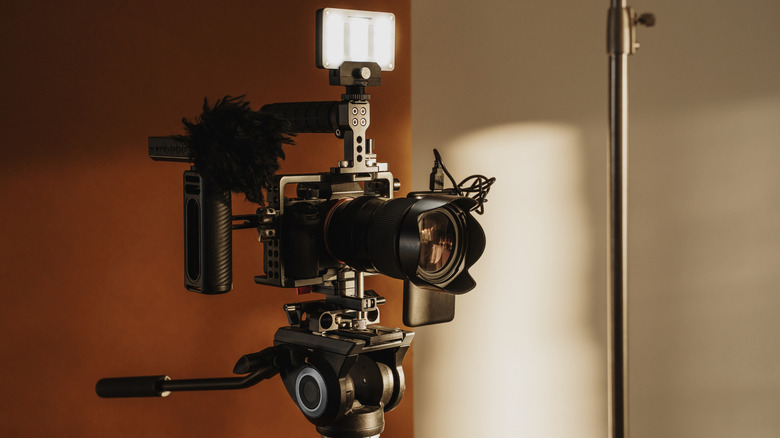
Film SLR cameras could only take photos, and the early generation of DSLR cameras was similarly limited to taking photos. However, once you've converted to digital "film," there's no reason you can't also make video, as long as you can capture images quickly enough. DSLRs became quite popular for video because they enabled cinematic, professional-looking video thanks to the variety of lenses. Camcorders are still worth buying today, but if you want to create a professional-grade video without spending tens of thousands on a cinematic video camera, a DSLR with video capability is it.
Yet it isn't an ideal solution. Video was an afterthought, shoehorned into a camera design that wasn't meant for it. Mirrorless cameras were designed from the ground up to be just as good at video as they are at photography. They can generally record at higher resolutions than DSLRs, faster frame rates, and have better video-focused features built into the hardware and firmware.
We mentioned continuous autofocus as a killer feature for video in these cameras earlier, and of course the smaller size makes it possible to mount these cameras in places (such as the interior of a car) that simply aren't practical for a DSLR. Many mirrorless cameras are among the best travel vlogging cameras, with reversible screens (like a camcorder) and easy mounting of external lights and microphones, while using the lens of your choice.
Faster burst shooting and silent shutter modes

If you want to capture fast action such as your kid's football game or your friend doing a sick backflip into your backyard above-ground pool, you need a good burst-shooting feature. This is where you hold down that shutter button, and the camera tries to take as many photos as it can, as quickly as it can, before something gets too hot or can't keep up anymore.
Because mirrorless cameras don't have a physical mechanism that flips a mirror back and forth for every exposure, that's not a limiting factor on how many exposures you can take in bursts. To give you some idea, a typical DSLR might manage three to eight shots in a one-second burst. A professional DSLR used for sports might push that up to the low 10s. An average consumer-grade mirrorless can easily offer 15 to 20 frames per second, and flagship mirrorless cameras can have burst speeds up to 195 frames per second.
Having an electronic rather than mechanical shutter also makes silent shutter mode possible. This lets your mirrorless camera take photos with no mechanical noise, no vibration, or any indication that a photo has been taken. This is great for taking photos in quiet places where you don't want to disturb people, or for a private eye surreptitiously photographing their mark while pretending to read a newspaper.
DSLRs have longer battery life
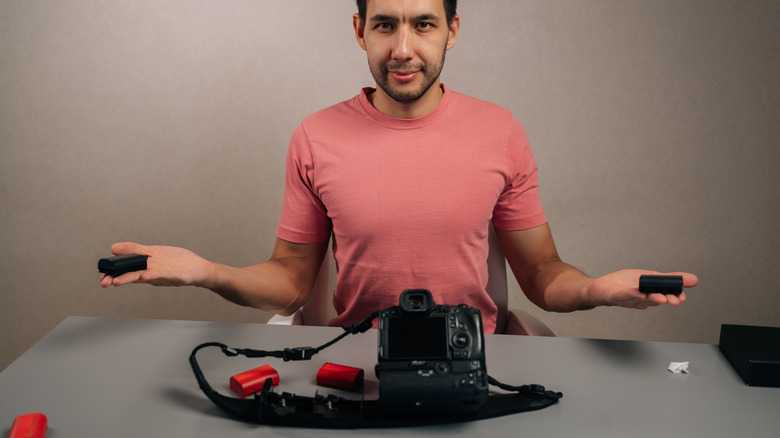
While the smaller size and lower weight of a mirrorless camera might make your arms last longer on long shoots, the weight of the extra batteries you'll have to carry around might cancel out that advantage.
On average, DSLRs have significantly longer battery life than mirrorless cameras. Part of the reason is simply size. With such a big body, you can fit a larger battery into a DSLR than a mirrorless model. The other reason concerns power consumption. Using the optical viewfinder on a DSLR doesn't use any power. With the LCD off, shooting photos is surprisingly power efficient. Likewise, the sensor only has to be on for the split second you shoot the image, or if you have "live view" active for the LCD.
In a mirrorless camera, the sensor is always on, and either the EVF or the LCD consumes power when you use it to preview your shot. It's not uncommon to see a DSLR rated for 800+ photos on a single battery, while a mirrorless might only be rated for 300 to 400. That means changing the battery much more often, and the need for more spare batteries. This is only a deal breaker if you can't live with these inconveniences, but it is a significant difference. Keep in mind that mirrorless technology is actively being developed, so the gap is narrowing.
DLSRs can be much cheaper
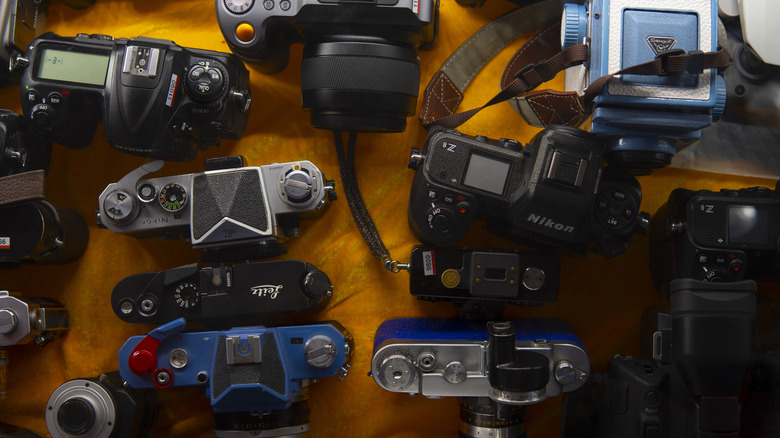
There's little doubt that mirrorless cameras are the future, and the major camera companies have shifted their resources toward further developing this camera design. The major hiccups in mirrorless technology from the early days have largely been solved. While some companies are still making new units of their popular DSLRs, the technology is nearing the end of its life.
However, mirrorless cameras, being new and cutting-edge, and with big R&D budgets to recoup, are not cheap. DSLRs are a mature technology, and that makes them a great budget option. Not only that, there are many used DSLRs worth buying out there which still have years of life left in them. DSLRs can be serviced, repaired, and maintained. Even models from decades ago can still take stunning photos that will put any budget digital camera or flagship smartphone camera to shame.
It also means you can buy gear that outclasses the equivalent new mirrorless you could buy for the same money. With high-quality used lenses, professional camera bodies, premium flashes, and more. If you're looking for high-end photographic performance and don't need (or want) all the modern hand-holding, a used or even new DSLR can deliver that at a lower price than you might expect.
DSLR optical viewfinders are still preferred by many photographers
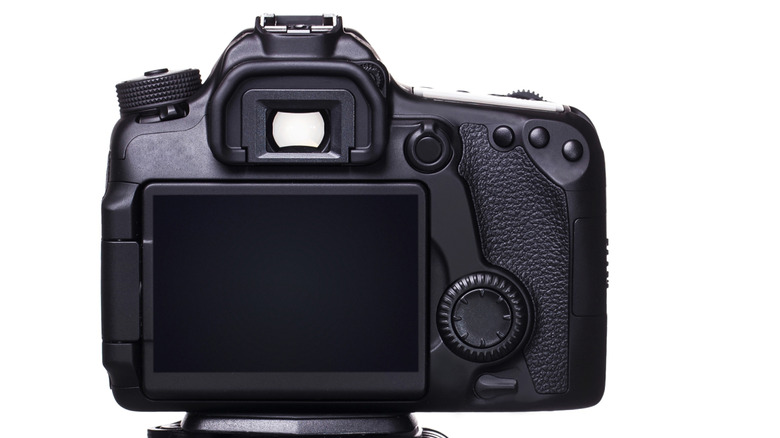
While we've sung the praises of the electronic viewfinders that mirrorless cameras use, there are still real advantages to the traditional SLR viewfinder, and some photographers prefer them for that reason.
These advantages are largely related to the fact that what you're looking at inside the EVF is a screen. It's a high-resolution (likely) OLED screen, but it's still going to fall short of the clarity and speed of reality. Which is what you see when you use an optical viewfinder. EVFs can have noticeable lag because the image must be processed before you see it. This can make capturing a moment harder.
No matter how high the refresh rate of the EVF screen, it will never look as smooth as real life; there's no digital noise, and as we mentioned before, you don't burn any battery power while using an optical viewfinder. Which means you can take your time composing your shot and perfectly dial in your lens.
DSLRs have many more lens options
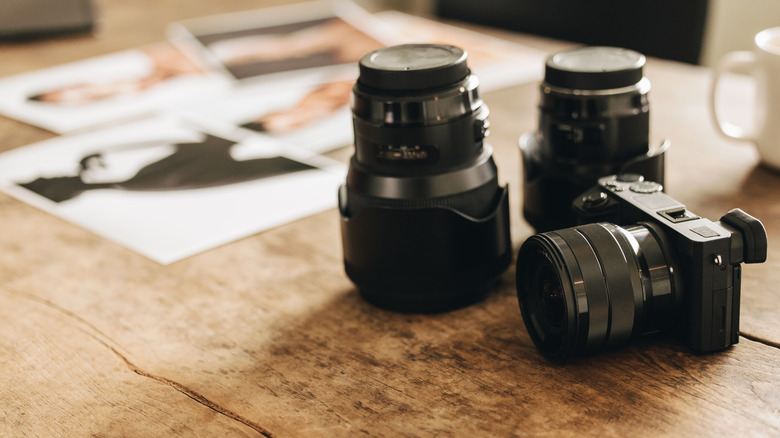
Because DSLR cameras have been around for such a long time (and you can count SLRs as part of that), there are a lot of lenses out there in the world to choose from. Decades of lenses from dozens of brands that will all natively fit on a DSLR using the same lens mounting system without any modification.
You can walk into a used goods store or trawl sites like Facebook Marketplace and find amazing glass for reasonable prices. The same can't be said for mirrorless cameras. They are relatively new, they have new lens-mounting solutions, and there just hasn't been time to build out the same variety of glass. This is why you'll see plenty of tiny mirrorless cameras attached to enormous DSLR lenses, with a lens-mount adapter allowing this unnatural union.
Mirrorless cameras are at their best when using a native lens designed for that camera system. You don't have to worry about crop factors and vignetting, or a lack of optical stabilization in your lenses. But if the lens you need isn't yet available as a native option for mirrorless cameras, your best bet might be to get an affordable DSLR body that works natively with the lens you need instead. That said, with each passing year, more native mirrorless lenses hit the market. This is now mainstream photography, so time solves the issue.
Mirrorless cameras can be less reliable during long shooting sessions
Remember when we said that mirrorless cameras use more power than DSLRs? Well, more power means generating more heat. With the sensor, screen, processor, and other components being active for longer compared to a DSLR, heat production builds up quickly. This problem is made worse by how compact these cameras are, so a common complaint you might hear when it comes to mirrorless cameras is that they overheat.
This issue was much worse with early generations of mirrorless cameras, and it largely cropped up while shooting video rather than photos. This limited how long some types of shooters could run before everyone had to take a break to let the cameras cool down.
Camera makers have, however, made significant strides with recent generations of mirrorless cameras. They have cooling systems, more efficient processors, and won't throw up an "I'm melting, I'm melting!" warning quite so often. However, if you're looking to record long-form video with long takes and you don't want to fork out for a dedicated video camera, a DSLR is probably the better choice. It also means that one of the key things to research before buying a mirrorless camera is whether the model is known for overheating issues.