

5 Reasons Why Some Gamers Still Can't Stand Cloud Gaming In 2026
With the rising prices of PC components and consoles, gaming is becoming an ever-increasingly expensive hobby. Do you really need a physical device capable of playing the latest and most graphically demanding games, though? Maybe. Cloud gaming is a relatively recent addition to the gaming industry landscape. Instead of playing a game directly off your own hardware, you essentially rent a gaming rig and stream the game off that. Think of it as using remote access to control someone's computer, except instead of using the program to diagnose problems, you're using it to play games such as "Fortnite" and "Cyberpunk 2077."
You can find plenty of reasons to use a cloud gaming program. Play games on the go, crank up the graphics beyond what your devices can normally handle, or experience titles without sacrificing crucial hard drive space. While using a cloud gaming service might tempt many gamers, plenty of people have their doubts. Connectivity issues, ownership concerns, and the general price of doing business are only a few reasons why gamers can't stand cloud gaming.
You are subject to the whims of internet connectivity
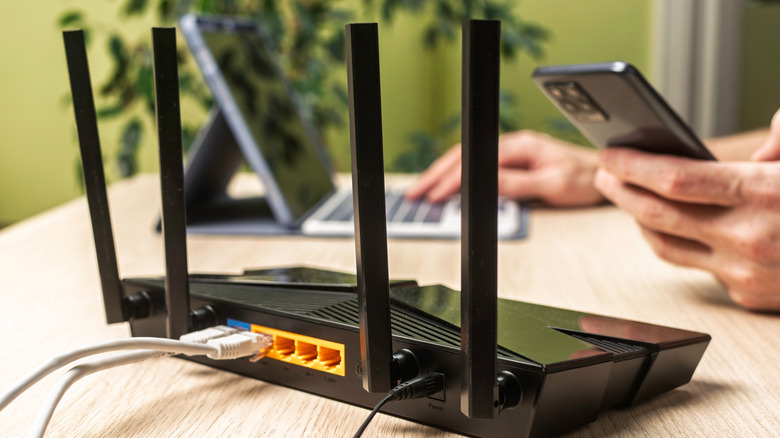
As its name suggests, cloud gaming relies heavily on cloud technology. You aren't sending controller inputs to a local device but a remote one, which returns the results to your screen. The strength of your connection will make or break your experience. Communicating with any server over the internet is invariably slower than communicating with a gaming platform directly in front of you. Latency (how long it takes to receive a response from an internet-connected device) ensures that your response times are a few milliseconds behind playing a game on a console.
As a result, playing titles through cloud services never feels as responsive or snappy, especially games that require quick reaction times. How do you expect to properly parry an enemy in "Elden Ring" if the internet is creating an artificial delay between when you input the parry command and when your character performs the action? Moreover, internet connections are rarely consistent or stable, especially if you rely on wireless connections. An errant bit of interference can slow down your connection.
Even your router settings could slow down your internet, and that's to say nothing of the people who live in remote locations and can't afford fast connections. Any disruption can render a cloud gaming session unplayable, as inputs will fail to register — or fail to cease registering depending on what you were doing at the time. Try playing "Elden Ring" with a camera that won't stop spinning. Spoiler warning: You can't.
Subscriptions not included
When you play a game on a console or computer, you're using components that you already paid for. Since cloud gaming is just renting a gaming rig without receiving a physical product, you are subject to the same restrictions as a rental agreement, especially when money is concerned. Cloud gaming services are often locked behind a recurring subscription fee. You want to play a title through Amazon Luna? The standard tier is basically a hidden Amazon Prime membership perk (which is $14.99 a month) and provides a rotating roster of games.
Still, if you want a larger library of titles, you need to spend $9.99 a month for Luna Premium, whether or not you pay for Prime. Rival services like GeForce Now offer free tiers, but these are hampered by numerous restrictions. You have to wait in queues for rigs, can only access weaker servers that lack Nvidia RTX capabilities, and get one hour of playtime per session. To make matters worse, subscriptions are rarely static.
Companies have a tendency to increase subscription prices, often without warning, and discontinue features. Apple Music, Netflix, or Xbox Game Pass; you name the service, it's more expensive than when it was first introduced. Previously, GeForce Now let users stream a potentially unlimited number of hours each month, but now even the highest subscription tiers cut you off after 100 hours each month. Subscribers didn't get a say in the matter; Nvidia just implemented the restriction, which makes the service inadvisable for, say, streamers whose jobs depend on their ability to play games for countless hours at a time.
BYOG (Bring your own games)
Sony came under fire for ditching physical games in favor of an all-digital future, which might not sound like a big issue until you consider that the company has removed digital content not just from its stores but also from user libraries. If buying a digital product isn't ownership, then what about cloud gaming? Different cloud gaming services treat what games you can and can't play slightly differently.
For instance, Amazon Luna lets you play any of the games in its library, but if you have the basic service that comes with Amazon Prime, you can only play some of these titles. Once a game leaves rotation, you can't play it, even if you're in the middle of the campaign. The same is also true for any titles you stream via Xbox Game Pass. While Microsoft frequently updates its library with new titles, Microsoft giveth, Microsoft taketh away. Once a game is gone, you can neither stream it nor play it on your console. GeForce Now is the exception to this rule since the service links to online accounts (Steam, GOG, and Epic Games). But that setup comes with its own problems.
Many games are locked behind a subscription paywall, so even if you own titles like "007: First Light" or "Monster Hunter Wilds," you can't stream them without an additional recurring membership fee. And that doesn't even tackle the biggest elephant in the room: Whenever you purchase a game on Steam (and other digital storefronts), you don't actually buy the game, just a license that gives you permission to access it. Ownership is basically an illusion in the modern gaming industry, whether you stream or not.
Support isn't always guaranteed
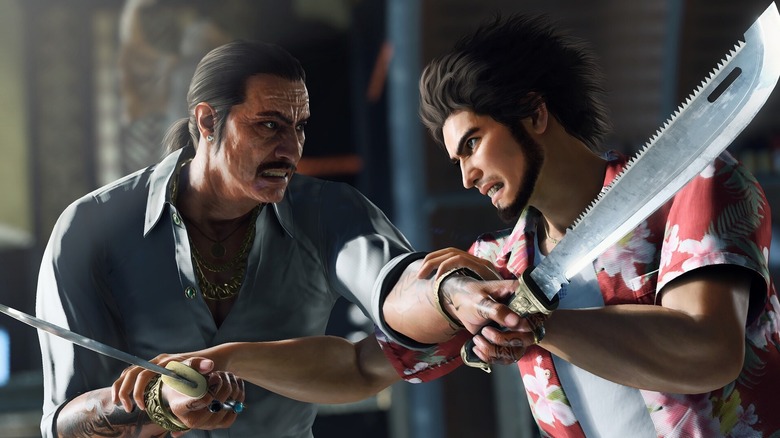
Even if you remove the fickle nature of game ownership and subscription tiers from the equation, some games you just can't stream. Simply put, you can only stream games that any given service supports, and no two cloud gaming providers have the exact same library. GeForce Now lets you stream the entire "Assassin's Creed" franchise (including the "Assassin's Creed Chronicles" side-scrolling spin-offs). Meanwhile, Xbox Game Pass lets you download all of these games, but you can't stream entries such as "Freedom's Cry."
Conversely, the "Yakuza"/"Like a Dragon" franchise is unavailable through GeForce Now, whereas Xbox Game Pass only offers two: "Pirate Yakuza in Hawaii" and "Infinite Wealth." It's not quite streaming service exclusivity, but it's close. Then there's the PlayStation Portal. Normally, you use it to stream games by connecting to your PlayStation 5 via the internet. It's basically a proprietary peripheral for PS5 Remote Play. In 2025, Sony finally added cloud streaming to the device, turning it into the PlayStation Portable 2.0 it should have been from the beginning.
However, this update came with two caveats. First, the service was only available for PlayStation Plus Premium members (which circles back to the issues we mentioned about gamers needing to pay for memberships to stream games). And second, PlayStation's Cloud Streaming service only supports slightly over 200 games, all of which are PS5 titles. You can't even play titles that originally released on the PS4 but received upgraded PS5 versions, like "Horizon Zero Dawn" and "God of War."
A potentially slippery slope

Arguably the biggest problem isn't one that gamers currently face but one they fear looms in the future. Mostly because there's precedent. Kind of. Cloud gaming is merely one of several options you can use to play your games, but audiences are afraid that it might become the industry standard, and it's easy to see why. Some tech giants believe cloud computing is the way of the future, and you won't own your next PC; you'll merely rent it and/or its capabilities. And you won't have a choice because with the rising costs of components, the alternative will be way too expensive.
Should that occur, gamers would face a monopoly situation. Companies that manage cloud gaming services would have free rein to set their own prices, and as we've previously gone over, many will raise their prices without warning. Even when you can buy games and install them on a device, a digital storefront service can be considered a monopoly if you don't have any viable alternatives.
That's the very argument many people used against Sony after it announced it would stop printing physical discs for games, and the company is facing a huge lawsuit because of it. Apply that logic to game streaming, and these fears don't seem so unfounded. For many people, avoiding game streaming is a matter of experience and frugality, but for others, it's a matter of principle to avoid a hypothetical future that could kill the game industry.