

9 Retro Electronics That Were Popular In Japan
We may receive a commission on purchases made from links.
The economic boom in Japan following World War II is nothing short of miraculous. Within just a few decades, this tiny island nation went from barely having any functional industry at all to being a global leader in technology. Today, we think of Japanese cars, TVs, gaming consoles, and just about any gadget or machine as cutting-edge.
But Japan's own relationship with technology is a little out of step with the rest of the world. You'll run into a working fax machine and a store operated by robots in the same street. Often the Japanese embrace technologies that the rest of the world didn't want. They'll hold on to some gadgets far longer than the rest of the world, while embracing other technologies first.
Maybe these odd yet popular devices or gadgets that the Japanese refuse to let go will give you a better understanding of how the people of this storied nation see the world, but at the very least, there's no denying that even the most retro examples are very cool no matter what year you're reading this in.
Sony MZ-R55 MiniDisc player
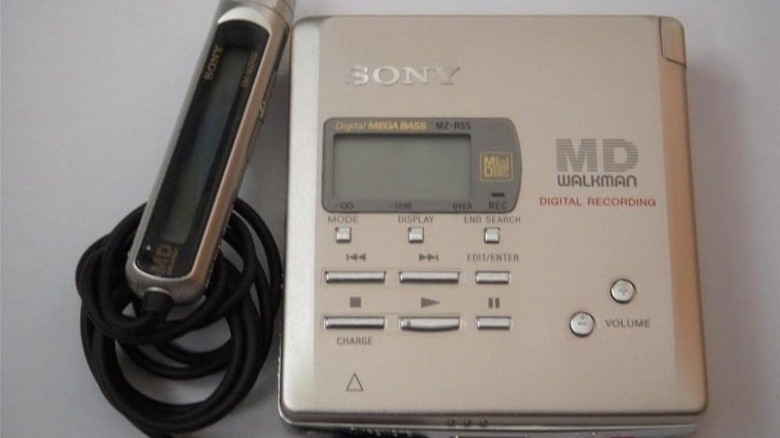
The MiniDisc certainly made it outside of Japan, and we consider it one of the legendary gadgets born in the '90s, but overall it was a bit of a damp squib globally. Sony had intended for MDs (MiniDiscs) to supplant both cassette-based Walkmans and portable CD players such as Sony's own DiscMan.
Things didn't quite work out that way, but in Japan MDs were nothing short of a cultural phenomenon. It was a mainstream portable format in the '90s and into the 2000s, which you can see reflected in the '90s movies, TV shows, and anime from Japan featuring MiniDisc players.
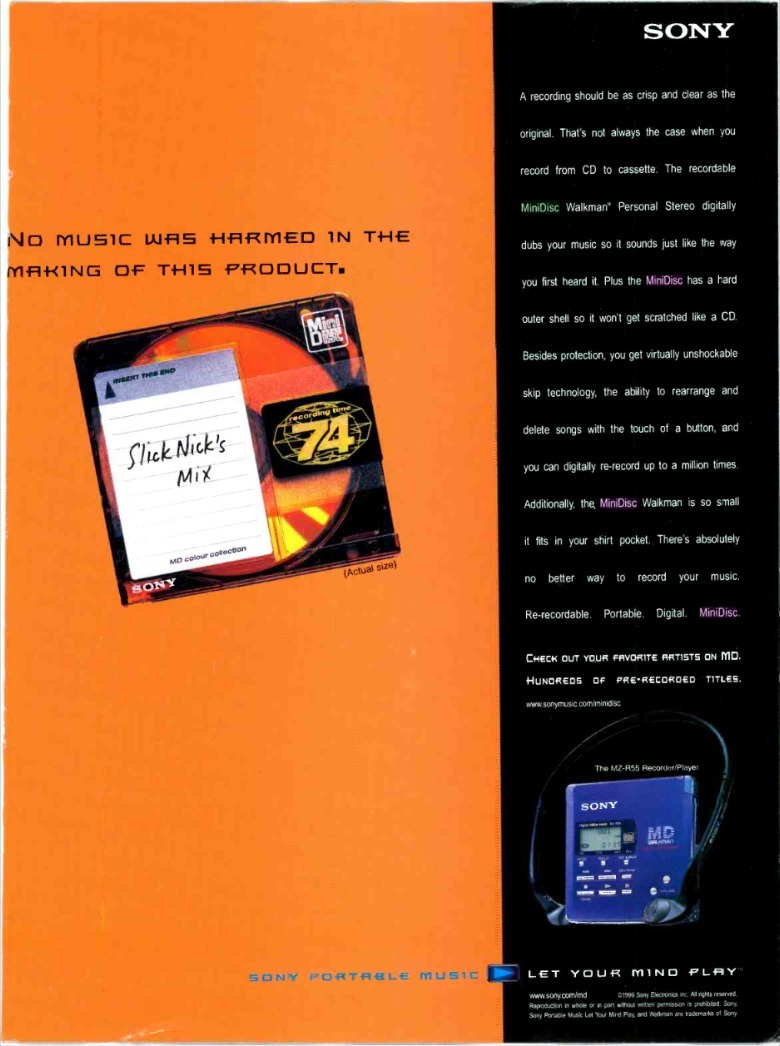
The MZ-R55 is special because not only was it popular in Japan, but this was the player that really kicked off the mainstream adoption of MDs over there. Released in 1998 for a competitive price, this was the smallest recording MD player at the time, and MD itself is a format with a lot that would make it appealing to the perpetually commuting Japanese. MDs are rewritable, shock resistant (a big problem with early portable CD players), and offered digital audio quality just a little worse than CD audio, but far superior to cassette tapes. Eventually, MP3 players like the iPod would sound the death knell for MD players in Japan and the rest of the world, but MD still has a hardcore following to this day.
Personal Handy-phone System (PHS) phones
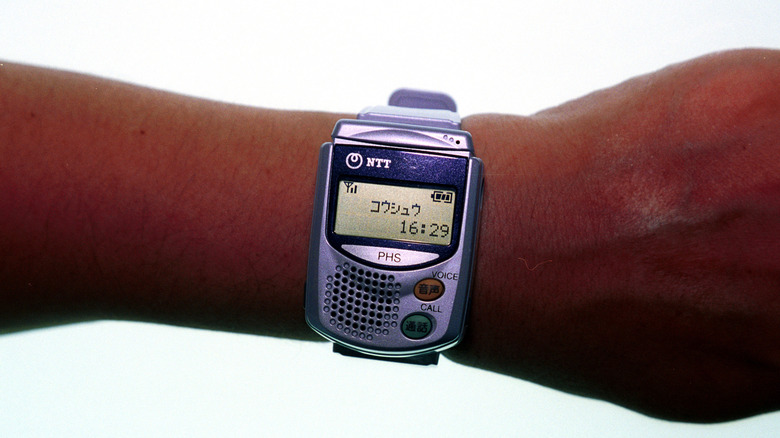
Most countries in the world used either GSM or CDMA as the underlying technology for their cellphone networks, but Japan went a different way. It skipped GSM completely, and while there was a CDMA network for a while, today it's been completely decommissioned. In the '90s, Japan implemented its own cheaper alternative to GSM and CDMA in the form of the PHS or Personal Handy-phone System.
Instead of the towering cellphone, er, towers that we see all over the world, PHS uses densely-packed base stations. This makes it cheaper to deploy in cities, which is where most Japanese people live. So that quirky PHS wrist-phone you see above offered clear voice quality, low rates, and would work anywhere in the city you'd find yourself.
PHS technology stuck around for ages too. The last PHS network was shut down in 2023, a full 28 years after its launch. That system wasn't for general users and was instead used to manage embedded systems like vending machines. However, the public phone service was shut down in 2021, so for 26 years you could use a PHS handset to make phone calls. Today, Japan uses the same 4G and 5G network technology as the rest of us, so if you take a trip there, chances are your phone will work, though you might need an eSIM when traveling abroad.
Electronic dictionaries like the Casio EX-word
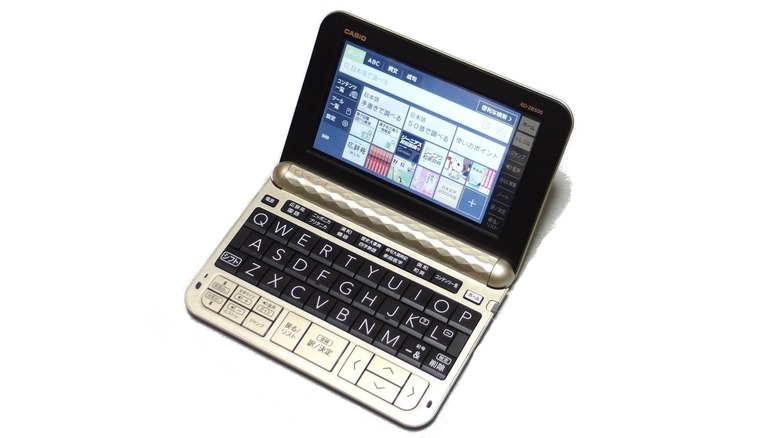
We are all used to having literally the entire world's information in our pockets at all times thanks to smartphones and mobile broadband, but there was a time when if you needed to look up the meaning of a word, you had to carry a dictionary around with you. They even made special pocket dictionaries with tiny print for that very purpose.
Not so in the (then) futuristic world of Japan. The model pictured above, the Casio EX-word XD-Z6500, is from 2018 and is one of the last and most advanced examples, but 2004's EX-word XD-L4600 is the milestone product, though the first model (the XD-500) launched all the way back in 1996.
While it may look like a mini laptop, this is an electronic reference device that lets you look up words anywhere and at any time. Eventually these devices could hold multiple dictionaries, encyclopedia entries, pronunciation guides, and other educational or academic resources. Perhaps the popularity of these devices wasn't entirely organic, since they were effectively essential for Japanese high-schoolers, even after smartphones became a thing. After all, you aren't allowed to use a smartphone in class, so these devices fill an artificial niche. These are still for sale, and the latest models are from 2025, but Casio has announced that it will stop developing new models. Citing the rise of smartphones and Japan's abysmal birthrate (of all things) as the main reasons.
Keitai phones
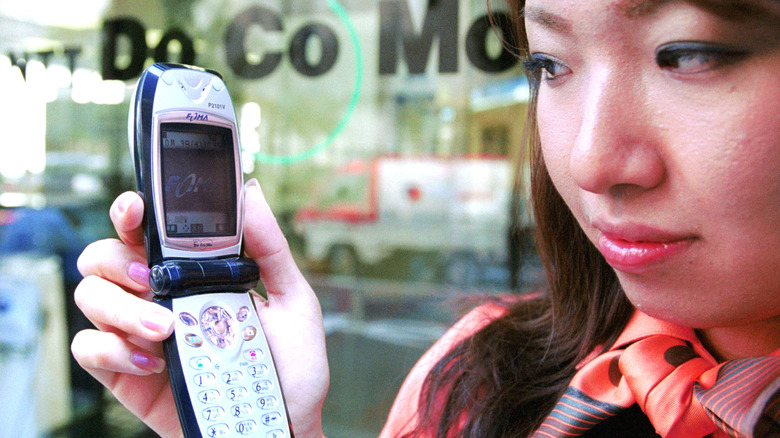
There's a little overlap here, because some of the "Keitai" phones obviously use the same PHS network we mentioned before, as basic cellular phones do. However, Japan was rather famous for its advanced feature phones, which is what most people think of when they hear "Keitai".
Feature phones are, of course, not quite smartphones, but have many features you'd expect of a full-fat smartphone. For example, you can browse the web, or send emails, take photos, and play basic games. However, as people who are choosing to ditch their smartphones for flip phones have found, they are incredibly limiting.
But Japanese feature phones could be absolutely packed with features like GPS, email, mobile payment, TV reception, better cameras than typical feature phones, and even downloadable apps. A big part of this was i-mode. This was a service offered by NTT Docomo, and it allowed feature phones to access the internet. In Japan, before i-mode, you needed a computer to access the web. So combined with Keitai phones, i-mode normalized mobile internet use for Japanese citizens. The service was launched in 1999, and was only finally shut down in 2026. That's almost three decades of continuous service. There's little doubt that i-mode served as an example of what mobile internet could become, and today that's the primary way people access the internet. Chances are you're reading this on a phone right now.
Pachinko Machines
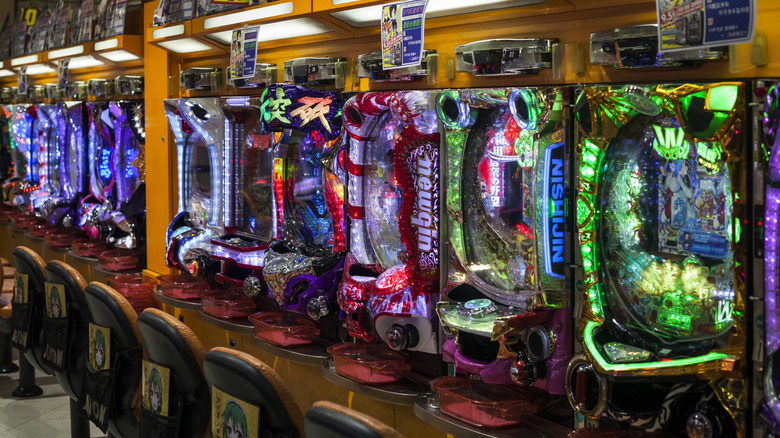
There are few things as stereotypical of modern Japan as a pachinko parlor. It's right up there with karaoke bars and love hotels. Japan has incredibly strict gambling laws, but pachinko falls into a gray area.
These are effectively pinball machines, and by that we mean the original pinball machines before the flippers turned it into a game of skill. Here the ball is launched and then follows a path down through the pins to determine what prize you can win. The prizes aren't cash, but wouldn't you know it, you can take your prizes and walk over to a completely separate premises, where they'll be more than happy to exchange those prizes for cold hard currency.
That pachinko is gambling with extra steps isn't the most interesting thing about them. It's how they've evolved into pretty sophisticated electronic devices. They are often based on popular franchises, just like slot machines in the U.S., and so we have things like the Konami Metal Gear 3 Snake Eater pachinko machine. While you play it, it shows you lavish remastered cutscenes from the game's story, much to the chagrin of Metal Gear fans at the time. Some people in Japan really sit and while away the day staring at the pretty lights of pachinko, but if you prefer a more interactive experience, Japan is also the last great bastion of arcades or "game centers" as they are known.
The Famicom Disk System
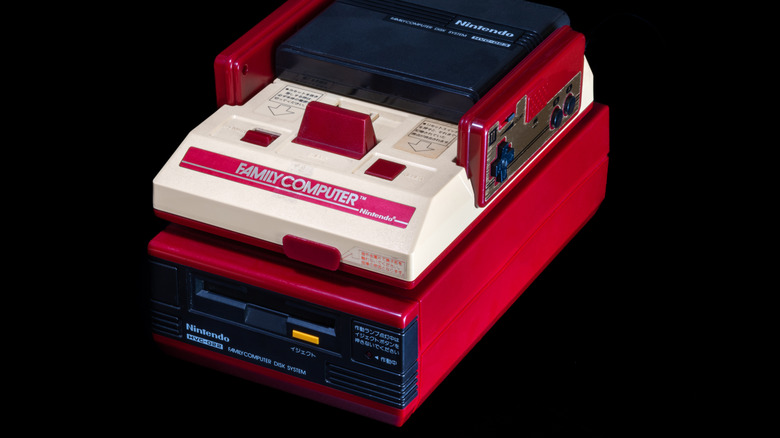
The Nintendo Entertainment System, or "NES," is one of the gaming consoles that defined the '80s and arguably the main reason the gaming industry recovered from the great U.S. video game crash of 1983. The most iconic aspect of the NES is undoubtedly the cartridge system and the act of blowing on the contacts if the game didn't work. That was a myth, by the way, and by blowing moisture into the cart you might cause corrosion that shortens how long you can expect the game cartridge to last.
Game carts are, however, both robust and fast, which is why companies like Nintendo have favored them for so long. Strictly speaking, the latest Nintendo console still uses them. But capacity was a problem then as it is now. So Nintendo came up with the Famicom Disk System, that being the name of the original machine the NES is based on.
This was effectively a floppy drive, and by connecting your Famicom to it, you could play games from special copy-protected Nintendo disks. You could write save data to the disk without the need for a battery backup system as used in the cartridge models. These disks had much more storage, and cost far less to make. You could take your disks to a special kiosk and have new games written for a discounted price. The Disk System was to come to the U.S. and the rest of the NES territories, but sadly, this never came to pass.
NEC PC-98 computers
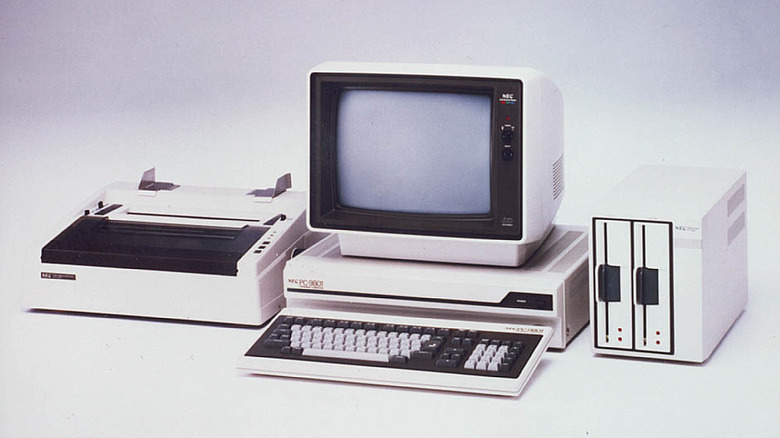
The IBM PC is one of the most game-changing inventions to ever come from the company, but Japan had its own separate PC revolution in the '80s and '90s. Instead of IBM's x86-based platform becoming the standard, NEC's (also x86-based) PC-9800 filled that niche.
This family of personal computers featured hardware that was, by and large, incompatible with Western computers. There are thousands of games, productivity apps, and business software developed exclusively to run on these machines.
While no one has much use for the productivity or business software anymore, the PC-98 platform has a huge library of beautiful and interesting games. Many of these are iconic visual novels, but action, RPG, and strategy genres are all represented, plus many more. Some titles like "Popful Mail" and "Policenauts" have been ported to modern platforms, but these popular computers still represent an era of Japanese history that's isolated from computer and software history in the West and almost seems like a classic PC from a parallel universe.
Sharp Zaurus PDAs
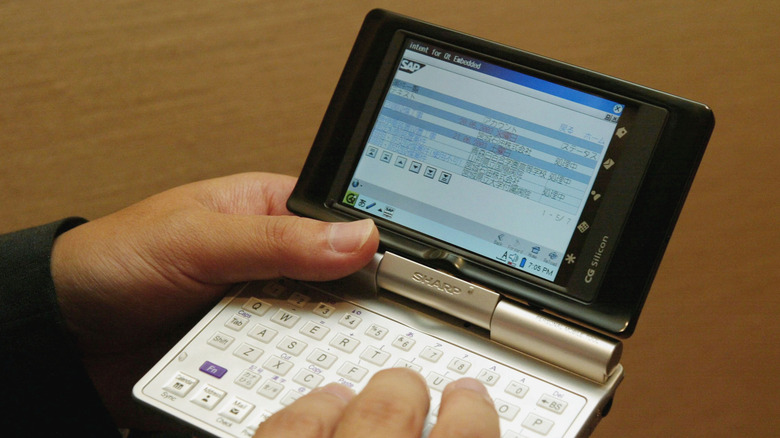
Before true smartphones became commonplace, if you wanted that level of computing power and flexibility on the go, you needed a PDA. In the West, devices like the Palm Pilot series or HP's iPaq were the most iconic, but in Japan, Sharp's Zaurus line of PDAs was the first thing that came to mind when you thought "PDA."
The first models in the '90s ran on a proprietary operating system, but later models like the SL-5000D used Linux. There's also quite a lot of variety in the Zaurus family when it comes to hardware design. There are, of course, models with the single tablet form factor that Palm and HP used for their PDAs, but Sharp also made clamshell models like the one you see above.
The Zaurus line was the successor to Sharp's earlier Wizard line of monochrome PDAs, and the initial PI-3000 model of Zaurus became one of the company's best-selling products. Sharp ended the Zaurus product line in 2008, not long after the first iPhone was released. That probably wasn't a coincidence, since modern smartphones effectively did everything a PDA could, and more.
Hi-Vision LD (MUSE) TVs
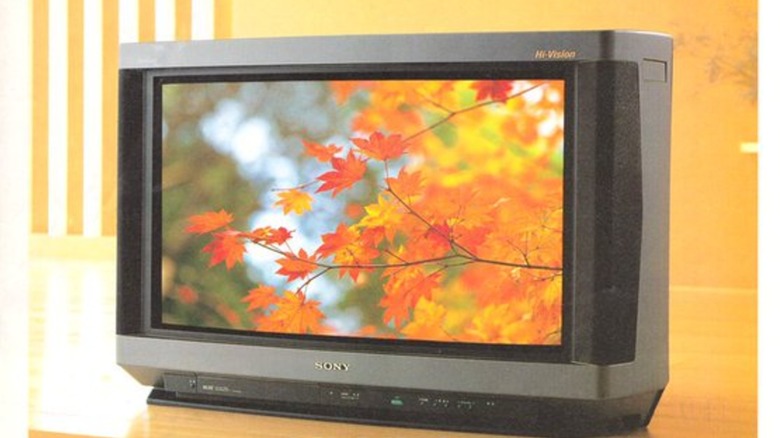
While the rest of us were still squinting at fuzzy broadcasts and blurry VHS recordings, the Japanese were getting a very early taste of HD video. It was an analog HD standard known as Hi-Vision, and it worked through the MUSE broadcasting system.
You could also capture HD analog video into special Hi-Vision LaserDiscs. Movies like "Terminator 2" and "Lawrence of Arabia" have Hi-Vision MUSE LD versions. This means that if you lived in Japan in the '90s, and had the fabulous wealth necessary to own a Hi-Vision CRT TV as well as a Hi-Vision LaserDisc player, you could watch these movies at home with an incredible 1125 horizontal lines of detail. More than the 1080 lines of "Full HD" and much more than the 720p "HD Ready" standard that would come many years later.
Now, it's only fair to mention that this was still interlaced video, not the progressive-scan quality of modern 720p and 1080p HD, but it blew standard LaserDisc out of the water, which blew VHS away in turn. So it really was a vision of the future more than a decade ahead of its time, and anyone who could afford it would certainly want it.