

Wired Headphones Are Back, But Don't Make These 9 Mistakes When You Buy
We may receive a commission on purchases made from links.
Something strange is happening in the world of headphones. After Apple "boldy" lead the way and removed headphone jacks from its iPhones, the world grudgingly moved on to wireless earbuds. Of course, not everyone could make the switch to wireless headphones, and instead chose to use an adapter with their phones, or stick to the dwindling number of devices that still have jacks. Most people, however, were seemingly all-in on wireless headphone technology.
But, in 2025, wired headphones saw a significant increase in demand. Why these headphones are gaining popularity is anyone's guess. It might be a matter of cost, as they are cheaper than wireless equivalents, and electronics have become more expensive across the board. People are also becoming aware of the fact that their expensive "lossless" music streaming subscriptions are largely wasted on Bluetooth headphones. Unless you have a (still expensive) lossless wireless setup using the latest Bluetooth codecs with the best audio quality.
If you've been considering a set of wired headphones, it may have been quite some time since you've had to buy a pair. Maybe you've never owned or used them at all, depending on when you were born and how you listen to audio. If that's you, then before you spend your money on a set of wired cans, there are a few very crucial things you'll want to get right to avoid disappointment.
Buying headphones with the wrong connector
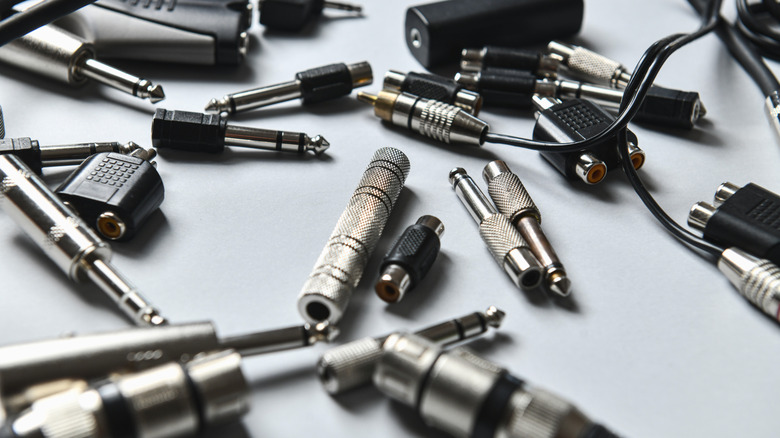
You might be familiar with the common 3.5mm headphone jack, but there are actually quite a few different connectors headphones can come with. If you buy one with the wrong connector, you'll have to rely on an adapter, which can cost extra and also impact quality or convenience.
If you want to wired headphones with your phone, you need headphones with a USB-C or Lightning adapter. Lighting is only necessary if you own an older model of iPhone or iPad, with Apple having moved to USB-C with its modern phones. While you can buy headphones that have a USB-C connector (such as wired earbuds) it actually makes more sense to simply buy a USB-C to 3.5mm adapter or the Lightning version, if that's what you need. It's fair to wonder whether USB-C or 3.5mm offers better audio quality, but a 3.5mm jack relies on the digital to analog converter (DAC) in the phone itself. Using USB-C, audio quality depends on the DAC in the cable or in the headphones, depending on the model. This gives you control over the final quality level.
When it comes to high-end wired headphones, you'll want to invest in one of the best portable DACs to make the most of your headphones. Other connectors you might encounter are 6.35mm and 2.5mm. Luckily you can use cheap analog adapters to change between these. Good headphones usually come with a 3.5mm to 6.35 adapter included.
Ignoring impedance and sensitivity
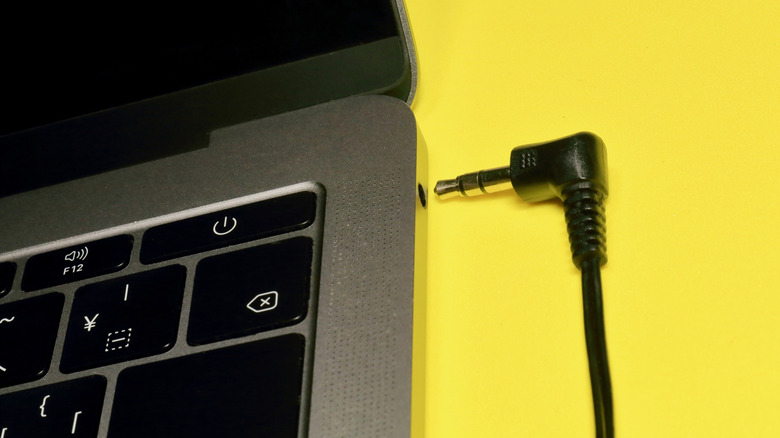
If you buy wired headphones, you need to think about the electrical properties of that wire and the headphones themselves. Impedance is a specification you'll see, measured in ohms (Ω). "Impedance" is just another way of referring to the resistance to current in a material. Headphones with a high impedance rating (e.g. 250Ω or 300Ω) will work just fine on a standard headphone jack, but they'll likely lack volume and sound a little unsatisfying. Higher impedance ratings need more power from the jack to sound correct.
So, either you need to buy headphones with an impedance rating that matches the device you're using, or you need to purchase an external headphone amplifier that can drive high-end, high-impedance headphones with ease. Some devices already have high-impedance outputs. For example, the MacBook Pros from 2021 and later have an auto-sensing headphone jack. Plug in headphones with less than 150Ω and it supplies 1.25 volts, but from 150Ω to 1KΩ gets 3 volts. So no additional external amp required!
Headphone sensitivity is a little more complicated to explain. It's effectively a measurement of how efficiently headphones convert electrical energy into sound. Two headphones with the same impedance but different sensitivities will have different volume levels. The more sensitive it is, the higher the volume at a given power level. High-impedance headphones with high sensitivity might still be usable on standard jacks, while low impedance, low sensitivity phones can be harder to drive.
Confusing open-back, closed-back, and semi-open designs
When you think of headphones, you likely imagine something that lets you listen to audio without anyone else hearing it. They block out the outside world, and prevent you from disturbing the people around you.
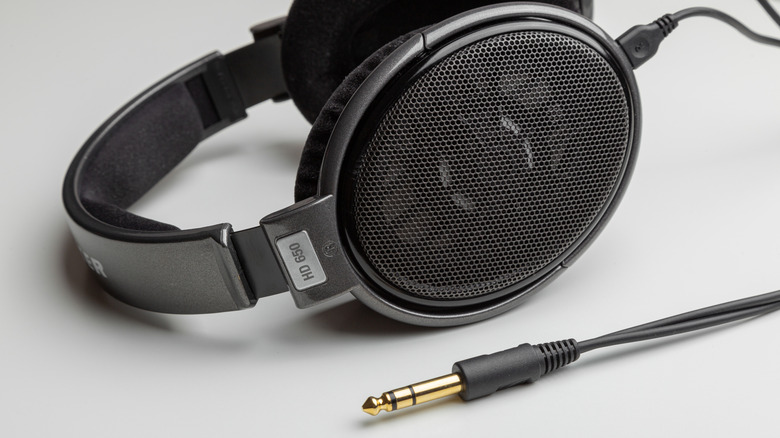
However, not all headphones are designed like this, and in the world of high-end wired headphones you'll encounter "open" or "semi-open" models offering a very different experience. Starting with "closed" models, these are simply headphones where there's a seal around the drivers to prevent audio from leaking out, or from coming in. Unlike active noise canceling or transparency modes, the level of audio isolation is achieved here through pure passive mechanical design.
Open-back headphones have vents on the back of the earcups that allow air (and therefore sound) to pass freely. Audiophiles love this style of headphone, because it creates a wide soundstage. Semi-open back headphones try to strike a balance between how much leakage is necessary to get that open sound without letting too much out. In either case, these open headphones are the wrong choice for riding the bus or flying in a plane. If you care about audio quality above all, then the world of open-backed headphones is amazing to explore, but in most cases, most people will want closed models. There have been a few attempts at modular headphones that can convert between open and closed modes, but these are niche.
Assuming wired always means analog or lossless
"Lossless" audio is simply audio that has preserved all the detail of its recording. In contrast "lossy" music formats like MP3 save space and bandwidth by removing parts of the audio that you're unlikely to notice thanks to psychoacoustics, or that are simply outside of the human hearing range.
Whether you can actually tell the difference between Hi-Res and lossless audio on anything but the highest-end equipment is debatable. However, what's not debatable is that audio codecs like Bluetooth's SBS or AAC are lossy, so the sound reaching your ears will be compressed, even if you're playing a lossless file. One of the reasons wired headphones have become more popular is that even a cheap set of wired analog headphones works with lossless audio. There's no limit to the "bitrate" of an analog signal carried by a wire.
However, don't just assume that using a wire guarantees real lossless audio. The DAC that's converting the audio into an analog signal has to support that level of audio fidelity. So if the DAC in your device, in your headphone adapter, or in the headphones themselves convert the audio in a lossy way, you're not getting a real deal. A good example is the first-generation AirPods Max. If you buy the (rather expensive) USB cable for it, the audio goes through conversion twice, and the headphones simply don't support lossless audio no matter what, though the 2024 model does.
Buying into buzzwords instead of performance
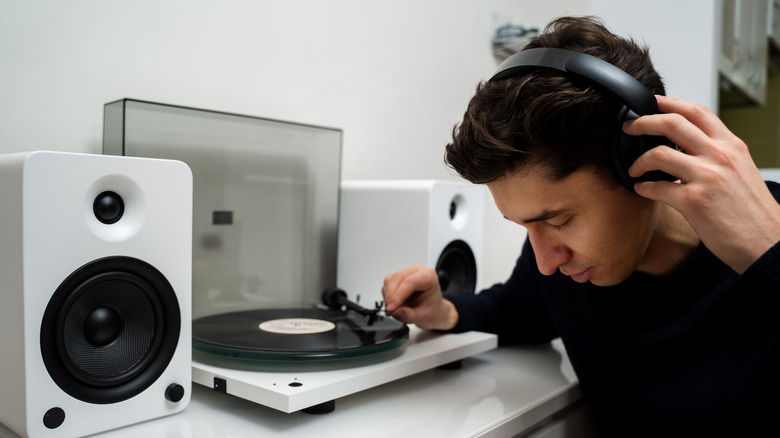
The world of audio equipment is notorious for buzzwords and features that crank up the price without adding much tangible value. For example, oxygen-free copper (OFC) cables are only slightly less conductive than normal copper wire. It makes no humanly perceptible difference to the sound. Copper-clad aluminum (CCA) actually sounds worse, since it has an impact on volume, high-frequencies can "smear," and bass can sound muddier. But even then, the impact of CCA is more pronounced in high-wattage systems, not the milliwatts that are pumped through headphones.
Likewise, silver or gold plating of connectors doesn't make your headphones sound better, though plausibly it can reduce the chances of oxidation. Big-number specs are also a common way to make headphones sound better than they are. For example, citing frequency response ranges below 20Hz and above 20,000Hz is meaningless, since that's outside the human hearing range.
Headphone makers also like to emphasize the size of the drivers (speakers) inside the headphone, under the premise that bigger is better. The problem is that the final performance of that driver depends on more factors than just its size. The sum of the engineering, tuning, and design of the headphones mean more than just how many millimeters your drivers are packing. Also, don't buy into the idea that you need to "burn in" your headphones before they start to sound good. That's a myth!
Choosing a permanently attached cable
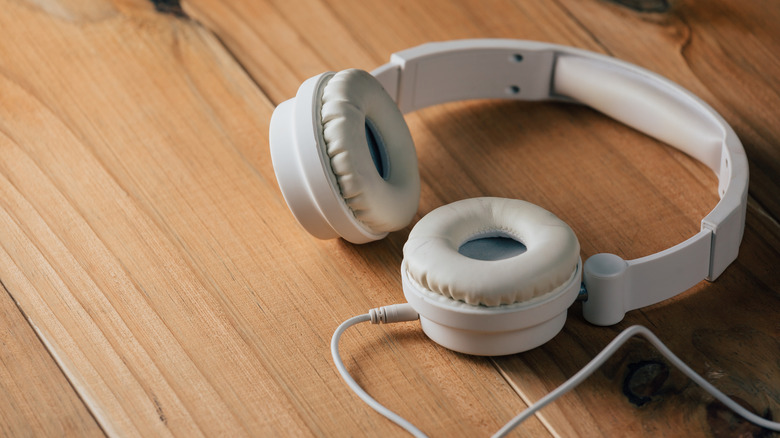
While wired headphones have many advantages, the actual cable itself can present a few notable problems. First, it's likely the component that will fail before anything else. A headphone cable undergoes frequent physical manipulation that can fatigue the copper wire inside over time, or the outer sheath can become brittle and come off. In many cases you could simply break the cable accidentally by snagging it on something, or rolling your office chair over it. There are many possibilities for it to meet a gruesome end.
The cable you get with your headphones might also be shorter than you wanted, or too long. Forcing you to use an extension or some sort of cable management solution. Either way, if you pick wired headphones where the actual wire can be detached, you can avoid all of this drama. It can then be easily replaced or swapped out as needed, without any effect on your headphones.
This is also a good time to mention that many wireless Bluetooth headphones also allow for a wired analog connection. For example, I own a set of Sony WH-1000XM4 headphones, and these come with a detachable 3.5mm cable in the box. With the headphones turned off, they work just like any analog set. With the power on that analog signal is processed to allow for noise-cancellation, but still allows for higher quality audio than standard Bluetooth.
Buying wired gaming headphones

If you're a gamer, and an online gamer in particular, then you may be tempted to buy a dedicated gaming headset to use with your PC or console. These often come with their own USB DAC, in addition to the option to run a straight analog connection. Wired headphones are generally more important for gaming because any latency in the audio can throw you off. Low-latency wireless solutions for gaming exist, but typical mainstream Bluetooth headphones usually don't have the best latency.
However, gaming headsets tend to offer poor value when it comes to the most important things you'd want in a typical pair of headphones. They might have flashy designs and RGB lights, or promises of pseudo-surround sound, but in the fundamental audio performance isn't always so great, the ergonomics could often be better, and prices can easily get pretty high.
For the same money, a regular non-gaming headset is likely to offer you more comfort and better audio quality, without the edgy styling or flashing lights that can only be seen by people not actually wearing the headphones. If you're an online gamer and you need a microphone for chat purposes, consider using a separate microphone. This way you can get a good mic with much better audio, and you control the individual quality of the headphones and microphone separately. Best of all, you can use the regular headphones when you're not gaming, so it saves you from buying an additional set.
Buying studio headphones

If you're just looking for headphones to enjoy movies, music, games, and other forms of audio-based entertainment, you probably shouldn't buy headphones labeled "reference" or "studio." It might sound like these are marks of high fidelity (which they are, sort of), but you may not like the result.
To understand why, we need to (very briefly) talk about how the audio you listen to is made. When the recordings are all done, a specialist sound engineer mixes and "masters" the audio to ensure that it will play correctly on any device. Whether it's a big public address system, or tiny smartphone speakers. To do this, the engineer uses special headphones or studio monitors that aim to be as neutral as possible. These headphones are designed to make the flaws in the audio more apparent. The idea is to have sound that's not "colored" and if you listen to a mastered track through these headphones you'll hear something flat and quite uninteresting.
Headphones meant for people who just want to enjoy the content and not critique it are inherently biased. Each headphone maker gives it a "signature" sound, and in effect when you read headphone reviews it's that signature that's being judged subjectively. You may have heard of the "Harman curve" which is a popular headphone signature that most people seem to find particularly pleasant when music or other mastered audio is filtered through it. Studio headphones remove that flavor by design.
Assuming more expensive always means better
How much should you pay for a set of wired headphones? This is one of those genuinely tough questions like "what is the meaning of life?" or "where do socks go in the dryer?" The only thing we can say is that a higher price does not guarantee a better set of headphones.
In the world of wireless headphones stuffed with electronics, batteries, and all the other things you need to make sound without a wire work, the core concerns like sound quality and comfort can take a back seat because money had to be allocated elsewhere. With wired headphones that don't have all that baggage, the relationship between cost and quality can be more linear, but there are still $300 headphones that most people agree sound better than $1,000 models.
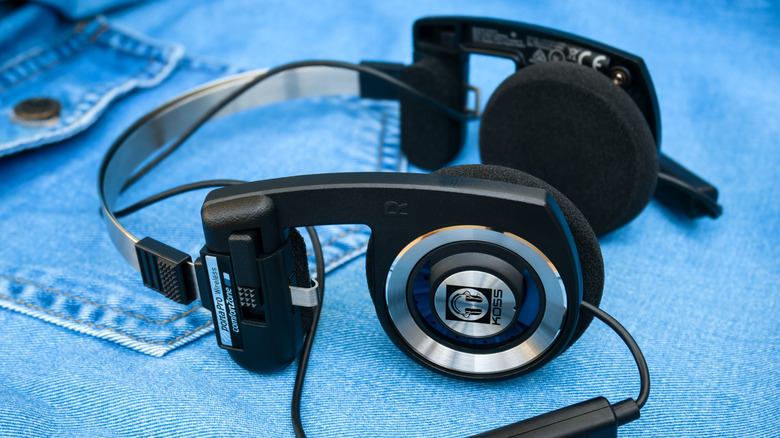
Sometimes this is because the headphone maker has some secret-sauce tuning, or clever engineering that is cost effective while making the headphones sound great. An extreme example of this is the Koss Porta Pro, which is often lauded by audiophiles for its unique signature and decent soundstage, despite costing less then $50. The point, ultimately, is that the price of a pair of headphones doesn't tell you much about what they sound like, how easy they are to live with, or whether they are better than a cheaper model. It's why ears-on testing is important for headphones, and why you should listen to a wide variety of opinions and reviews.