

Fujifilm Instax Mini 13 Review: Still The Best Entry-Level Instant Camera
We may receive a commission on purchases made from links.
Not so long ago, holidays had a dedicated cameraman, a person in charge of capturing all the memories, then developing the film afterward. That era, however, was over when smartphones became popular. Now, everyone can take good-looking photos, but over time, people have started to miss the fun of actual photography. This is exactly why '90s kids' film cameras and '00s digital cameras are coming back. The benefits are clear. You get a physical memory of an important event to keep in your wallet instead of a WhatsApp forward, and the photos don't have that HDR-heavy look that tries to balance everything perfectly. For the longest time, the Instax Mini series has served as the entry-level instant camera. They are ridiculously easy to use, capture great Mini prints, and most importantly, are super fun.
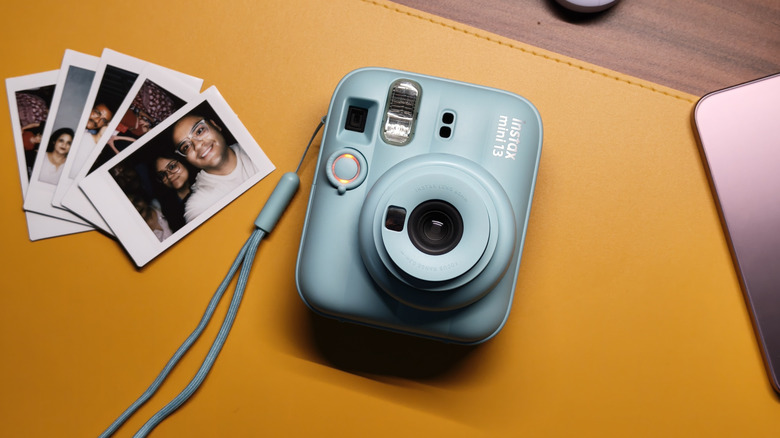
This year, Fujifilm is back with the newest iteration: the Mini 13. While I agree it doesn't bring many big upgrades in image quality compared to its predecessor, it does add some genuinely helpful features, like a self-timer to frame your shots and the much-requested close-up mode, so you can finally take selfies. All this at the $93.95 price makes a pretty compelling case, if you can ignore the lack of any manual controls. But is it worth your money? We tested the camera for about two weeks; this review should help you find out.
Design
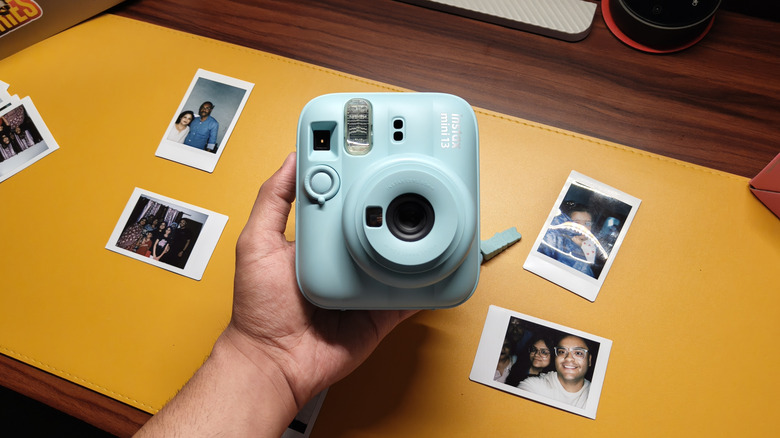
If I just had to use one word to describe the Mini 13's design, it would be "cute." Compared to the Mini 12, the new camera features a bumpy, almost pillow-like aesthetic that instantly makes it an approachable tool. Color options are quite fun, including the likes of Candy Pink, Dreamy Purple, Frost Blue, and Lagoon Green. I received the Lagoon Green model for review, and it looks handsome.
The corners are slightly less rounded this time, and Fujifilm has swapped the Mini 12's asymmetrical design for a more sophisticated aesthetic. Despite what many professional photographers will tell you about the Mini 13, I never once felt like I was walking around town with a toy camera. That feeling was thanks to the build quality. Sure, the camera is made of plastic, but the 11.5-ounce weight made it feel substantial in hand. There were no rattles or loose parts in the chassis, and the dimensions of 4.15 × 4.91 × 2.66 inches ensured that I could carry the camera around without taking up much space in my backpack.
Handling
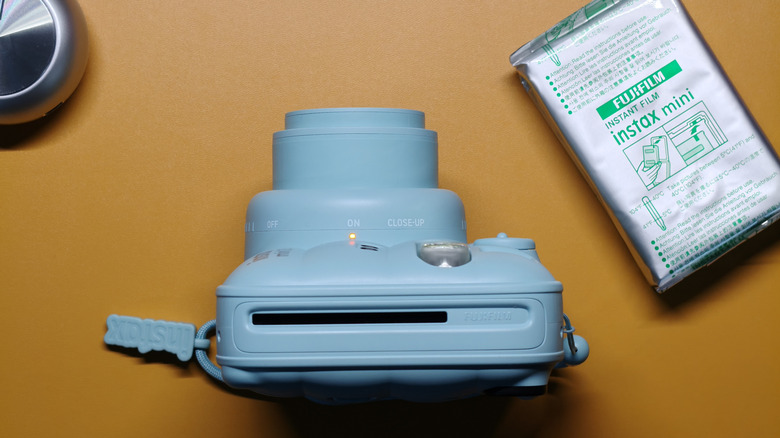
Handling is Fujifilm's bread and butter. With the pillow-like design, my fingers would naturally rest inside one of these contours, which gave a rather confident grip since I'm always afraid of dropping things. This design also works for landscape shots, though it's a bit tricky. When holding the camera horizontally, your index finger will naturally rest at the shutter button. Sadly, there isn't enough grip for a confident fit, so I had to make an L-shape with my other hand to hold the camera, which blocked the printing area.
Inside the box, you also get a wrist strap with a little Instax-shaped accessory that can be used to prop the camera at a slight angle for your photos. For selfie aficionados, there's a little mirror right next to the lens, which I found quite helpful when framing shots, except for when taking selfies from far away, where my bad eyesight made it a little challenging to see the mirror clearly. Alongside that, there's the automatic Xenon flash, which gives indoor photos that classic instant-film look. The rest of the new additions are headlined by the selfie timer. On the back, there's a handy counter that keeps track of how many prints you have left.
There's just one small nitpick I have with the Mini 13. For a camera with a self-timer, it's a shame Fujifilm didn't incorporate tripod support, which is one of the most useful photography accessories. You can buy specific tripod mounts for the camera, but it's a flawed solution. Every time I had to take a group photo, we had to find a flat surface first, then fiddle with the wrist accessory to get the right angle.
Controls
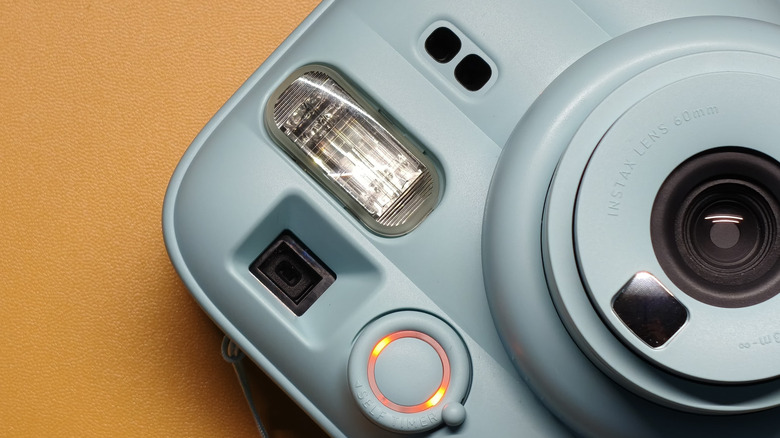
Instax Mini cameras have some of the easiest controls of any modern camera. You can give it to your kids or parents, explain the controls once, and not get bombarded with questions afterward. Thankfully, I can say the same thing about the Mini 13. You switch on the camera by turning the lens, which has clear on and off positions. Once on, the red light around the shutter button comes to life, and you rotate the lens a bit further to trigger the Close-Up mode (1 to 2 feet away).
Surrounding the shutter button is the new self-timer lever. You twist it once to start the two-second timer mode. Holding the lever for two seconds initializes the 10-second timer. The shutter LED light blinking until the shot is taken is also a nice touch. However, if you mess up the framing and want to try again, just twist the lever to cancel the timer.
Still, the most fun I had with the Mini 13 was photographing my friends and using the viewfinder to frame the shots. It's not a Single Lens Reflex (SLR) system like some of the best instant cameras, but it's competent at shooting far-away objects with photos framed bang on. If you're worried about the deviations in close-up mode, Fujifilm incorporated a Parallax correction feature, which physically adds another lens to the viewfinder for a precise look.
Sadly, that's about it for controls. Fujifilm doesn't let you adjust exposure settings, nor does the camera have various film emulations. I don't necessarily have a problem with the lack of manual controls, except the fact that you cannot turn off the flash. This does mess up the exposure sometimes, and if you'd rather not have that, the Mini 99, which currently costs $195, is a decent alternative.
Lens & image quality
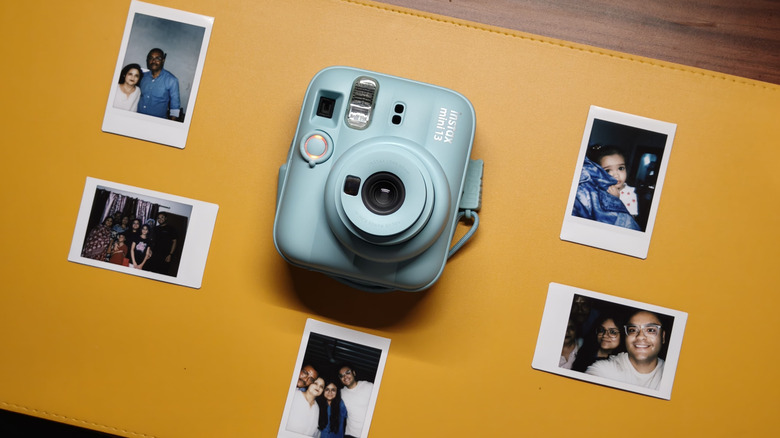
As I said before, Fujifilm hasn't changed much when it comes to optics on the Mini 13. It still has a plastic lens with an f/2.3 aperture and a 60mm focal length. I found the lens to be pretty good at taking a variety of shots, including landscapes, people, and objects without issue. Shutter speeds are also automatically adjusted by the camera itself and range from 1/2s to 1/250s. Unlike the hybrid Instax Mini Evo, light gets directly projected onto the film, meaning you just have one take.
Right off the bat, if you're expecting smartphone-level sharpness, the Mini 13 is not for you. But are the images bad? Absolutely not. Photos from the Mini 13 carry the soft, almost dreamy look that's famously popular with retro enthusiasts. Blues and greens are represented very well, which makes outdoor photography really playful. That said, the Instax film's ISO 800 sensitivity is quite high, so the Mini 13 does struggle with HDR. In the photos, it sometimes overexposes, which blows out the sky.
Real-world experience
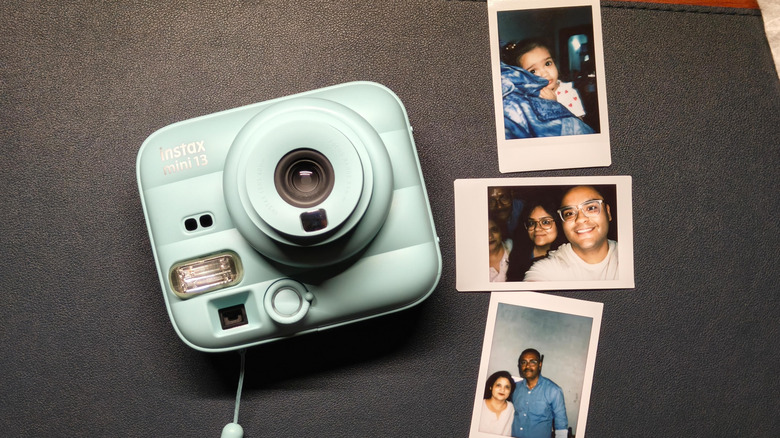
Where I think the Mini 13 shines, though, is as a party camera. I took it to a housewarming party, and the first thing I noticed was that taking photos with the Mini 13 is super fun. You prop up the camera, start the shutter timer, and wait for the shot to be taken, hoping everyone's in frame. All this adds a lot to the experience. Indoor photos are detailed, and the flash helps light up everyone. Skin tones were perfect for the most part, and I could give people a real memory to keep for themselves. Close-up photos also carried the same details, though I did mess up the framing a few times when taking a selfie. Realistically, you can only fit two, or maybe three, people in the frame.
Another thing to note is consistency. The Mini 13's shots looked the same regardless of where I was shooting or the lighting conditions. Other budget instant cameras that I've tested produce photos that vary a lot from one scene to the next. And while that kind of unpredictability is a part of the creative process for professionals, it's not ideal for beginners who just need reliable results.
Beyond that, since sharing photos on Instagram is part of everyone's lifestyle these days, Fujifilm has its Instax UP! app. It's on both iOS and Android, and scans your physical prints to save a digital copy. You can then edit different metrics like contrast and brightness and arrange them in a collage to share with others.
Film costs & battery life
While the Mini 13 doesn't cost a lot, you also need to consider film prices. In the U.S., a pack of 20 film costs $18 on Amazon, which equates to about $0.9 per photo. With the camera, Fujifilm also debuted a new pack of Pastel Galaxy film, with colorful borders, for $12 (10-pack). The company also does not bundle any film inside the box, so you'll be spending extra from the beginning. In my experience, the 20-pack lasted me the full housewarming party, but your mileage may vary.
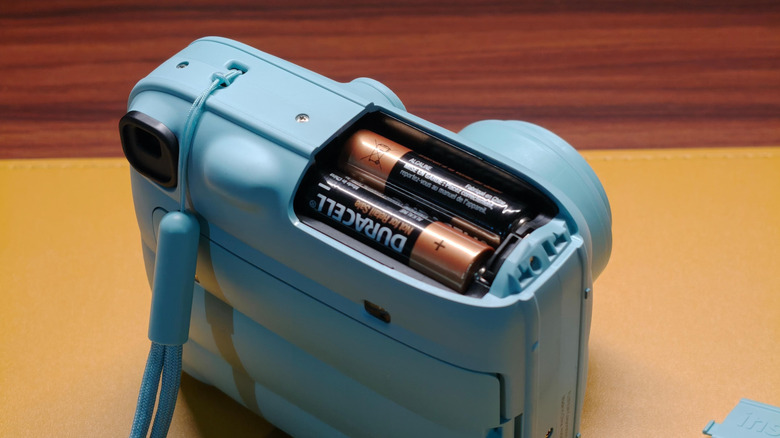
The Mini 13, like its predecessors, runs on two AA batteries. Fujifilm says that it should be enough for 100 shots before needing a replacement. AA batteries are not my favorite solution, considering they are bad for the environment and create more waste. Fortunately, a rechargeable AA pack from a top battery brand should help solve that problem. I couldn't test the full battery life of the Mini 13, since I didn't take anywhere close to the hundred photos and wasting so much film would be expensive. Fortunately, the light will start to blink faster when your battery is near the end.
Should you buy the Instax Mini 13?
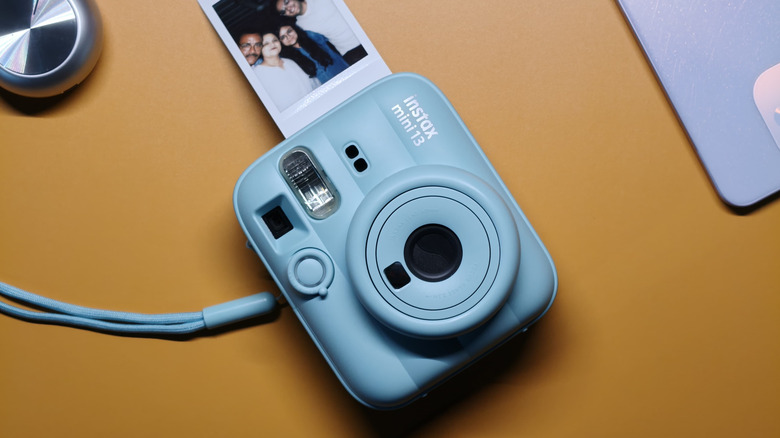
Similar to the Mini 12, the Fujifilm Instax Mini 13 is among the best entry-level instant cameras you can buy for $93.95. It plays things safe and builds on many of the things people already love. Things like the beautiful, fun design and the variety of cute colors to choose from. The handling is great whether shooting portrait or landscape shots. And the controls manage to keep things surprisingly simple, even with the new self-timer, which unlocked a new dimension of using the Mini 13.
Photos have that look we've all come to love and, most importantly, stay consistent wherever you shoot, albeit with some exposure issues outdoors. For those coming from a smartphone, you will be taking fewer photos here, but those shots will have meaning. The thought process that goes behind framing and setting up the shutter makes everything more memorable.
Competition from the likes of the Polaroid Go 3 does exist, but its films cost a lot more. Is the Mini 13 perfect? Nope. There are still a few things I'd like Fujifilm to work on, especially the tripod support. But to answer the question from the beginning: Yes, the Mini 13 is worth your money, especially if you want to give instant photography a try.