

Every Nintendo Home Console Released In Chronological Order
Nintendo is one of the most legendary video game companies of all time, enjoying a stellar run in the industry after helping save the medium from the brink of extinction. It has never looked back since, riding on the coattails of iconic video game characters like everyone's favorite plumber to craft incredible gaming experiences. Its unerring focus on unique hardware and software has helped Nintendo reach major heights with its home console offerings every gaming generation — well, bar one.
Fans have fond memories of trying to save the princess in "Super Mario Bros.," going on an adventure for the ages in "A Link to the Past," mowing down foes in space as Fox McCloud, enjoying Samus' adventures in first-person, and playing a game of "Wii Sports" with their friends. None of these experiences would've been possible if they didn't find a home on Nintendo's hardware lineup, with their home consoles either invoking feelings of nostalgia or wowing fans with their hybrid design.
Color TV-Game
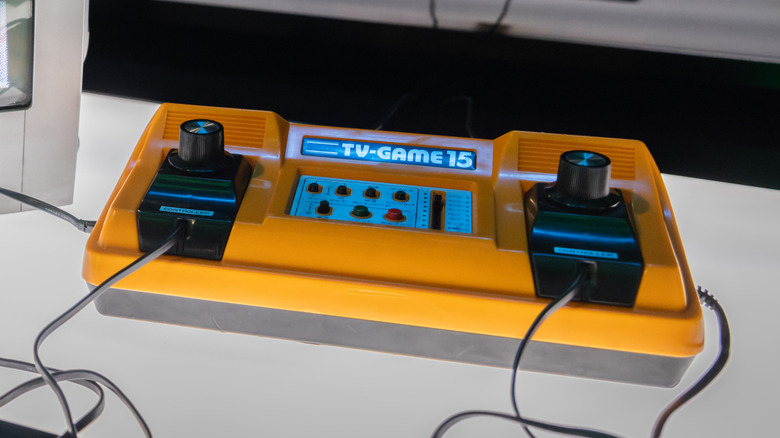
Most people think of the NES when talking about Nintendo's first console, but the company had already tried to break into the gaming industry from the very first gaming generation. Well before Atari released a product in the market, and the Magnavox Odyssey was the only way to game at home in the West, Nintendo had released the Color TV-Game series on June 1, 1977. Despite its Japan-only release and the ability to only play a single game with each version of this device, the Color TV-Game series became the highest-selling home console of the first generation, with sales reaching three million.
The games that players could check out on these consoles included a racing game with a bird's-eye view, "Computer Othello," a block-breaking game like "Breakout," and "Light Tennis" — Nintendo's version of the classic "Pong." Since Nintendo lacked any experience in console development before this point, it partnered with Mitsubishi Electronics to bring the Color TV-Game to life. Despite the system initially selling at a loss, Nintendo clearly saw something in this console and made enough Color TV-Game systems that they decided to bet on the home console market for the long haul.
Nintendo Entertainment System/Famicom
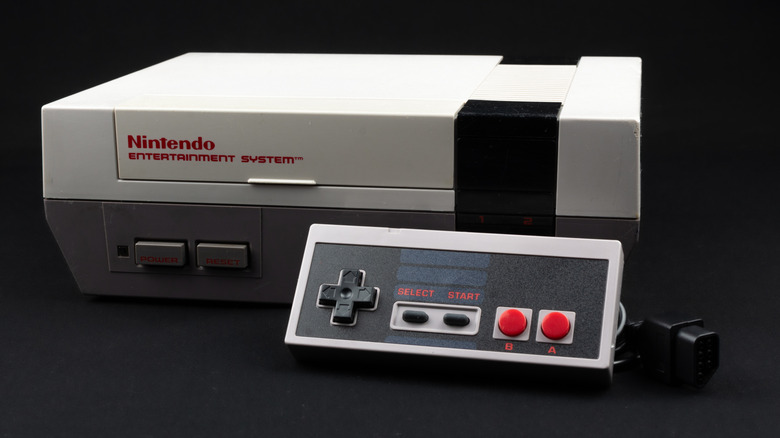
A legendary console that needs no introduction, the NES was released in Japan first on July 15, 1983, surviving a buggy launch to become one of the most in-demand gaming platforms in the country. However, as great as Nintendo's domestic success was, they still wanted to break into the Western video game market.
Unfortunately, in the same year that this console was released, the video game market had crashed, with Atari attaining a level of market saturation that caused people to turn their noses up at home console hardware. To circumvent this problem, the Famicom — short for "Family Computer" — was rebranded as the Nintendo Entertainment System. This was the first step in a masterstroke gaming strategy that aimed to re-market their product as a toy instead of a console. That helped the console distance itself from the gaming computer moniker that could've injured sales.
Two years later, the NES came to Western shores in 1985. With a lineup of strong games that included "Donkey Kong" and "Super Mario Bros.," the focus on quality control and stellar video game experiences helped make home consoles viable outside of Japan once again. An iconic and adored controller design, a game library with over 500 quality titles, and the focus on uniquely weird '80s gaming peripherals and gadgets like the NES Zapper and R.O.B.; these all helped the NES stand out as one of the most legendary gaming consoles ever made.
Super Nintendo Entertainment System/Super Famicom
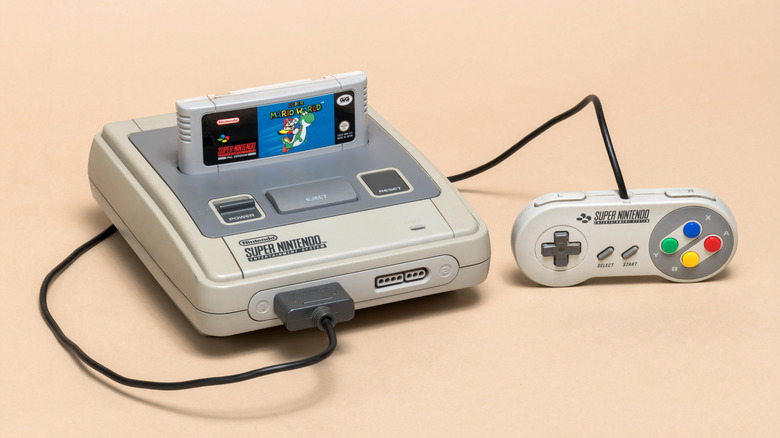
Now that Nintendo had proven that the worldwide market would welcome home consoles again, it was time to release an upgraded version of its console. On November 21, 1990, its answer arrived in the form of the Super Famicom in Japan; followed by the U.S. release of the renamed Super Nintendo Entertainment System on August 23, 1991. The 16-bit era of gaming allowed for more detailed visuals, and the SNES made the most of it with incredible games like "Super Mario World," "Final Fantasy VI" (released as "Final Fantasy III" outside of Japan), "Super Metroid," "The Legend of Zelda: A Link to the Past," "Star Fox," "F-Zero," "Chrono Trigger," and "Super Mario Kart."
Initially, the SNES' sales trailed behind the Sega Genesis, which ironically enough came into being after the Nintendo NES proved that the console market was ripe for the picking. The SNES eventually overtook its competitor and sold almost 50 million units. The console features stereo sound, more memory, and larger Game Paks to let developers craft wondrous adventures that players could enjoy.
The controller's design was also improved, using a dogbone-esque design for greater comfort, and adding two new buttons to let games experiment with slightly more complex control schemes. Given the current trend of loading advanced controllers with as many buttons as possible, it's amusing in hindsight.
Nintendo 64
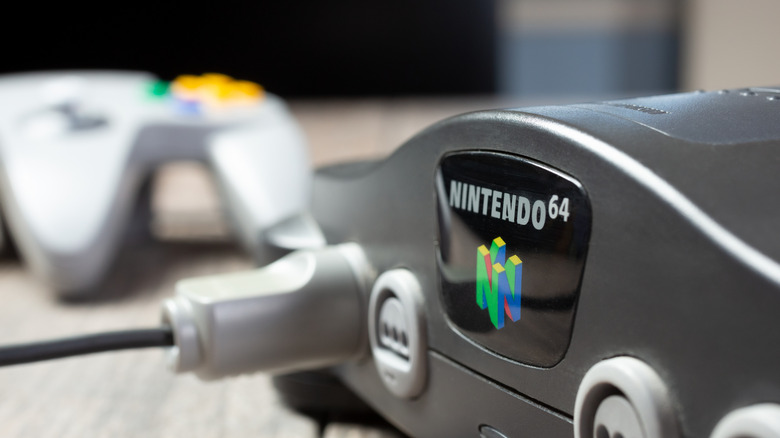
The Nintendo 64 launched on June 23, 1996, with the name stemming from the 64-bit processor it used to usher in a new era of gaming. Known as Project Reality during its development period, Nintendo went all out to create a console that let players enjoy the wonders of 3D gaming. Sega struggled in this department, with "Sonic Adventure" serving as a fitting example of how its IP failed to make a proper transition to 3D. The brilliance of "Super Mario 64" highlighted that Nintendo was a champ when it came to both home console and video game development.
However, as great as the console's video game library was, the N64 struggled on two fronts: Firstly, the console stuck to cartridges instead of switching over to CD technology, causing many third-party developers to move on from this console to PlayStation.
Speaking of which, the debut of Sony's first gaming console, which happened after Nintendo refused to partner with Sony on a console that used CD-ROMs, was another hurdle that the N64 failed to overcome. The PlayStation was marketed to children and adults alike, with its hardware surpassing anything the N64 had to offer. As a result, Nintendo technically won its battle with Sega, only for Sony to swoop in and win the fifth-generation console war.
Nintendo GameCube
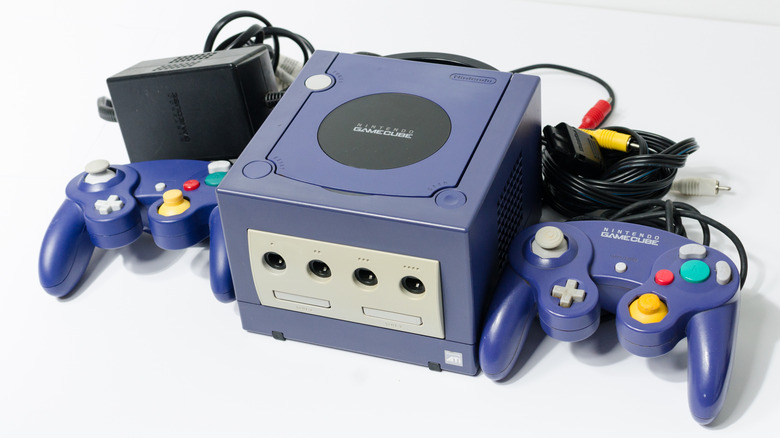
Despite the N64 falling well behind in sales as compared to the PlayStation, Nintendo's priority wasn't to release a system with amazing hardware that let players enjoy state-of-the-art 3D visuals. Their focus was on crafting quality video games, and the GameCube added another layer to the mix with its quirky looks.
The iconic purple color of the GameCube is easily identifiable. Even the controller had an in-your-face design, using the best lessons learned from Sony's amazing PS1 controllers while adding a trademark Nintendo flair. The games released on this console following its launch on September 14, 2001 are certainly legendary in their own right, with beloved titles like "Super Smash Bros. Melee," "The Legend of Zelda: The Wind Waker," and "Metroid Prime" being standout highlights.
Still, despite being the complete package, including the switch to optical media, the sales of the GameCube were still disappointing. The legend Shigeru Miyamoto himself has gone on record to state that the Nintendo GameCube failed. It became increasingly clear that the PlayStation had eaten into Nintendo's consumer base extensively, and a massive paradigm shift needed to be carried out if the company still wanted to remain in the console business.
Wii
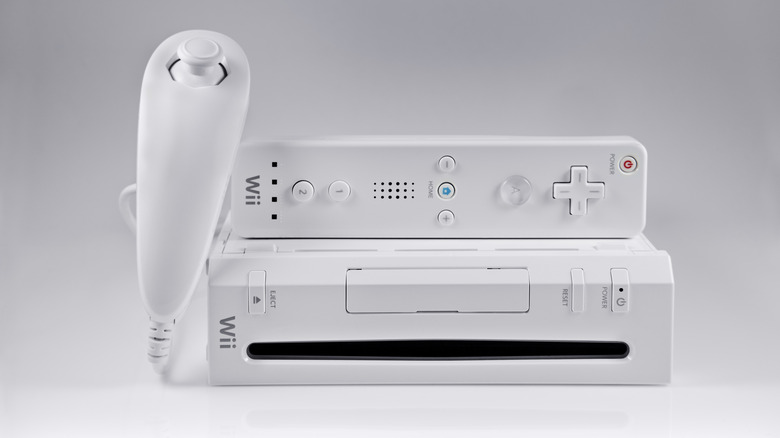
The N64 and GameCube hadn't exactly been barn-burners in terms of sales. Realizing that Sony and Microsoft were now at war with each other and trying to capture the hardcore gaming market, Nintendo let each other fight this battle without getting involved. Instead, Nintendo decided to market an accessible home console for the entire family; to the point where the controller developed for the Wii resembled a regular TV remote. Nintendo emphasized motion controls in this console, going the extra mile to ensure that this immersive control mode would be carried out without a hitch by utilizing a sensor bar that used IR signals to read the Wiimote's motion.
The end result is the Nintendo Wii, the ultimate party console that gamers across multiple generations could play. It helped that titles like "Wii Sports," "Wii Play," and "Wii Fit" had little to no barriers to entry, becoming genuine pick-up-and-play experiences that further enhanced the Wii's appeal to all folks.
As a result, the Wii sold more than 100 million units since its launch on November 19, 2006, becoming the seventh-highest-selling video game console of all time. If you missed out on this console's golden years, why not buy an old Nintendo Wii for cheap to enjoy a fun party night with your friends?
Wii U
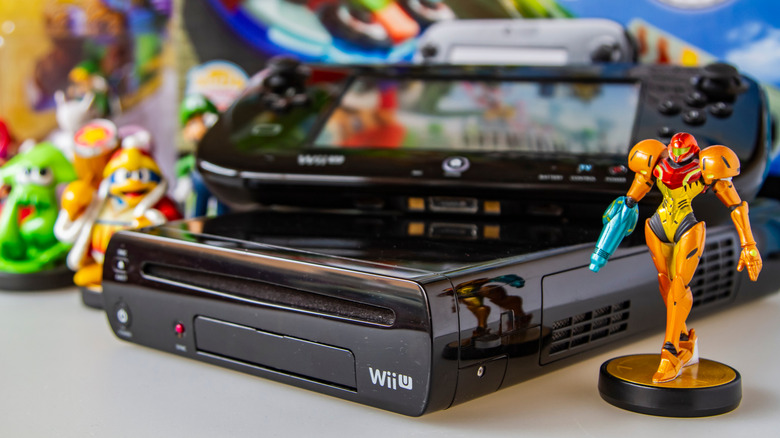
The Wii was a smash hit, and all Nintendo had to do was carry forward this momentum with the launch of its successor, codenamed Project Cafe. However, while the success of the Wii encouraged Nintendo to take some risks, the company went way overboard in this department, leading to one of the weirdest products ever made by Nintendo. This could be sensed from the very moment the Wii U was announced with its bulky controller (the heaviest ever released for a home console), alongside disappointing hardware specs. The Wii U became Nintendo's lowest-selling home console of all time.
The controller was very unwieldy because of its weight, and it didn't help that the battery life was also woeful. Compared to the simple Wiimote that appealed to casuals, the interface of the Wii U's gamepad felt rather complex in comparison. Even with the 1080p visuals and a brief lead over its competition, the Wii U was a massive failure and barely reached 14 million units in lifetime sales after launching on November 18, 2012. If it wasn't for the Nintendo 3DS handheld keeping the company afloat, chances are that Nintendo would've had to shutter its console division outright.
Nintendo Switch
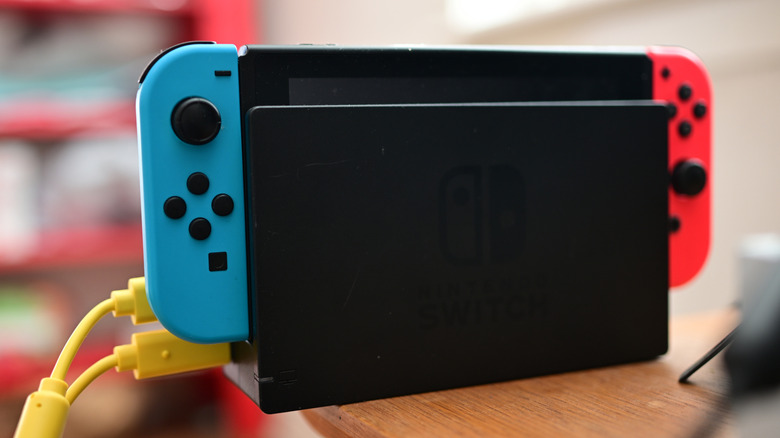
Nintendo needed a home run after the Wii U's failure. It could've been very easy for them to play it safe and provide a console offering in the same vein as Sony or Microsoft, but the need to innovate is what made Nintendo such a beloved brand in the first place. So, with the Nintendo Switch, the company decided to merge both handheld and home console into one package.
Before the Nintendo Switch, no console maker had proposed the idea of a hybrid console that could work on both an external display and by itself. With the inclusion of a dock, detachable Joy-Con controllers (innovative despite their poor build quality), and impressive third-party support, the Nintendo Switch regained a dominant position in the gaming industry previously lost by the Wii U.
It helped that Nintendo launched this console on March 3, 2017, along with "The Legend of Zelda: Breath of the Wild," which is easily one of the greatest open-world adventure games ever made. "Super Mario Odyssey" was released in the same year, and became one of the best 3D platformers in recent memory. People who only wanted a handheld version of this device could opt for the cheaper Nintendo Switch Lite, while others who didn't mind paying a premium could get the more expensive OLED display model.
Nintendo Switch 2
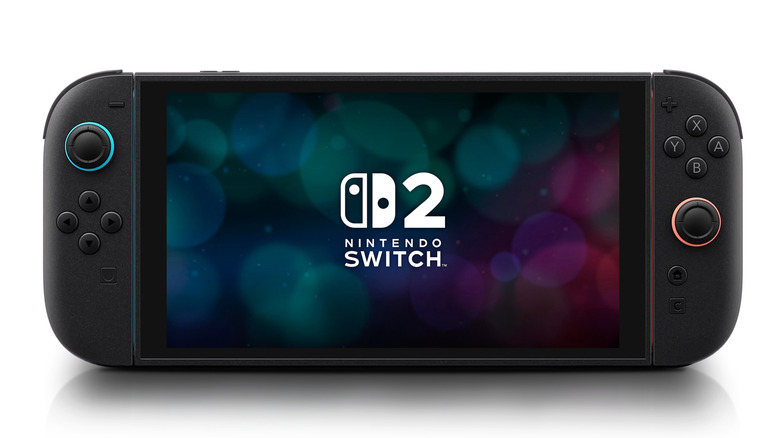
For Nintendo, the current gaming generation started on June 5, 2025, with the launch of the Nintendo Switch 2. Instead of making the same mistake as the Wii U, Nintendo clearly adopted an "if it ain't broke, don't fix it" mentality. The form factor is largely similar, with the Switch 2 operating in a similar manner to the previous console.
The Nintendo Switch 2 retains its hybrid functionality and bolsters the Switch's hardware to the point where it can outperform the PS4 when docked, which is no mean feat. Support for backwards compatibility with all games for the original Switch is also much welcome, incentivizing you to transfer your games to the Switch 2 from your old console. Now, with the whole physical media debacle marring PlayStation's name, it's understandable why some gamers would want to switch allegiances to maintain their integrity.
Joy-Cons have arguably seen the biggest improvement over the original Switch. Instead of the slide-and-click attachment that most people are used to, it uses magnets as a far more refined and simple solution to attach on the Switch 2. It even comes with a mouse mode, courtesy of an optical sensor, that will make playing simulation and strategy titles far simpler on Switch 2. It even supports 4K resolutions in docked mode, which is genuinely impressive. Unlike the Switch, its successor hasn't exactly launched with a variety of amazing games, although titles like "Donkey Kong Bananza," "Mario Kart World," and "Pokemon Pokopia" are slowly but surely bolstering the Switch 2's game library.