

5 Unique Bose Gadgets You Probably Didn't Know Existed
We may receive a commission on purchases made from links.
Bose is an audio company whose reputation may range from overrated to outright premium depending on who you're talking to. Its headphones, earbuds, portable speakers, and home theater equipment are mostly well regarded in the consumer tech world, though there remains some audiophiles who hate Bose out there. As a company, Bose has been making forward-minded audio products for a long time. It was founded in 1964 by Dr. Amar Bose, an MIT professor who grew up a bit of a dreamer and who often found himself inspired by technology.
The company's first consumer product came in 1966, when Bose launched a loud speaker known as the Bose 2201, but due to sales fewer than 50 were ever built. Its first commercial success was in 1968 with the Bose 901 speaker system and Bose's willingness to experiment with technology and dive into niche markets has remained over the years.
Today there are several audio brands you might not realize are owned by Bose, but there are also a number of Bose gadgets you probably didn't know ever existed at all. From modest wearable tech to overpriced entertainment systems, let's explore some of Bose's lesser known products.
Bose Frames
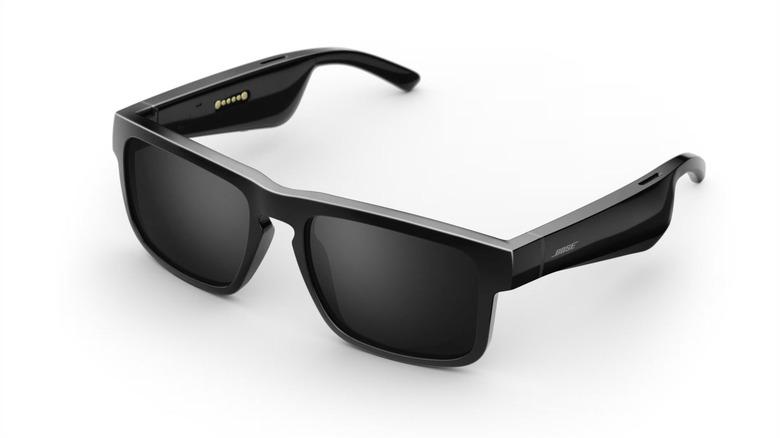
Before it became commonplace to wonder if somebody's recording you with smart glasses, Bose took a stab at the wearable market. In 2018, the Bose Frames were announced. They weren't meant to be smart glasses in the sense that they could augment reality or connect to social media. Bose's intention was simply to provide a stylish way to listen to music. The Bose Frames were a bit of a sleight of hand in that regard, as they resembled an everyday pair of sunglasses but had miniature speakers built into the arms. They were angled toward the wearer's ears and were designed for users who found discomfort in the intrusion of earbuds or heaviness in the bulk of headphones.
Reviews were mixed when the Frames hit the market. Some tech outlets saw them as mostly a conceptual product, though others noted the impressive audio quality. In 2020, Bose announced three new Frames models, each with a unique style. While the original Frames launched at $199, these newer models were priced at $249. The Frames have since been discontinued, though the company does still support all models. The product itself never quite took off, but the listening technology spilled into Bose's open-ear line of products, including another Bose gadget you might not know existed, the Bose Ultra Open Earbuds.
Bose Ultra Open Earbuds
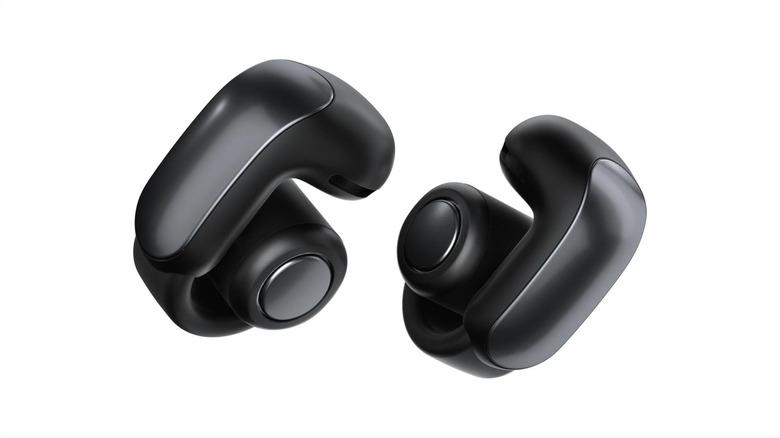
Bose has a number of models that compete to be among the best wireless earbuds for audiophiles, but the Ultra Open Earbuds don't quite fit that mold. Their unique design makes them appear, at least at first glance, to be the wrong style of earbuds for most users. Rather than fitting inside the ear canal, the Bose Ultra Open Earbuds are designed to clip onto the side of the ear. This eliminates Bose's ability to include any kind of passive noise cancellation in the earbuds. The earbuds still have a lot to offer though, and we find them to be among the best earbuds for people with small ears.
Part of why these earbuds aren't at the forefront of the market's awareness is simply because they're overshadowed by Bose's other models. More traditional, in-ear designs are what people are used to seeing, and thus, are what get most of the attention through Bose's own marketing. Its niche market, open-ear design is yet to catch on among reviewers as well. Among those who've purchased and put the Ultra Open Earbuds to use, feedback is mixed. The earbuds have earned a 4.3-star overall rating from purchasers on the Bose website, while purchasers at Amazon only give the earbuds 3.8 stars overall. Originally released in 2024, the Bose Ultra Open Earbuds are still on the market and priced at $299.
Bose VideoWave II Entertainment System
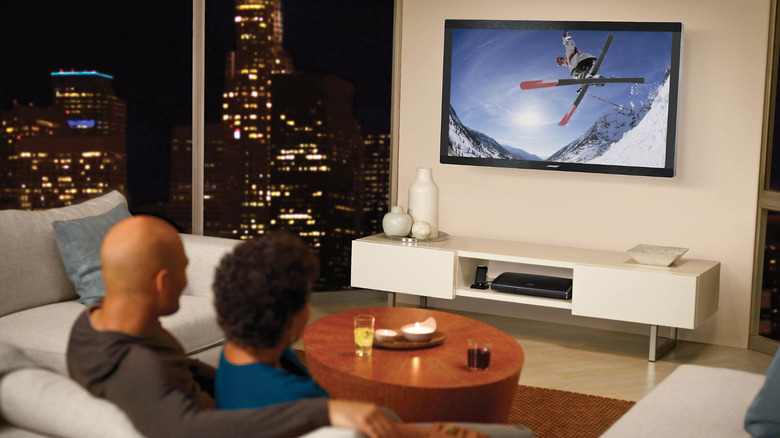
Bose has long been known for its audio chops and relatively long-lasting speakers. Its products are typically devices and peripherals meant to be paired with other equipment like smart TVs and smartphones. But in 2012 Bose released the VideoWave II Entertainment System. It was a flat-panel HD television and console, with an entire Bose home theater system built into it. The TV had a 120Hz refresh rate and was somewhat slim and minimally styled. The setup included a speaker system with 16 speakers, an auto-equalizer system with a headset microphone, an iPod and iPhone dock, and a programmable remote control.
Home theater setups are typically pieced together using peripheral equipment from various manufacturers. Some like to lean entirely on a single brand that they've found to sound great and provide reliability. But even among Bose users, the VideoWave II's all-in-one design was hard to get a grip on. The 46-inch model was priced at $4,999, and the 55-inch version went for $5,999. At the time of its release, NBC News stated in a review that the VideoWave II's cost didn't hide the fact that it merely resembled an everyday Samsung monitor. The VideoWave II did appeal to some, with PCMag, and The Guardian, reviewing it at four stars.
Bose SoundWear Companion

Bose has established itself as a premium consumer audio brand. That image has normalized the expensive pricing of its more traditional headphones and speakers, but it's also what has kept many of its more niche products out of the awareness of the masses. While neckband speakers have gained some traction among gamers and runners, they're somewhat quirky and awkward in their design. In 2017, Bose released its neckband speaker, the Bose SoundWear Companion. If you haven't yet stumbled across this gadget, it's likely because of the obscurity of neckband speakers in general, as the SoundWear Companion itself seems to have lived up to the Bose name.
The speaker had two 11-inch waveguides that extended the bass response, as well as a built-in microphone for taking phone calls. The battery was able to get up to 12 hours of playback between charges, Siri and Google Assistant were accessible for voice controls, and it had IPX4 water resistance to accommodate fitness enthusiasts. In other words, the SoundWear Companion wasn't short on capabilities. Its $299 retail price, however, was likely too much for such a uniquely styled listening device. It received a glowing review from The Verge back in 2018, which notes both the niche market for neckband speakers and the fact that Bose managed to create a good one anyway.
Bose Sleepbuds
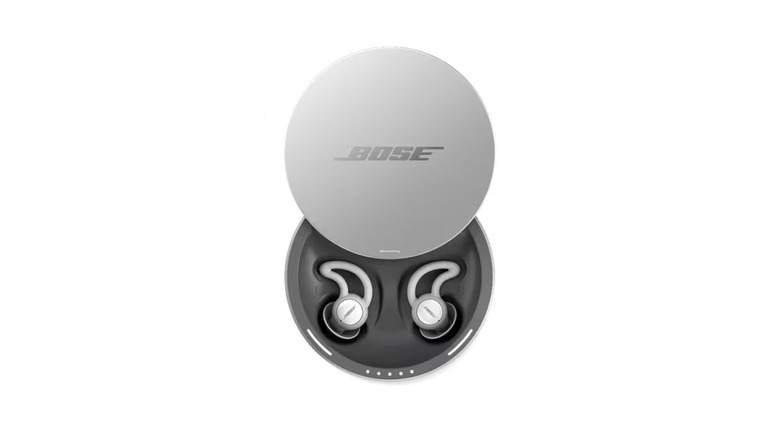
In 2018 Bose jumped into the sleep tech market with the Bose Sleepbuds. They were small, wireless earbuds designed specifically to help the user sleep. Notably, the Sleepbuds could not stream music from music libraries or streaming services, nor could they receive or make phone calls. They used noise-masking technology and played only pre-loaded sounds that were tuned to block out the frequencies of common sleep disruptors. These included snoring and street traffic, among other sounds. Just like the other products we've looked at here, Bose didn't hold back on pricing. The Sleepbuds hit the market at $249.
Bose initially ran a Sleepbuds prototype on Indiegogo in 2017, selling out in six days. It was a promising start, though taking the product to market didn't go as well as Bose had hoped. The Sleepbuds had battery issues from the start, with some users even experiencing complete battery failure after just a few months of use. Bose discontinued them in 2019, but after a redesign, released them as the Sleepbuds II, in 2020, before dropping the line entirely in 2023. Several Bose engineers saw promise in the Sleepbuds technology, however, and acquired it from Bose after founding a company called Ozlo. Ozlo has again redesigned the hardware and today sells what were once the Bose Sleepbuds as the Ozlo Sleepbuds 2.