

5 Digital Wallets To Try Instead Of Google Wallet
We live in a time when you can absolutely ditch your wallet for mobile payment apps. And if you're a Google Wallet user, you're probably already aware of how you can use the app to manage your money and process card payments. There are probably some Google Wallet features you're overlooking, but that's not necessarily a good problem to have. Some minimalists feel that Google Wallet has too much feature bloat to be useful as a digital wallet. Other users are hesitant to let Google handle even more of their information than they already are. But are there any other digital wallets that you should actually try instead?
There are many digital wallet apps and money transfer services out there, but we narrowed the list down to five that can rival Google Wallet in terms of convenience, usefulness, and ubiquity. This list doesn't mention Apple Pay, despite its popularity, based on the assumption that a large chunk of people searching for an alternative to Google Wallet are probably in the Android ecosystem. These are digital wallets that are available as Android apps and that you can use as payment methods in a variety of situations.
Samsung Wallet
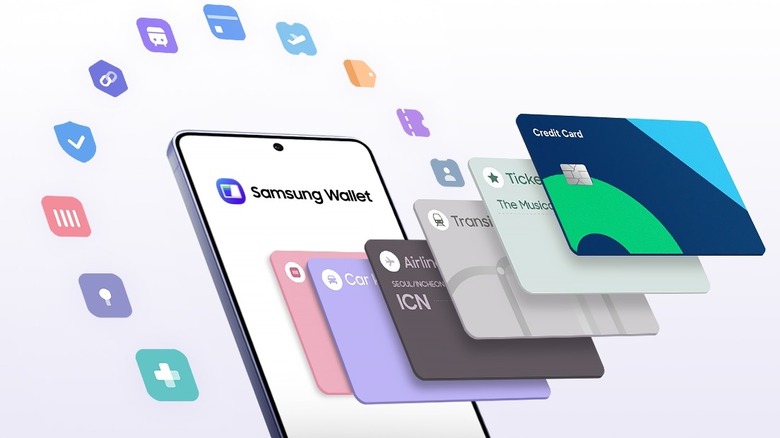
Samsung Wallet, formerly known as Samsung Pay, is very comparable to Google Wallet in terms of features and functionality. It allows contactless tap-to-pay transactions at a wide variety of locations internationally and is compatible with more than 100 banks and financial institutions in the United States. It's also capable of storing ID cards, gift cards, digital keys, passwords, and more. You'll get even more convenience out of Samsung Wallet if you're deep in the Galaxy ecosystem, considering its seamless integration with Galaxy Watches. Of course, the downside is that Samsung Wallet is only compatible with Galaxy devices; it won't be a viable Google Wallet alternative for you if you're using a different Android phone.
We compared Google Wallet and Samsung Wallet to determine which stood out as the better Android payment app. We found them to be practically identical in practice, with the only standout difference being that they each gain functionality when used with other devices within their respective ecosystems. If you own multiple Samsung devices, it's definitely worthwhile to try Samsung Wallet to discover how it might make your life more convenient.
PayPal
PayPal has been enabling digital payments since before the turn of the millennium, and even though mobile-first services like Google Wallet have elbowed into the spotlight, PayPal still remains one of the strongest alternatives to those other digital wallets. Modern reviews of PayPal highlight that it has very strict fraud protections in place, which is a huge plus unless it results in your account being temporarily frozen after a suspicious purchase.
Unlike Google Wallet, PayPal is a money management service that also has its own branded credit card that works anywhere you can use Mastercard and generates cashback rewards that you can redeem directly into your PayPal account. This may seem like it defeats the purpose of using a digital wallet in the first place, especially since there's an argument to be made that physical credit cards aren't needed anymore, but it strikes an appealing middle ground. Tap-to-pay is convenient, but some people find it reassuring to have a physical card for in-person purchases, even if they want to handle all other financial matters digitally.
Cash App
Cash App has long been considered one of the top PayPal alternatives worth using, and it functions as a viable Google Wallet replacement as well. It's a digital wallet that operates on two extremes. On one hand, reviewers have noted that it has an extremely simple and straightforward interface, which makes it great for sending payments to friends or family members without hassle. On the other hand, Cash App also lets you purchase stocks, buy bitcoin, and file your taxes. This makes it a powerful tool for professionals and investors who need to manage complex financial situations.
What really makes Cash App worth trying, though, is its security commitment. Payment information is encrypted, and the platform is PCI-DSS Level 1 compliant, which, in simple terms, means that it meets the same level of compliance as major credit card companies like Visa and Mastercard. And in fact, Cash App does have its own debit card that you can use to make purchases from digital and physical retailers.
Klarna
Klarna is a money management platform that is best known for its "buy now, pay later" service. You can make purchases with Klarna at a large variety of major retailers, and when you do, you can either pay with your Klarna balance or choose to pay later. If you opt to pay back in four payments at a frequency of one payment every two weeks, there will be no interest. Klarna's flexible payment service is popular enough that it now serves as an official partner in Apple's new upgrade and lease program. Just be aware that Klarna does charge interest as high as 19.99% APR on monthly payment plans and longer-term financing plans.
As both a shopping tool and a digital wallet, Klarna can be a hub for all of your financial activity. It's a Google Wallet alternative that can receive funds from your debit card, and it can hold all of your loyalty cards to ensure you get the perks you've earned when you make purchases through Klarna. Reviewers have acknowledged that Klarna strives to be an all-in-one shopping companion that even features frequent cashback rewards. You can even sign up for a physical Klarna card while still using the app to track spending, savings, and investments.
Venmo
Venmo is a digital wallet with a social twist. By default, your Venmo transactions are shown on a social media-like feed for your friends to see. If this is an exposure of privacy that you dislike, you can disable it. However, it does demonstrate how Venmo is designed for communal situations, like splitting the bill after a big dinner or an all-hands business outing. Payments you receive on Venmo are stored in your Venmo wallet, and those funds can either be transferred to your bank or used for other purchases. You can use Venmo with many online retailers that accept PayPal, or you can even get a Venmo debit or credit card.
Venmo is actually owned by PayPal, and the two platforms have various identical account protection features. In 2025, it was announced that PayPal and Venmo would use AI to protect users from scams. When you're about to send a payment, an AI agent will analyze relevant data and generate a scam alert if there's reason to believe that the other account is fraudulent. With Venmo using the same technology, it's worth considering as a Google Wallet alternative ahead of similar platforms like Zelle.