

5 Phones With The Best Built-In Speakers
For die-hard audiophiles, using anything less than a high-quality wireless speaker for mobile music streaming is hard to fathom. But for those outside that demographic, it's more than possible to enjoy audio from smartphone speakers. We've come a long way from the tinny, single-driver mono speakers in early smartphones, and modern phone speakers can do the job for all kinds of general-purpose listening.
Good built-in smartphone speakers help with speakerphone calls, but they're also handy for streaming media or playing mobile games when you don't have headphones or an external Bluetooth speaker on hand. Or, perhaps more commonly, when you're showing someone that one Instagram video that's been living rent-free in your head for a week. Fortunately for our ears, most smartphone models now have stereo speakers, and some even include special tuning and added features for improved acoustics — including subwoofers.
Smartphone speaker audio has graduated to a more detailed, balanced sound shaped by audio-enhancing algorithms. Now we get smartphone audio that doesn't remind you of Limewire-era downloads. If you're a producer or audio engineer of any kind, it's a good idea to use phone speakers to see how your mix translates to cellular hardware.
If quality smartphone speaker audio is a selling point for you, a handful of devices deliver on that front better than others in their class. We included only phones from 2025 or 2026, and each had to be a well-reviewed flagship rated four out of five stars or higher by reputable outlets. Each one also had to have a loudness units relative to full scale (LUFS) rating of "good" or better, based on testing by GSMArena. For context, LUFS is a relative measurement to assess — roughly — how loud something sounds to the human ear.
iPhone 17 Pro Max
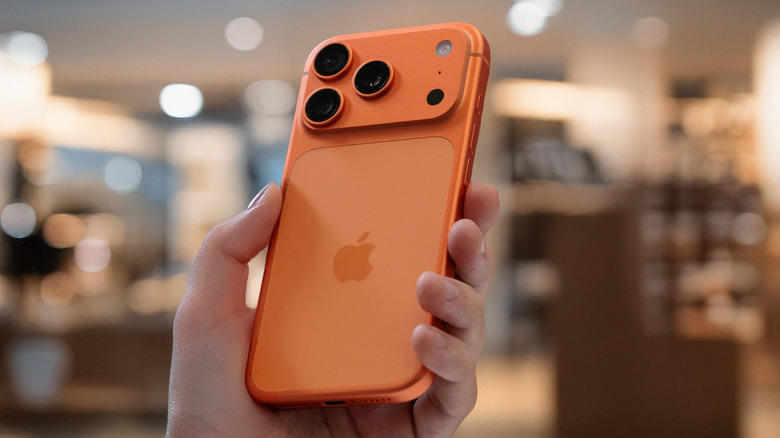
Apple has a demonstrable history of investing in speaker design in its mobile devices. The company began implementing stereo sound in its phones starting with the iPhone 7, and the subsequent iPhone 8 featured newly balanced speakers that were reportedly 25% louder than before. Apple also designed its phones with dedicated digital-to-analog converters (DACs) separate from the CPU, which contributed to improved audio quality. For these reasons, iPhones have historically been a cut above their Android counterparts on the speaker front, to the point where even one TechRadar reviewer preferred using the built-in speakers on his iPhone 15 to Bluetooth speakers for their "blend of simplicity and quality." Quite the surprise, but certainly telling.
The iPhone 7 came out in 2016, so stereo sound being bundled into iPhones is fairly old news. However, nearly a decade later in 2025, the iPhone 17 Pro Max distinguished itself as having the "best [phone] speakers of 2025," per GSMArena. Even at max volume, you can expect little to no distortion from the 17 Pro Max's bottom speaker. That said, we do suggest leveraging the useful iOS feature of capping your max speaker volume, for both your phone speakers' sake and your ears' sake.
GSMArena clocked the phone's LUFS rating at -26.2 for a relative rating of "good," so the phone's speakers aren't the loudest on the market. However, they are clean and balanced — albeit slightly weak on the low end, which is still surprisingly good. With a hybrid stereo speaker setup, both the phone's bottom speaker and its earpiece deliver wide, boomy sound, so you'd notice a difference compared to the iPhone Air from late 2025, whose form factor could only handle a lonesome mono speaker.
Xiaomi 17 Ultra
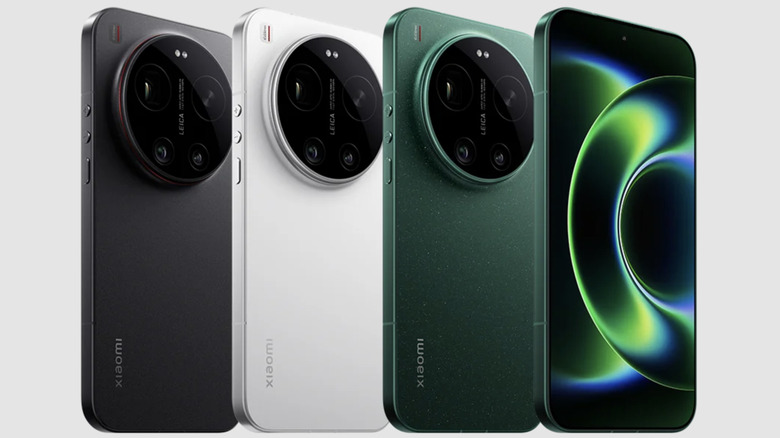
Like the iPhone 17 Pro Max, the flagship Xiaomi 17 Ultra has a hybrid stereo speaker setup with a bottom speaker and an earpiece to produce one of the nicest speaker systems you can get in a smartphone. And, like the 17 Pro Max, the Xiaomi 17 Ultra's built-in speaker performance is noteworthy for its consistency. It is, in fact, "more consistent than the Galaxy S26 Ultra," per Notebookcheck. The phone ultimately took the top spot for smartphone speaker performance in the publication's 2026 review roundup.
As expected of most smartphone speakers, the 17 Ultra is light on bass, but it has clear mids and highs. Even so, MakeUseOf described the bass on these humble stereo speakers as "a feature, not an afterthought;"; its delivery is genuinely good despite being on the quieter side, and its frequency response encompasses a bit of the sub-bass range, too, which is even more than the flagship Samsung Galaxy S25 Ultra could manage.
In terms of loudness, the Xiaomi 17 Ultra is up there for smartphone speakers, coming in at -24.1 LUFS based on GSMArena's testing — a "very good" loudness score. On top of all that, AndroidAuthority also purported that this phone "has a legitimate claim to being the best Android camera phone," making it the camera champion of non-Apple devices, on top of being a speaker powerhouse.
Samsung Galaxy S26 Ultra
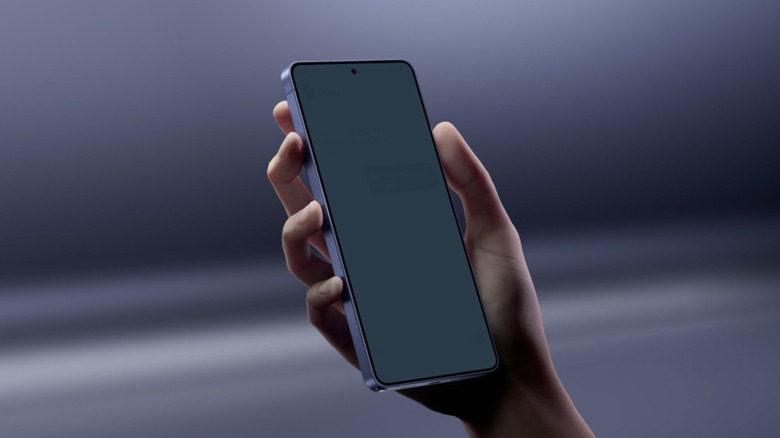
Samsung's flagship S-series phones have a track record of strong speakers; SoundGuys not only said the S24 Ultra had 2024's best smartphone speakers, but also stated point-blank that the phone was "one of the best" on the market around its release. This foreshadowed the success of the Samsung Galaxy S26 Ultra that would eventually follow, especially in terms of speaker performance, even though Samsung had previously fallen short in that regard. It's straightforward to improve the audio on your Samsung device with the phone's pre-loaded EQ utility, but no amount of software tweaking can overcome deficient hardware.
The Samsung Galaxy S26 Ultra boasts a loud and punchy sound with what PhoneArena has defined as "noticeably better bass" than what its predecessors had. The hybrid stereo speaker setup we've seen in the aforementioned models appears again on this Samsung smartphone, and the distance between those loudspeakers "results in a good sense of stereo separation," according to What Hi-Fi?, which gave the phone a perfect five-out-of-five-star rating.
The dynamic range you get with the S26's speakers makes the device perfectly suitable for media playback, and while you can't exactly enjoy the phone's hi-res audio support to its fullest extent on the loudspeakers alone, you could certainly get it to sound pretty loud, especially if you were to disable the media volume limit in your Android volume settings. In its formal speaker testing, GSMArena pinned down a LUFS rating of -25.9 for this device, which earned it a "very good" rating. GSMArena also found the Galaxy S26 Ultra's smartphone speaker performance was nearly identical to the Xiaomi 17 Ultra — it scored just 0.2% lower overall. Nice.
Honor Magic8 Pro
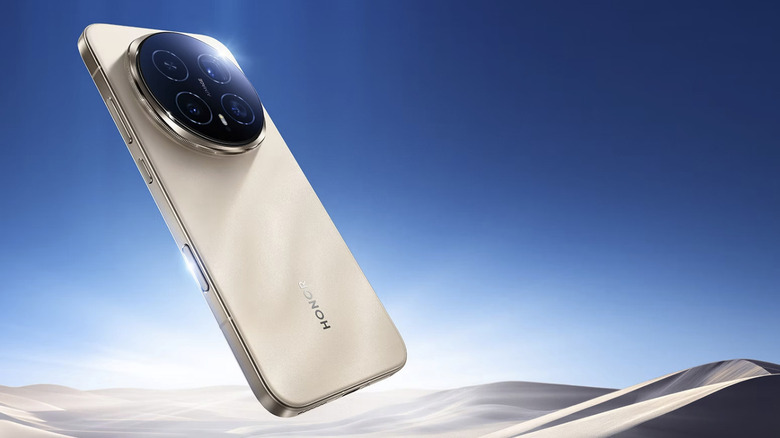
You might've noticed a trend that bass is seldom emphasized as a selling point in smartphone speakers. That's frankly because it tends to be bad, which is especially true of older models from the 2010s. But times are, as they say, changing. Bassheads, rejoice — there's a phone by one Chinese manufacturer that actually makes a sincere effort to deliver on bass in its speakers, although it's one you've likely not paid much mind to.
As a flagship phone, the Honor Magic8 Pro has stereo speakers that are punchier and louder than most alternatives on the market. That's partly because it features loudspeakers that are uncharacteristically large for a smartphone. In its review, TechRadar noted an "impressive level of bass" on this device, even for "music that you blast." That's quite the claim, yes, but it's shared by reviewers at Android Headlines and Tech Reviewer, who (respectively) appreciated the "considerable loudness of the speakers [and] how clear the sound is" and the fact that the "speaker reaches a high volume without any unpleasant distortion."
Those observations aren't just anecdotal, either. We have the data to prove it. In its testing, GSMArena clocked the Magic8 Pro's LUFS rating at -22 flat, a minor improvement from the -22.8 LUFS output measured on the phone's predecessor, the Honor Magic7 Pro (which was also hailed as having best-in-class speaker quality among 2025 offerings). Both scores are considered "excellent," better than every other device we've inspected so far, making this device a compelling choice for those who like their audio loud and low.
Xiaomi Poco F8 Ultra
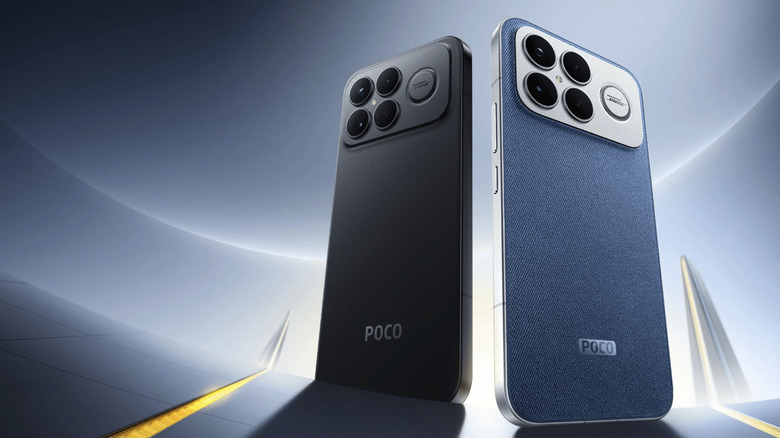
If you thought the Honor Magic8 Pro smartphone was great for bass — and it is, of course — there's another phone that manages to outperform it in the sub-250Hz frequency range. Spoiler alert: it's another Xiaomi phone. The Poco F8 Ultra is a rather low-key "budget" flagship, but its sound system was tuned by none other than Bose. Meaning that, when it comes to speaker perks, you're getting your money's worth with this unit.
The Poco F8 Ultra features a dedicated 16x20mm subwoofer placed right on the back of the device that cements the unit as a bona fide three-channel 2.1 audio system. This is the phone's real selling point and, in a ranking, would put it above even the Magic8 Pro. Additionally, Notebookcheck explicitly cited the Xiaomi Poco F8 Ultra as an alternative to the 2025 Xiaomi 17 Ultra, in part because it "can deliver noticeably more bass thanks to its rear-mounted subwoofer." It's not quite as loud, though, with an integrated "very good" LUFS rating of -26, per GSMArena (compared to -24.1 on the 17 Ultra).
The phone's 2.1 configuration still won't give you anything close to the chest-vibrating sensations you'd get from an expensive, multi-channel living room setup, of course — and it may not hold a candle to a powerful external speaker, either. But the Poco F8 Ultra's audio offerings are still high-quality enough to provide "a solid, weighty low end that gives music, films, and games more physical presence than most phones in its class," as Yanko Design put it in a review. Perhaps even more impressive is the fact that Xiaomi managed to fit 2.1 hardware into the Poco F8 Ultra's modest form factor without adding unnecessary bulk.
How we landed on the best built-in smartphone speakers on the market
Because manufacturers rarely release public data on smartphone speakers, these selections were based on a specific set of predefined criteria unrelated to DACs, amps, or other sound-related components. Additionally, despite improvements over the years, smartphone speakers still aren't equipped to faithfully reproduce high-resolution audio, so we didn't account for specific codec support or hi-res audio in our decisions.
Each model we highlighted for its speaker quality had to be a flagship phone from either 2025 or 2026 to reflect the top-shelf smartphone speaker tech on the market at the time of writing. The phones' general reception also had to exceed four out of five stars or greater in reviews conducted by reputable publications, such as TechRadar, SoundGuys, and What Hi-Fi?. Each phone had to have a LUFS measurement rated "good" or higher on GSMArena, and each model had to have appeared on one or more roundups of phones with the best smartphone speakers, including those published by GSMArena, PhoneArena, and MakeUseOf.