

Every Xbox Game Console Ranked From Best To Worst
Microsoft launched its first console at the start of the millennium, originally driven by a small group of passionate engineers on Microsoft's DirectX team. The original Xbox put PC hardware in console gamers' hands, featuring a custom Intel Pentium III processor, an Nvidia GPU, an internal hard drive, and a built-in Ethernet port. It was also released at a time when multiplayer and online play were beginning to emerge more in the West. Xbox Live arrived a year later and revolutionized online gaming. The original Xbox didn't come without growing pains. It struggled financially and was killed ahead of schedule, so the team could pivot resources to its successor, the Xbox 360. Since then, Microsoft Xbox, a division of Microsoft Gaming, has overseen everything we see today related to Xbox and its services.
Seeing the release and development of each Xbox console is fascinating to most gamers; as such, we ranked each console by its past market impact and how that translates to the present, separating each Xbox by its hardware capabilities and the user experience it delivered. In our eyes, a console stands out for its technical prowess, accessibility, and innovation in new features and use cases that help it make its mark; each Microsoft Xbox system has done a lot to improve its competition against Sony, Nintendo, and even Valve. In our list, the best are considered game-changers, while the worst leave a unique signature, but nothing too groundbreaking.
1. Xbox 360
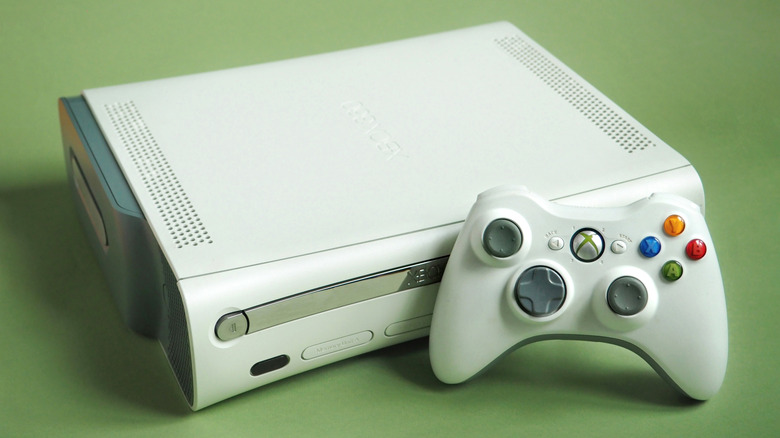
When someone mentions the Xbox 360, you might hear stories about the famous Red Ring of Death that plagued this Xbox since its launch in 2005. Even so, this console far outclassed its competition; Sony struggled with the PlayStation 3 because of its high price and limited games, and the Xbox 360 was already revolutionizing online gaming. In those early years, the Xbox 360 built a strong identity through Xbox Live, its Achievements system, and a connected online platform. It may even be considered the blueprint for the more modern Xbox consoles we see today.
What's impressive is that while hardware failures plagued the Xbox 360, they didn't seem to deter Microsoft from success; in 2014, the Xbox 360 sold around 84 million units, with lifetime game sales for the platform at $37.7 billion. Though competition surpassed these sales, the Xbox 360 remains one of the most remembered consoles thanks to its legendary, diverse library and its daring expansion into motion-sensing technology with the Kinect. It offered gamers a rich experience during the console's 11-year supported lifespan.
2. Xbox Series X and Series S
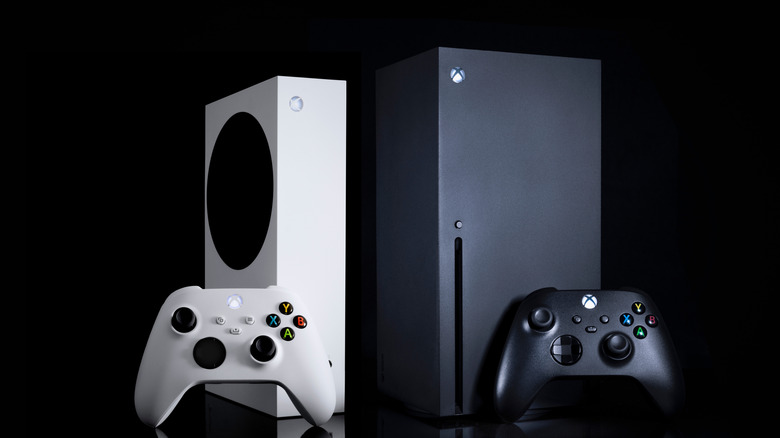
Technically, the Xbox Series X and S should be split because they are different hardware. Still, Microsoft has marketed them as the same generation and family, similar to how Sony markets the PlayStation 5 with disc and digital editions. The key difference is that the Xbox Series S is weaker than the Series X. Part of the versatility is what makes this console generation among the strongest. If you want the best performance to date, plus the ability to play old-disc titles, the Xbox Series X is fantastic. Its custom 12-teraflop GPU and 8-core CPU deliver true 4K and 120 FPS (if supported). The hardware is a real powerhouse; the issue is that console exclusivity has been lacking, as the company has mainly focused on Game Pass, which is also available on PC. Still, while it is better late than never, Microsoft has promised to keep two titles on PC and its own consoles: "Gears of War: E-Day" and "Clockwork Revolution."
The Xbox Series S is the weaker, more affordable sibling. That's because Microsoft Xbox has cut some corners to shave down its price tag. But with price hikes, it's now the cheapest modern console you can get, tied with the Nintendo Switch 2. So, given the times and economic constraints, it becomes a more attractive option if you're fine with a fully digital entertainment system; and even if it is worse than the Xbox Series X on paper, the Xbox Series X doesn't always deliver its promised performance in practice. So if you want a strong entry point into gaming while taking full advantage of Game Pass and its catalog, the Xbox Series S is one of the best options to date.
3. The original Xbox
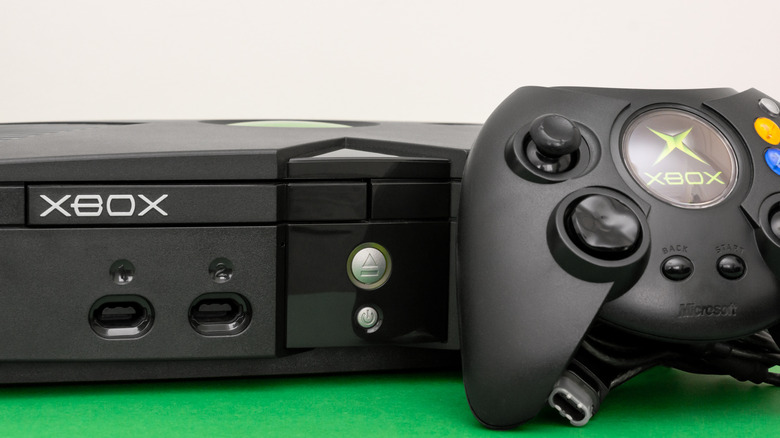
Microsoft Xbox wouldn't be where it is today without taking any risks by entering the console market. So it is no surprise it came with growing pains. One is that the original Xbox suffered long-term from a plethora of hardware problems. It had leaking and failing capacitors because corrosive electrolyte fluid leaked over time, damaging the motherboard, the console's brain. Once that gets damaged, repairs are no longer straightforward.
The internal DVD drive, based on different manufacturers, was also unreliable; it wouldn't always read discs and suffered from laser degradation (as users speculated). The controller, also known as "the Duke," wasn't much loved either. While these might seem like a lot of negatives, they weren't so bad once Microsoft Xbox started learning from its mistakes in future designs. The team kept leaning into the console's strengths, like its "Halo" and "Fable" franchises, which many gamers who experienced them cherish, for newer systems. The Xbox 360 controller was a massive step up; if you visit a subreddit that mentions it, you will still see a respectable number of responses sharing their love for it, even among modern options.
4. Xbox One and One X
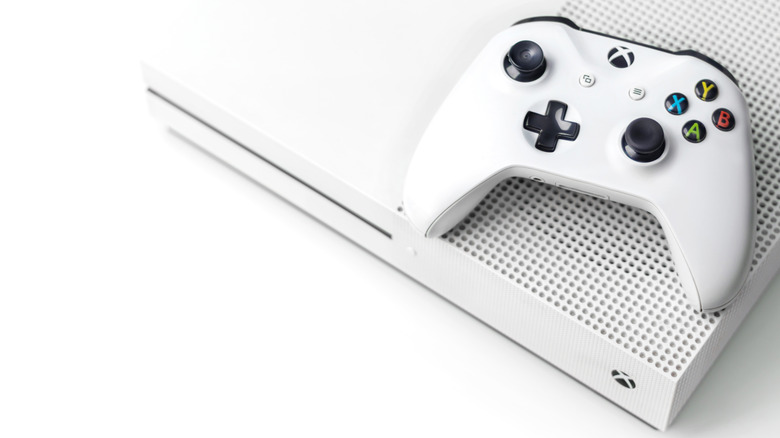
It's no secret that Microsoft had a bit of a disastrous time with the Xbox One. The Xbox One came in three iterations: the original (released in 2013) and the Xbox One S and Xbox One X (released in 2016 and 2017, respectively). The last two updated the original, which some users may see negatively, especially with the affordable Xbox One S. The Xbox One S did not provide true 4K gaming; instead, it only upscaled games to fit a 4K display, plus there was a lack of games that supported HDR at the time. Overall, the Xbox One S offered little performance gain, which made it less worthwhile, and it also removed the dedicated Kinect port.
To make it even more awkward, Microsoft Xbox announced a more advanced iteration shortly after: the Xbox One X. This one had true native 4K support and had better specs across the board, like more RAM, storage, and a better processor to boot. It cost a little hefty at the time, $500, and launched toward the tail end of the Xbox One's generational lifespan; remember, Microsoft released its next-gen console three years later. So buying one to improve the specs wasn't quite worth it, and by then, the PlayStation 4 and the PlayStation 4 Pro were still thriving, though Microsoft's updated console notably outsold Sony in December of that year. Still, the PlayStation 4 outsold the Xbox One 2-to-1 within its generation, according to data submitted to Brazil's antitrust regulators, as reported by TechSpot. Lastly, the final nail in the coffin: the Nintendo Switch also launched that same year, 2017, and was far cheaper and more different than what was on the market, marking Nintendo's early entry into the new-gen leap.
5. Asus ROG Xbox Ally/Ally X/X20
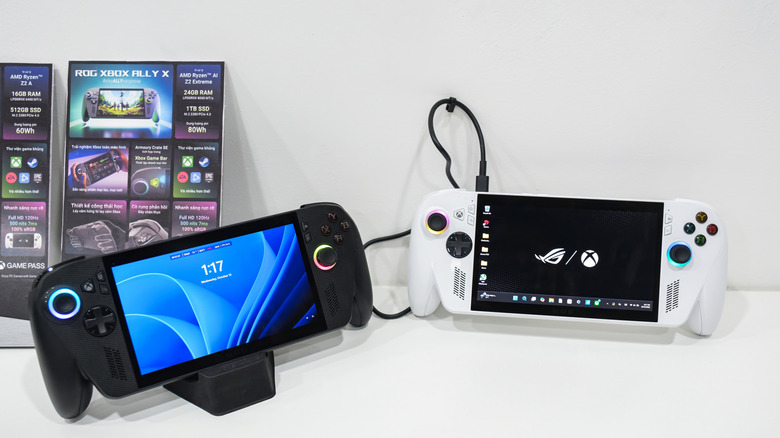
Yes, even though the Asus ROG Xbox Ally is marketed as a handheld, it is technically a PC handheld, or, as some call it, a portable console or handheld console. It's confusing because it doesn't run traditional Xbox software; it runs Windows 11 with deep integration with the Xbox PC app. So despite its Xbox branding, every iteration of the ROG Xbox Ally, ROG Xbox Ally X, and ROG Xbox Ally X20 is more like a PC handheld than an Xbox one.
On the Xbox front, the Xbox Ally works best for Game Pass titles while keeping an ergonomically familiar, Xbox-like layout. However, unlike an Xbox console, owning one doesn't lock you out of other digital storefronts that support PC handheld gaming; you can use it to play your Steam titles. It's versatile, and you can upgrade to the ROG Xbox Ally X and the ROG Xbox Ally X20 to improve the hardware, but it still isn't a true, traditional Xbox console experience, which is why we rated it lower than the rest.