

Vivo V80 Review: Mobile Photography That Won't Break The Bank
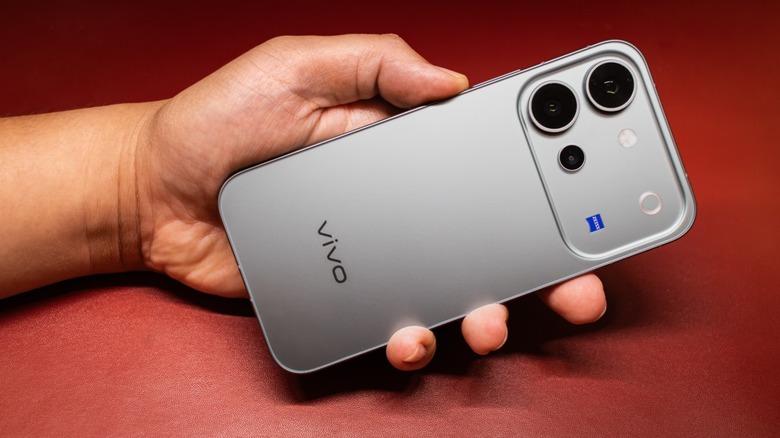
Mid-range phones have historically offered the best balance between price and performance. While you're not getting the latest top-of-the-line hardware, you're still getting a competent smartphone that can deliver nearly 90% of the experience of a flagship device at fraction of the price.
Now, there are a ton of options in this price range, so you might be facing analysis paralysis if you're out shopping for one, whether for yourself or your loved ones. But if you find yourself taking a lot of photos on your phone and don't want to spend thousands of dollars on a high-end device that can do it all, then it's a good idea to pick a mid-ranger that's specifically designed for taking pictures.
This is what the Vivo V80 offers — a handset that can handle most of your everyday tasks while also excelling at photography. The company sent us a device for testing, and we used it as our primary smartphone for about two weeks to see how it holds up in regular use. Of course, we also had to put it through its paces as a photography handset, so we spent a few hours just walking around and taking photos to see what it could do.
The bigger picture
The Vivo V80 is a minor upgrade over the previous-generation V70, with the phone featuring the same Snapdragon 7 Gen 4 chip, a similar 6.59-inch AMOLED screen with the same resolution (but a refresh rate bump from 120Hz to 144Hz), and an IP68/69 environmental protection rating. Even the cameras on both phones are the same — they have a 50 MP f/1.9 23mm wide lens, a 50 MP f/2.7 73mm periscope telephoto lens with 3x optical zoom, an 8 MP f/2.2 15mm ultrawide lens, and a 50 MP f/2.0 21mm wide selfie camera — and both can record 4K video at up to 60 fps.
There are two major differences on the V80 compared to older models — one is that it gets an upgraded 7200 mAh battery, which the company claims lasts up to 39.5 hours on a single charge while playing local video and up to 14 hours when used for navigation. The phone also includes a 90-watt fast charger in the box that could charge the phone to 50% from empty in half an hour. However, there's also one downside — its top memory configuration is now limited to 8 GB of RAM, whereas older models like the V60 offered up to 16 GB of memory.
This is an unfortunate side effect of the ongoing AI-driven memory chip shortage, which is causing devices that require RAM chips to become more expensive. This meant that Vivo had to reduce the V80's top memory configuration to just 8 GB and then use the extended RAM feature to allocate 16 GB of the slower storage drives to compensate. Despite that, the Vivo V80 is still a solid mid-range offering, especially if you're coming from a much older device.
A beautiful design
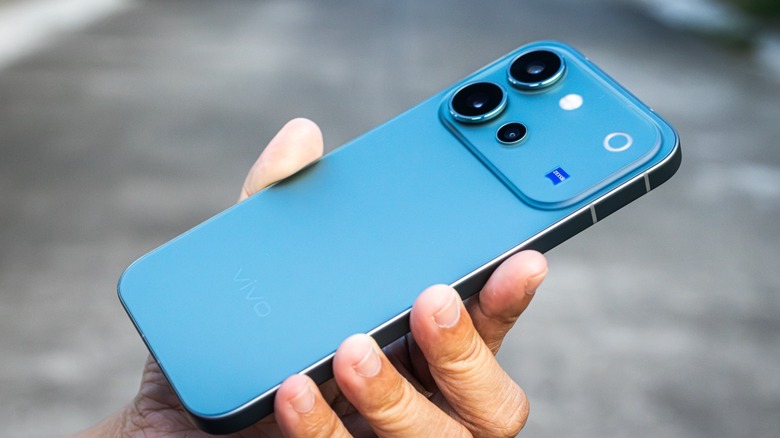
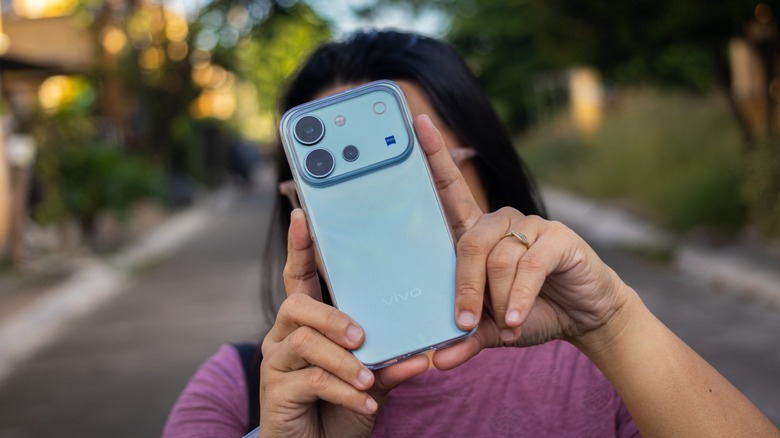
The design of the Vivo V80 appears to be heavily inspired by that of the iPhone 18 Pro, with its flat sides, rounded corners, and camera plateau. It's slightly smaller than my iPhone Pro Max and weighs significantly less by about 40 grams — or 1.4 ounces — making it much easier to hold. It also has a unique camera layout, with the main two-tone flash, Aura Light flash, and the Zeiss branding clearly seen on the plateau.
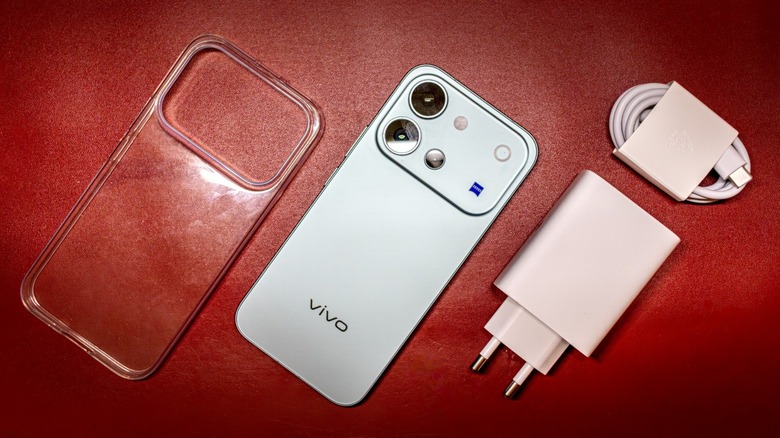
It's also the back of the phone that arguably makes it stand out, with its single-piece glass rear incorporating the Floating Camera Module for a seamless appearance. It's also a joy to hold with its smooth, matte finish, so you'll be tempted to use it without a case if you're adventurous enough. But for users who don't want to risk breaking or scratching their phone (even though Vivo claims that its rear glass is "significantly stronger than traditional hot-bent glass"), it also comes with a clear phone case in the box and a pre-applied screen protector.
When you view the phone head on, you see a single hole-punch 50 MP selfie camera, an under-display fingerprint reader, and a 2750 x 1260-pixel screen with up to 144 Hz refresh rate delivering a 90.7% screen-to-body ratio. It also has a decent 1,800 nits peak brightness when used outdoors, although some parts of the screen can hit 5,000 nits, making it great for HDR content. This gives a pleasurable viewing experience without sacrificing usability or battery power.
Zeiss branding isn't just marketing
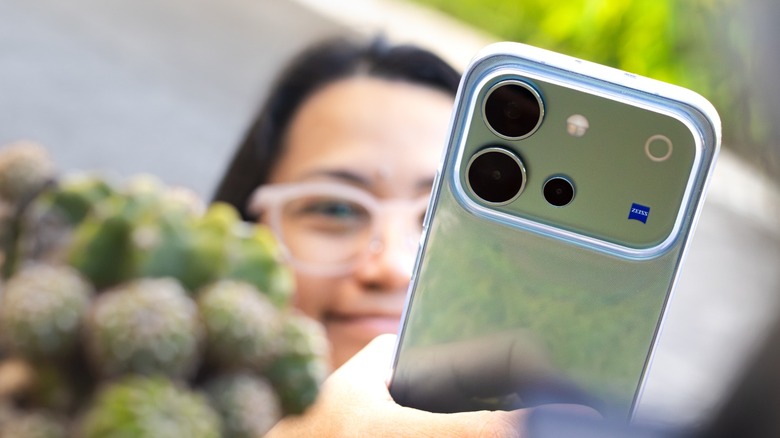
Vivo boasts that the Vivo V80 has been co-engineered with Zeiss, with the branding printed right across the box cover. The company, renowned for its camera lenses, applied its know-how to build the camera system, lenses, and software processing on the smartphone. As noted earlier, the V80 comes with three rear cameras — an ultrawide camera with a fixed 15mm-equivalent lens; the main 23mm-equivalent wide camera, and a 3x periscope telephoto zoom camera that gives you an equivalent focal length of 73mm to 219mm — giving you a zoom range of about 14.6 times and making for a great everyday snapper.
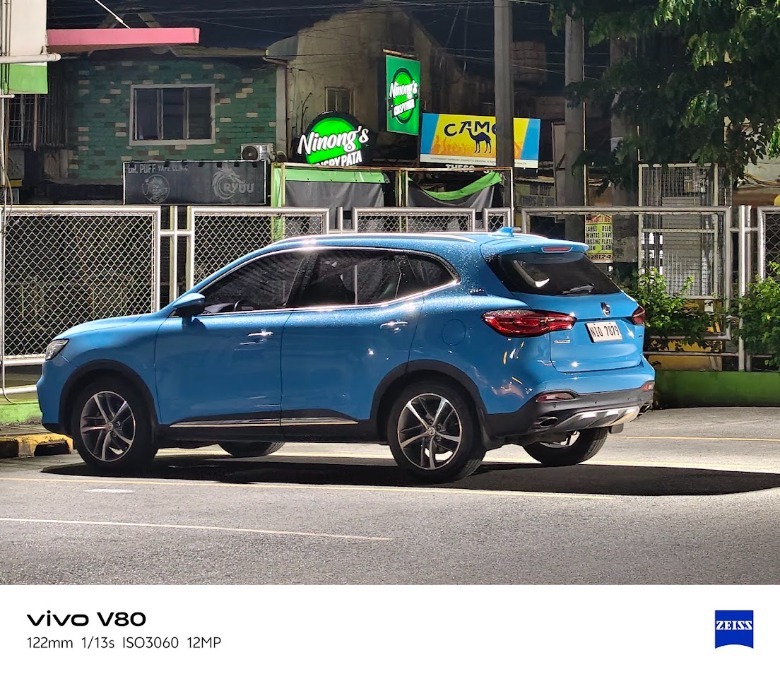 Jowi Morales/BGR
There are also a plethora of styles available in the camera app, including B/W, Textured, Vivid, and the Zeiss-branded Natural, plus seven more custom styles, which allow you to change the tone and feel of your images as needed. These filters let you mimic film stock, although you can also customize them if you want to capture a specific feel for your photos. Aside from that, Vivo takes advantage of Zeiss' optical knowledge in Portrait mode, where you can select various bokeh styles based on different Zeiss lenses, like Biotar, B-Speed, Sonnar, Planar, and Distagon. It also lets you change the aperture simulation from f0.95 to f16, although you can turn off these bokeh effects after you take the picture if you don't like them.
 Jowi Morales/BGR
The Vivo V80 was only missing a few tricks. The first is that it doesn't have a macro lens, so the closest that I can get while keeping the subject in focus is about three inches. It also doesn't let you quick launch the camera by double tapping the power button, making it slightly slower if you see a scene that you want to capture quickly.
You can't escape AI
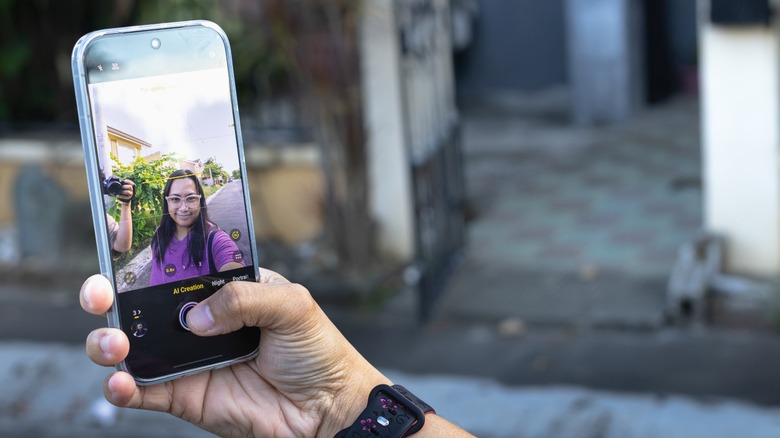
The Vivo V80 comes with an AI Creation mode built into the phone, allowing you to add AI effects to your photos. These go beyond filters that change the tone of your photos by also adding effects like shadows, lighting, and even other elements like fireworks, animation, and fog. Some of the effects look quite realistic, although processing them is resource intensive. The feature requires an active internet connection as Vivo processes the photo in the cloud, and it also takes quite some time for the AI edits to finish. It's noted that processing can take some time and there's a daily usage cap, although the phone does not mention how many AI photos you can take per day.
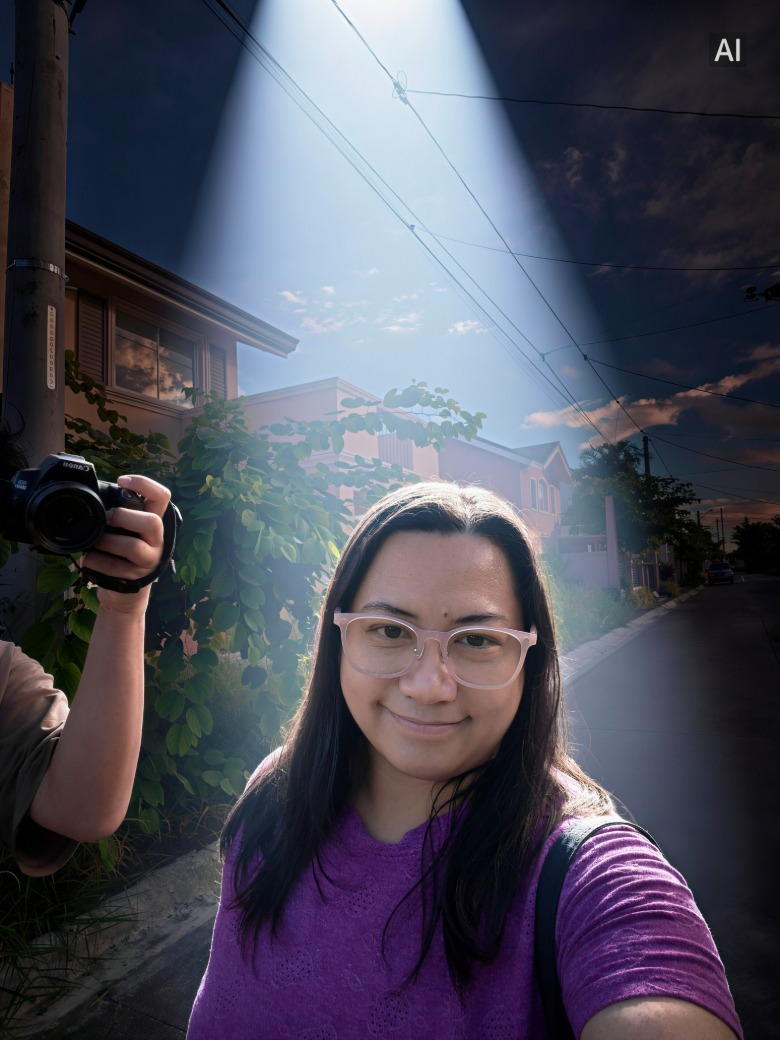 Jowi Morales/BGR
I also noticed that there's a delay when the phone processes images. Whenever I take a photo, especially one that has dynamic lighting, and view it immediately in the album, I notice that the phone does a little post-processing after about half a second. Every phone (along with DSLRs and mirrorless cameras) applies post-processing to the photos it takes, unless you shoot in RAW, but this is often unnoticeable because do it so quickly. It seems that the Vivo V80 takes a bit longer than I'm used to compared to flagship phones, but it still does not affect the final image quality. But if you really don't want the phone to do any post-processing on your images and want to edit them yourself, it lets you shoot in Pro for the ultimate control.
Massive battery capacity
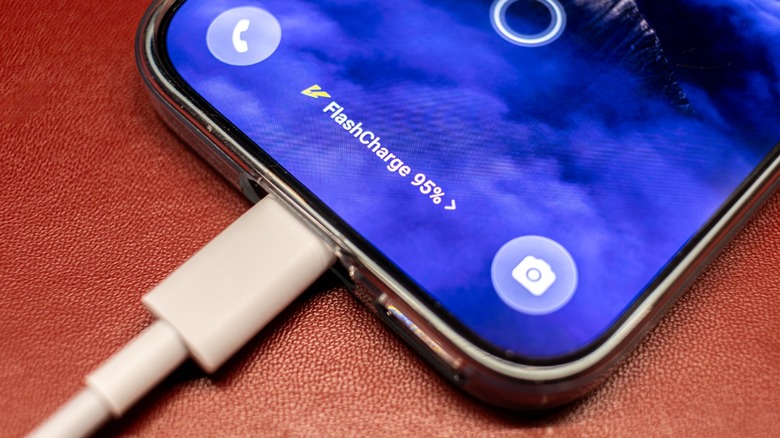
Photography can consume a lot of power, but you don't have to worry about running out of battery with the Vivo V80's massive 7,200 mAh battery. By comparison, the iPhone 18 Pro Max and the Samsung S26 Ultra only offer around 5,000 to 5,500 mAh capacity, giving the Vivo an advantage when it comes to battery life. I spent two hours taking 146 photos on the beach with the phone and it did not even drop below 95% from being fully charged. I've also used it as my primary phone for the last couple of weeks and used it as a hotspot when I worked outside, and I never received the low-battery warning.
The great thing about many mid-range phones, including this one, is that they come with a charging brick and cable right in the box. This lets you charge the phone up to 50% in 30 minutes, allowing you to quickly juice it up in case you run out of power after an extremely long day. It also has a bypass charging feature if you're planning to use it for gaming to reduce the heat and charging cycles of the phone and wired reverse charging if your wireless earbuds run out of power and you don't have a power bank to top them off. It doesn't have wireless charging, though, something that I missed when I was using it as my day-to-day device.
Everyday performance
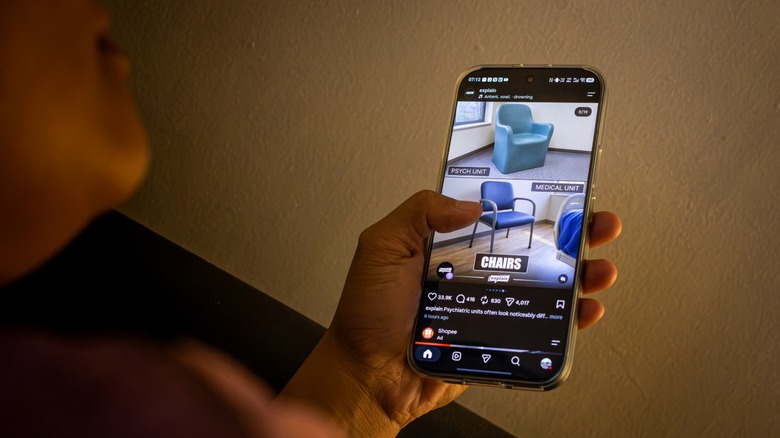
Since this is a mid-range smartphone, Vivo only gave the V80 a Snapdragon 7 Gen 4 processor instead of the more powerful Snapdragon 8 Elite Gen 5 found on the RedMagic Astra 2 gaming tablet and other recent flagships. Despite that, it still delivered acceptable day-to-day performance, and I didn't have to deal with any lags or hiccups on the device, except during the AI-powered processing in AI Creation mode. I also did not feel the limitations of its relatively small 8 GB of RAM, while the 512 GB storage on the test phone is more than enough for most people.
As for the screen, it's bright enough to be used in direct sunlight, so you don't have to cover the screen just to see the directions when you're walking in a new city at noon. It also drops down to just 1 nit of brightness so you don't sear your eyeballs when you're checking the time at 3:00 a.m. My only complaint is that the rounded corners sometimes cut off the screen, making it harder for me to see information or press an on-screen button, but this might be more of a layout issue with the mobile game I'm playing.
The phone itself also comes with IP68 environmental protection, meaning I don't have to worry that it will stop working if I drop it in sand or water. The Android-based OriginOS 7 also feels snappy and quick, although I don't like that it comes with a bunch of pointless pre-installed apps or that Vivo's V-Appstore keeps suggesting apps to download that I have no interest in.
Gaming and entertainment
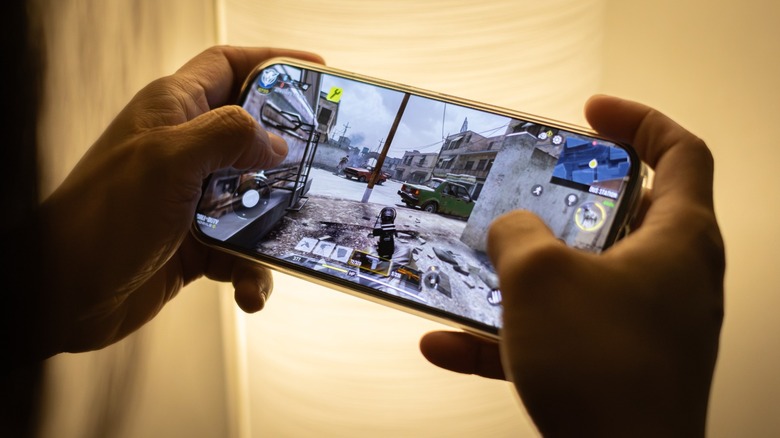
Even though the Vivo V80 isn't marketed towards gamers, it feels great for gaming and could be a competitive alternative to some of the best budget gaming phones. The 144 Hz screen makes for a smooth gaming experience, especially for titles that aren't as demanding, like "Call of Duty Mobile" or "World of Tanks Blitz." Even though it doesn't have top-of-the-line hardware like some of the more expensive flagship phones, it still holds its own and even offers some software features to make gaming easier.
While it doesn't show you an FPS counter right on the screen unlike some gaming-focused devices, it has a slide out panel that lets you set the phone's performance and even give you tools like one-tap screen recording, bypass charging, and off-screen autoplay. That last feature is important for larger games that require massive downloads with the screen on and those titles that only run when you have them displayed on your phone.
If you're into movies instead of gaming, you'd also be happy to find that the Vivo V80 supports HDR, allowing the phone to recreate realistic color on screen. The stereo speakers are also good enough that you should be able to clearly hear content without putting on headphones — although I'd still recommend one of these compact Bluetooth speakers over just using the phone.
A great mid-range snapper
The AI-driven memory chip shortage has not been kind to smartphones, with manufacturers like Apple bumping up their prices to cope with the lack of supply. Vivo was able to make the most of the situation with the V80, though. Despite having just 8 GB RAM (compared to the 12 GB and 16 GB you could get from its previous iterations), it still performed admirably, and the majority of users likely won't even notice the halved memory capacity day to day.
It should be capable enough to do what most users demand from their smartphone — make calls and receive messages, browse social media, watch videos, movies, and TV shows, listen to music, and play games. Beyond all that, it's an excellent photography smartphone, and I won't hesitate to take it with me if I want to venture out with a discreet camera for street photography. More importantly, the Vivo V80 has about 90% of the performance of a flagship smartphone at less than 50% the price, making it an absolute steal for anyone on a budget. The only problem is that getting your hands on one in the U.S. could be quite an adventure.