

Honor Magic V6 Review: The Thinnest Foldable Is Also The Best
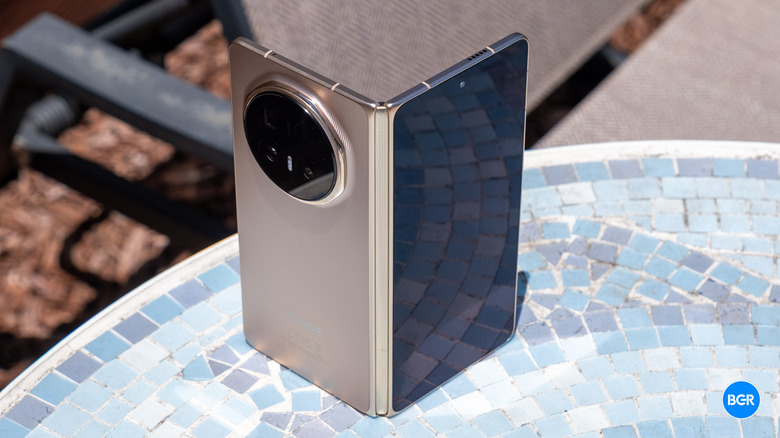
I've long loved the Honor Magic V series of foldable phones — at least when it comes to the hardware. For a number of years now, Honor has been pursuing the thinnest build it can in a foldable phone, and it's done it again with the V6.That's all while much of the industry plays catch-up.
It's hard not to be stunned by the thin build when you're holding it, but it's equally important that thinness isn't the only trick up the phone's sleeve. Does the Honor Magic V6 have more going for it than just its sleek design and premium build? I've been using the phone for a while now to find out.
Design
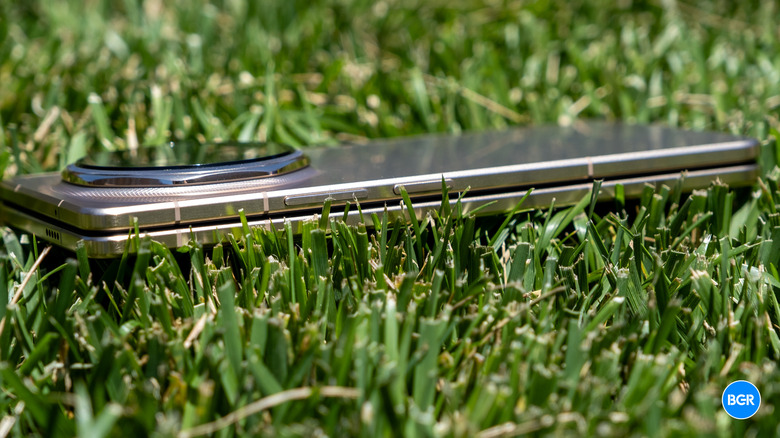
As mentioned, the Honor Magic V6 continues Honor's march towards building a super-thin foldable phone. Last year, I noted that the Magic V5 felt essentially like a traditional slab phone when folded up. This year, that's even more true. Pull the phone out of your pocket and someone could easily mistake it for a more familiar flagship smartphone — it's only once you unfold it that the form factor becomes apparent.
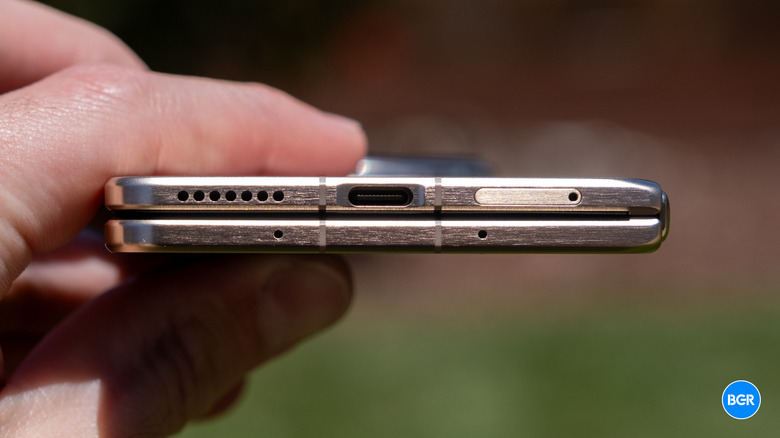
The Honor Magic V6 measures in at a petite 4.1mm thick when unfolded, and when it's folded up, it expands to just 9.0mm. Yeah, it's very thin, and it feels like it. Unfolded, the phone practically disappears in the hand, and it makes for a remarkably comfortable device for long stretches of reading or video watching.
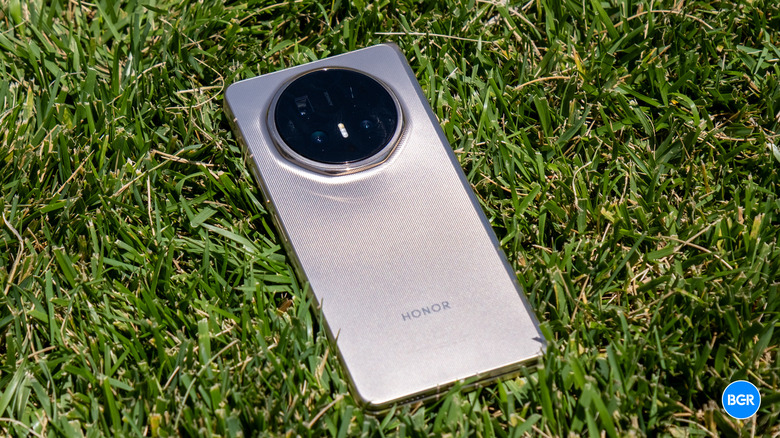
There are other things about the design that I like, too. It comes in a few great-looking colors, including gold, red, white, and black. I like red the best, partly because of its textured rear panel, which adds a little grip along with looking great. The model I'm reviewing is the gold color, and it is similarly attractive. The gold coloring isn't too over the top, and the ornate look actually compliments the thin build.
On the back of the phone is a large, circular camera module, and while it stands out, it doesn't overshadow the overall aesthetic. At this point, the circular module has become pretty standard for Chinese phone manufacturers. Moving around the phone, there's a USB-C port on the bottom of the device and a power button and volume rocker on the right edge.
Then there's the build quality, and it's another high point. The phone is IP68 and IP69-rated, which means that that it's rated to withstand high-pressure water jets and high-temperature water. You shouldn't put the phone through any of this intentionally, but it's more likely to survive anything you accidentally subject it to.
It's rather noteworthy to see this rating on a foldable phone. Foldables have historically lagged behind slab phones in this area, given all the moving parts involved in a hinge. To be clear, the IP rating isn't the only marker of a phone's durability, but being more dust-resistant is particularly helpful when we were worried about objects as large as pocket lint getting lodged under the screen only a few short years ago.
Display
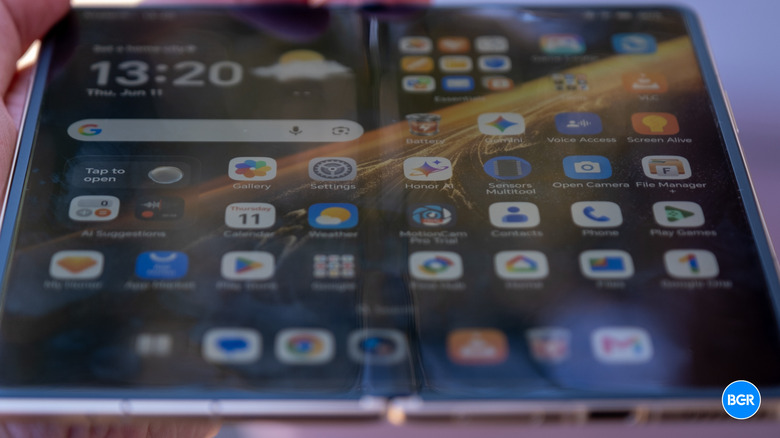
You know a foldable like the Honor Magic V6 will have two screens, but these aren't your average foldable phone displays. Before you unfold the device, you'll see an LTPO2 OLED display with a maximum refresh rate of 120Hz and 6,000-nit peak brightness. The LTPO2 tech also means the refresh rate can scale down when you don't need all 120Hz, which helps preserve battery life. It has a 1080p resolution, but I found it to be easily crisp and detailed enough.
More than that, I found it to be bright — but not quite 6,000 nits. I managed to hit around 5,000 nits of peak brightness, but even that was only with a small window size, and that brightness dips pretty dramatically as the window size grows to 100%. You're looking at closer to 2,000 nits in regular use, which, to be clear, is still impressive and bright enough for even outdoor viewing. That's how peak brightness claims typically work anyway — manufacturers measure them with only a small portion of the screen lit, so full-screen brightness always comes in lower.
Inside the device is a larger 7.95-inch screen, which is also an LTPO2 OLED display. This one has a 2172 x 2352 resolution, and hits a peak brightness of 5,000 nits — which is still plenty bright. On the end display, I did get closer to the rated brightness and measured a little over 4,700 nits. Again, this was only with a small window size. Even at a 25% window size, the brightness was closer to 1,300 nits. That's not all that surprising for a bigger display like this, but don't expect to get that full brightness with super bright scenes when watching video. Larger panels simply have more area to light up, and pushing all of it to peak brightness generates a lot more heat.
Performance
Under the hood, the phone is powered by a Qualcomm Snapdragon 8 Elite Gen 5 coupled with 16GB of RAM. It's the best chip for Android phones right now, and as a result, the phone performs excellently. Day to day, everything feels fast, and the 16GB of RAM gives you plenty of headroom for heavy multitasking.
Really, any phone with the latest Qualcomm chip is going to perform well. The Honor Magic V6 can make particular use of that performance, though, given the larger display that can come in handy for gaming. There's something pretty great about playing demanding games on a nearly 8-inch screen that folds up and slides into your pocket when you're done. Whatever you throw at the device, it'll be able to handle it.
I found the phone to perform excellently in CPU performance, which is unsurprising. It did well in GPU performance too, with solid peak benchmark scores. However, likely due to the super thin build, it can't sustain that GPU performance very well over time. There's only so much room inside a chassis this thin for the kind of cooling hardware that dissipates heat, and that shows up under sustained load.
In the 3D Mark Wildlife Extreme test, it settled to a little over half of its peak performance by the end of the test. Again, that's not surprising, and to be clear, you should still expect to be able to play demanding games on the phone without issue. But after some time playing those games, the phone will heat up a bit, and you won't be getting the same frame rates as you did when you started. For most people, that trade-off will be well worth it for a phone this thin.
Battery and charging
One of the ways the Honor Magic V6 is able to hit such a thin build is through Honor's new super-thin battery tech. The device has a 6,660mAh silicon-carbon battery that it showed off at MWC by having a magician throw it like a playing card. In truth, it's definitely thicker than a playing card — but it is indeed quite thin for such a high-capacity battery. Silicon-carbon batteries allow for a higher energy density than traditional lithium-ion cells, which is how Honor managed to fit this much capacity into so little space. It's also higher-capacity than other foldable phones, thanks to this new tech.
The battery life will largely depend on how you use the phone, but the vast majority of users will be able to get through a full day of mixed use between the inner and outer screens. I got solid video playback times and hit a little over 30 hours using the inner display at 200 nits. I did run into some strange optimization issues, though. The phone seemed to lose battery quickly in standby compared to other devices. However, that is something that can be fixed with firmware, though don't depend on that. Regardless of the standby issue, you should expect to get through a full day easily.
The phone charges pretty quickly, too. It supports 80W wired charging, coupled with 66W wireless charging — though for both of those, you'll need Honor's propriety charging tech. Unfortunately, the device does not support Qi2 magnetic charging. That means the growing world of magnetic chargers and accessories is off the table here.
Camera
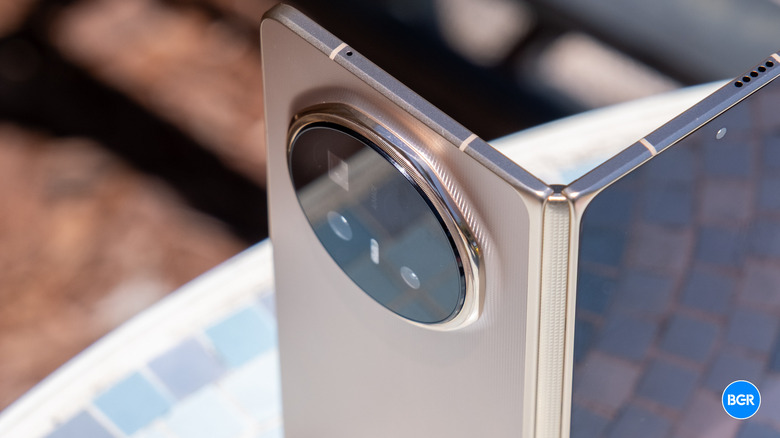
On the back of the Honor Magic V6 can be found a triple camera system made up of a 50-megapixel main camera, a 50-megapixel ultrawide camera, and a 64-megapixel periscope telephoto camera with a 3x optical zoom. It's a very similar setup to the camera system found on the Honor Magic V5.
I did find the camera system to perform better than the Honor Magic V5, though. Both the main camera and the telephoto camera performed pretty well, capturing crisp and detailed images the vast majority of the time. That was true in daytime and low-light scenarios, and detail was retained very well at native zoom lengths on both of these lenses. That kind of consistency hasn't always been a given on foldables, where camera hardware tends to get squeezed by the thin form factor.
Of course, you can push the phone to its limits. Really, past around 6x zoom or so, details start to degrade. Images at 20x are still usable, but they're clearly blurry. They're fine for reading a far-off sign or grabbing a quick reference shot, but not much more than that. And once you reach 50x or 60x, you're starting to get into completely unusable territory. Shots at that range look more like watercolor paintings than photographs. The ultrawide camera wasn't quite as detailed as the main telephoto cameras, but it certainly wasn't bad, even in low lighting.
The system was decently color accurate, but like many other phones, the Magic V6 does push saturation to make for a more vibrant image. That's not really a huge deal, nor is it uncommon. Most people prefer a punchier photo straight out of the camera anyway. To be clear, images were still hue accurate, which meant they still produced the correct colors, for the most part.
While the Magic V6's camera system isn't as impressive as the best slab phones, like the Xiaomi 17 Ultra's, I did find that its camera quality was better than any other foldable phone I've tested so far. That includes the new Motorola Razr Fold and the Razr Ultra, both of which have pretty good camera systems overall. But the Magic V6 is just that extra bit better. Cameras have long been the area where foldables compromise the most, and it's encouraging to see that gap start to close.
Software
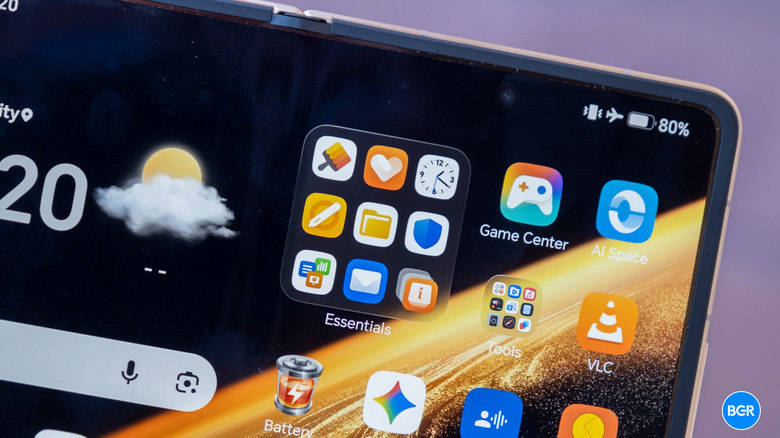
The story with Honor phones has long been great hardware and mediocre software. That continues to be the story here, but the software is getting better.
For the most part, the software is easy to navigate, and it's a little cleaner than it has been in the past. Some of the visual clutter that used to define Honor's take on Android has been dialed back. There are plenty of Honor apps that duplicate Google functions, though. Expect to spend a little time during setup sorting out which apps you actually want handling things like photos and browsing.
The Honor Magic V6 does have some interesting software tricks up its sleeve. Notable is Honor's integration with Apple services. The Honor Magic V6 has a two-way notification sync feature with the iPhone and iPad, and you can even share files between Honor and Apple devices. Even more interesting is that Honor says you can get messages and notifications from the Magic V6 on an Apple Watch. This will require that you install an app on your iOS device and be logged in to your Honor account with the same account on your Magic V6, but if you live in both ecosystems, it's a pretty neat feature.
The software handles multiple screens decently well. There's a dock feature that allows you to enter split screen relatively easily, and it's also easy to swap the two apps open on the screen. The device was built with multitasking in mind, and I like how Honor is offering productivity features. The big inner display is where a foldable earns its keep, after all, and the software does a solid job of letting you actually use all that screen real estate.
Thankfully, it seems as though software support might be pretty good, though that remains to be seen. Honor has promised seven years of updates to the device, and while we'll have to wait seven years to see if Honor makes good on that promise, manufacturers in general have been getting better at providing more extensive software support — and there's no reason to assume Honor won't hit that mark. The promise also puts the Magic V6 in line with the longest update commitments in the Android world right now.
Conclusions
Honor has put a lot of effort into its portable phones over the last 5 years or so, and it really shows. The Magic V5 was a big step forward due to how thin it was, and while the V6 doesn't dramatically improve in that particular area, it does improve in plenty of others, like performance and camera quality. Sure, the Honor Magic V6 is expensive, and there are issues with it, like the fact that the software can take some getting used to. But if you like the idea of a foldable phone and are willing to spend the cash, then the Honor Magic V6 is the top option.
The competition
There's plenty of competition to the Honor Magic V6, including the likes of the Pixel 10 Pro Fold, Samsung Galaxy Z Fold 7, and the new Motorola Razr Fold. The book-style foldable space is more crowded than it has ever been, and that's good news for buyers.
Ultimately, I think the Honor Magic V6 is better than all of them. Its performance is the best of the four, though I suspect Samsung will have something to say about that with the new Galaxy Z Fold 8, whenever it comes out. Still, the Magic V6 exceeds the other devices when it comes to charging speed, battery life, and even camera quality. Those are the things that will matter in daily use. It is a little more expensive than some other foldables at RM 7,699 in Malaysia (~$1,897), and it's nowhere near as accessible, especially for those living in North America. But if you have access to the Honor Magic V6, then I think you'll be very happy with it.
Should I buy the Honor Magic V6?
Yes. It's the best foldable phone out there right now.