

5 MP3 Players That Came Before The iPod
We may receive a commission on purchases made from links.
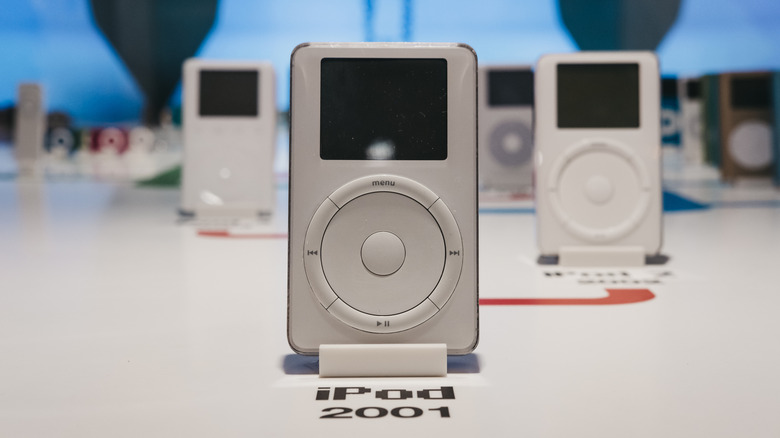
Originally released on November 10, 2001, the Apple iPod permanently transformed how users listen to music. With a 5GB hard drive capable of holding up to 1000 songs, it also came with an LCD display, 10 hours of battery life, and a "Scroll Wheel" controller. At the time, the device was revolutionary, yet today, some users are still deciding what to do with their old iPods. Important as Apple's player was to tech history, it wasn't the first MP3 player — not by a long shot.
Below are five MP3 players released before the Apple iPod. We're not only taking a look at the first publicly available MP3 player, but we're also exploring devices that experimented with unique features, changed how we think of MP3 players, and even brought about lawsuits. The road to the tech we know and appreciate today was a rather bumpy one, though these devices helped pave the way for how we listen to our tunes.
Even if there are still several older iPods worth buying in 2026, hunting down these MP3 players may be more about owning a piece of history than about owning something usable. Don't worry, we're not going to need a time machine for where we're going. Just make sure your MP3 player is charged before this trip down memory lane.
MPMan F-10
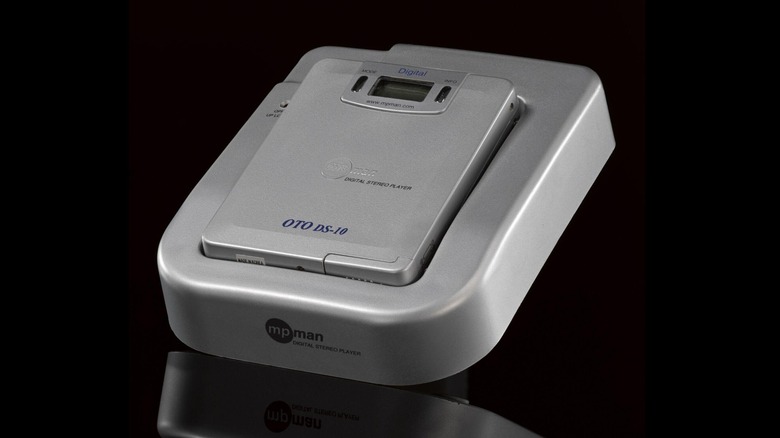
Released in the spring of 1998, the MPMan F-10 is often considered the first commercially available portable MP3 player. Developed by SeaHan Electronics in South Korea, it was initially available in only a few Asian countries, yet helped pave the way for how we consume media today. Though old-school iPods are making a comeback, users today would likely steer clear of these devices for their paltry storage.
There's actually a bit of interesting history to the F-10. Its developer, Mr. Moon, was a General Manager at Samsung when he was inspired to create the MP3 player after seeing someone on a flight using a Minidisk player. Though he pitched the device to Samsung, the company was facing financial problems at the time and rejected his idea. Mr. Moon would leave Samsung and join Seashan Information Systems, which released the device in Korea and Japan on May 2, 1998.
Available for 59,800 Yen ($372.85 in today's USD), the MPMan was available in 32MB and 64MB models. That's right, megabytes, meaning even the larger model was lucky if it could hold an entire album. With 32MB only holding around eight 3.5-minute songs, the players also suffered from slow transfer speeds. However, the original model came with a rechargeable battery offering 8 hours of battery life, as well as a docking station — though both of these features were removed from the F-20 model that arrived in the U.S. in the Summer of 1998 through Eiger Labs.
Diamond Rio PMP300
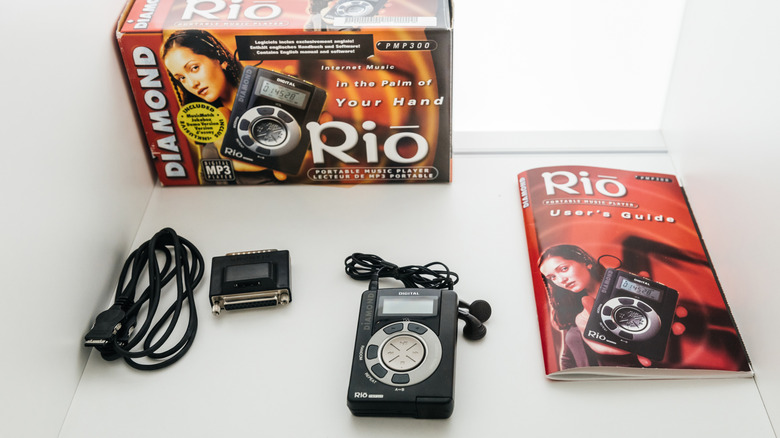
Released in 1998 and available for about $200, the Diamond Rio PMP300 is typically considered to be the first commercially successful MP3 player. With a storage capacity of 32MB, it could hold about the same number of songs as the MPMan, though it had a slightly larger LCD screen. Considering its low storage options, it's very much likely an old-school gadget no one uses anymore.
Bulky and requiring a single AA battery to function, the PMP300 is notable for how its release had the potential to change how users listened to music forever. After the PMP300 went on sale, the Recording Industry Association of America (RIAA) sought an injunction against Diamond Multimedia to stop the device's sale. Citing the 1992 Audio Home Recording Act, the RIAA argued that the PMP300 violated the act by potentially copying audio from CDs and playing it as MP3s without being legally an audio recorder. Ultimately, the U.S. 9th Circuit Court would rule against the RIAA, as moving recordings from one device to another in a non-commercial way would be considered space shifting rather than the creation of new material.
Additionally, the RIAA also took umbrage with the Diamond company having its own digital download service, known as RioPort. However, this wouldn't stop the PMP300 from selling over 200,000 units after the RIAA lawsuits. The device would eventually be discontinued, and today Diamond Multimedia focuses more on accessories for digitally transferring analog media, as well as other computer-based accessories.
HanGo Personal Jukebox PJB-100
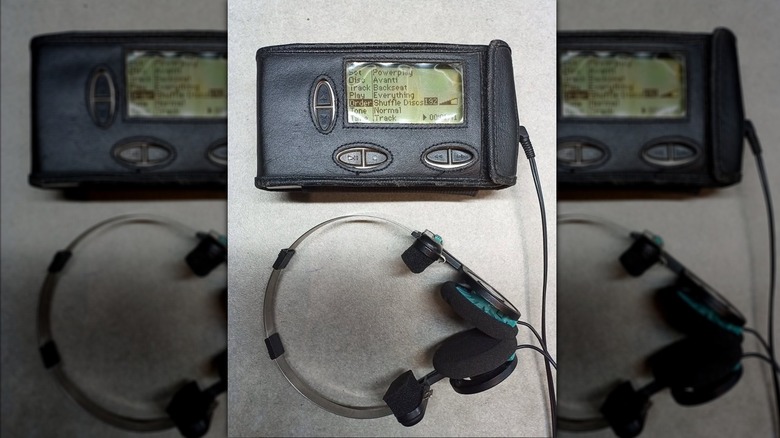
Shipping commercially in November, 1999, development of the Personal Jukebox (PJB) began in Palo Alto, California, at the Digital Equipment Corporation's (DEC) Systems Research Center (SRC). The DEC would eventually be sold to Compaq Computer Corporation, and while Compaq would continue developing the MP3 player, it never released it publicly. Instead, the device was licensed to South Korean manufacturer HanGo Electronics Co., Ltd (which later became Remote Solution). The company would begin selling the devices in November, 1999.
Perhaps the most eye-opening feature of the PJB-100 is that it relied on a 2.5-inch laptop hard drive to store music, making it the first hard-drive-based MP3 player. With a 4.86GB storage capacity, the device boasted that it could store 110 hours of music at CD quality. The device also had 12GB of DRAM, allowing users to cache up to 12 minutes of music to put less stress on the drive. It also had 10 hours of playtime thanks to its rechargeable lithium-ion battery, along with a rather sizable LCD display for the time.
Though the PJB-100 was considered slow and lacked a good user interface, it nonetheless earned its spot in technology history books for its disk-based design. It's also worth noting that the device itself was rather large, especially considering it housed a laptop drive. Today, we can tell you what happened to Compaq and its computers, whereas Remote Solution now focuses almost exclusively on developing and distributing TV remotes.
Creative Nomad Jukebox
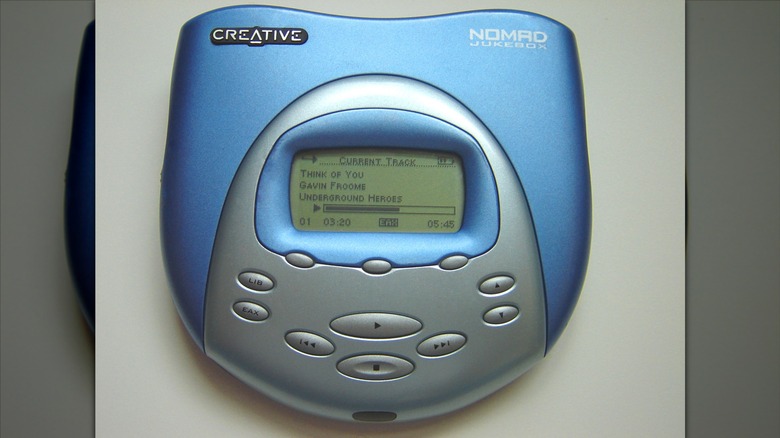
First released in September, 2000, the Creative Nomad Jukebox retailed for $499.99 and touted the ability to store 100 hours of "high-quality digital music" with its 6GB of storage. While the design resembled a CD player, its main physical interface included a variety of media controls. However, one thing that made the Nomad interesting was that, in addition to users being able to convert their CDs to MP3s and transfer them to the device, they could also use the device to record live audio. It also supported WMA and WAV files.
For a device that was released near the turn of the century, it packed some other impressive features. Requiring four AA batteries to function (it came with a spare set), it nonetheless came with adjustable playback speed, a parametric EQ, two line outs for FourPointSurround Surround Sound support, and a digital signal processor (DSP) board for customizing audio playback. By 2005, the company was making two distinct MP3 players — the Nomad and the Creative Zen.
Creative boasted that it had beaten Apple to the MP3 player market, and the two would get into a patent dispute over how users interacted with MP3 players. The battle would end with Apple giving Creative $100 million to use their interface patents. Today, Creative still focuses on sound, including its own Creative Zen Air earbuds. Though things might be different had Apple won its lawsuits, the original Creative Nomad can still be a useful old USB gadget.
i2Go EGo
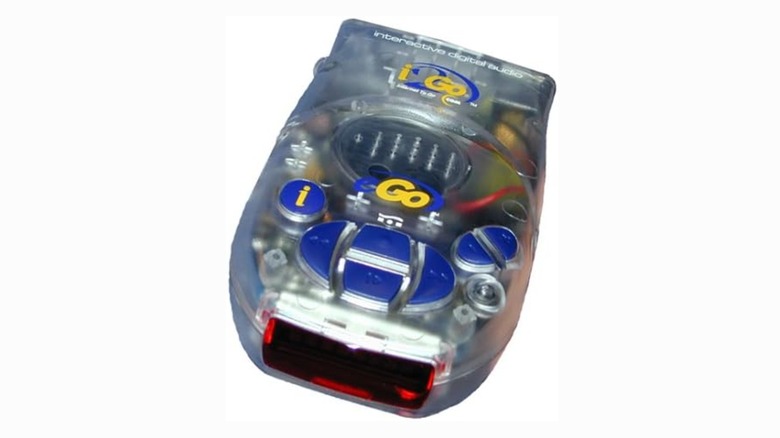
By now, you may have noticed that MP3 players of the past had a major problem: either be small and sacrifice storage, or have plenty of storage space but be too large to carry. While it may be hard to understand this problem today, the i2Go EGo MP3 player available in 2000 thought it had a solution. The EGo supported expandable storage, albeit at a hefty cost.
Though you could get the EGo with up to 2GB (about 1000 songs) of storage thanks to IBM's Microdrive tech, it would run you over $2000 because each 1GB drive costs $1000. However, other storage options were available, and the device also had some unique features of its own. In addition to the device's car stereo kit for vehicle connections, the MP3 player could also download emails and read them back to you. You could even record responses and convert them into text on a computer.
The device would cost users between $299 and $699, depending on their storage options, and i2Go planned to develop a player that would allow users to download music wirelessly. However, despite the company running a promotion where the devices were given out as promotional items during the 2000 Academy Awards, i2Go would end up calling it quits in 2002. Considering it may still be possible to buy an iPod in 2026, this one may just be a curiosity for those interested in archaic tech.