

5 Essential Inventions You Probably Didn't Realize Existed In The '60s
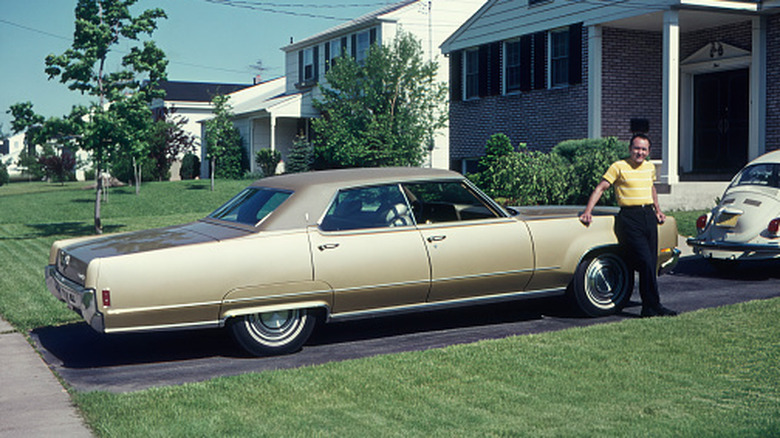
The 1960s stand out in American history for their cultural explosion, but social leaders, musicians, and filmmakers weren't the only ones driving change. The 1960s saw a man land on the moon, the first successful heart transplant, and the discovery of cosmic microwave background radiation, which provided the first direct evidence supporting the Big Bang theory. Even plate tectonics was confirmed in the 1960s through new surveys of the ocean floor.
But the decade also saw the massive expansion of technology and tech inventions. There's no shortage of visionary 1960s gadgets, and with NASA gaining a solid footing, the decade saw several everyday NASA inventions and electronics that can still be found in homes today. It wasn't just NASA, however, as government research teamed with corporate labs and university programs to create the kind of environment that moved a lot of technology out of research and development phases and into the marketplace.
In many ways, tech of the 1960s still feels ahead of its time, and that's part of why '60s tech feels more futuristic than where reality ended up. But much of what hit the market has played a major role in shaping the world we live in today. There are several essential inventions people don't realize existed in the 1960s, including ones we use daily for creativity, productivity, transportation, and even to power our homes.
The word processor
Over the years, everyday writing evolved from a pen-and-notepad process to something that could be done with a typewriter. The typewriter eventually gave way to desktop PCs, and soon enough, we were doing all of our writing on the go with laptops. Now smartphones allow us to keep such abilities in our pockets, with applications like Microsoft Word and Google Docs providing the necessary interface. But these are far from the first word processing programs, as the first word processor didn't appear on a typical computing device at all.
In 1964, IBM released a machine that combined a typewriter with magnetic tape recording equipment. It was called the MT/ST, and it's credited as the first system ever marketed as a word processor. The MT/ST worked by recording each keystroke onto magnetic tape that was housed in a cartridge. The user could make revisions by playing the tape back, stopping it at the edit point, and continuing to record after making the correction.
The MT/ST was a clunky device with major flaws by today's standards. It had no screen and a high price tag, and its limitations included magnetic tapes that could store only 10 pages of double-spaced text per cartridge. But IBM could see its potential at the time. It hired Jim Henson to direct a short film about the MT/ST in 1967 and supported the product until 1983, when screen-based word processors began to dominate the market.
DRAM
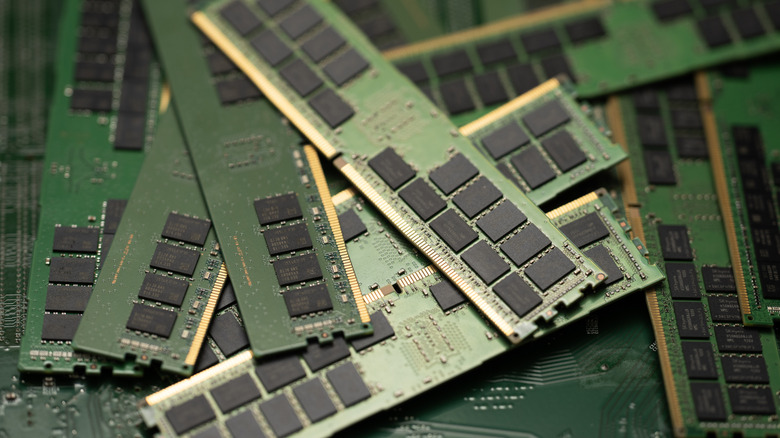
Electronics like computers, smartphones, and gaming consoles all rely on memory that can store data and retrieve it as quickly as possible. That memory is known as DRAM, or dynamic random-access memory. It's what allows applications to function responsively and our devices to switch between tasks and apps without noticeable delay. DRAM stores accompanying files and keeps them ready for when users come back to them.
DRAM has been the main form of computer memory for decades, but it was first conceived by an IBM engineer named Robert Dennard in 1966. Dennard recognized that a single transistor paired with a capacitor stored data much more efficiently than the magnetic core memory cells that were common at the time. This triggered a complete reimagining of computer memory, and a patent for DRAM was issued to Dennard and IBM in 1968. Intel released the 1103, the first widely adopted DRAM chip, in 1970.
Some of the first computers to adopt the 1103 for their main memory were the HP 9800 series and several Honeywell microcomputers. IBM incorporated its own DRAM into the System 370 Model 158 in 1972. DRAM would become cheaper as it continued to be adopted by computer manufacturers, allowing other electronics manufacturers to utilize it in products. Today, it can be found in devices like digital cameras, GPS devices, routers, smart TVs, portable gaming consoles, and even wearable tech.
The electric car
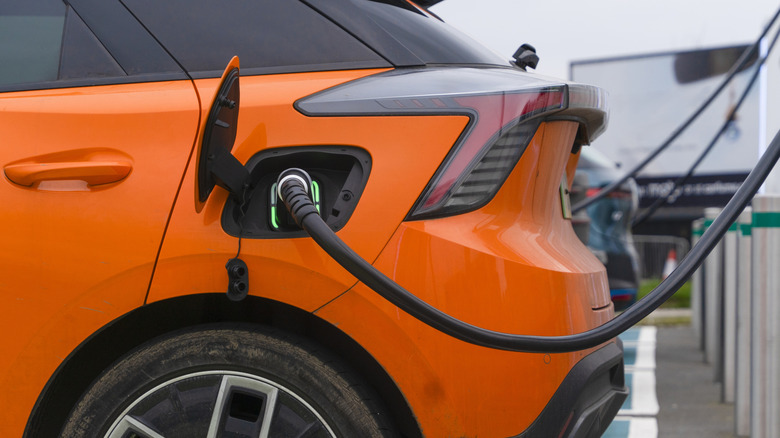
Electric vehicles have moved from simply testing the marketplace to a mainstream part of the auto industry, with nearly every major manufacturer now having at least one EV in its lineup. Battery technology and charging infrastructure are as advanced as they've ever been, and driving range in electric vehicles continues to improve. Some of the most reliable electric vehicles of all time have hit the market in the last decade, but that's in part because of research and development that goes back a long way.
While EV roots date back to 1828, the 1960s saw what could be considered the invention of the modern electric vehicle. In 1964, General Motors built an electric version of the popular Chevrolet Corvair. Known as the Electrovair, GM followed it up with the Electrovair II in 1966. The automobile had reached the masses by that point, and with nearly every household owning one, people were becoming increasingly aware of pollution. The Electrovair was a direct response to this.
Auto manufacturers like Ford also experimented with electric prototypes in the 1960s, with the Ford Comuta released for the UK market in 1967. This was an experimental microcar that could travel up to 37 miles on a single charge and had a top speed of 25 mph. Today's American-made electric vehicles still include models by manufacturers like Ford and GM. But while there were genuine intentions to bring them to market at scale, the 1960s EVs functioned more as prototypes for the EVs we know today.
Solar panels
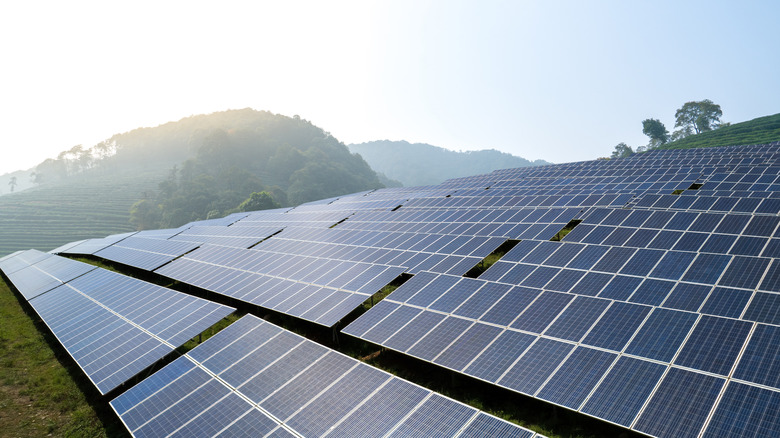
Solar panels have made their way into everyday use. The Energy Information Administration projects that solar will be the fastest-growing source of electricity generation in the U.S. through 2027, and a large reason for that is increased household use. But long before solar panels were somewhat mainstream in neighborhoods, they were used to power and charge smaller devices like digital watches, calculators, and even keyboards. All of these uses can be traced back to the 1960s, particularly to NASA, which used solar panels extensively.
In 1958, NASA first used solar cells to power its Vanguard 1 satellite, and the 1960s saw the agency implement them in various ways. In 1966, Telstar, the world's first communications satellite, was equipped with solar panels, as was the Nimbus 1 satellite in 1964. But while NASA was putting solar cells into space, the technology itself came from Bell Labs, which was using solar panels in more down-to-earth ways. Its interest in solar panels stemmed from a desire to power telephone equipment in remote locations where running electrical lines wasn't cost-effective.
NASA's pioneering use of solar panels in the 1960s remained their primary function until the 1970s, when they began to be deployed in much smaller form factors. The first solar-powered watch hit the market in 1972, with a side-facing display because the top provided more surface area for solar panels. Sharp released the first mass-produced solar-powered calculator in 1976, and throughout the 1980s, more and more small electronic devices used solar power.
The ATM
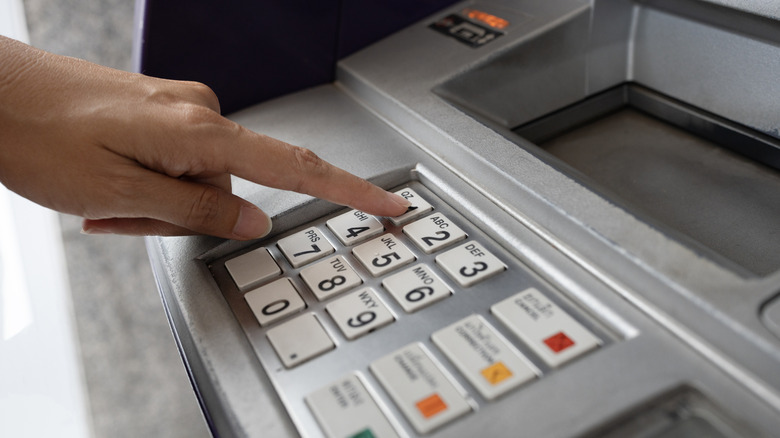
The world's first ATM was unveiled in London in the summer of 1967. The invention is credited to a banking executive named John Shepherd-Barron, who came up with the idea upon being unable to withdraw cash while his bank was closed on a Saturday. He pitched Barclays the idea, drawing on chocolate vending machines as inspiration. The first auto-teller machine took only a few months to design, build, and deploy for the public. America's first ATM became accessible in 1969 at a Chemical Bank in Long Island, New York.
The idea of around-the-clock banking quickly became a major operation. In 1973, IBM introduced the 3614, a bank machine that linked to a bank's central computer over telephone lines and allowed customers to check their account balances and make deposits in addition to withdrawals. As the network of ATMs grew throughout the 1970s and 1980s, an entire supporting industry arose, with armored car companies expanding operations to keep the machines stocked with cash.
The drive-through ATM emerged in the 1980s, but in our near future, the ATM could prove to be an example of how difficult it is for an invention to remain essential forever. Short of distributing cash, a smartphone and its accompanying banking app can do everything an ATM can. But the need to always have cash on hand has dwindled significantly over the last several decades with the rise of debit cards, electronic transactions, and, of course, the digital wallets and payment processes available today.