

Want To Spend Less On Utilities? Start With These Smart Home Automations
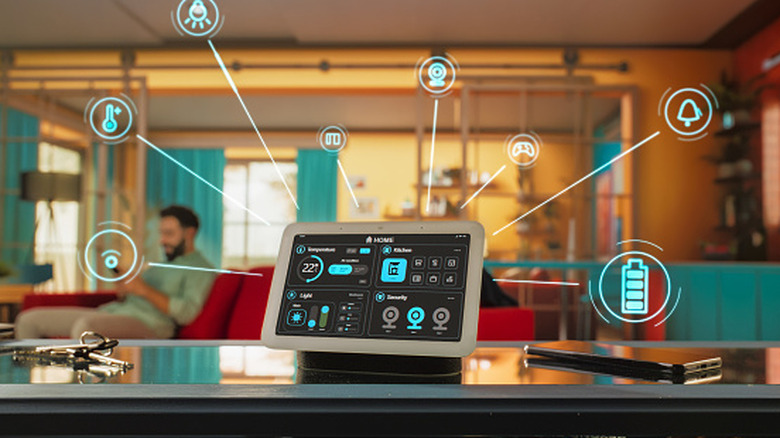
The advantages of a smart home are multifold. Aside from the convenience of configuring your home to work as per your schedule so that you barely have to enact any manual commands of your own, a well-planned smart home can also help safeguard your home security and — perhaps the best perk of the lot — help conserve power. You can set this system up to reduce electricity waste when appliances are left on too long or draw vampire energy when left on standby.
Electricity isn't the only utility that can be conserved if you set proper automation protocols in place. From your water bills to your grocery expenses, certain smart home gadget rules that everyone should follow can be invaluable for saving up on a person's day-to-day household costs. Given the initial investment required to set up a proper smart home, many people want to recoup these costs in one manner or another. In this context, becoming a sustainable citizen to preserve resources and save money is a no-brainer for any aspiring smart home adopter.
Schedule your smart lights to operate as and when required
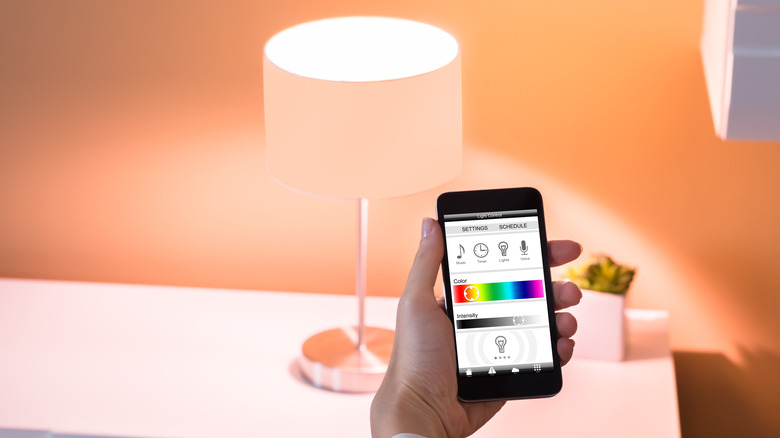
When people think about the easiest and most beginner-friendly smart home upgrades, the first thing that comes to mind is replacing their regular lights with a smart variant. People are attracted to the idea of installing lights with a full RGB spectrum that can be controlled via their phone, allowing them to unlock different vibes for a variety of use cases. Of course, showing off your brand-new smart lights to your guests at a party isn't the only reason to get these fixtures.
A creative way to use smart lights around your house is to set up automations that make them more convenient, while also saving precious energy. Time these lights to your schedule so that they turn on only when needed at night. You can group the smart lights in each room to operate in tandem and turn them on or off at your command. Whenever it's time for you to hit the sack, your smart lights can turn off automatically so that you don't leave any lights on by accident. Unlike other lights that either stay at full brightness or shut off with no in-between, smart bulbs can be dimmed for convenient ambient lighting while also saving on power.
Finally, most smart lights use LEDs, which are more efficient than incandescent lighting solutions. Compared to the latter, LED smart lights use up to 75% less power and last up to 25 times longer on average, meaning savings on electricity bills without contributing to the waste problem plaguing the planet.
Set proper temperatures and schedule your smart thermostats for optimal use
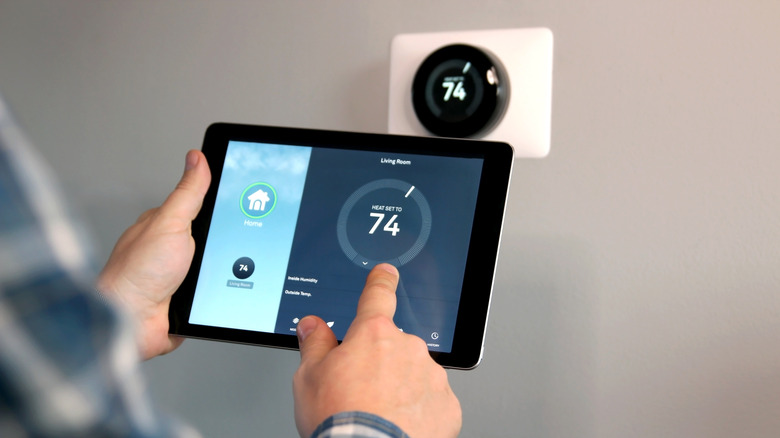
Another essential smart home gadget that you should be using in 2026 to help conserve power and make your home more comfortable to live in is an advanced thermostat. Sure, manually controlling your regular thermostat isn't the biggest pain, but the convenience of changing temperatures via your phone and setting up schedules to make sure your thermostat isn't being wasted is unmatched. In fact, the latter is a great way to save up on electricity, preventing your thermostat from working at full tilt even when you're in the office. Most smart thermostats even have their version of a vacation mode that can be used to prevent humidity or freezing conditions from damaging your house without wasting too much power.
Speaking of power conservation, another excellent way to reduce electricity consumption with a smart home thermostat is by double-checking that the temperature values you've chosen fall within 7 to 10 degrees of the current outdoor temperature. As per the U.S. Department of Energy, you can reduce your power bill by around 10 percent as long as you keep your in-house temperature values within this range for around eight hours a day. With a smart home thermostat, setting up an automation protocol makes it easier than ever to adhere to these values, optimizing your house's heating or cooling without burning a sizeable hole in your wallet.
Set timers for your smart switches and plugs
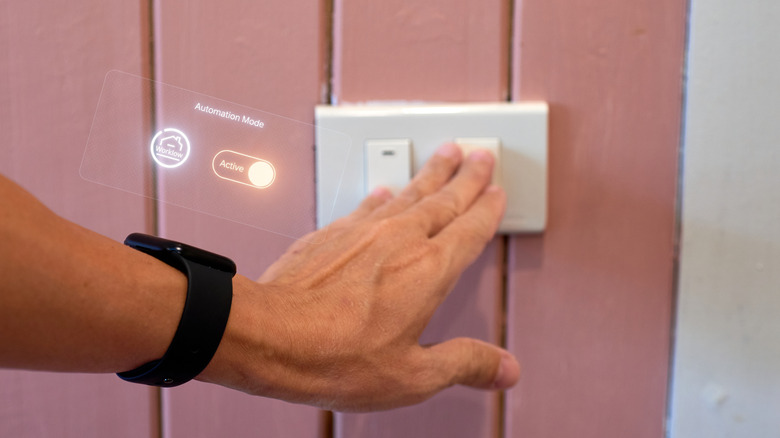
If your house has so many fixtures that replacing all of them with smart versions can be too costly for your liking, then a great workaround is to install smart switches and plugs to control these appliances. A single smart switch may be more expensive than a smart bulb, but you'll need only a few of these switches around the house. This ensures you're already saving funds from the get-go with a cool new smart home gadget to upgrade your living room space, but that's not the only way smart switches and plugs can help reduce electricity costs.
Charging phones, tablets, and any other battery-powered appliance overnight is a common practice for most people. While modern devices have safeguards set in place to prevent any battery damage from "overcharging," it's still far from optimal to keep your plugs and switches on throughout the night. The vampire power draw issue can come into play here, which is why it's prudent to set a timer for these smart appliances.
If you feel that this minute power consumption doesn't warrant installing a smart switch, keep in mind that it can be a huge help for large-scale electrical products like EVs. This, coupled with the fact that the battery of an electric vehicle shouldn't ideally cross the 80% range to mitigate long-term degradation — a statement that applies to lithium-ion battery-powered products — makes it clear that a smart switch can go a long way in conserving power while also guaranteeing that the most expensive component of your electric vehicle has a longer shelf life.
Make sure your smart water leak sensors notify you instantly if they detect something wrong
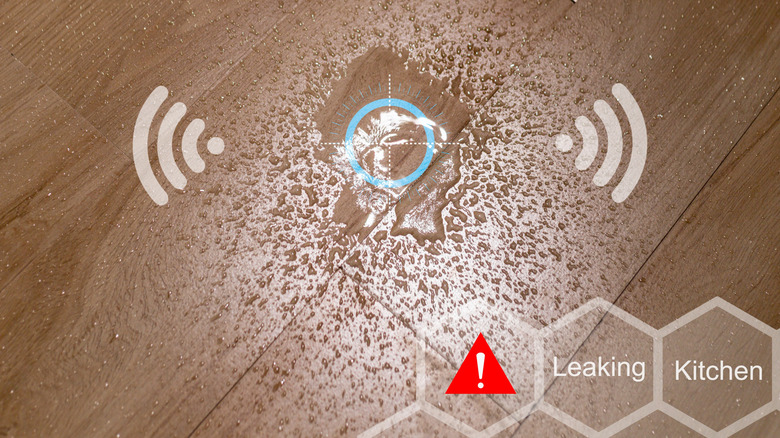
Along with your electrical use, your water bill can also be reduced with a practical smart home. Specifically, smart water leak sensors placed all around the house can help detect any water-related problems and keep you informed in case of water damage accumulating over time. Don't just limit your water sensors to the bathroom and kitchen — this is a common mistake people make when upgrading to a smart home. After all, these water pipes are strewn all over your house, and the last thing you'd want to deal with is accumulated water damage in neglected areas, such as your attic or basement.
However, setting up these smart water leak sensors is just one of many steps. You should also configure the settings of these sensors so that they automatically notify you in case they detect a water leak. A priority-level notification setting is recommended so that this important information doesn't get drowned out by the wealth of notifications that flood your phone daily.
Set timers and schedules for your smart water heater
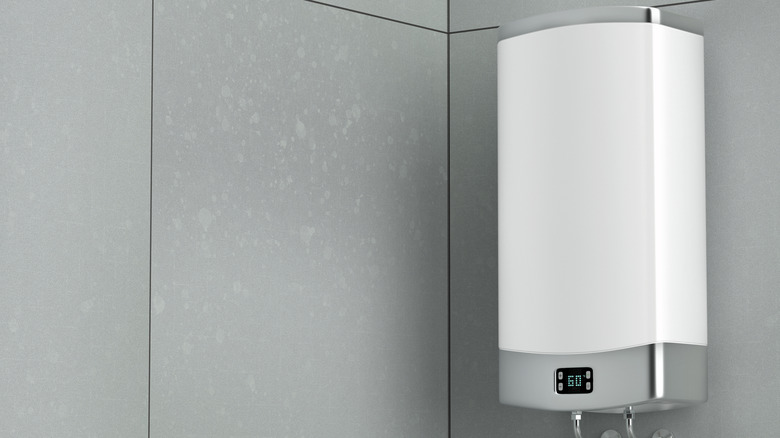
Many people have accidentally left their water heater on for too long, which isn't the greatest news for their bank account when the electricity bill rears its ugly head. It's a fairly common mistake, and one that's better off avoided. Instead of having to personally monitor your water heater all the time, a smarter — no pun intended — solution is to install a smart water heater that lets you implement a bunch of money-saving automations that do all the work for you.
Not only will this help you start this water heater from the comfort of your living room a few minutes before you get ready for a bath, but it also lets you set up timers in the event that you forget to turn off the water heater after you're done with it. People who are meticulous about taking showers at a particular time can also set up schedules to optimize their water heater usage, and, of course, save up on their electricity bills in the process.
Configure your smart refrigerator to save up on utility costs
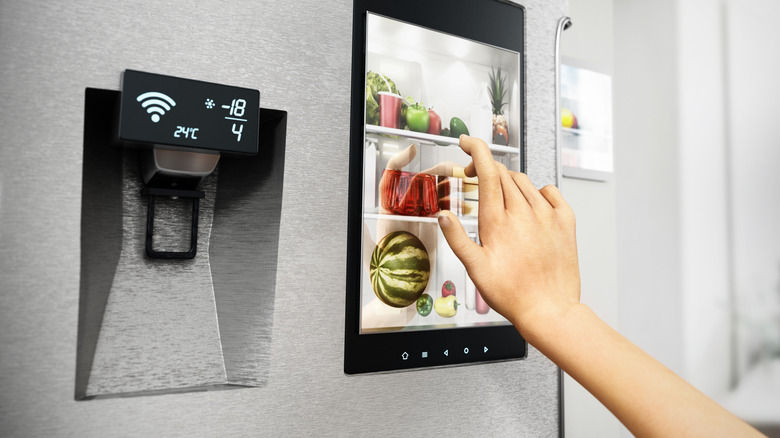
Most people who want to make their kitchen as smart as possible should consider investing in a high-quality smart refrigerator. Sure, a smart coffee maker will help you enjoy the painless cup of morning coffee you desperately crave, but practicality should remain at the forefront when it comes to converting your kitchen into a smart one. With a smart refrigerator, the sheer number of ways you can save up on your household expenses is immense — which, just to clarify, isn't just limited to electricity costs.
Efficient energy use is one of the best parts of owning a smart refrigerator. These appliances adjust to your usage patterns and monitor power consumption, while also recommending settings you can implement to optimize electricity use. You can also use various modes as and when necessary. A great example of the same is Vacation Mode, which stops your fridge from drawing too much power when not in use.
Another excellent way smart fridges help reduce your expenses is by giving you a clear idea of the products you've placed in the fridge, highlighting the ones that are nearing their expiry date. This feature will help optimize groceries and minimize the trips to the local supermarket. Most fridges also detect potential problems early, allowing you to call a technician and repair these parts before they cause substantial damage to the appliance further down the line.